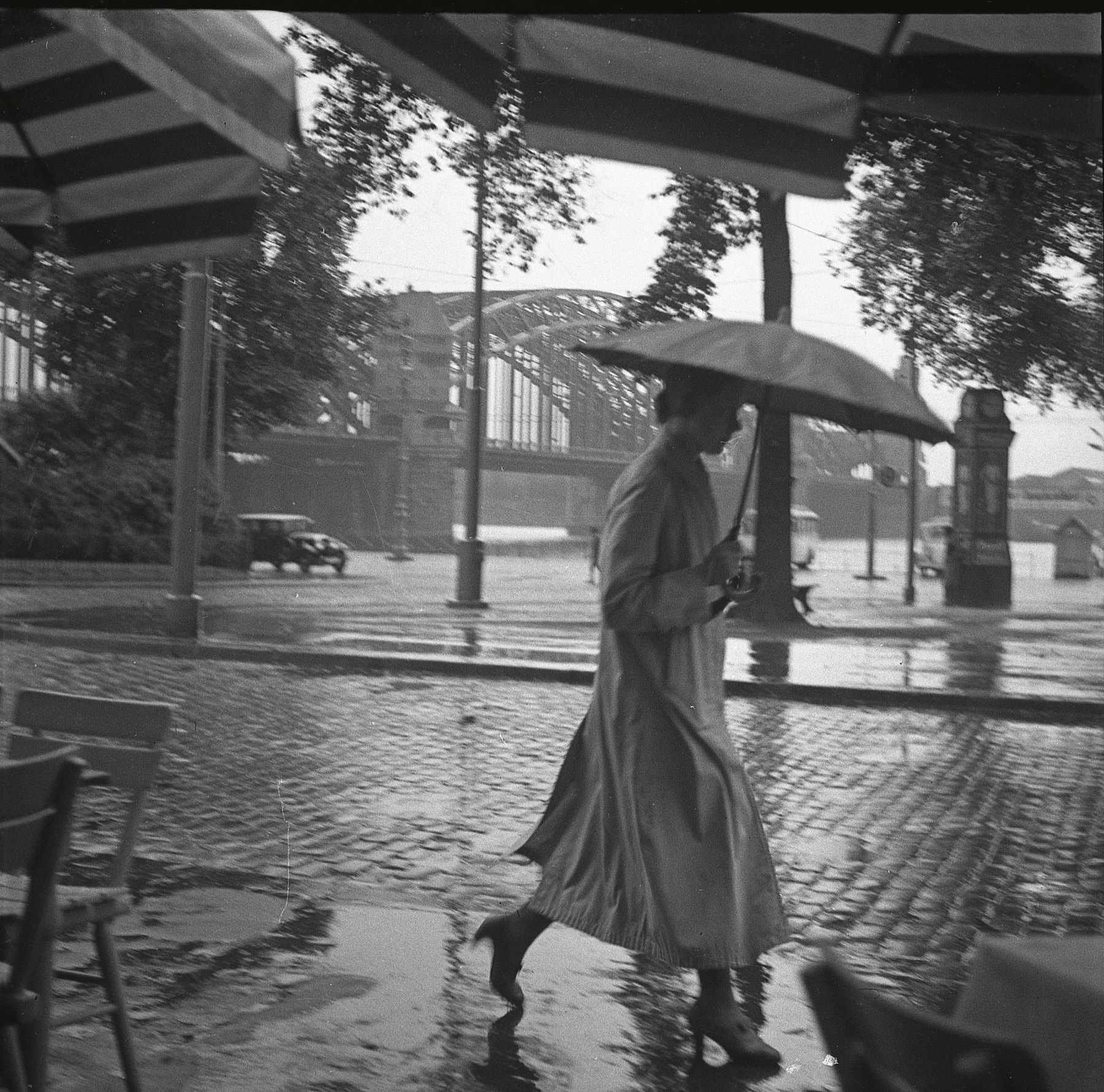
These images do not set out to explain Germany. They were made without a journalistic assignment, without a documentary concept and without any claim to completeness. They are travel pictures, personal memory pictures, amateur photographs. And yet, perhaps precisely for that reason, they are interesting.
The photographs come from Chilean family collections. They show journeys to Germany from the 1930s into the postwar period, in some cases into the 1970s and 1980s. The collection is accidental and unrepresentative; often, little more than what the images themselves show has been preserved. It does not keep an official view of Germany, but individual encounters: people from Chile who travelled through Europe, businesspeople, visitors who recorded what seemed remarkable to them. That is exactly where its value lies.
Travel photography rarely shows a country as a whole. It gathers impressions: sights, atmospheres, surprises, small irritations. The outside eye sometimes sees things that locals hardly notice anymore. It remains limited, but precisely that limitation makes it revealing.
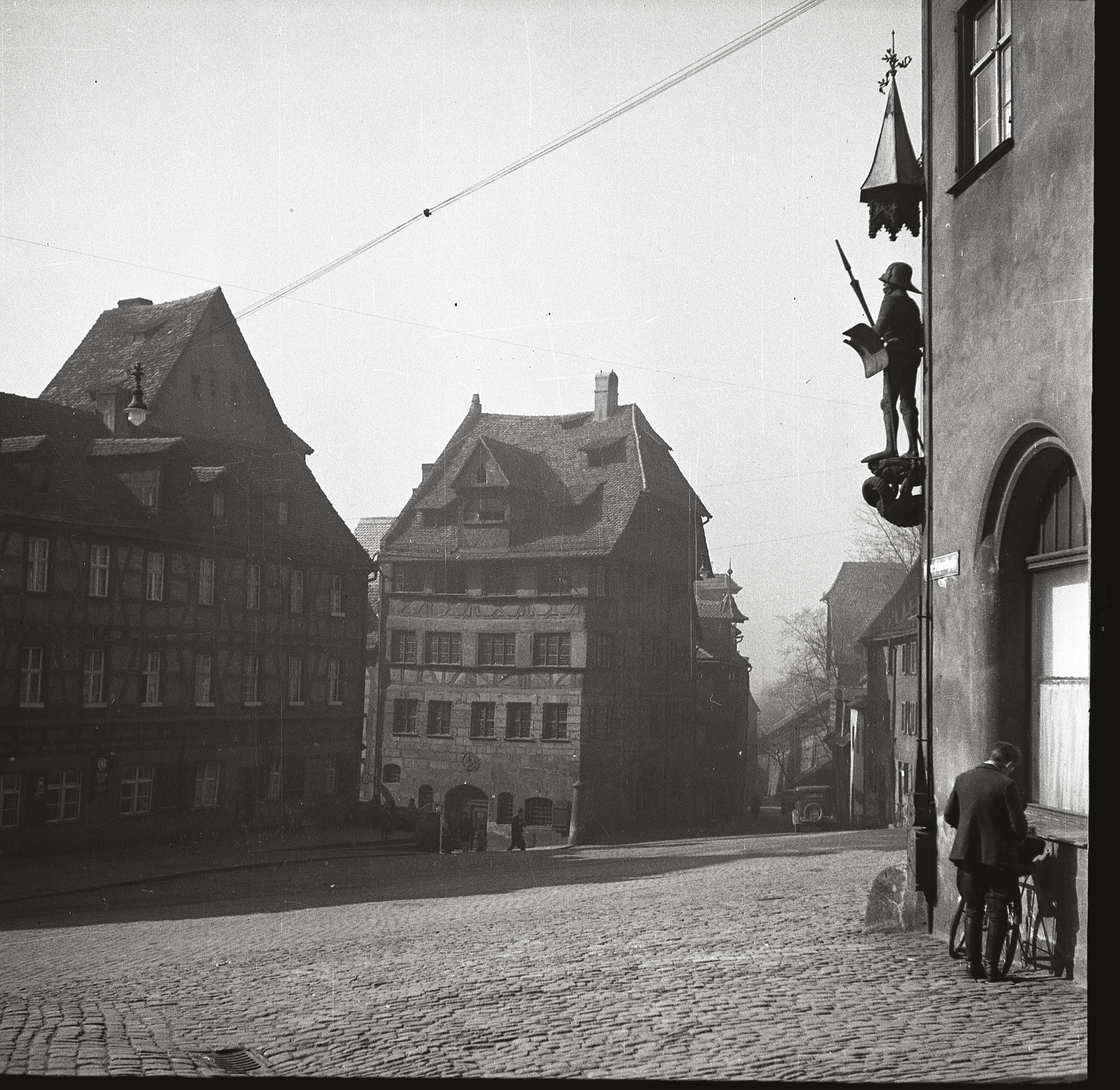
Luis Mitrovic Balbontin Collection
Sights and Moments
At first glance, much is expected. Germany appears as a country of cathedrals, castles, half-timbered houses, rivers, harbours, museums and city views. Berlin, Cologne, Hamburg, Dresden, Weimar, Nuremberg, Würzburg, Heidelberg, the Rhine: these are the places found in travel guides. But among these motifs are images that tell more than a tourist route. What matters is where the visitors' eyes came to rest.
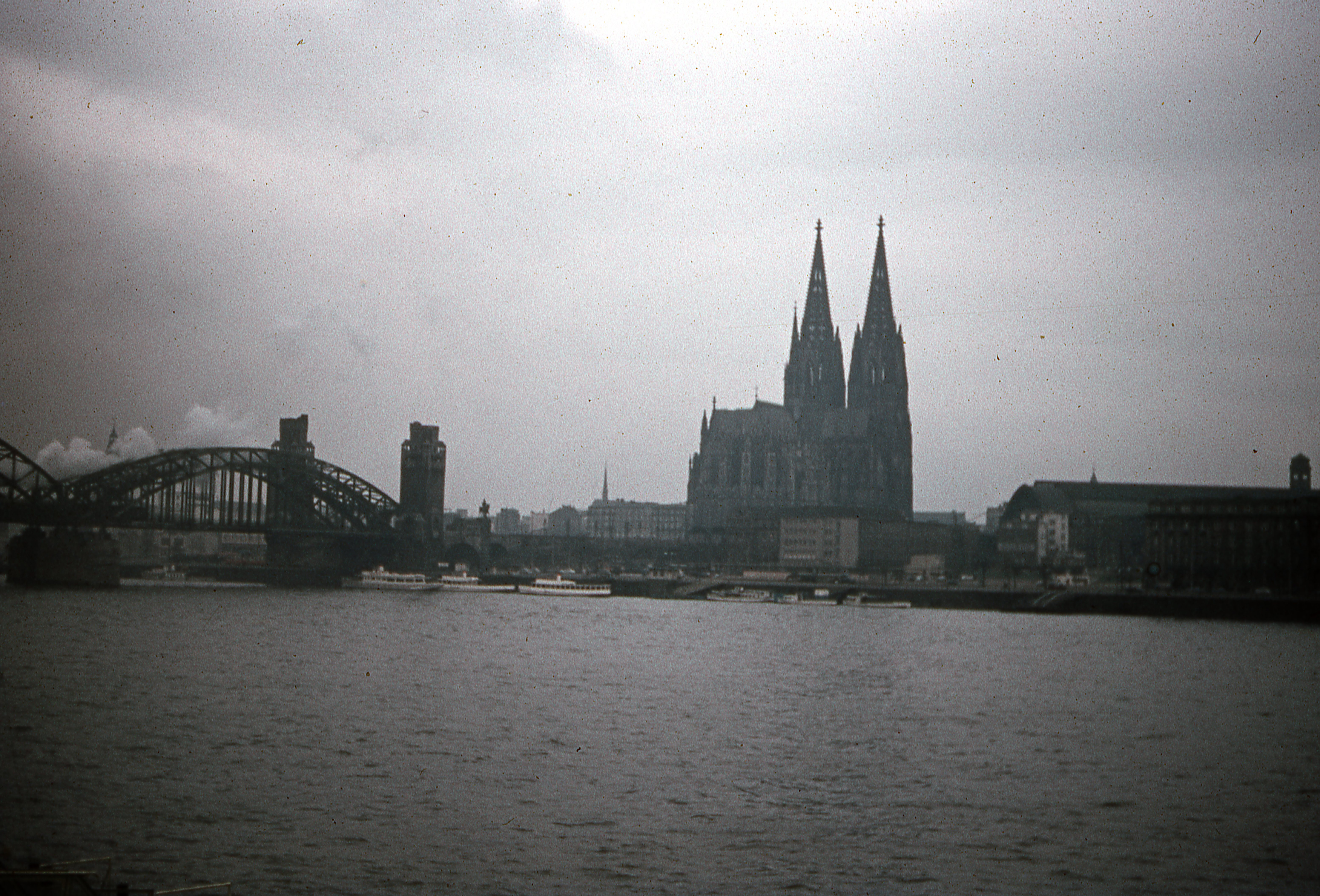
Family Hernández Nieto Collection
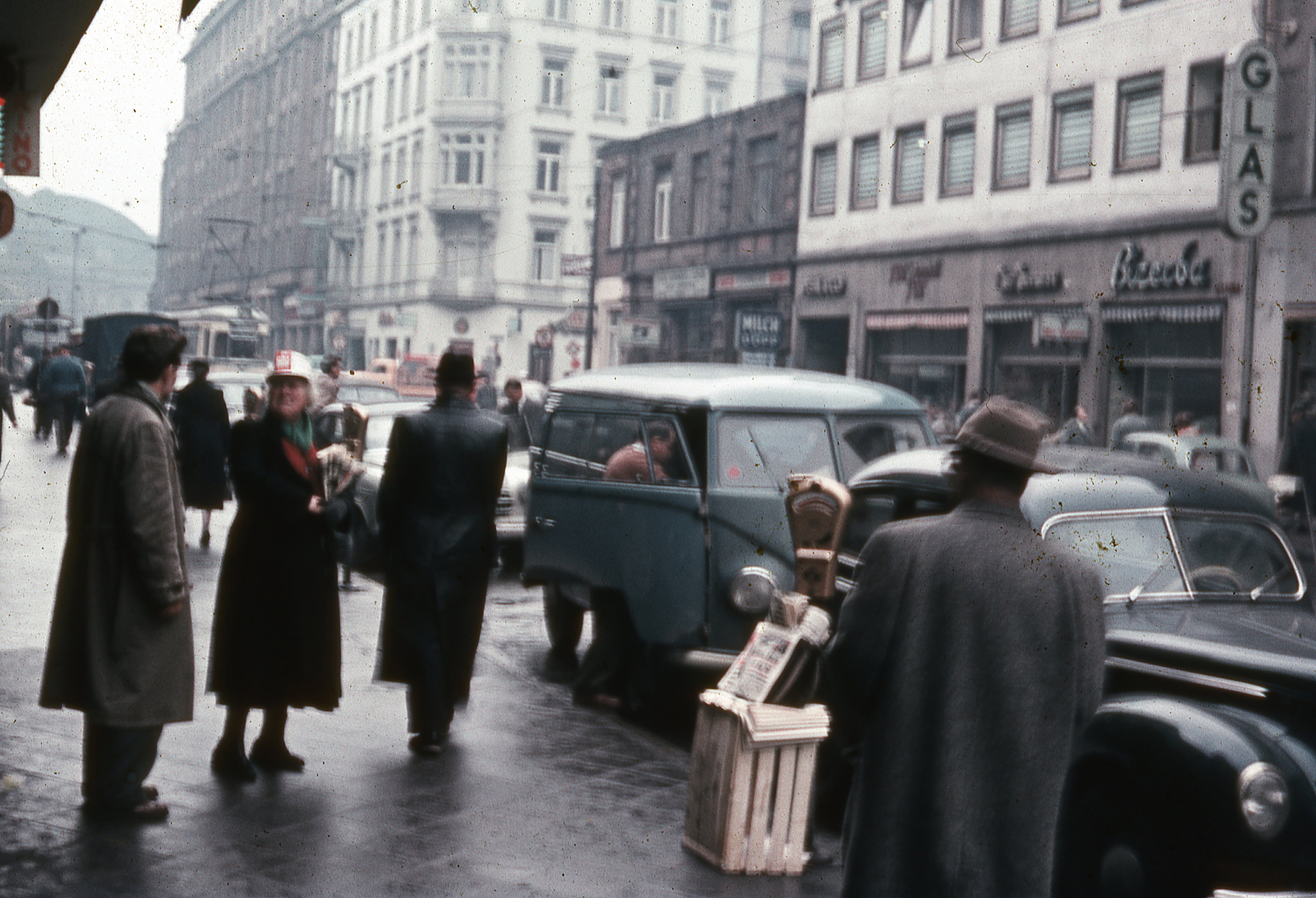
Family Hernández Nieto Collection
In the images from Cologne from the 1960s, the cathedral is present, but the view repeatedly moves into the city itself: streets, cars, building sites, advertising signs, shop windows, people on wet asphalt. A VW bus stands by the roadside, a woman sells the Bild newspaper at an improvised stand, passers-by wear coats and hats. Cologne appears not only as a postcard motif, but as the city the visitor experienced it: rebuilt, full of traffic, sometimes grey, yet interesting enough for a snapshot as a memory.
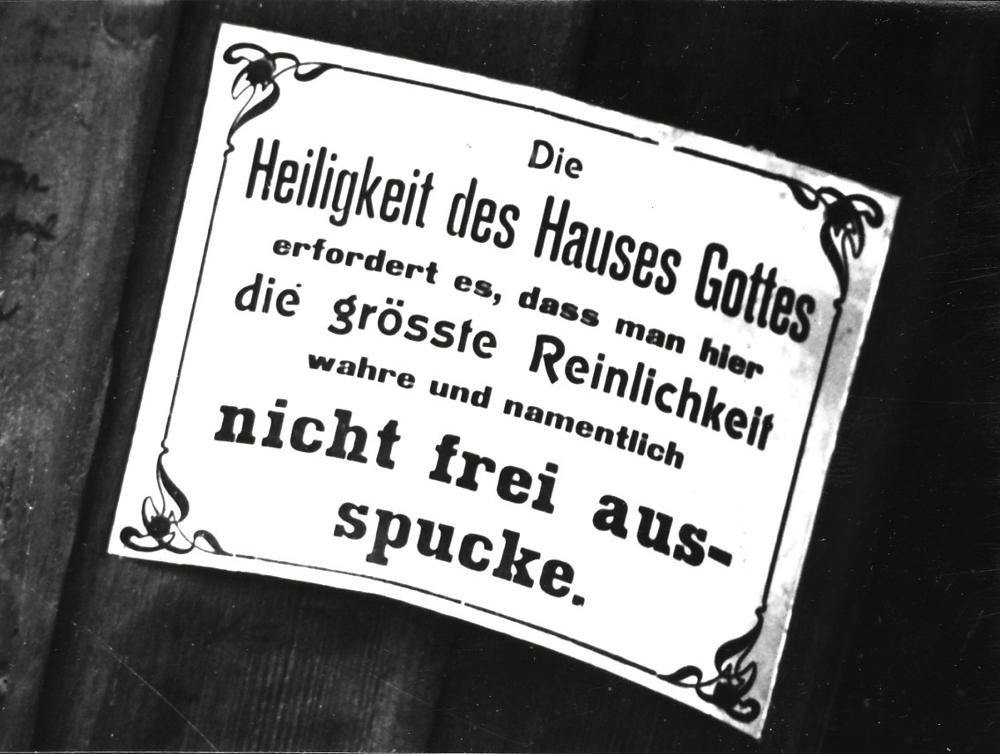
The small observations are especially telling. A sign in a church calls for cleanliness and explicitly forbids spitting. Such pictures are not taken because they are beautiful. They are taken because they surprise. They are small visual notes: this was strange, this was amusing, this was different.
Luis Mitrovic Balbontin Collection
The 1930s: Cultural Journey and Dictatorship
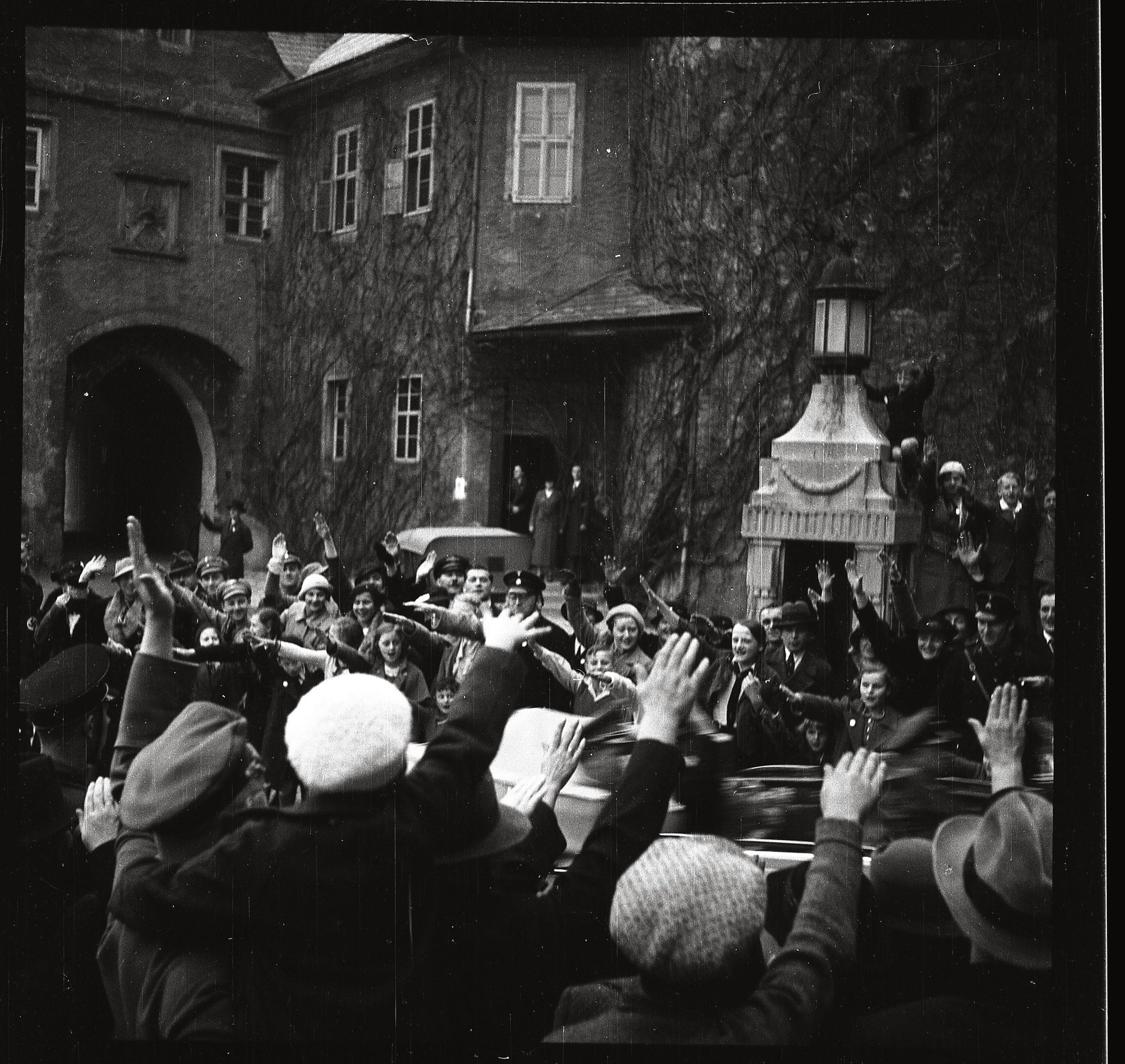
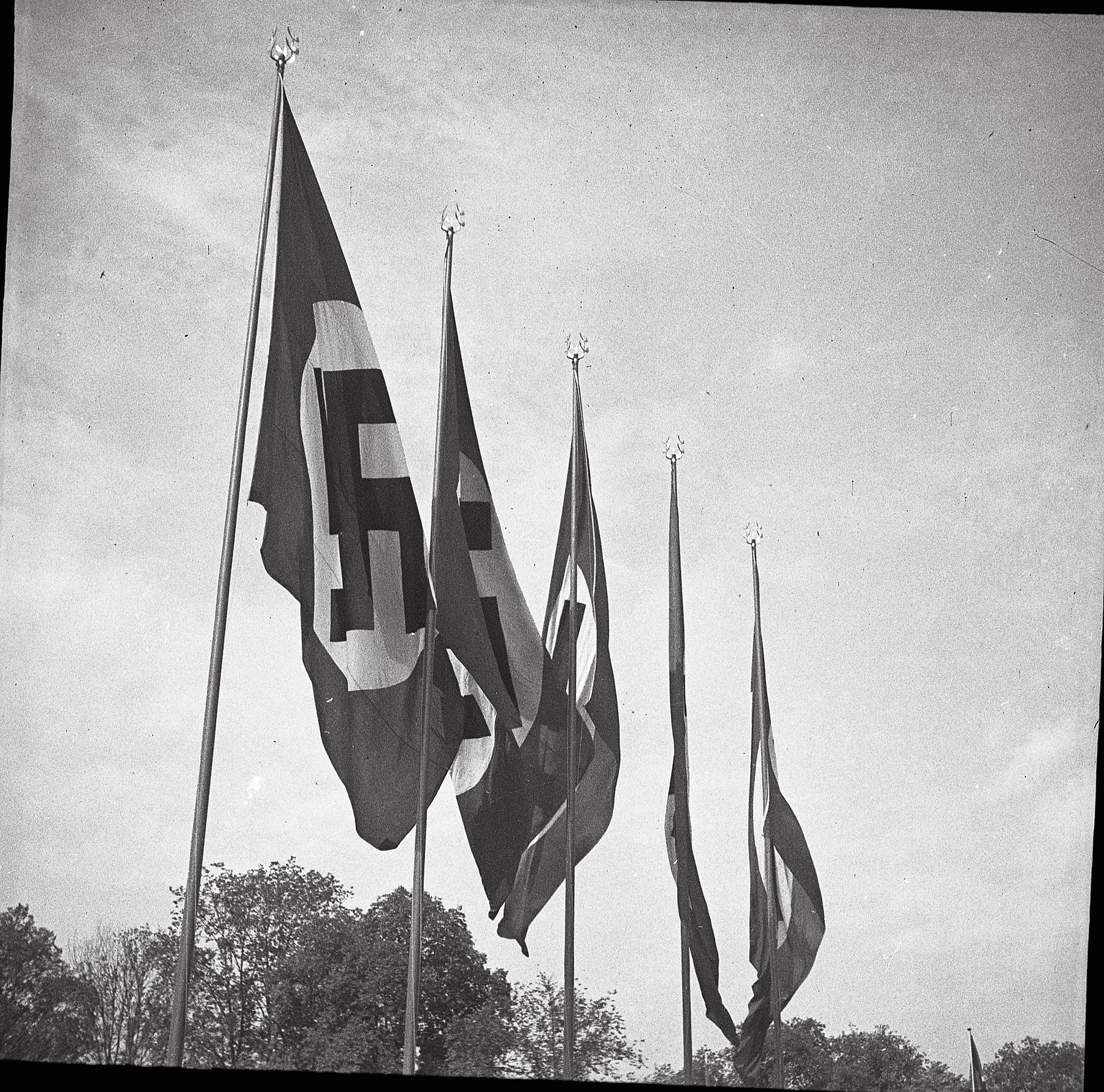
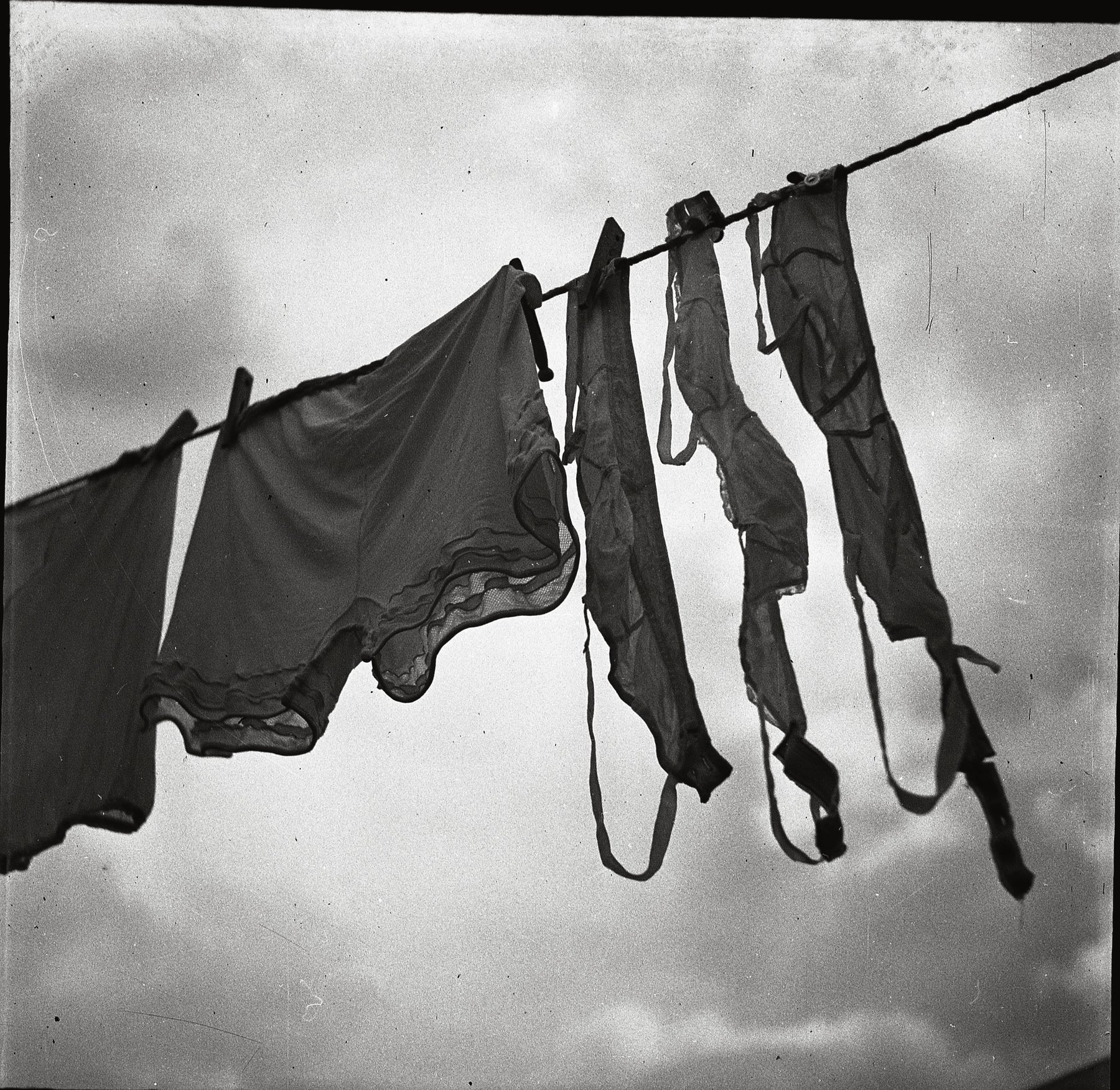
The photographs by Luis Mitrovic Balbontin from the 1930s create a particularly dense impression. Weimar, the Goethe House, parks, churches, museums, sculptures, medieval towns and river landscapes show a Germany of culture and education. But beside this stands another image of the period. One photograph is titled "Arquitectura Dictatorial" and shows monumental, severe architecture: a view of the NSDAP Führerbau and one of the so-called Temples of Honour, built during the Nazi period. Other photographs show flags with swastika symbols, captured almost incidentally, like laundry on a line elsewhere. Crowds, raised arms in the Hitler salute. Politics intrudes into the tourist gaze and shows how the transformation into the Nazi dictatorship shaped the everyday visual world.
Luis Mitrovic Balbontin Collection
Luis Mitrovic Balbontin Collection
Luis Mitrovic Balbontin Collection
Berlin, East and West
In the postwar period, there are images only from West Germany; the visit to the East was apparently limited to East Berlin, a typical tourist route. Yet the Berlin pictures again lead into another historical tension. In 1967, a man poses in front of Berlin Cathedral; beside it a grandstand has been erected, probably in preparation for the May Day rally, with political slogans and flags. In another picture he stands in West Berlin near the Soviet War Memorial in the Tiergarten on Straße des 17. Juni. The memorial lay in the British sector of West Berlin and, after the construction of the Wall, was secured by barriers and barbed wire.
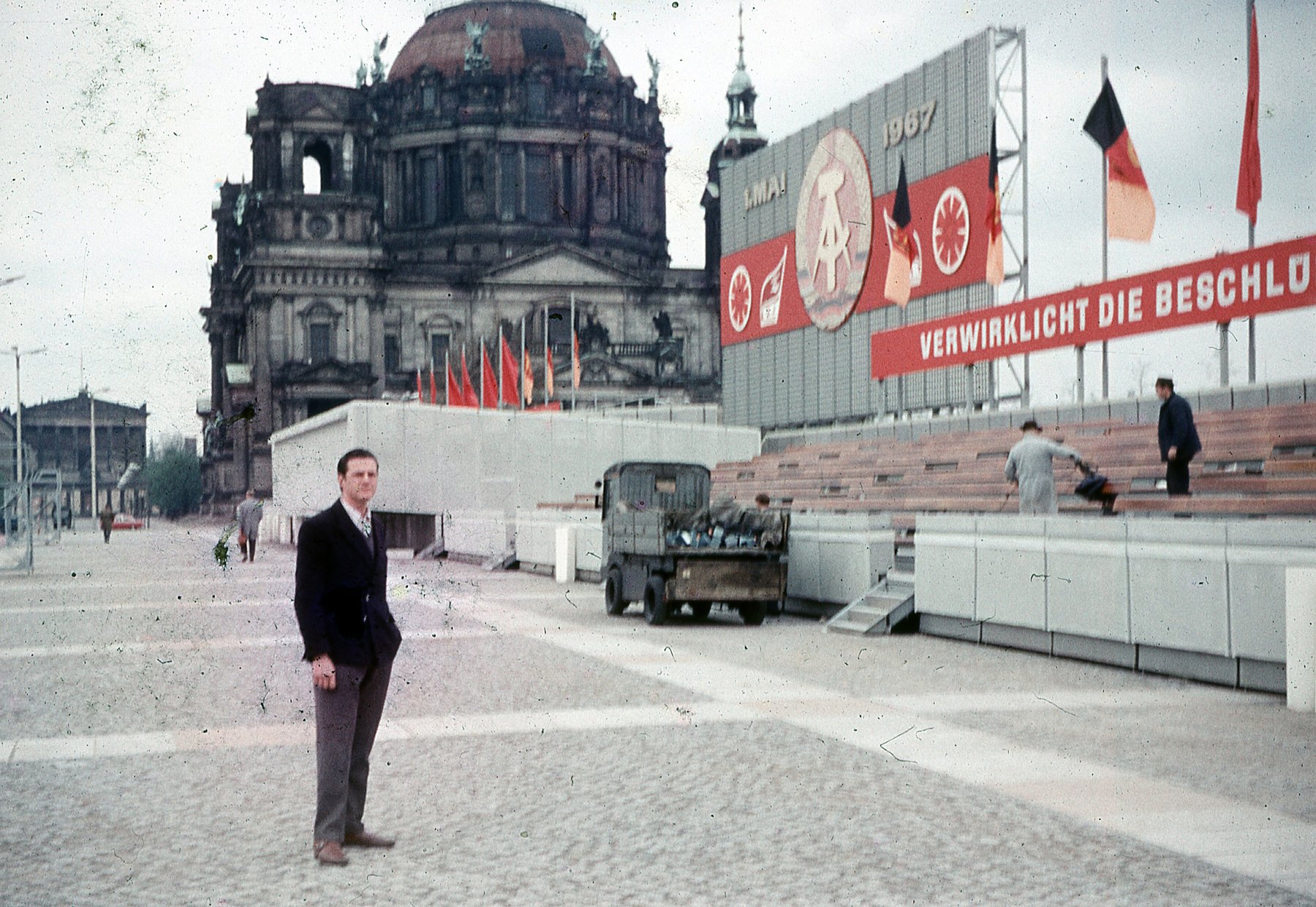
Francisco Ariztia Fernández Collection
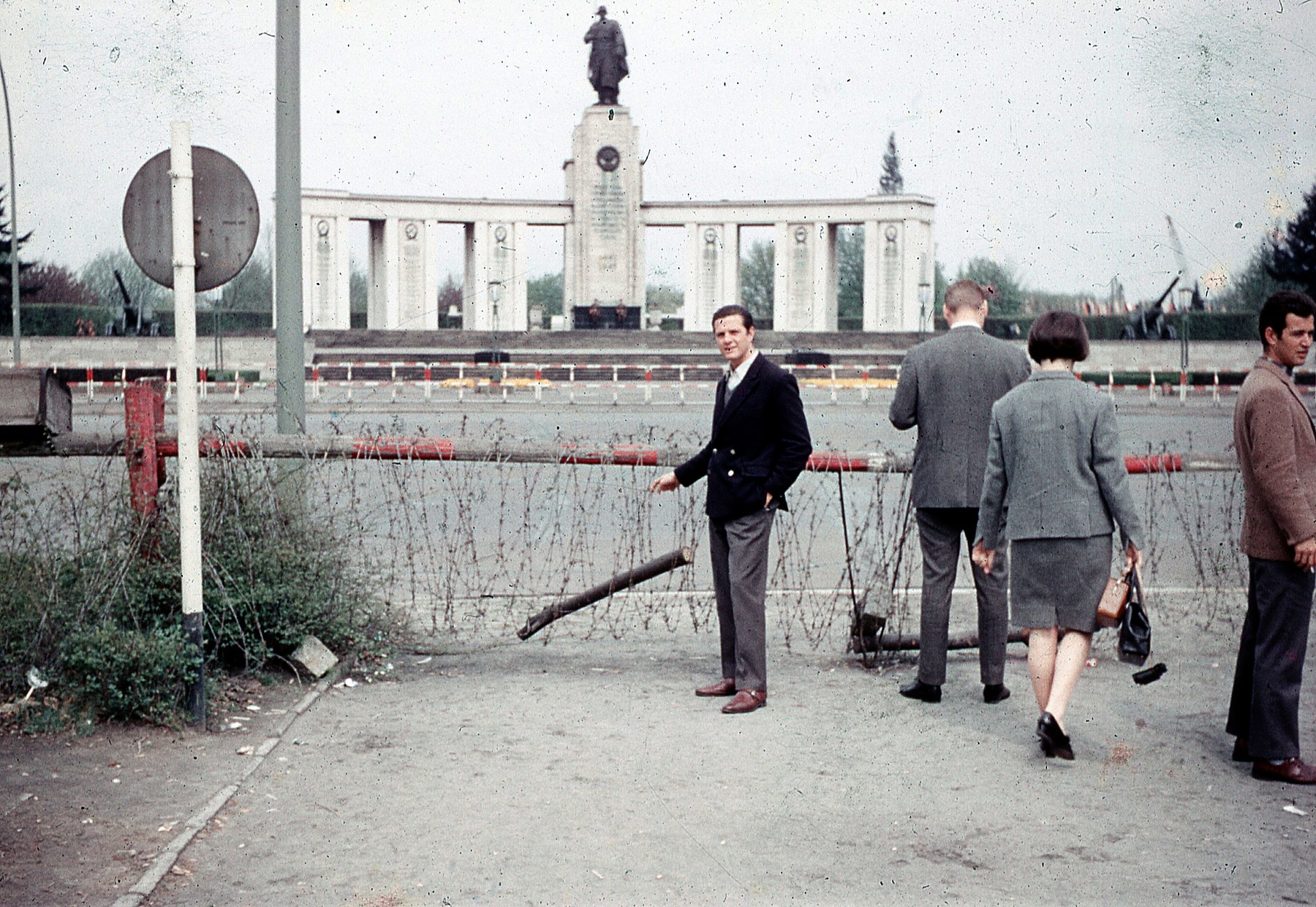
Francisco Ariztia Fernández Collection
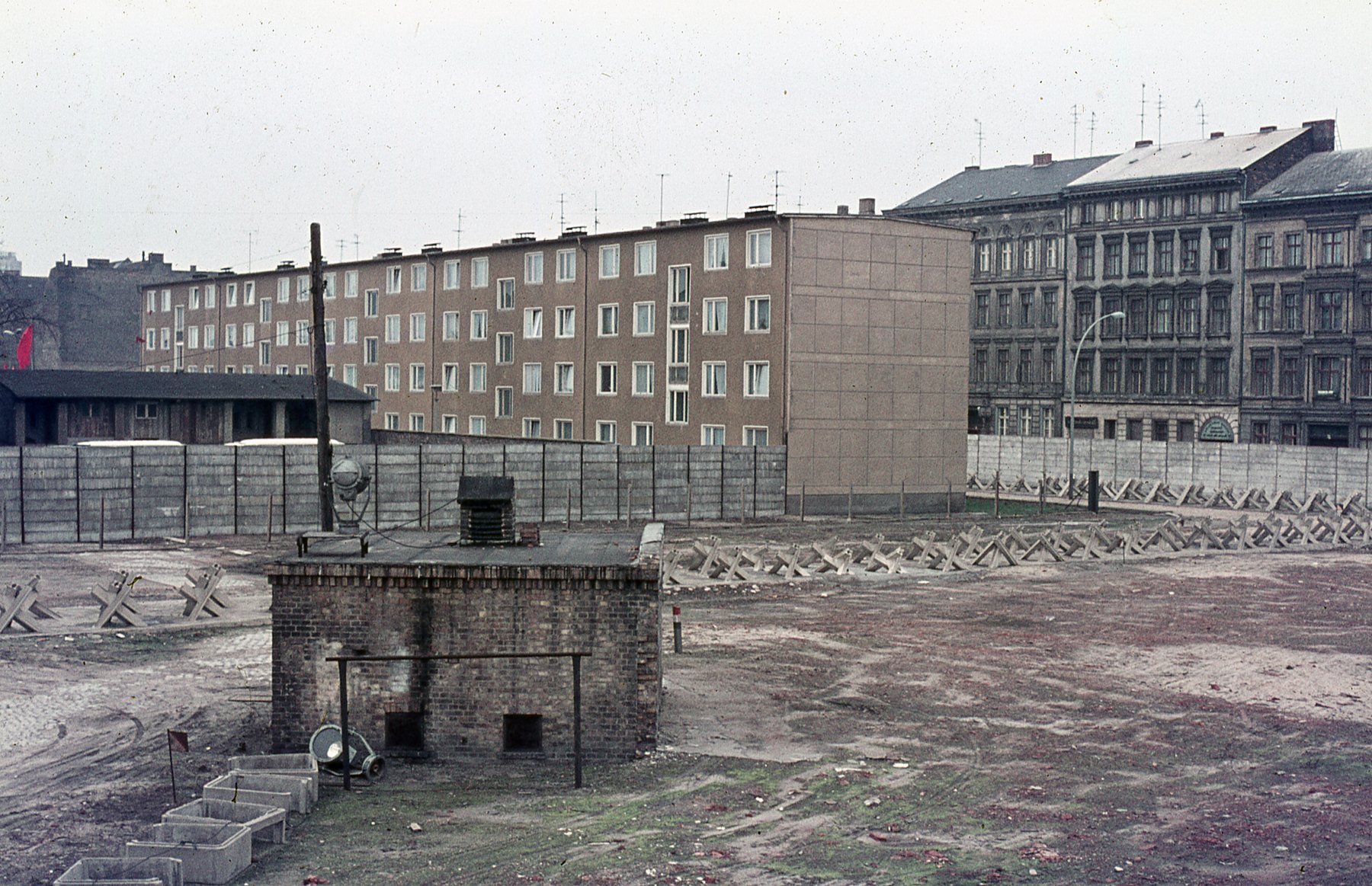
Other photographs show war ruins: burnt-out or half-demolished houses directly beside a broad street, while modern traffic passes in front of them. Other images show border or restricted zones with the Wall, cleared ground, tank barriers or construction work in East Berlin, including near Alexanderplatz.
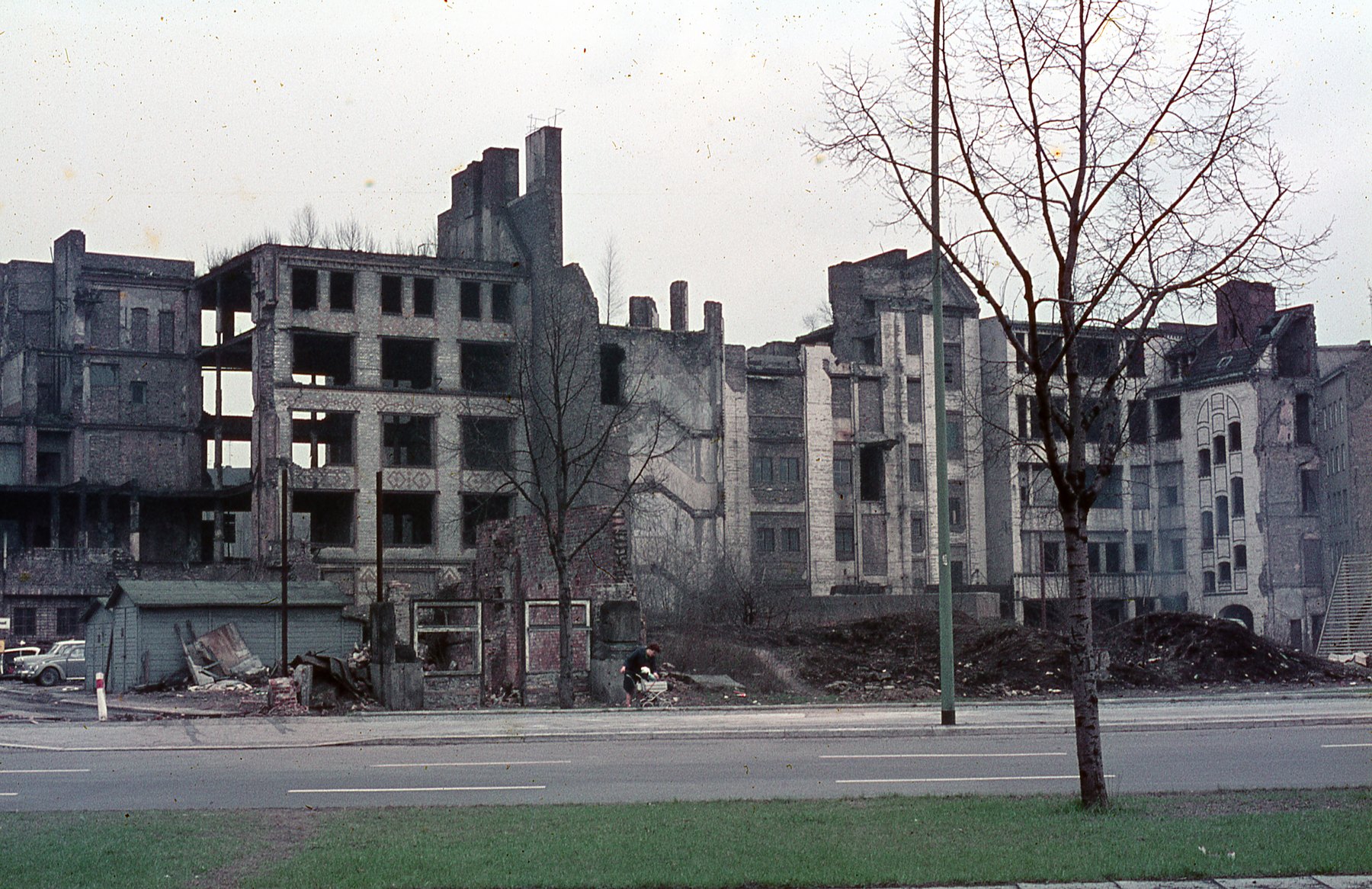
Enrique Zorrilla Concha Collection
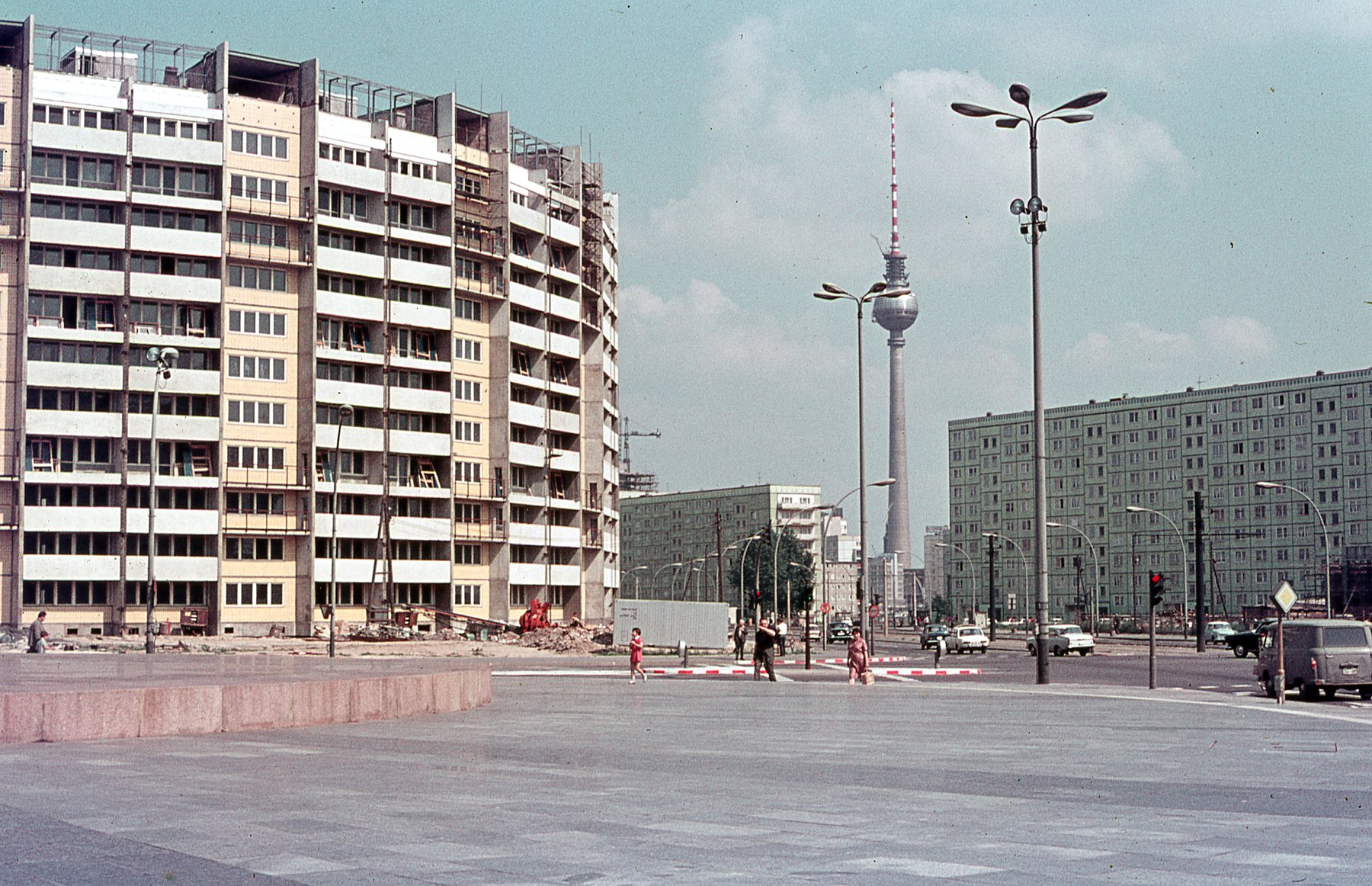
Enrique Zorrilla Concha Collection
Enrique Zorrilla Concha Collection
Many Germanys at Once
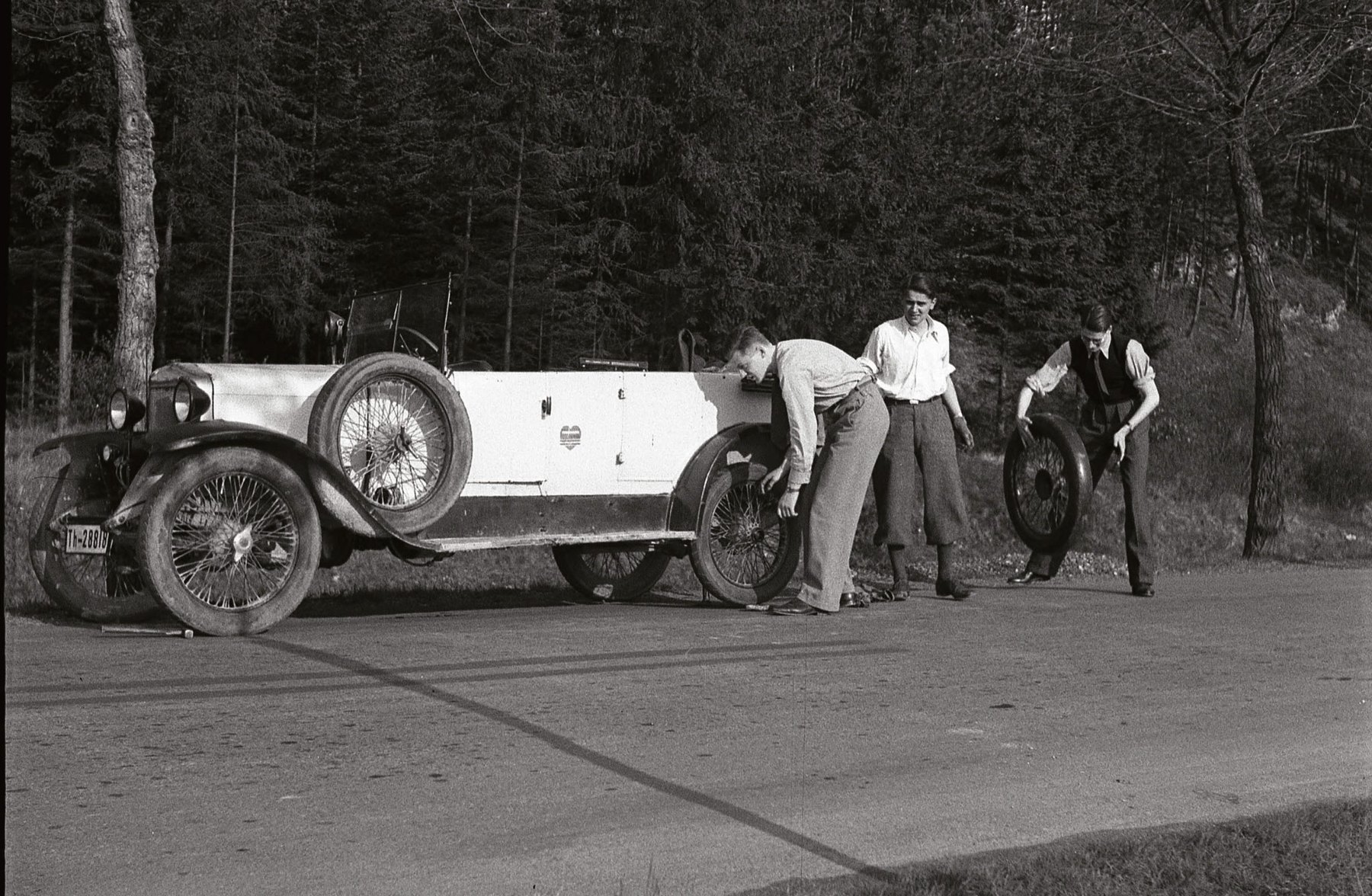
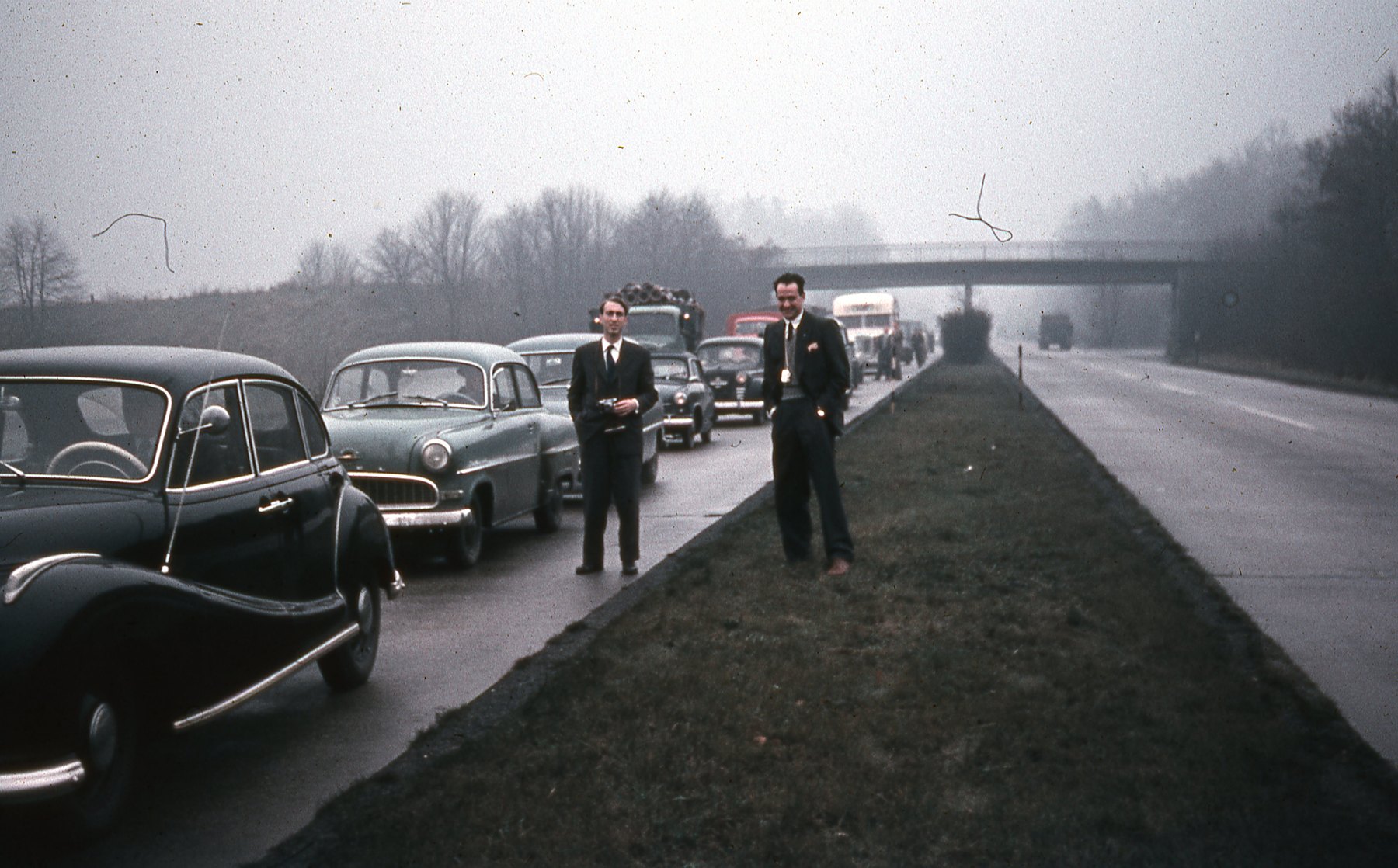
Even if many pictures first seem ordinary, show an expected image of Germany and are technically imperfect, they open a direct view in which history can be found. The collection shows many facets of Germany: the romantic Germany of castles, cathedrals and half-timbered houses; the technical and modern Germany of harbours, ships and industrial sites; the everyday Germany of building sites, streets, breakdowns and traffic jams. And it shows a political Germany: the Nazi period of the 1930s and the Cold War, which repeatedly intrude into the tourist gaze.
Luis Mitrovic Balbontin Collection
Family Hernández Nieto Collection
The Chilean initiative Enterreno Community, from which these holdings come, preserves the estates of amateur photographers. Such work rescues images that could easily disappear because for a long time hardly anyone assigned them special value. Yet precisely within them lies another form of writing history: not the history of state visits, treaties and headlines, but the history of what people saw, kept and considered worth remembering.
Perhaps the most important thing about this collection is this: it shows Germany not from German memory, but from the amazement of others - from the eyes of visitors who came from outside.