Historicbits
drachenfels007


Quick Photography at the Drachenfels


A Business Model

drachenfels001

The Drachenfels
in the Siebengebirge, known for the legend of Siegfried and the ruined Drachenfels castle, is among the best-known excursion destinations on the Middle Rhine. Views over the Rhine valley and the beauty of the surroundings attracted visitors from an early date. Less well known, but no less fascinating, is the history of quick photography at the Drachenfels, an important part of tourist culture since the late nineteenth century.
drachenfels003
drachenfels006
drachenfels005
drachenfels004


The Beginnings of Quick Photography
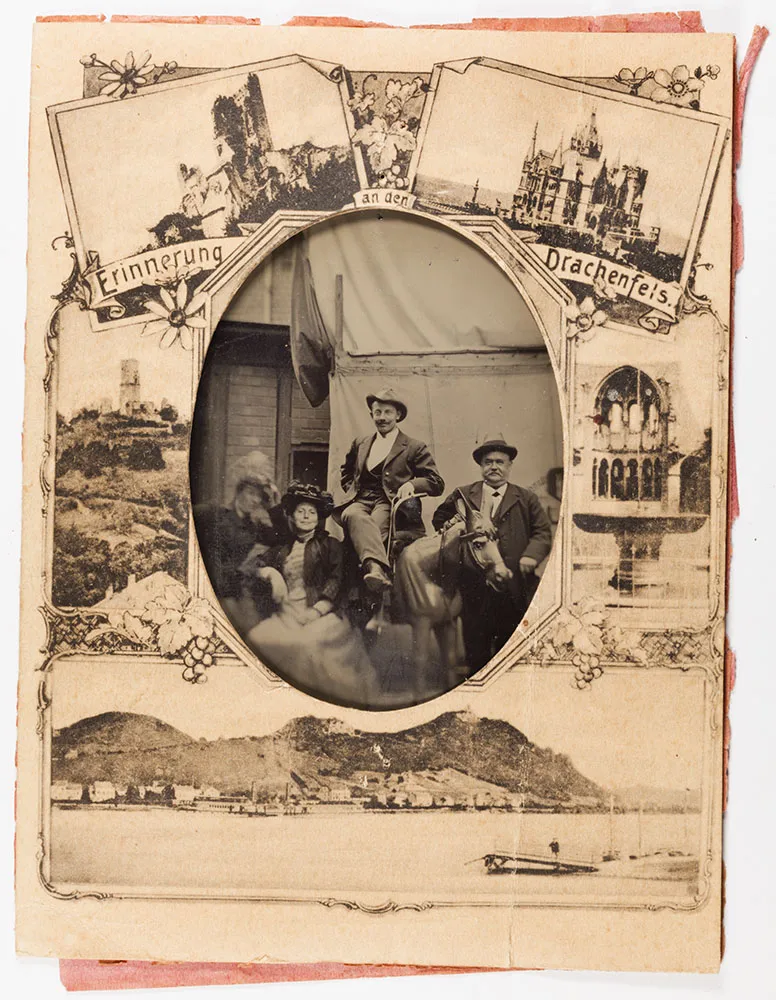
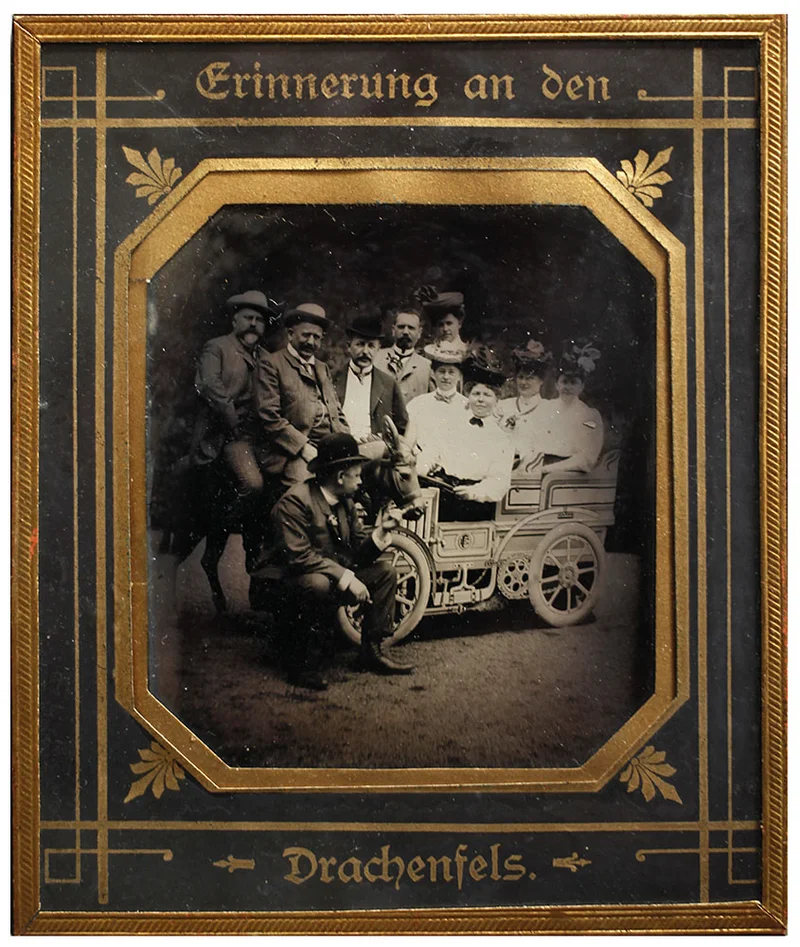
Quick photography at the Drachenfels began in 1881, when the photographer Eduard Fischer established a mobile studio on the summit. Fischer recognised the potential of photographing visitors against the imposing castle ruins. The timing was right: emerging mass tourism required new attractions and souvenirs. Quick photography became a flourishing business, offering visitors both an immediate reminder of their outing and an opportunity for humorous, creative self-presentation.
By the 1930s, numerous photographic stalls had opened on the mountain. Each offered its own, often imaginative backdrops, allowing visitors to enter unusual scenarios. These stalls exemplified the commercial use of photography in the leisure market and reflected contemporary tastes.
drachenfels009drachenfels28
drachenfels31
drachenfels10


The Technology of Quick Photography
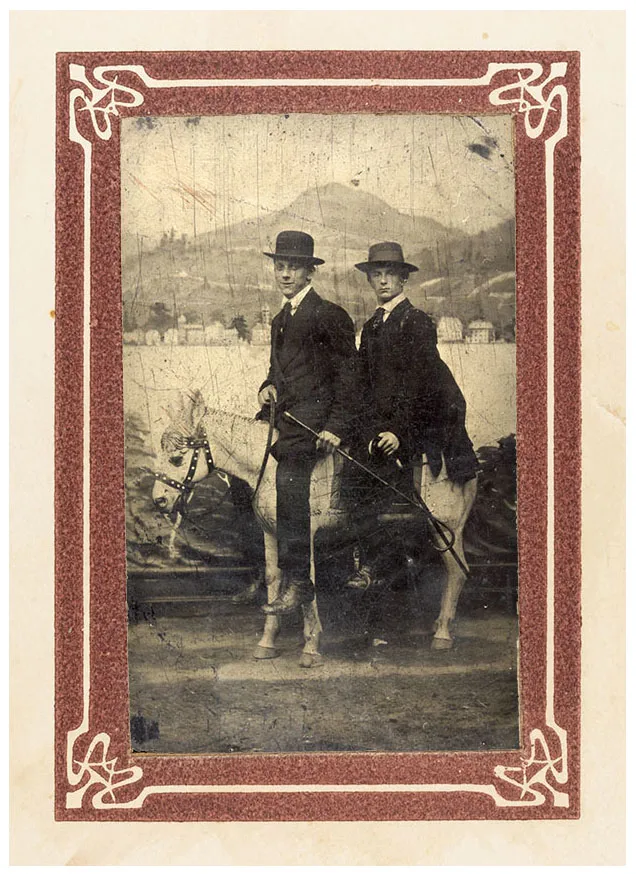
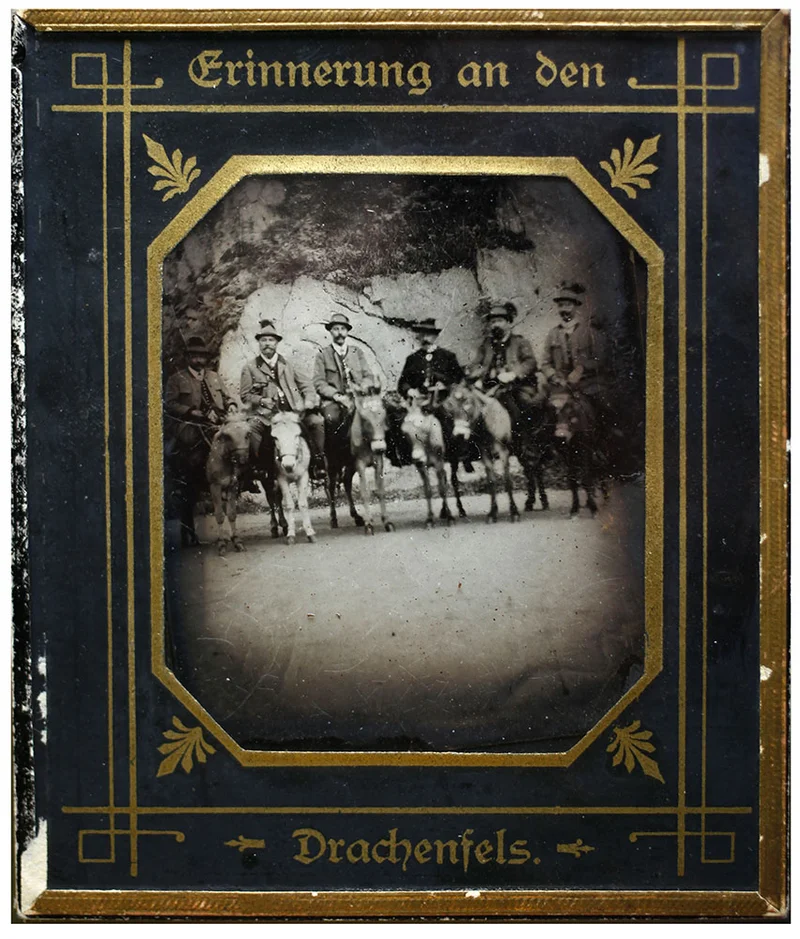
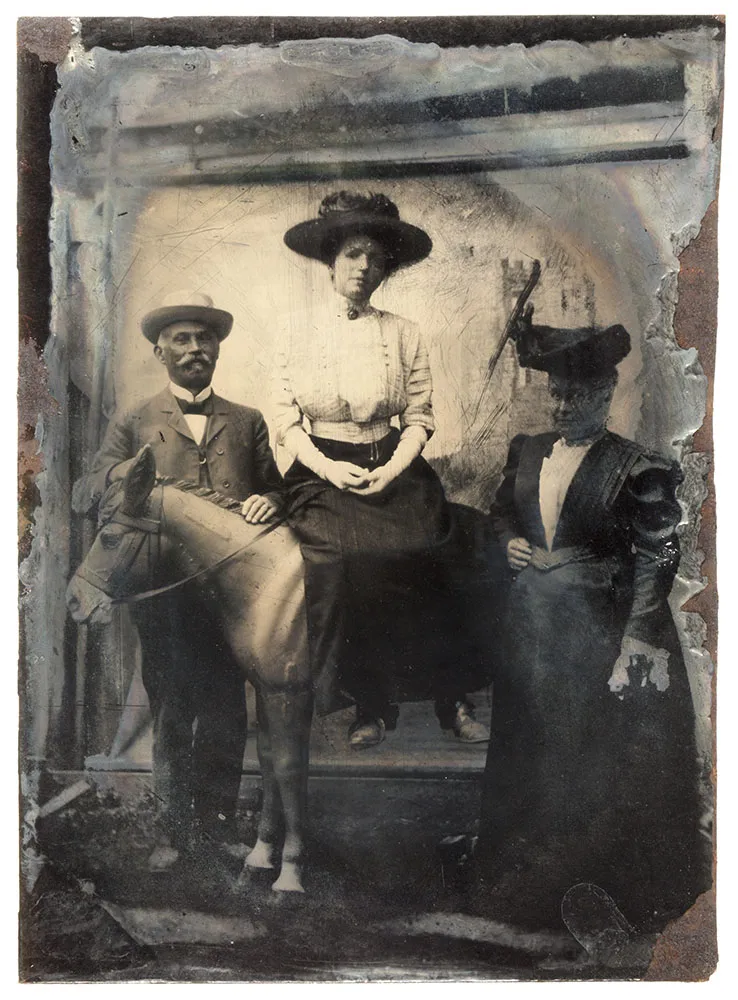
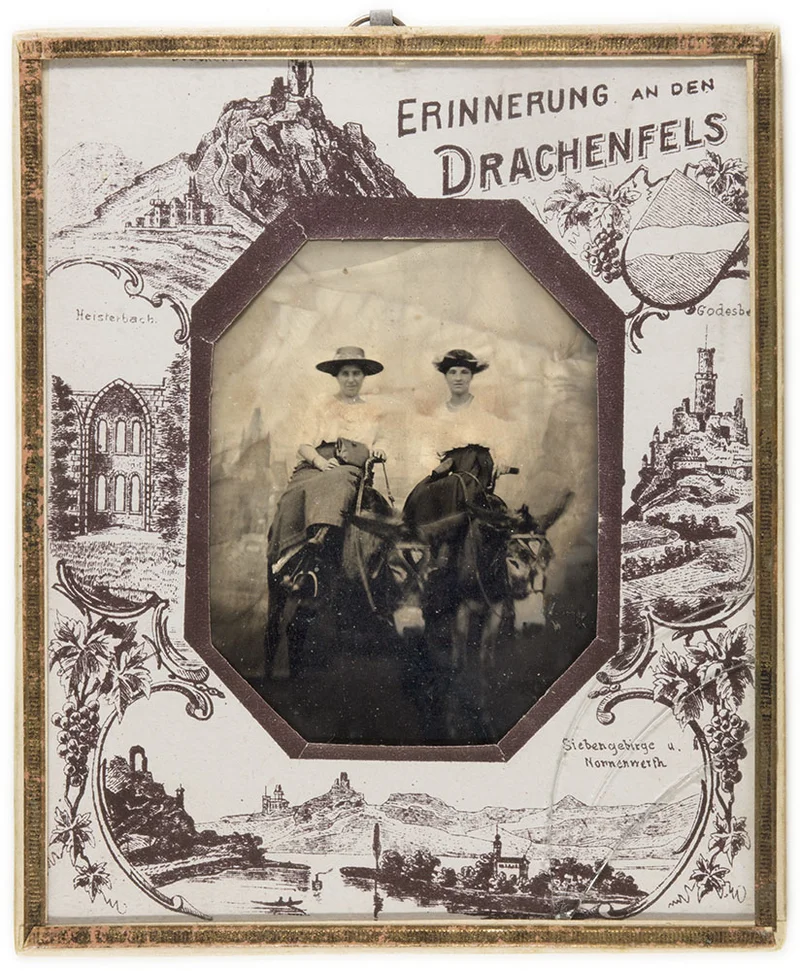
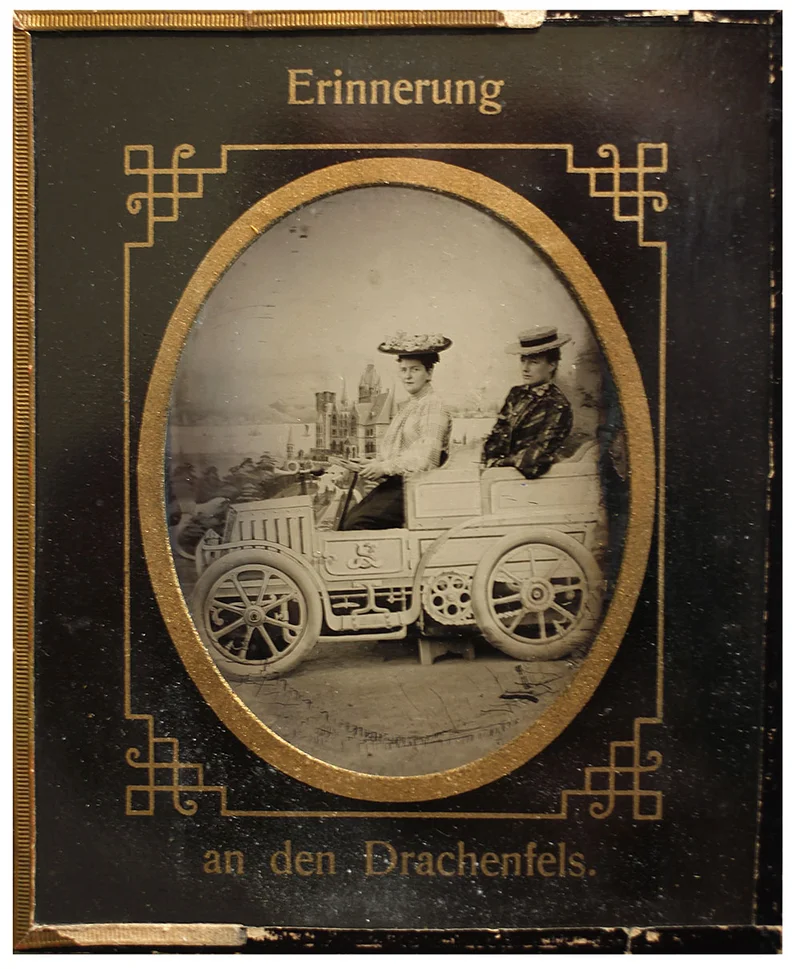
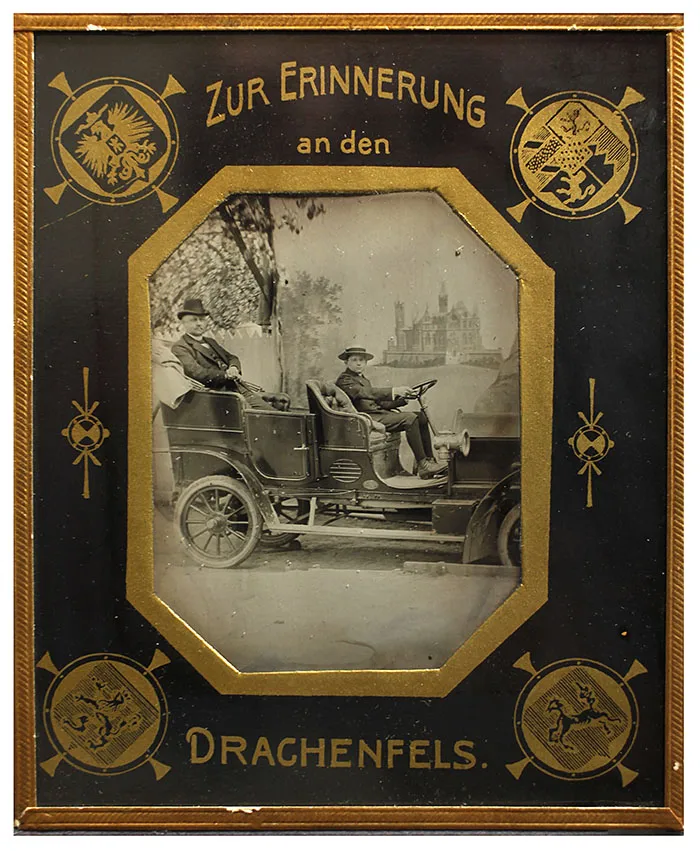
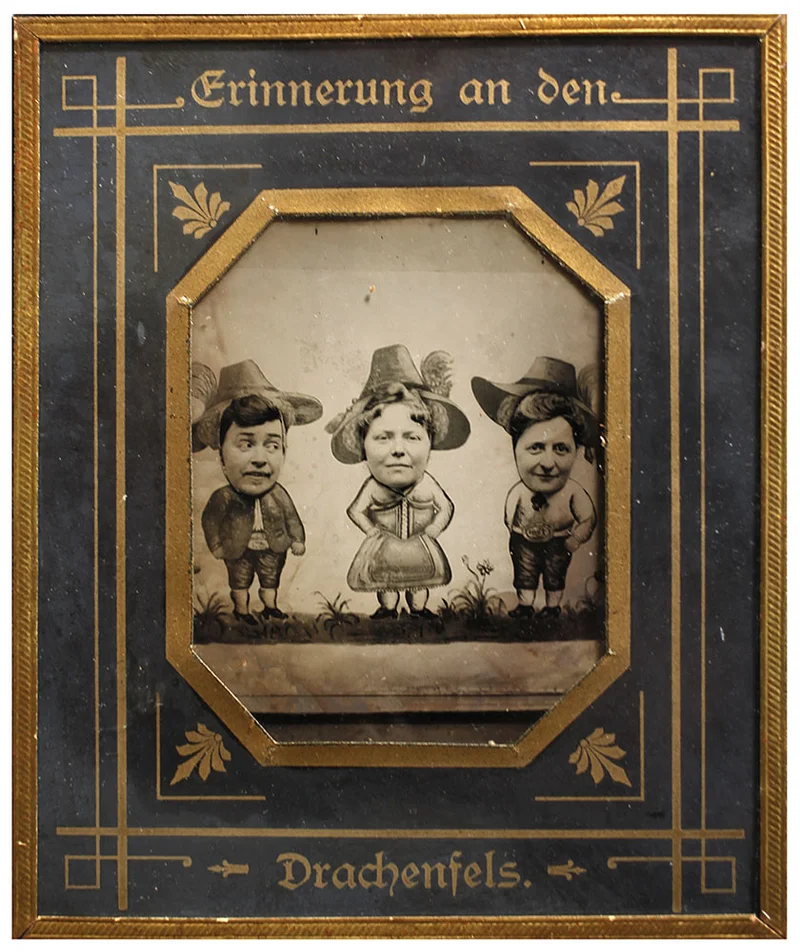
The original process used in quick photography was the tintype. The image was exposed directly onto a lacquered iron plate. This was ideal for producing quick, inexpensive photographs for the mass tourist market. The plates were robust and immediately framed behind glass, allowing visitors to take their souvenir away.
drachenfels12
drachenfels33
drachenfels13drachenfels32
 

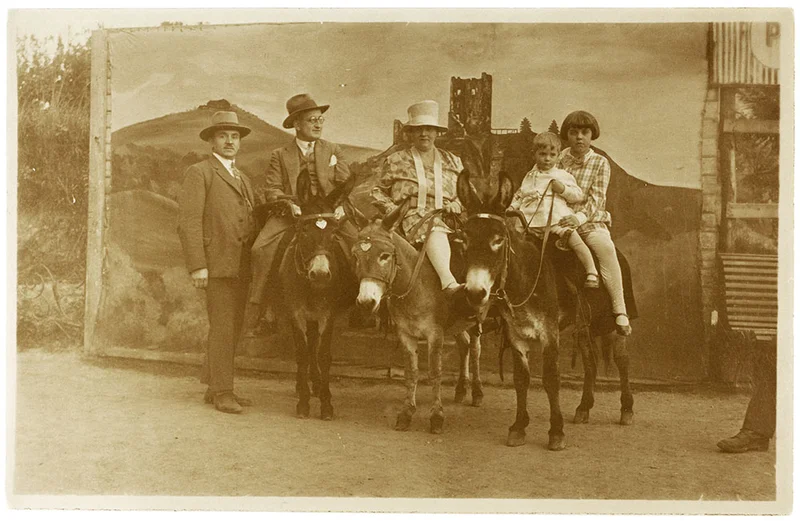
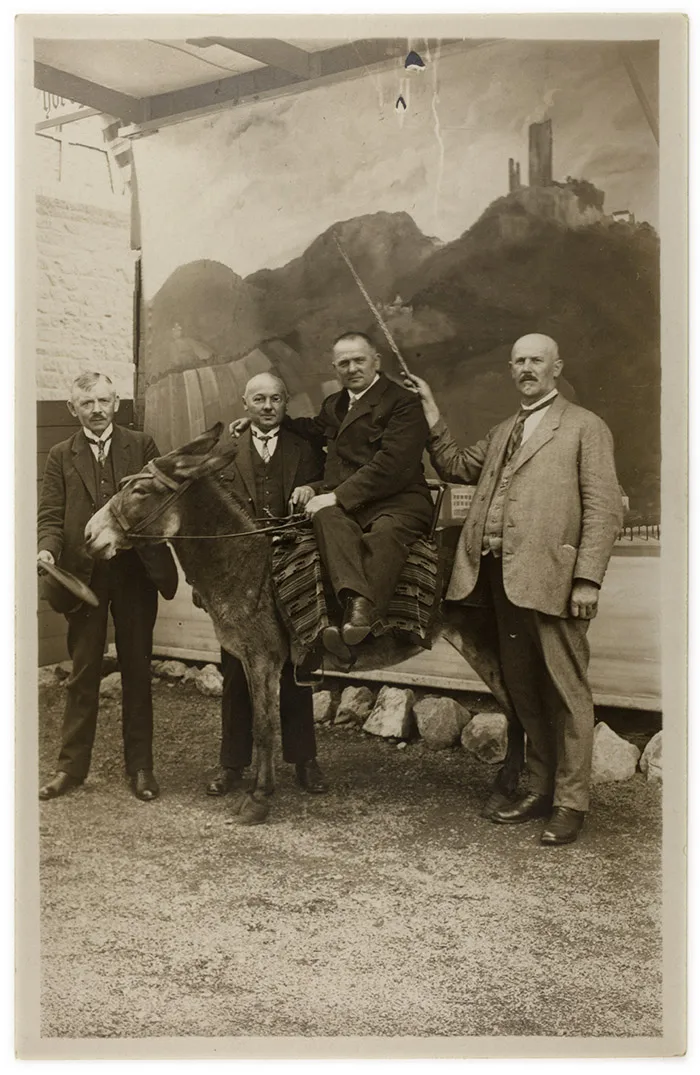
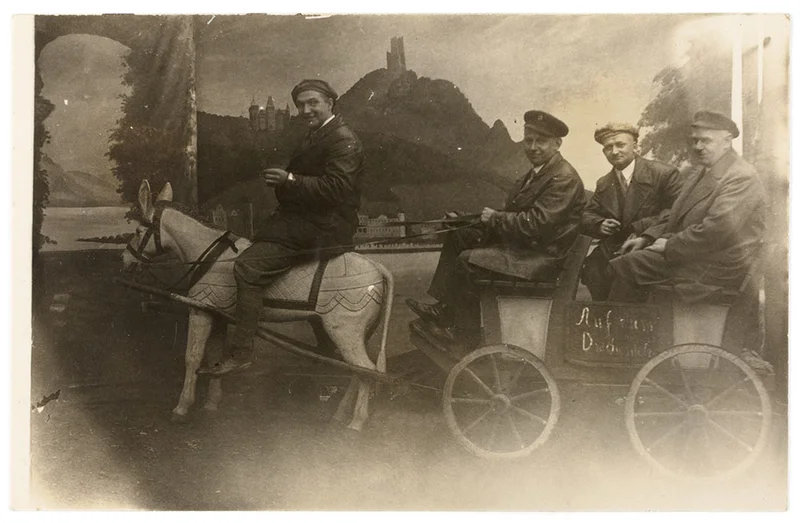
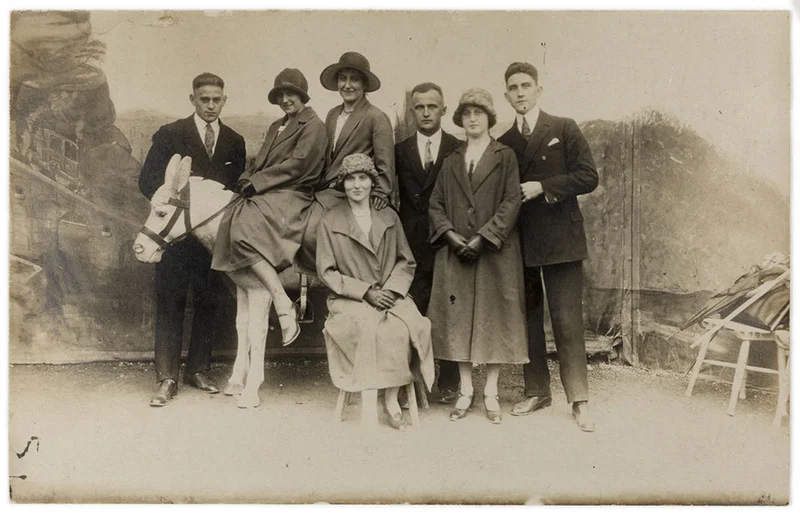
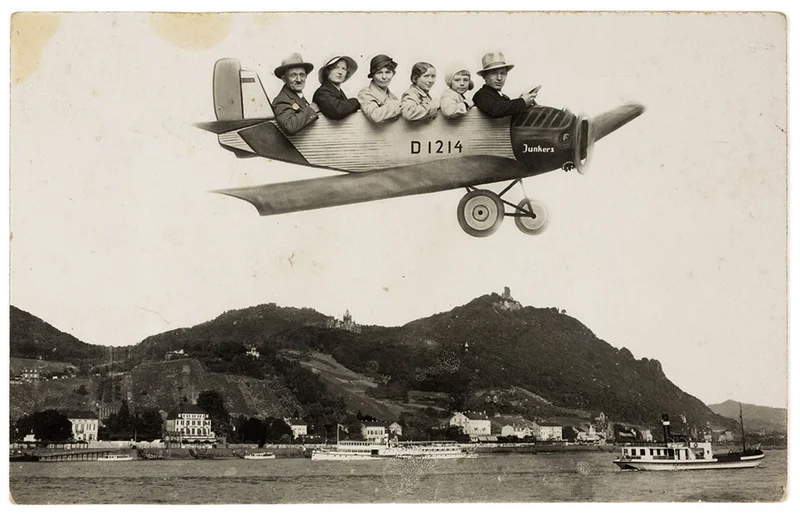
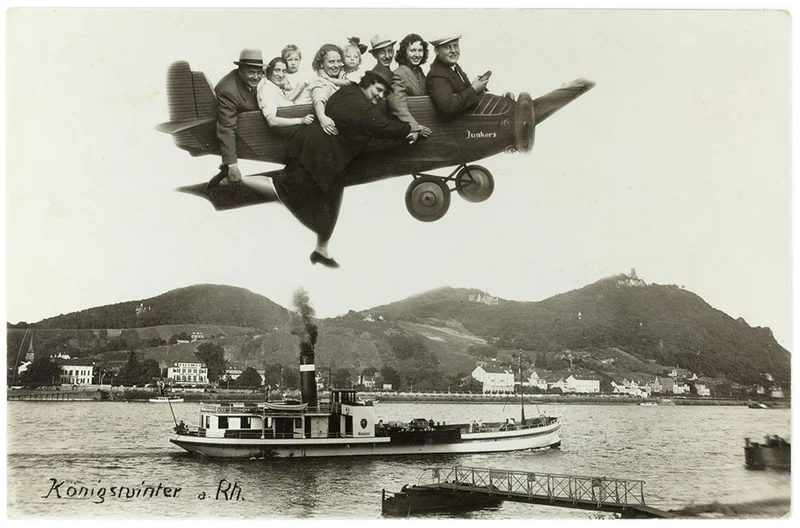
Over time, however, paper prints in postcard format became established. These small prints, measuring about 9 × 14 cm, were more practical and easier to handle and post. They entered family albums or were sent as souvenirs to friends and relatives. Their popularity continued for decades, and examples can still be found in many family photograph albums.
drachenfels11
drachenfels19drachenfels16
drachenfels26

The Subjects
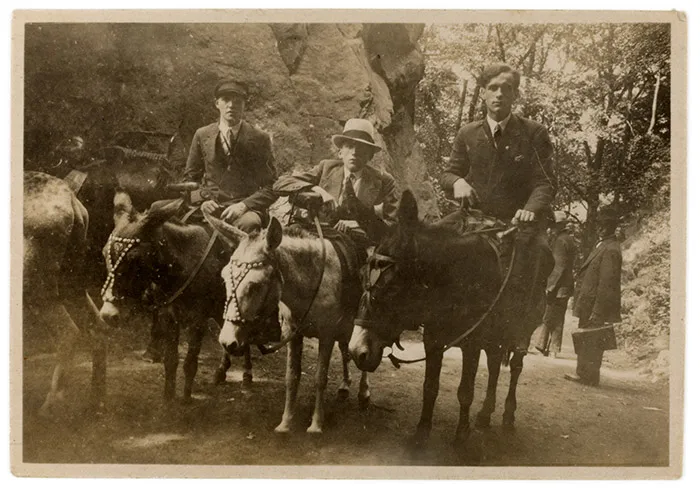
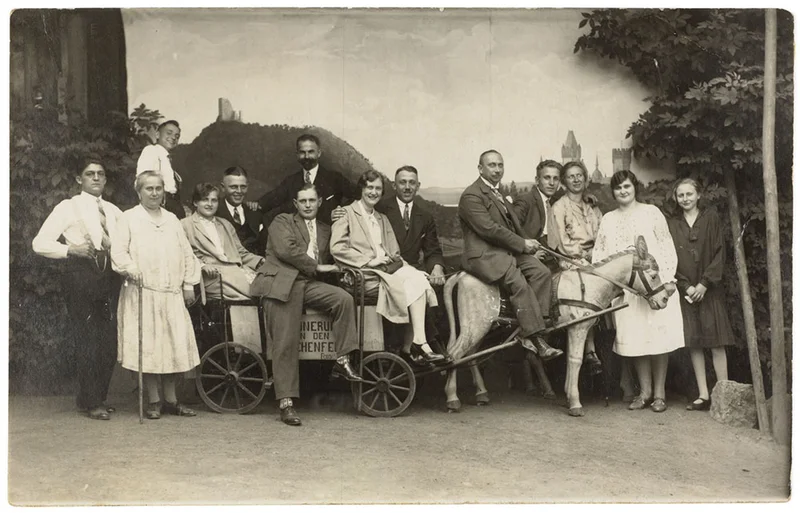
Riding a donkey was once a popular way of ascending the Drachenfels. Early photographs show visitors on the way up; later pictures were made before painted scenery. As photographing a live donkey was unpredictable, artificial donkeys soon allowed visitors to pose as they pleased.

Subjects adapted to changing tastes. Car backdrops appeared alongside comic pictures. This form of tourist photography, taking visitors’ portraits at excursion destinations and selling the results directly, was common well beyond the Drachenfels. It continues in amusement parks and tourist attractions today.

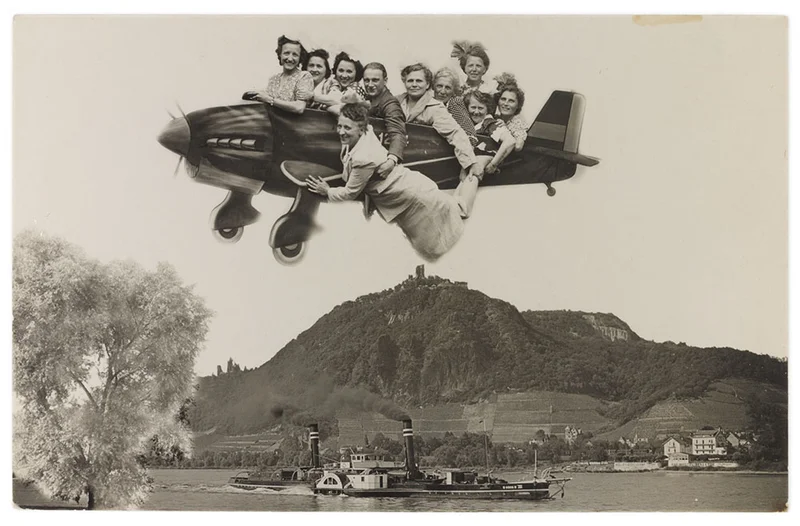
Similar scenes were staged elsewhere. Soldiers posing before aircraft backdrops, for instance, were popular at military locations. This kind of imaginary ‘flight’ eventually became a hallmark of Drachenfels quick photography: fanciful sightseeing trips in a biplane, corrugated-metal Junkers aircraft, jet or even a helicopter.


drachenfels15
drachenfels kulisse 2 Amateur photographs of the aircraft backdrop at the Drachenfels

The Kern Family and Creative Staging

The Kern family played a central role in this history. Johannes Oster, originally a tailor, founded the family business around 1900. It soon became a leading provider of quick photography at the Drachenfels. Oster’s son-in-law Hans Kern, and later Hans’s son Richard Kern, continued the business and introduced creative approaches to staging.


drachenfels15 drachenfels27drchenfels21drachenfels20

Richard Kern was particularly known for his innovative backdropswhich he regularly changed to offer tourists new and exciting subjects. Particularly notable were the
special backdrops, especially those featuring aircraft, which he altered from season to season to surprise visitors with fresh subjects . Kern also used inventive double exposures, combining striking views of the Rhine valley and Drachenfels with other images. These artistic elements made the pictures distinctive and contributed substantially to their commercial success.

The spread of 35 mm cameras in the 1980s, however, brought a sharp decline in demand for professional tourist photographs. Visitors increasingly made their own pictures, rendering the business model obsolete. Richard Kern retired in 1989 as its last practitioner there, bringing the era of quick photography at the Drachenfels to an end.


drachenfels008
drachenfels-handkoloriert drachenfels24 drahchenfels22
drachenfels30

Cultural and Social Significance
Quick photography at the Drachenfels was more than a commercial business. It reflected contemporary leisure and popular culture. Tourism expanded enormously during the economic boom after the Second World War, and photographic stalls flourished. Visitors from the 1950s through the 1970s wanted humorous, often exaggerated portrayals. Photography allowed creative self-presentation that reflected the spirit and social conventions of the period.


drachenfels14drachenfels18 drachenfels23 drachenfels29

The Legacy of Quick Photography
These photographs are now more than nostalgic snapshots. They record changes in fashion, posture and expression and offer insights into twentieth-century social and political transformations: from the formal style of Imperial Germany through the individual freedom of the Weimar Republic to self-presentation under National Socialism and hopeful moments in the post-war years. They also show changes in tourism and leisure over the decades. Their importance as historical documents should not be underestimated: they offer a distinctive view of the cultural and social history of the past century.


Sources:
• Virtuelles Brückenhofmuseum Königswinter: Drachenfels: Schnellfotografie — virtuellesbrueckenhofmuseum.de
• Kölner Stadt-Anzeiger / Rundschau Online (various articles, 2015–2024)
• Siebengebirgsmuseum Königswinter: exhibition on quick photography


Further examples are available in this magazine as a PDF download:

pdf5

assets/stories/drachenfels/drachenfels.pdf


View the collection:
gehfilm