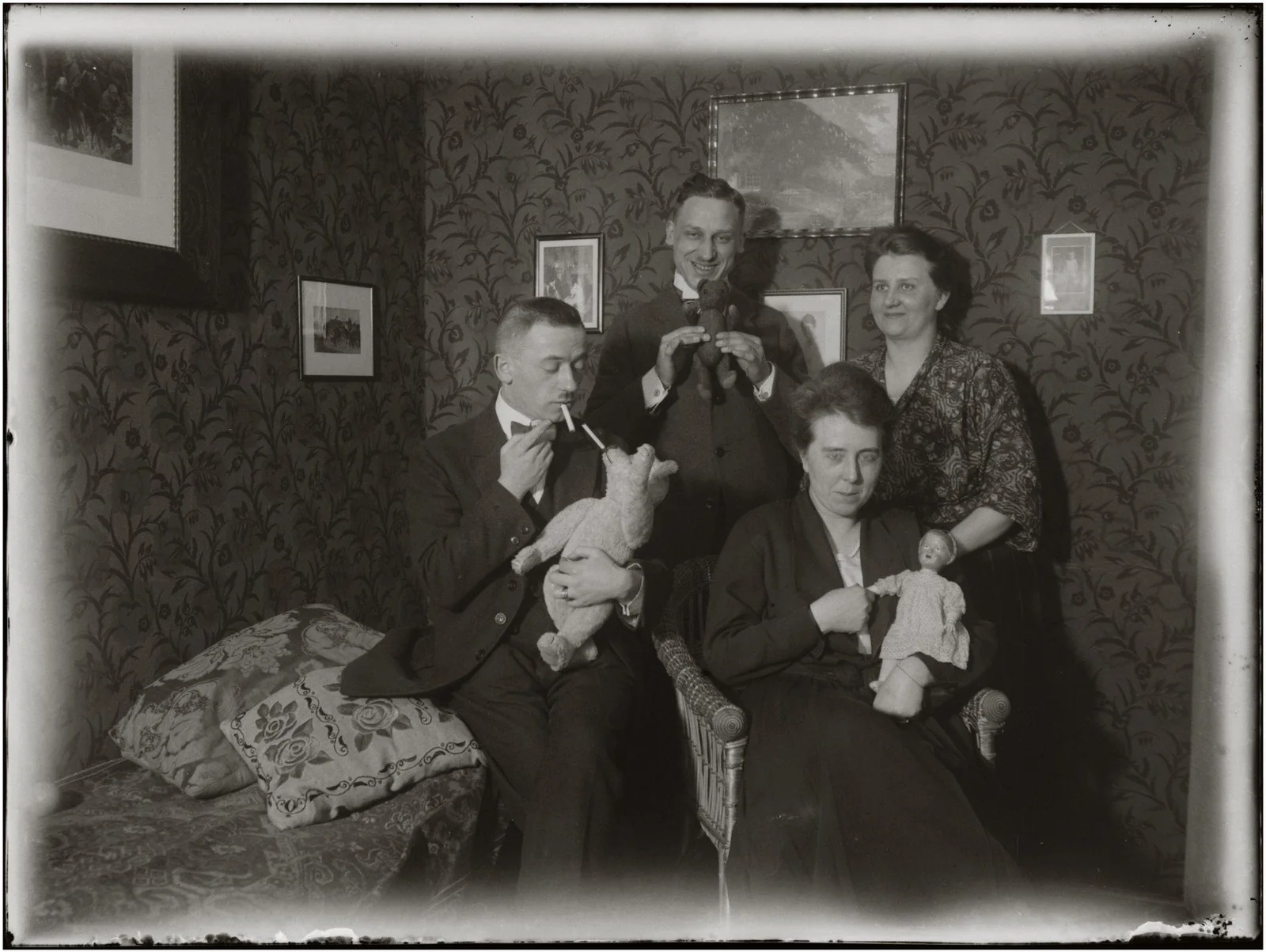
FOUR ADULTS HAVE gathered in a sitting room to be photographed. Two men and two women, carefully dressed, are surrounded by patterned wallpaper, framed pictures and the furnishings of a middle-class home.
But the sitters have devised something unusual. The men pose with teddy bears. One holds a small bear against his chest; the man seated beside him has a larger one on his lap. Both the bear and the man have cigarettes in their mouths. With a raised index finger, the seated man appears to be admonishing the toy. The woman in the armchair holds a doll, while the second woman stands behind her, smiling.
The photograph is a joke staged together. Those involved evidently enjoyed posing for this unusual group portrait. Its appeal lies in the contrast between formal clothing, sometimes solemn expressions and comic props.
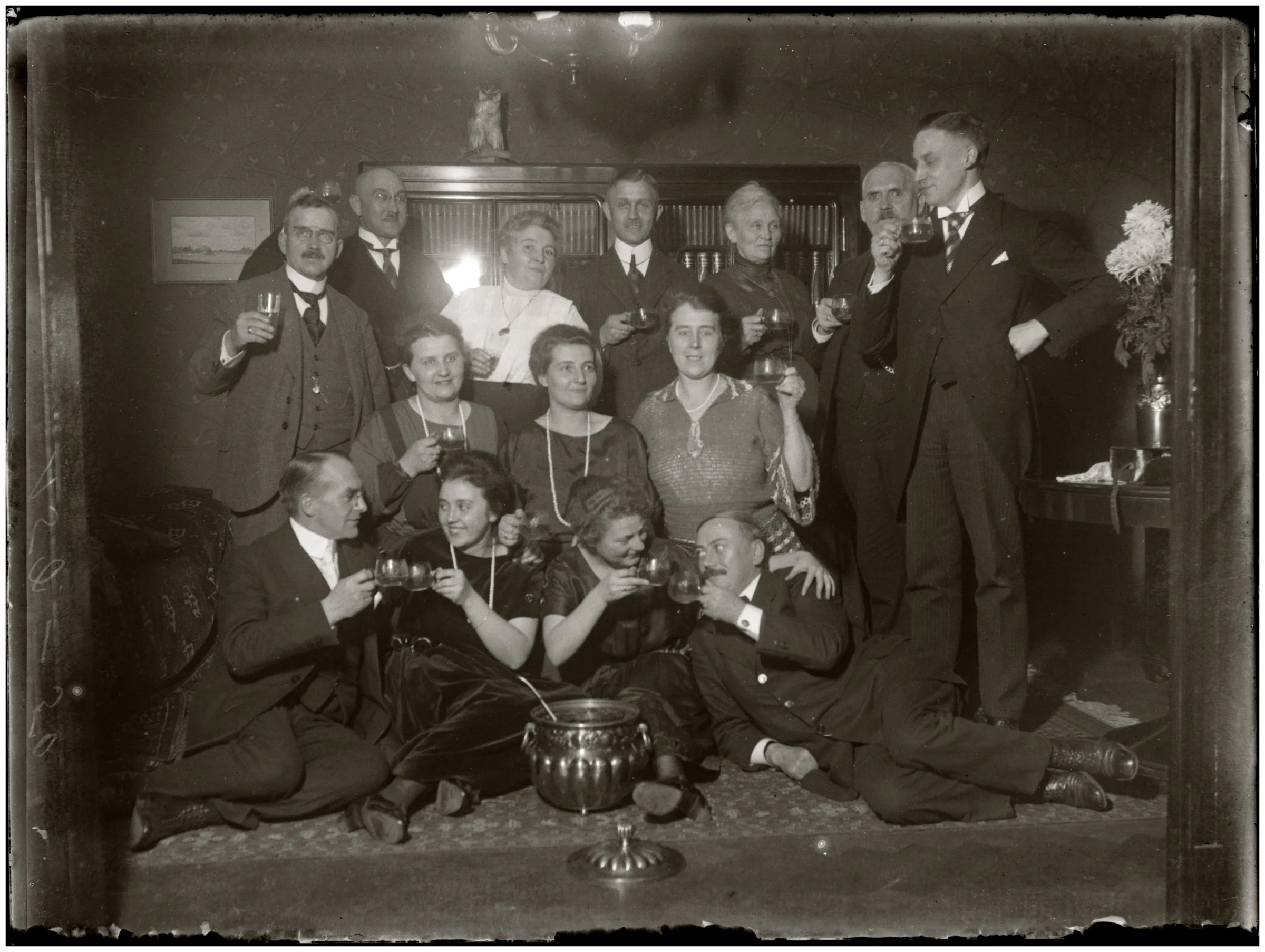
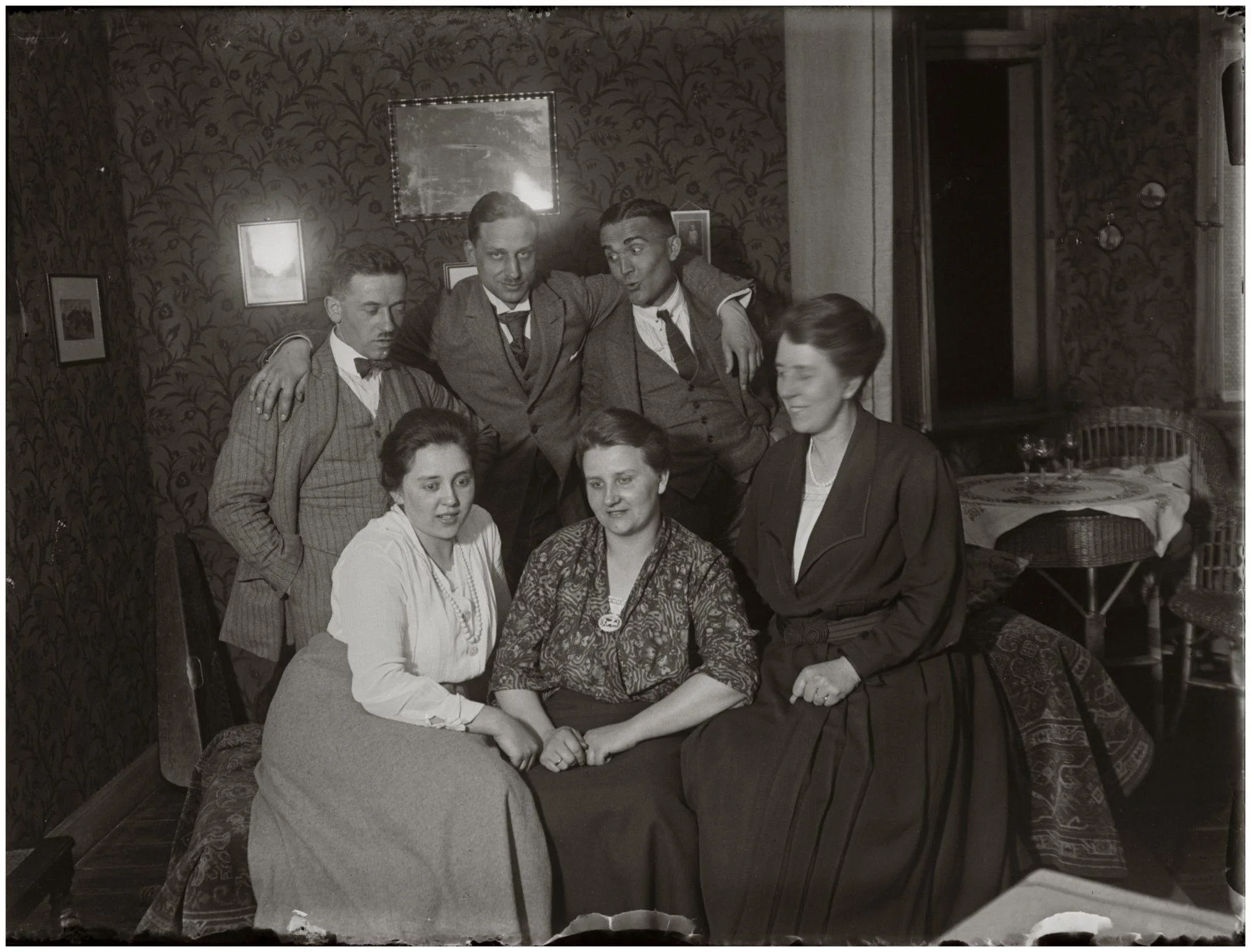
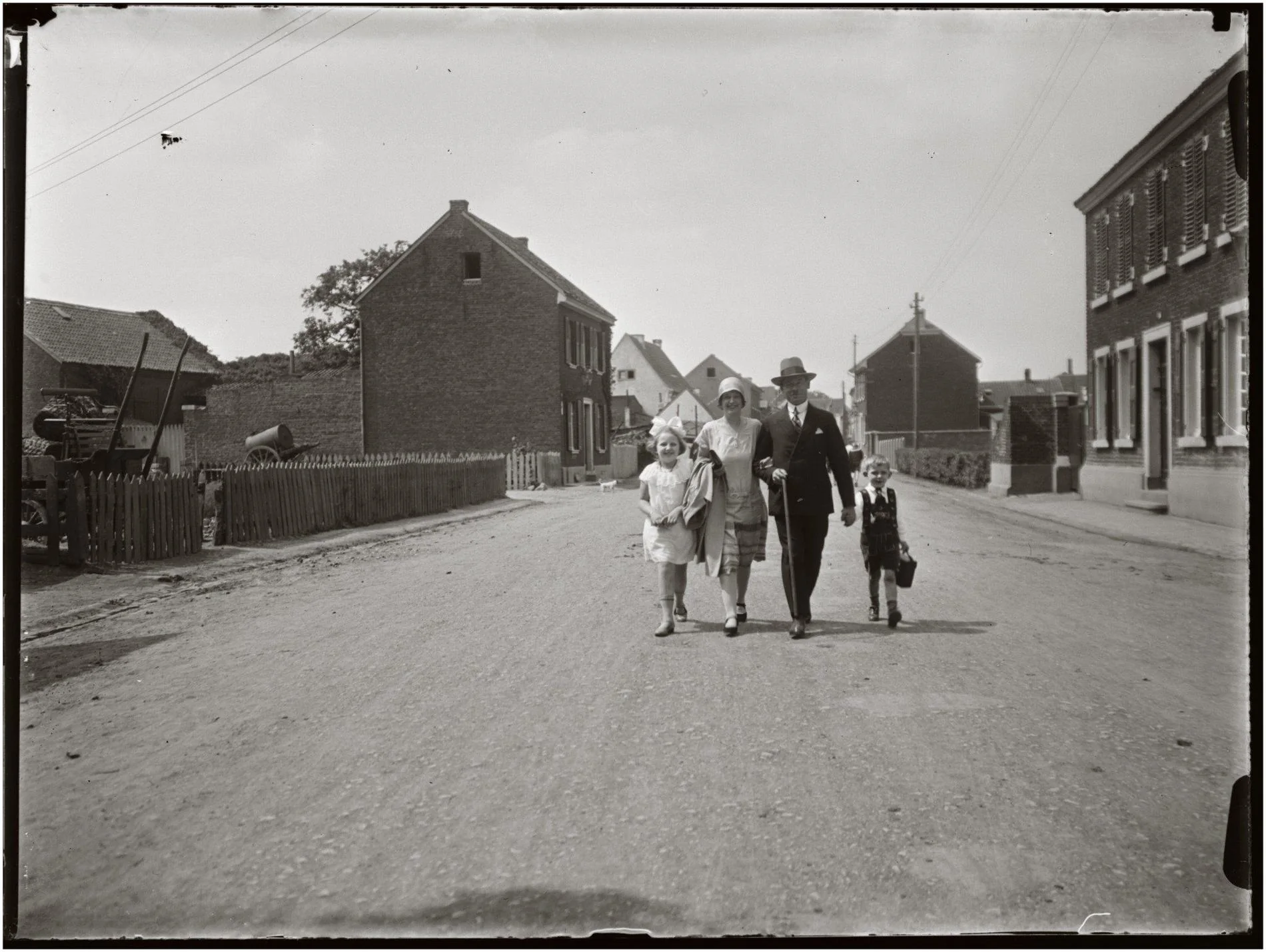
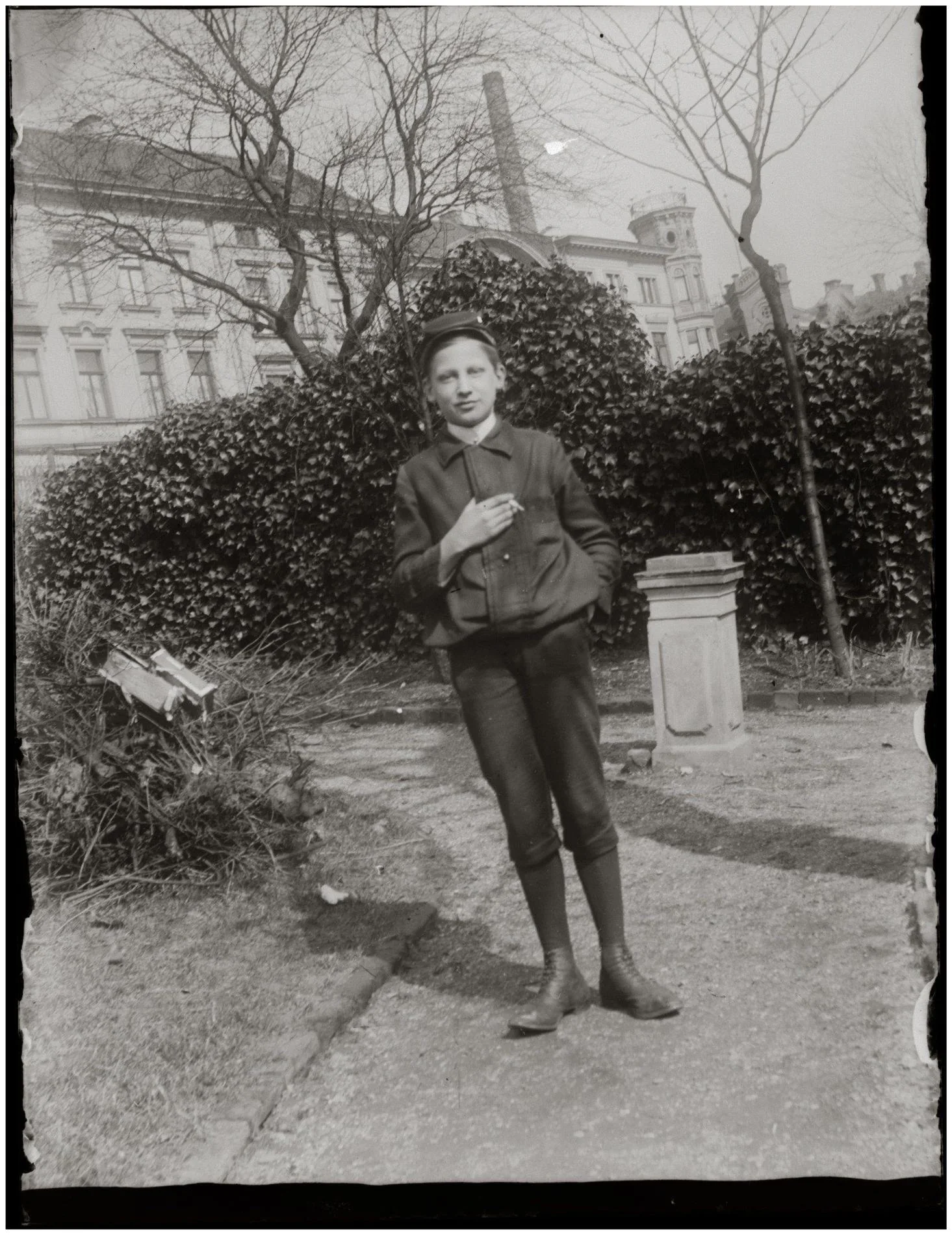
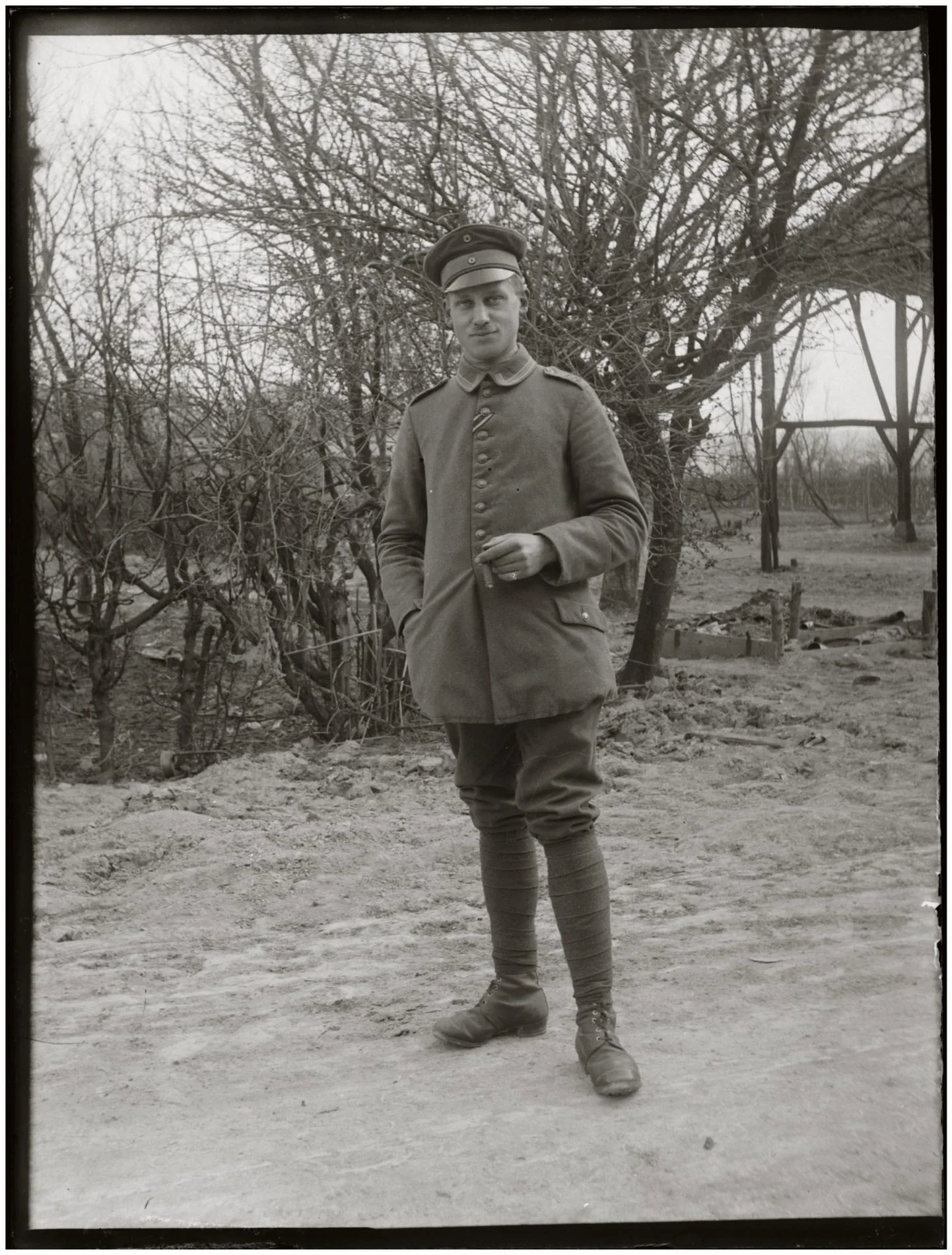
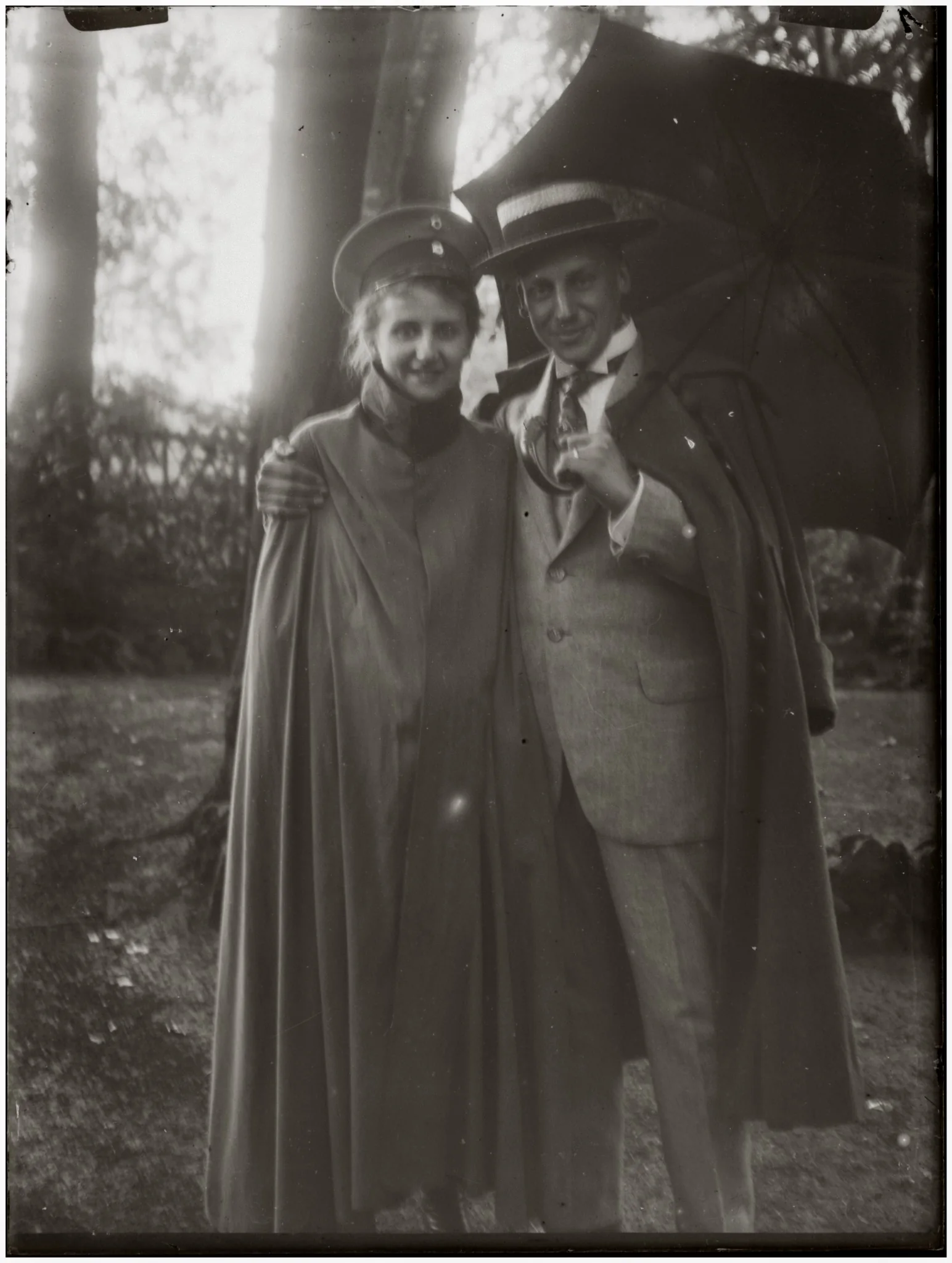
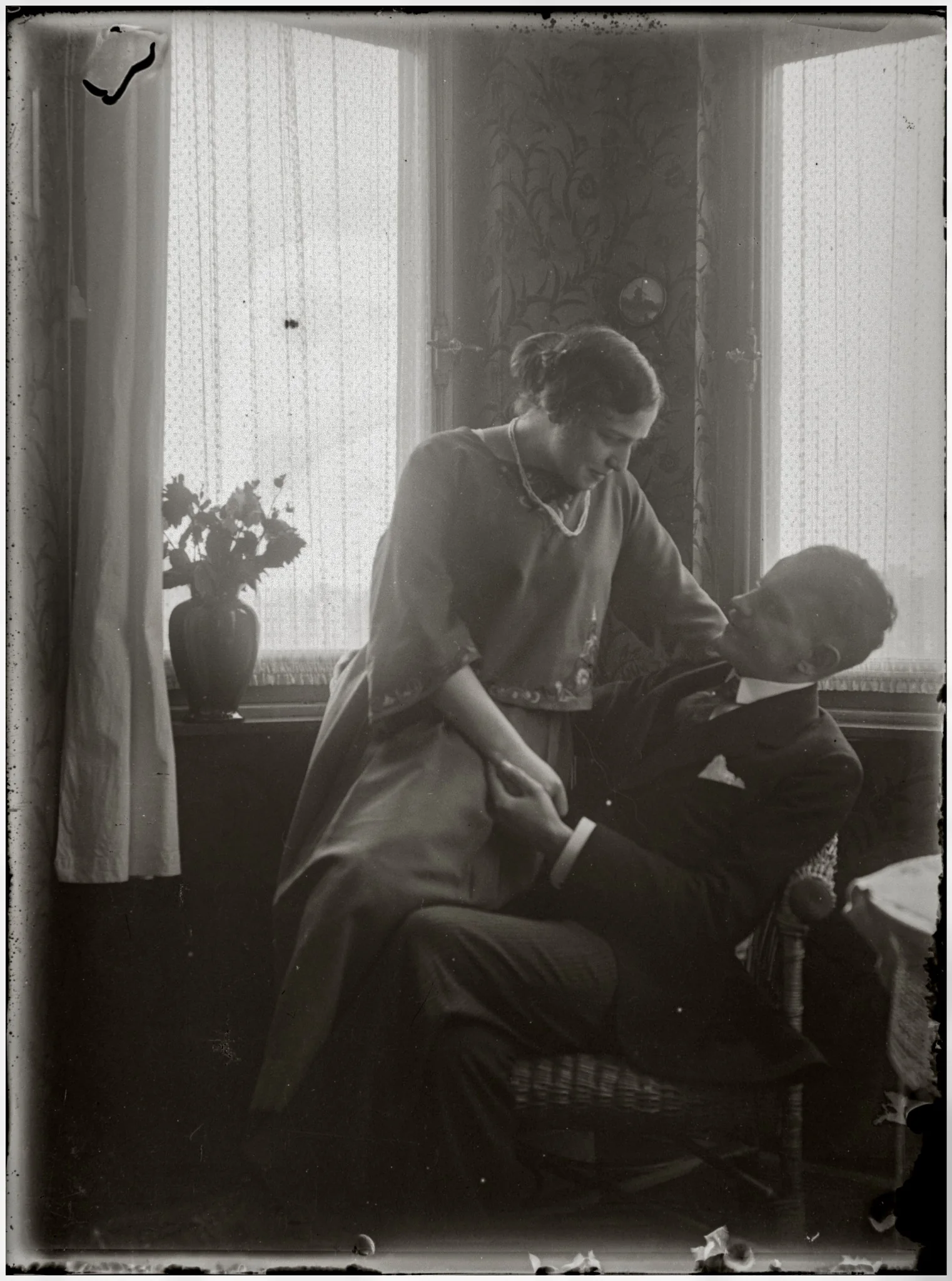
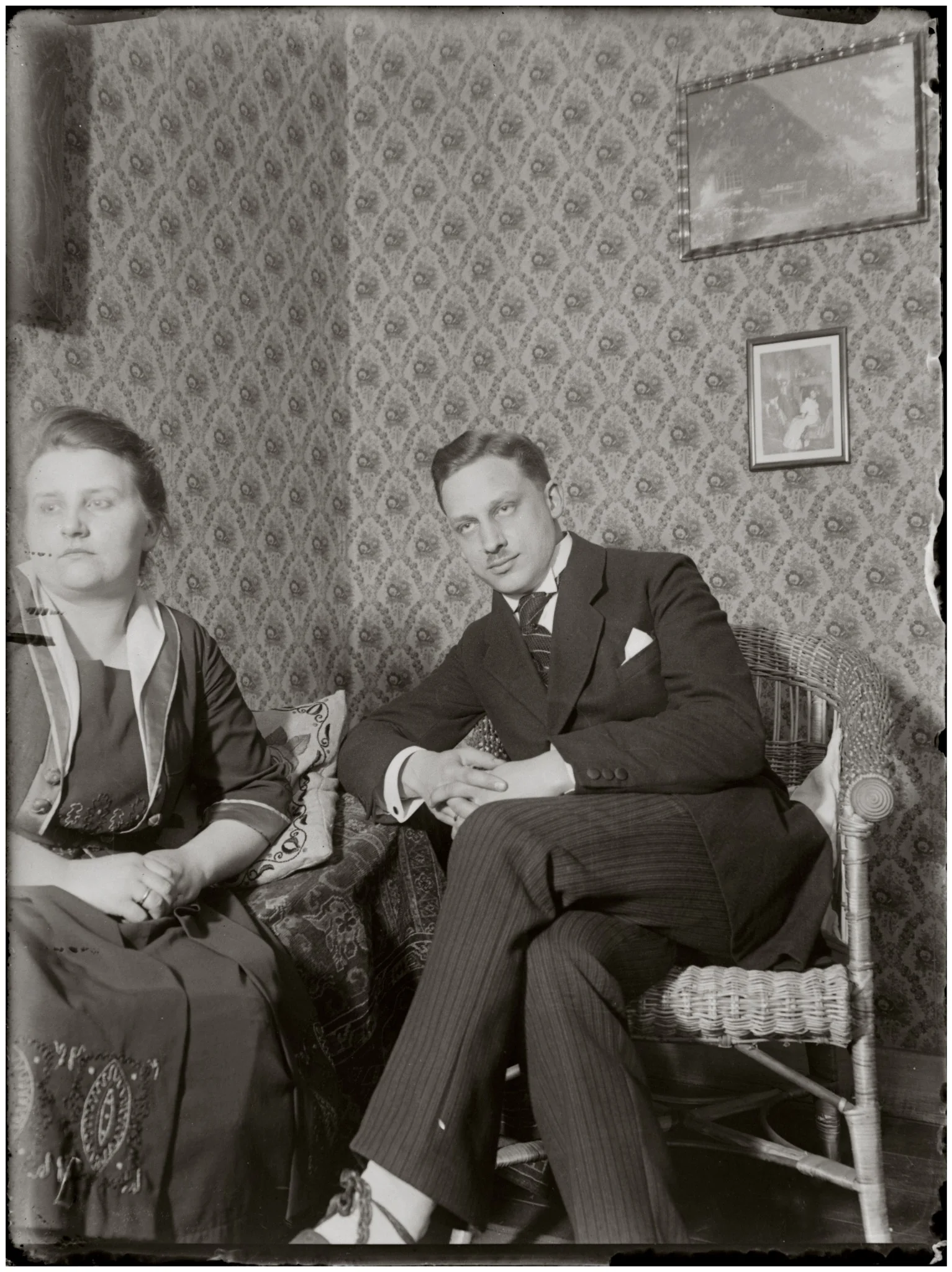
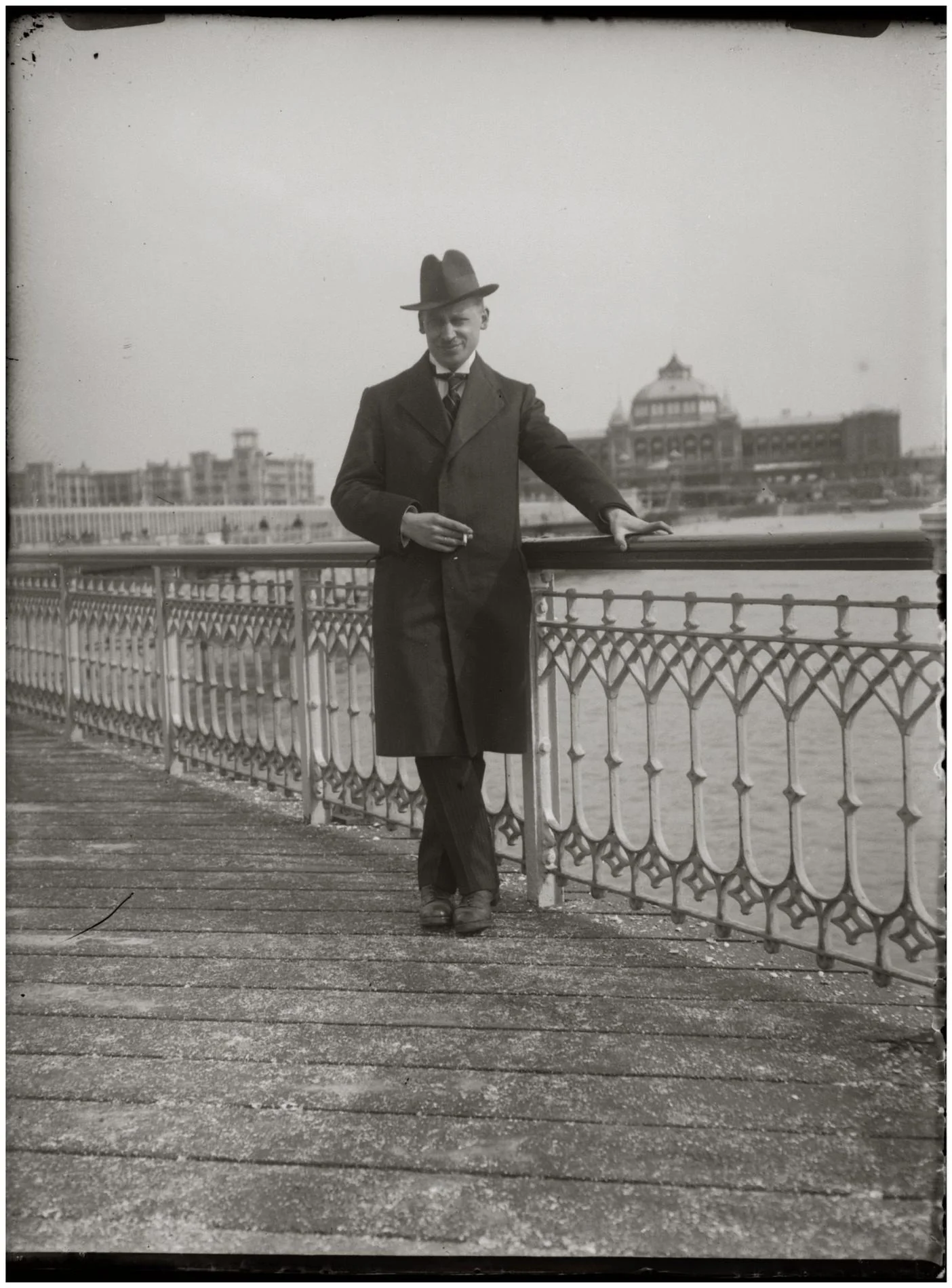
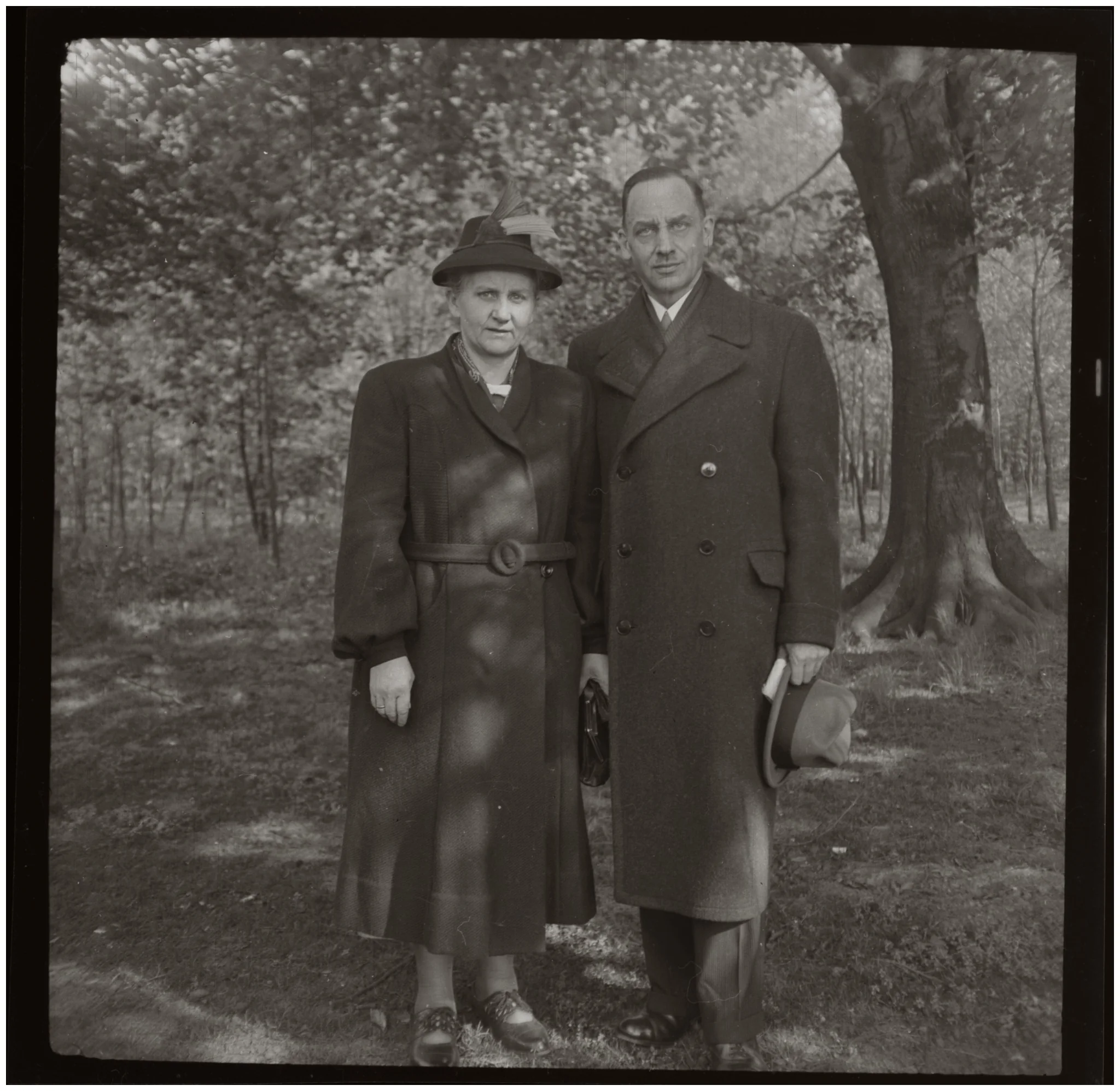
THIS PHOTOGRAPH IS PART of a private collection of 116 glass-plate negatives and a number of roll-film negatives, apparently made over an extended period within a close circle of family and acquaintances. We see family groups, children, older people, visitors and shared outings. Some faces recur; others appear only once.
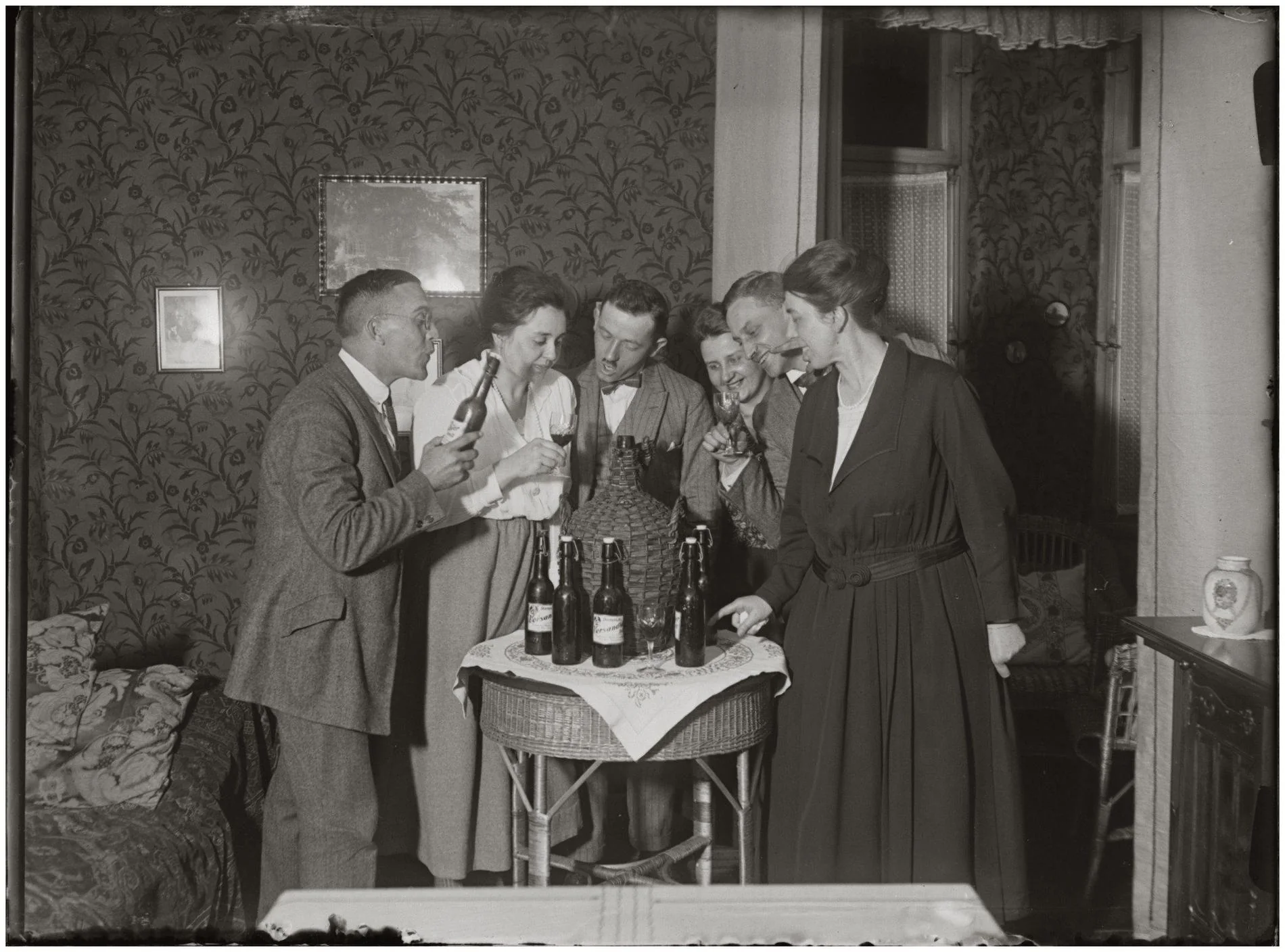
One photograph shows a group enjoying drinks together. The beer bottles are of particular interest: their labels identify the Gebrüder Dieterich brewery in Düsseldorf — a possible clue to where the photographs were taken.
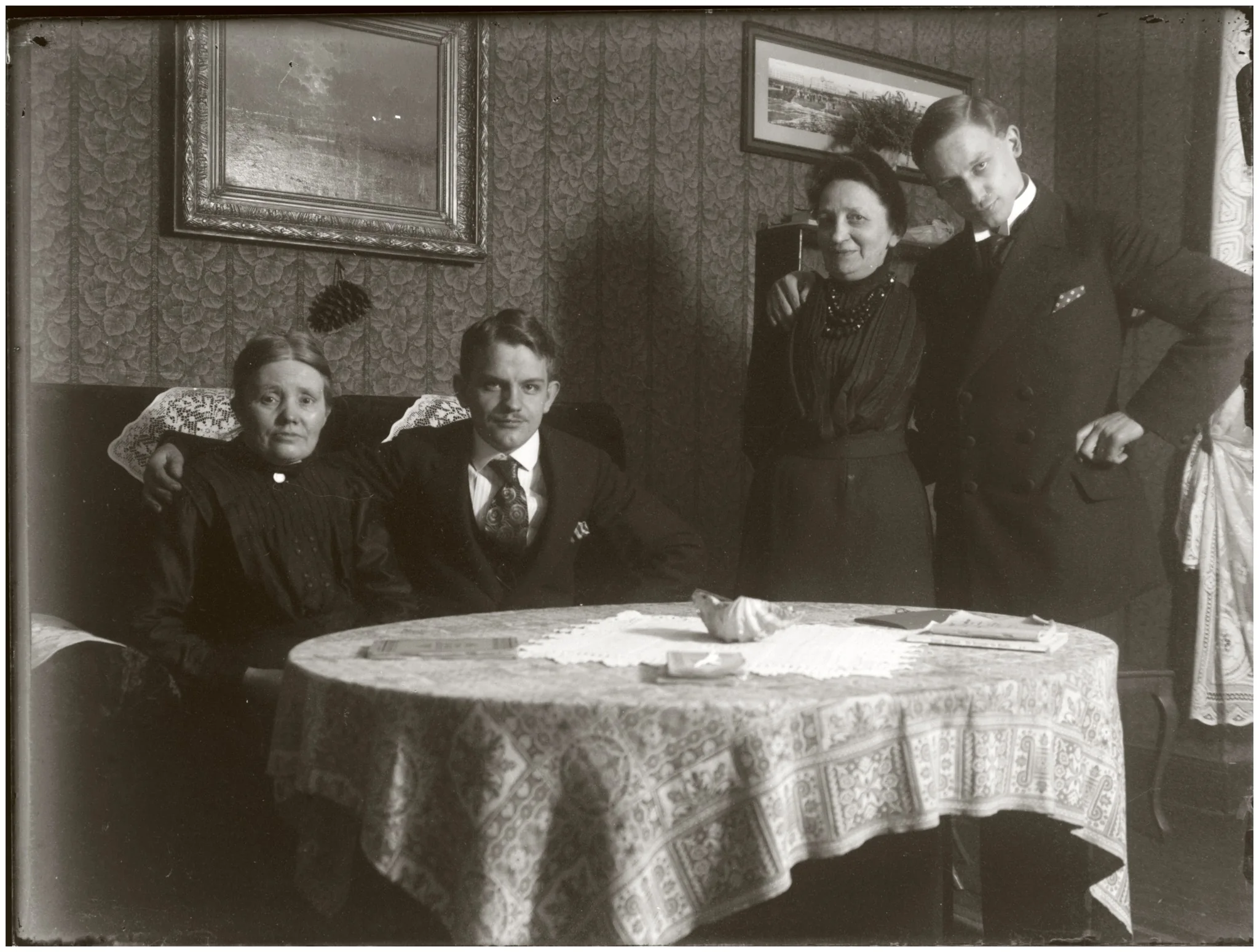
In another photograph, a young man sits with an open book and looks towards the camera. He appears to be holding a remote shutter release and to have taken the picture himself. Perhaps this is the photographer whose work survives in the collection.
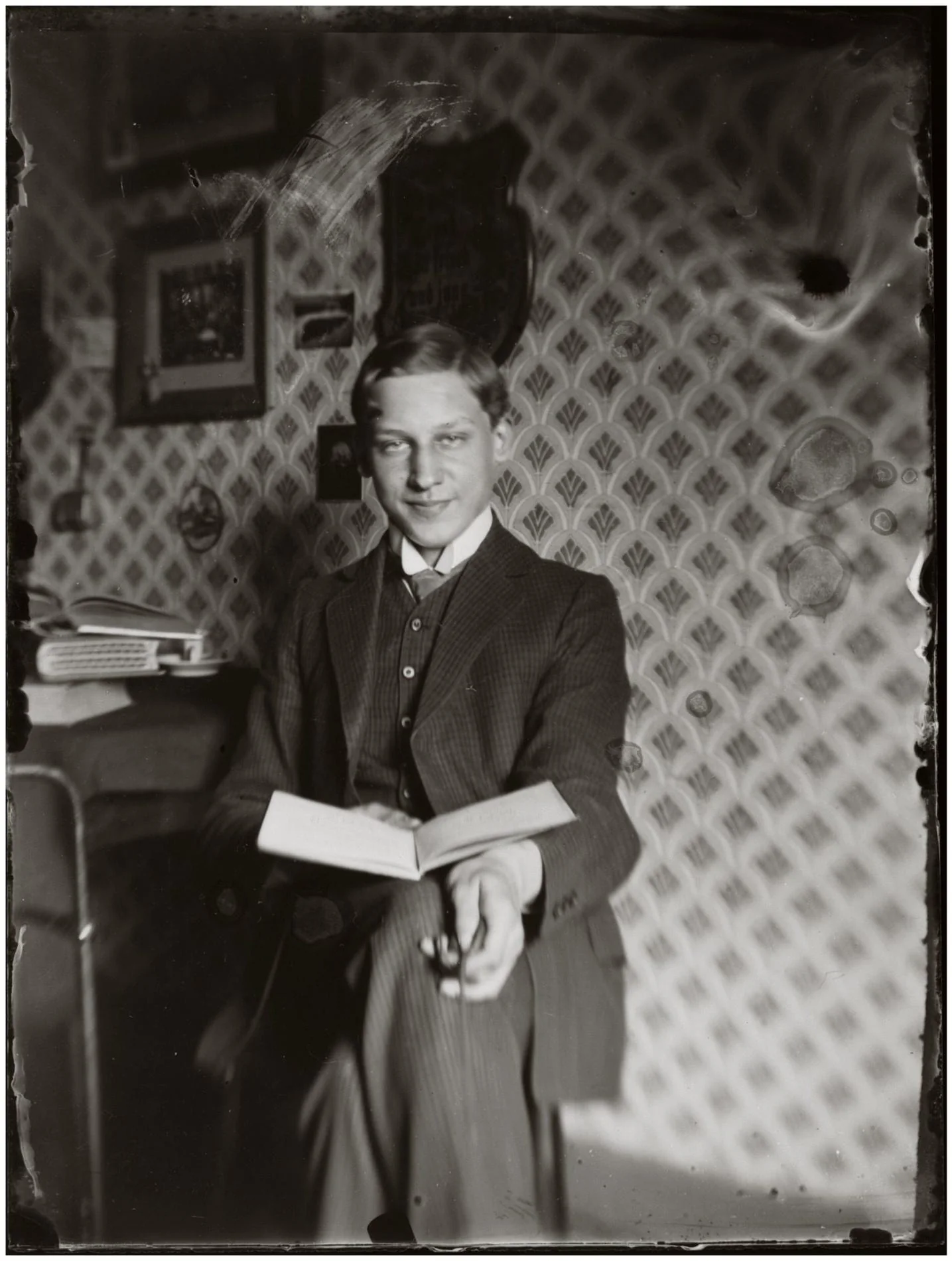
We know nothing for certain about him or the people he photographed. This collection is one of many private photographic archives whose original context has been lost and which eventually surface at online auctions or flea markets. Although the photographs were never intended for public display, they now document family life in their time and the everyday use of photography.
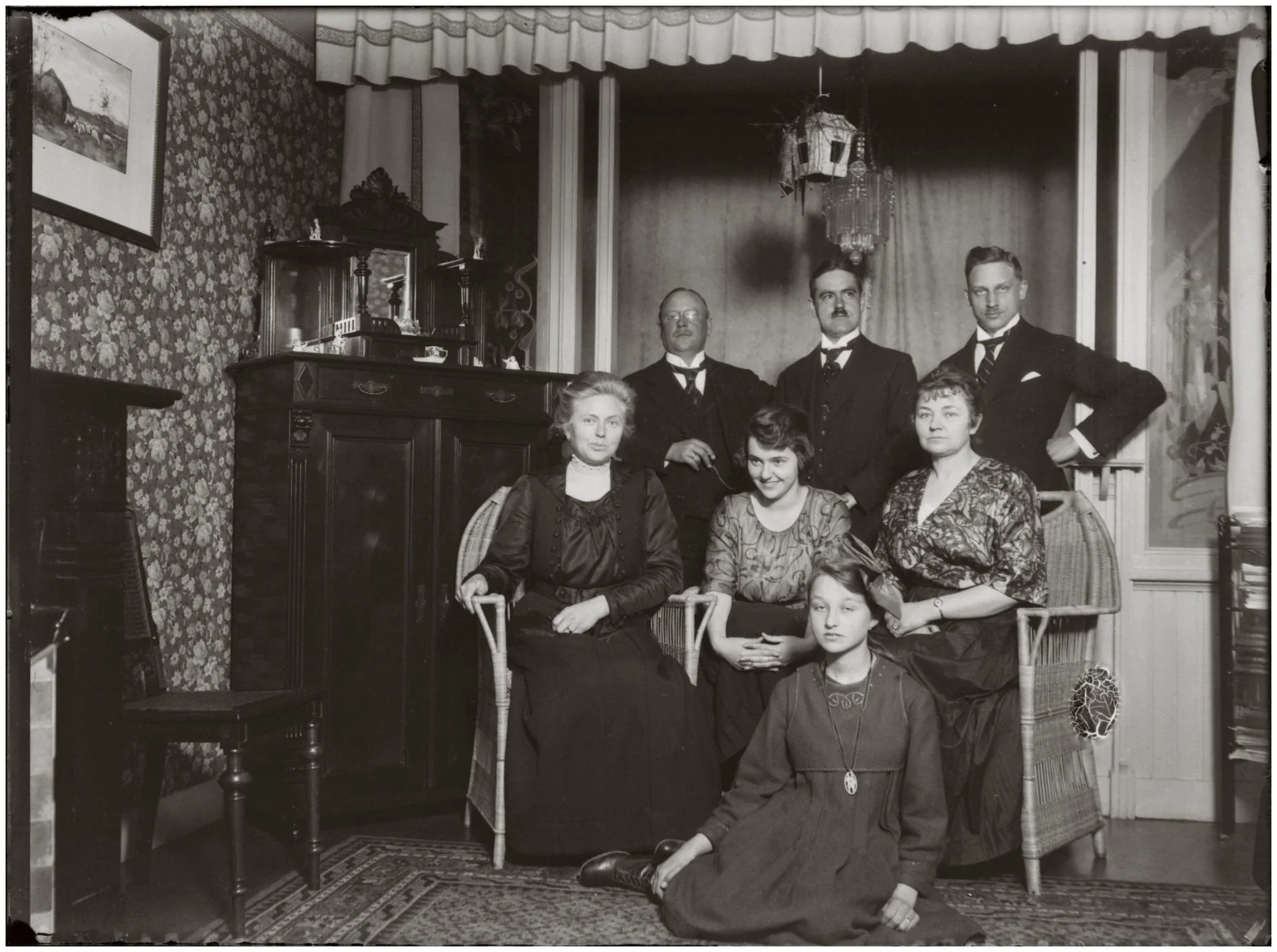
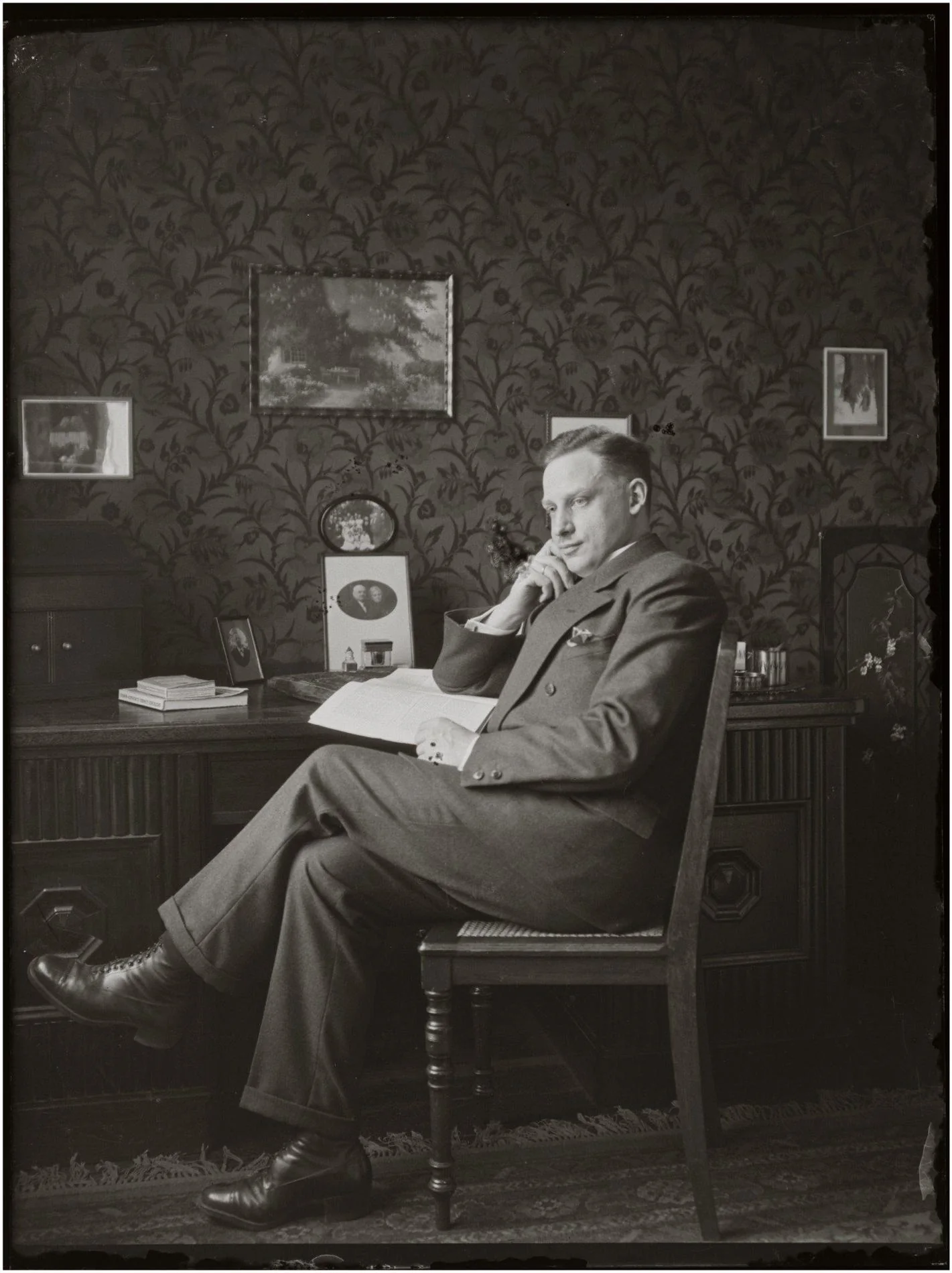
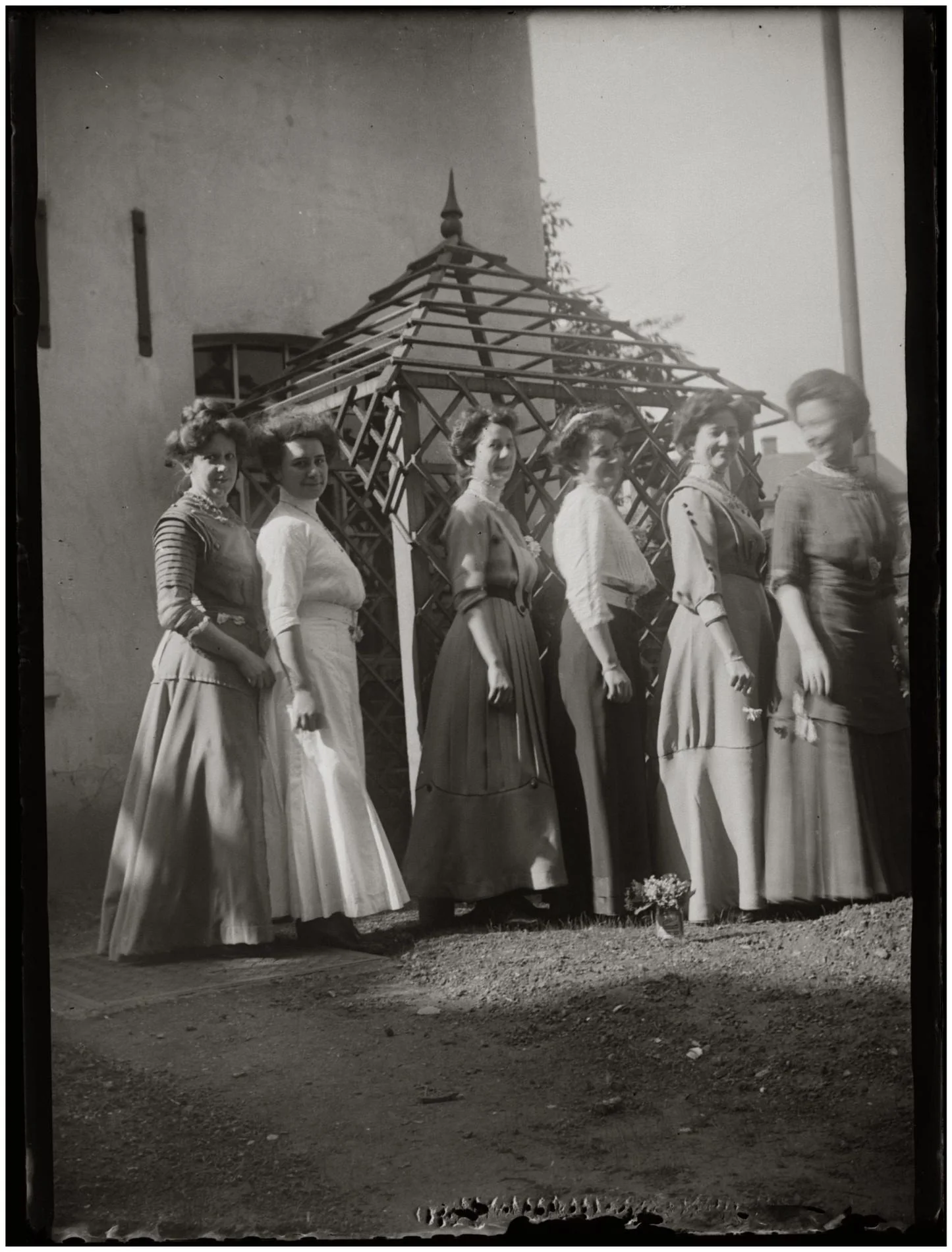
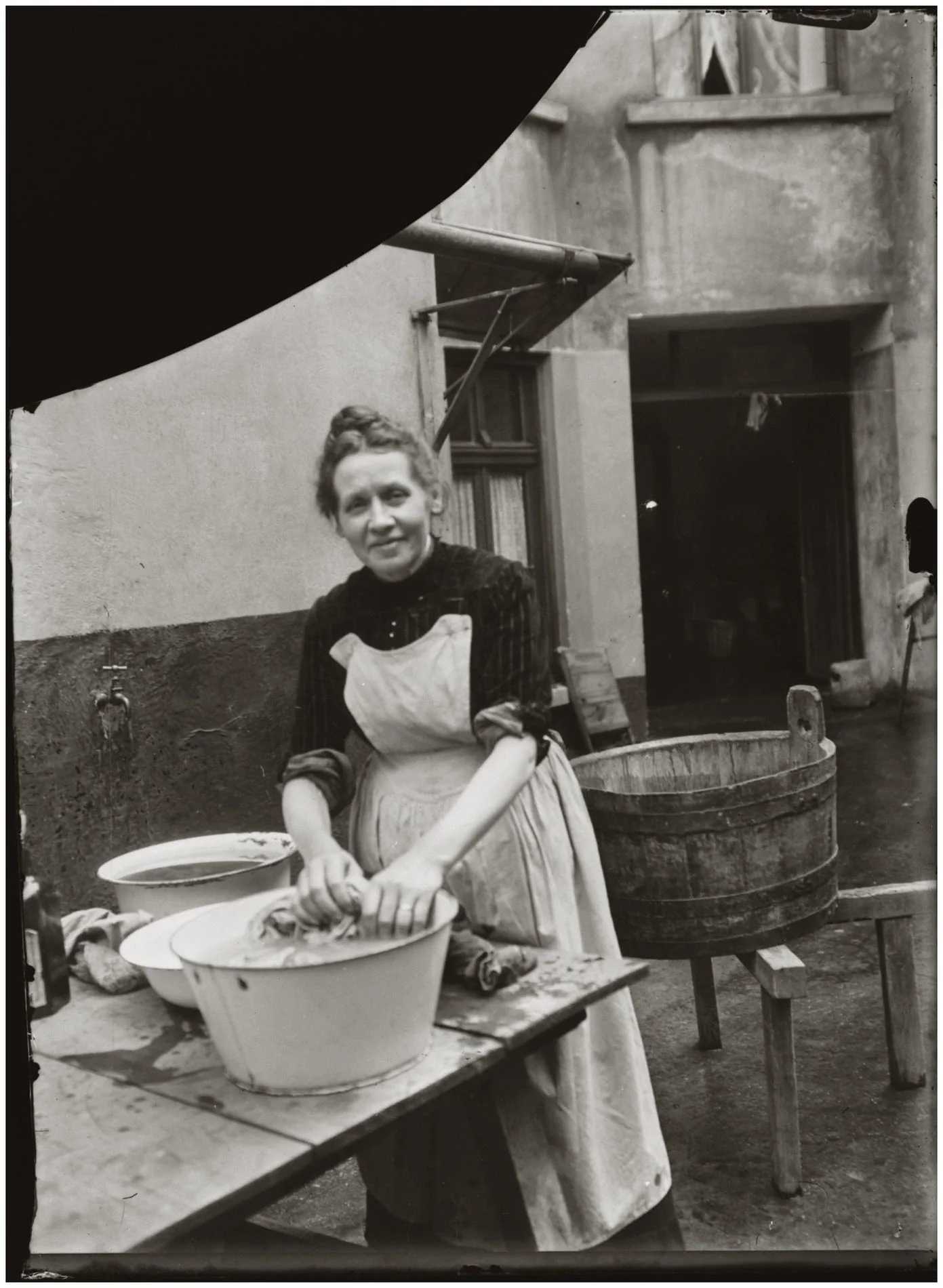
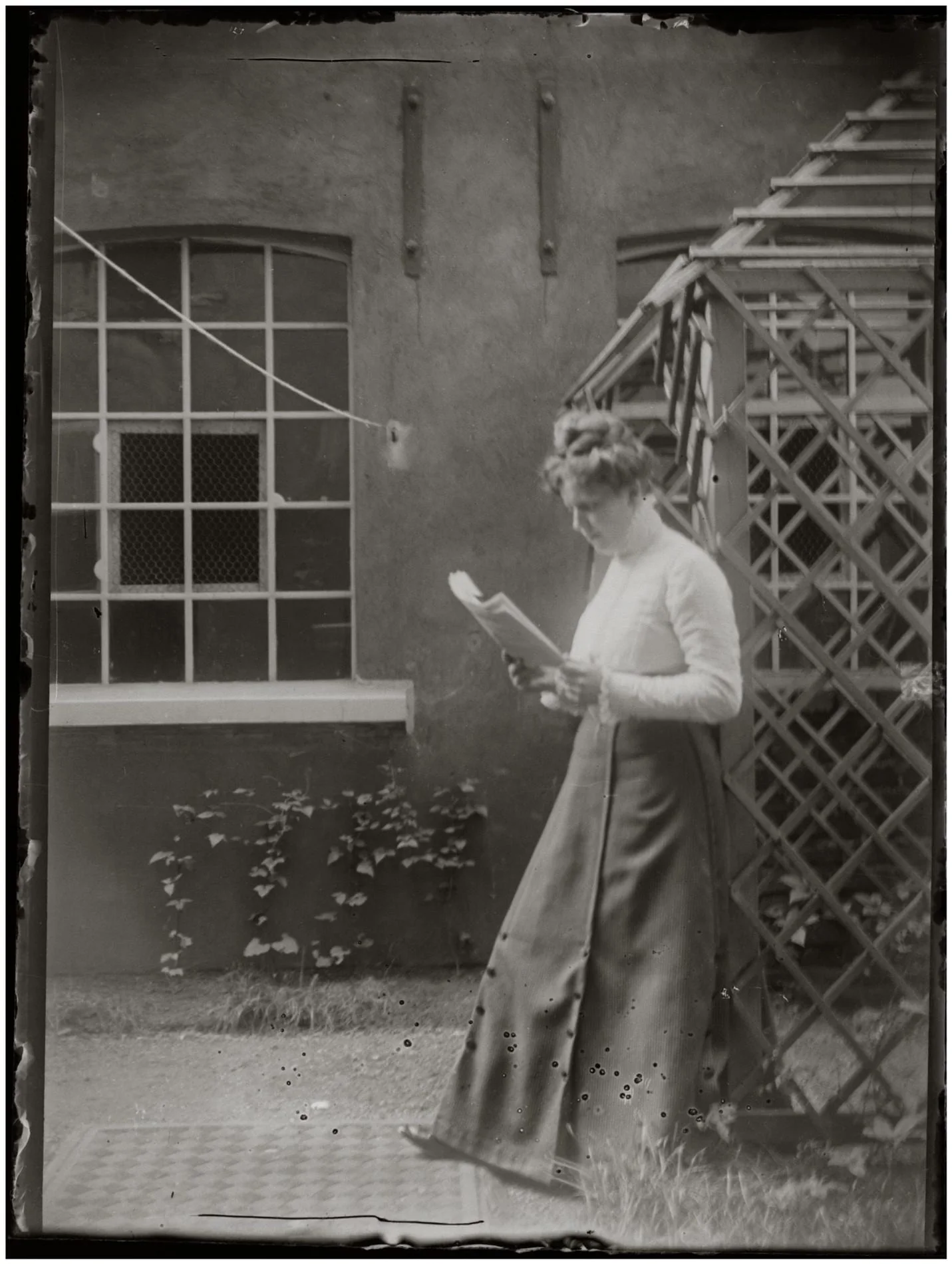
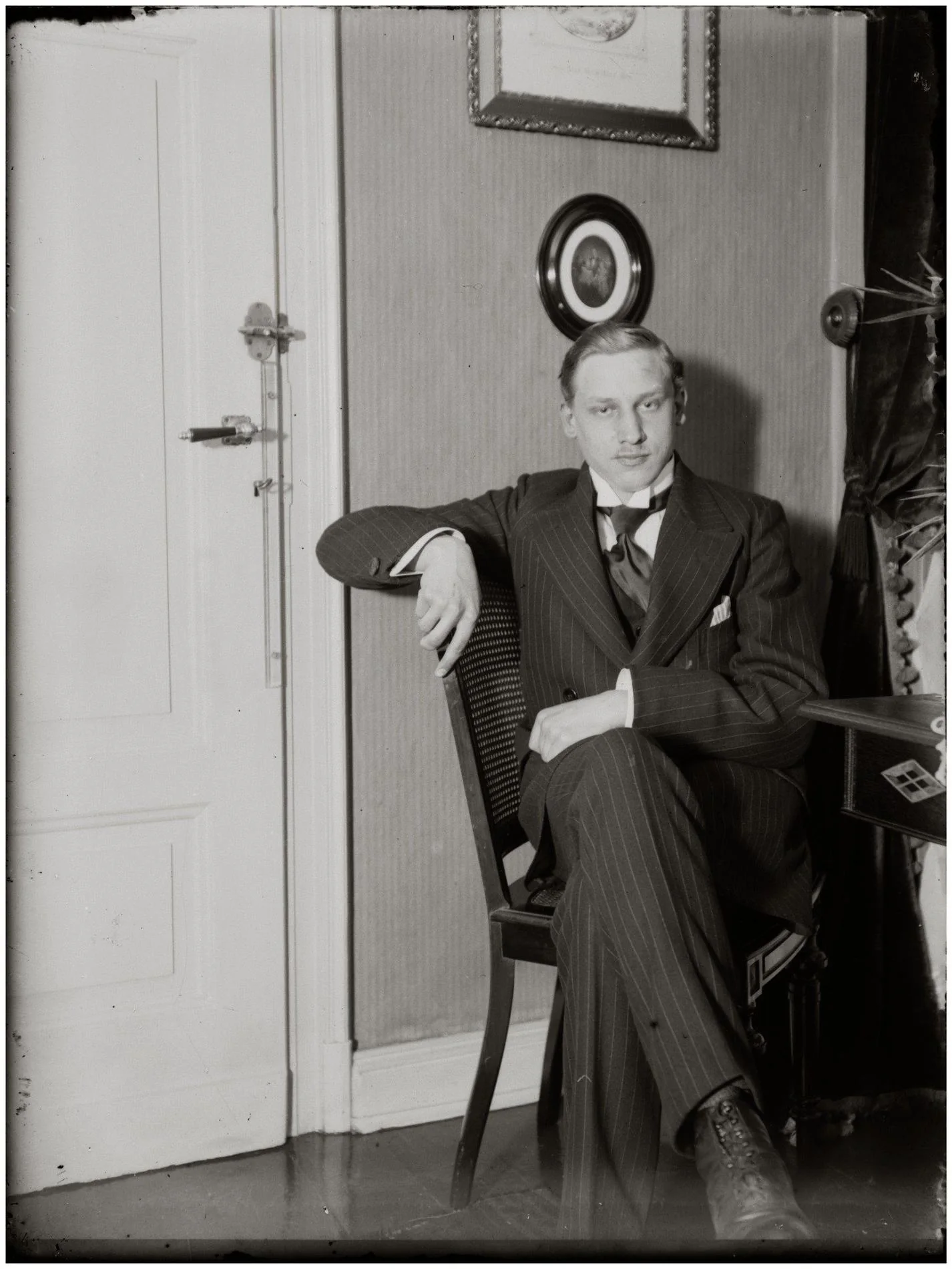
MANY HISTORICAL FAMILY PHOTOGRAPHS record special occasions: weddings, celebrations, excursions and gatherings. This collection is no exception.
Such photographs serve a familiar purpose. They record who was present at a gathering. People who have come together for a particular occasion assemble in front of the camera, preserving the group in a single image.
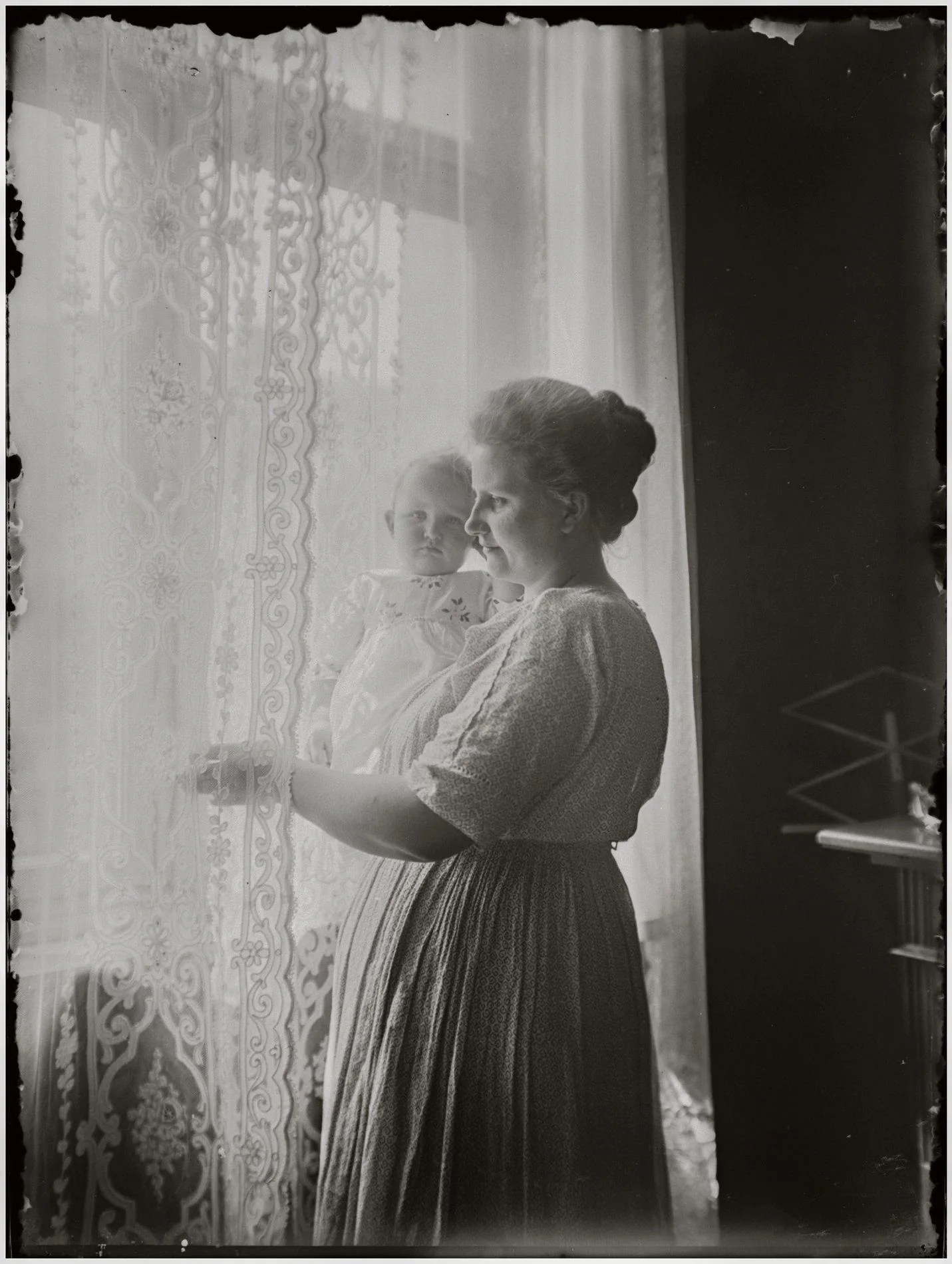
Yet this photographer was equally interested in unremarkable moments.
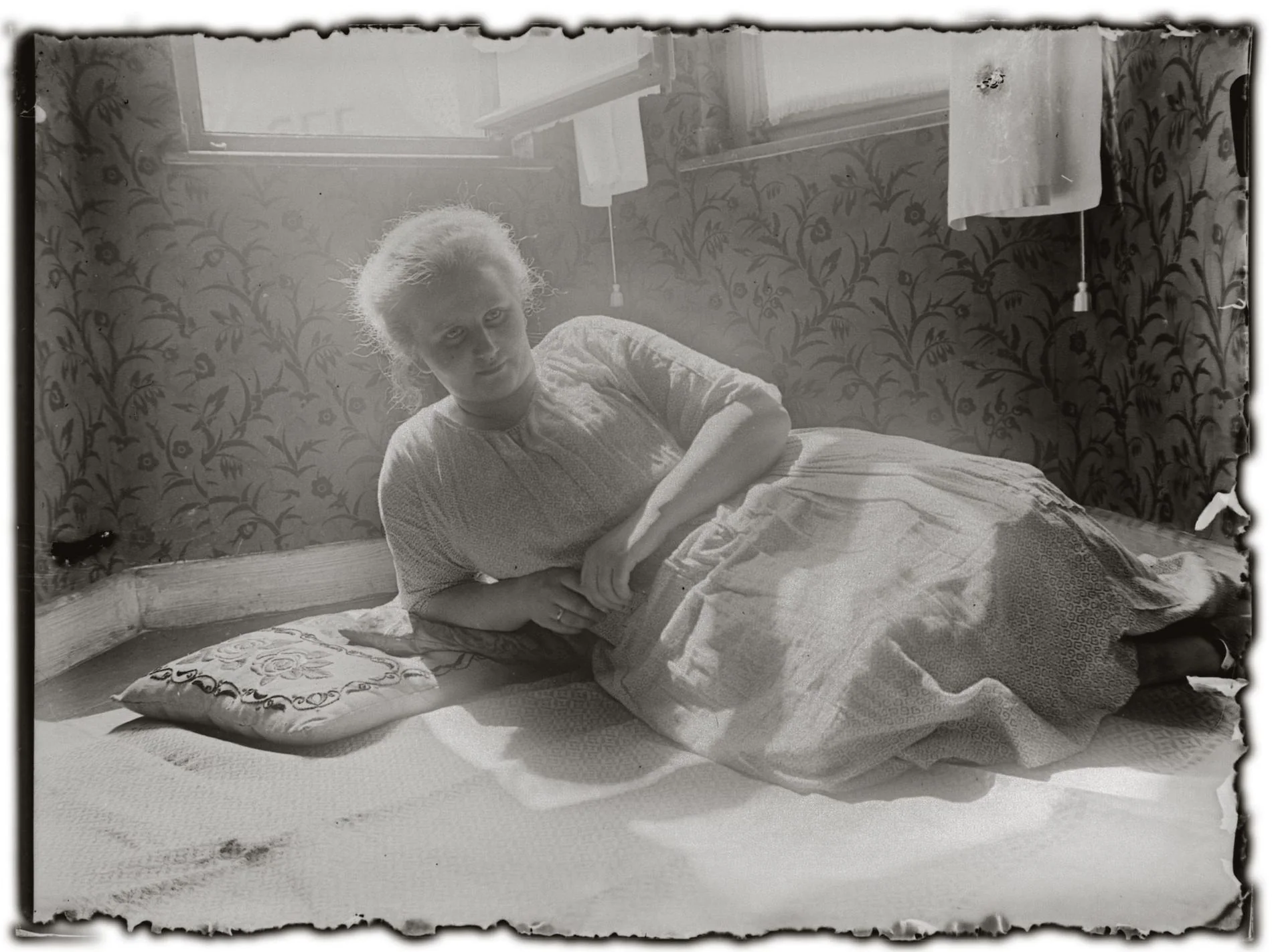
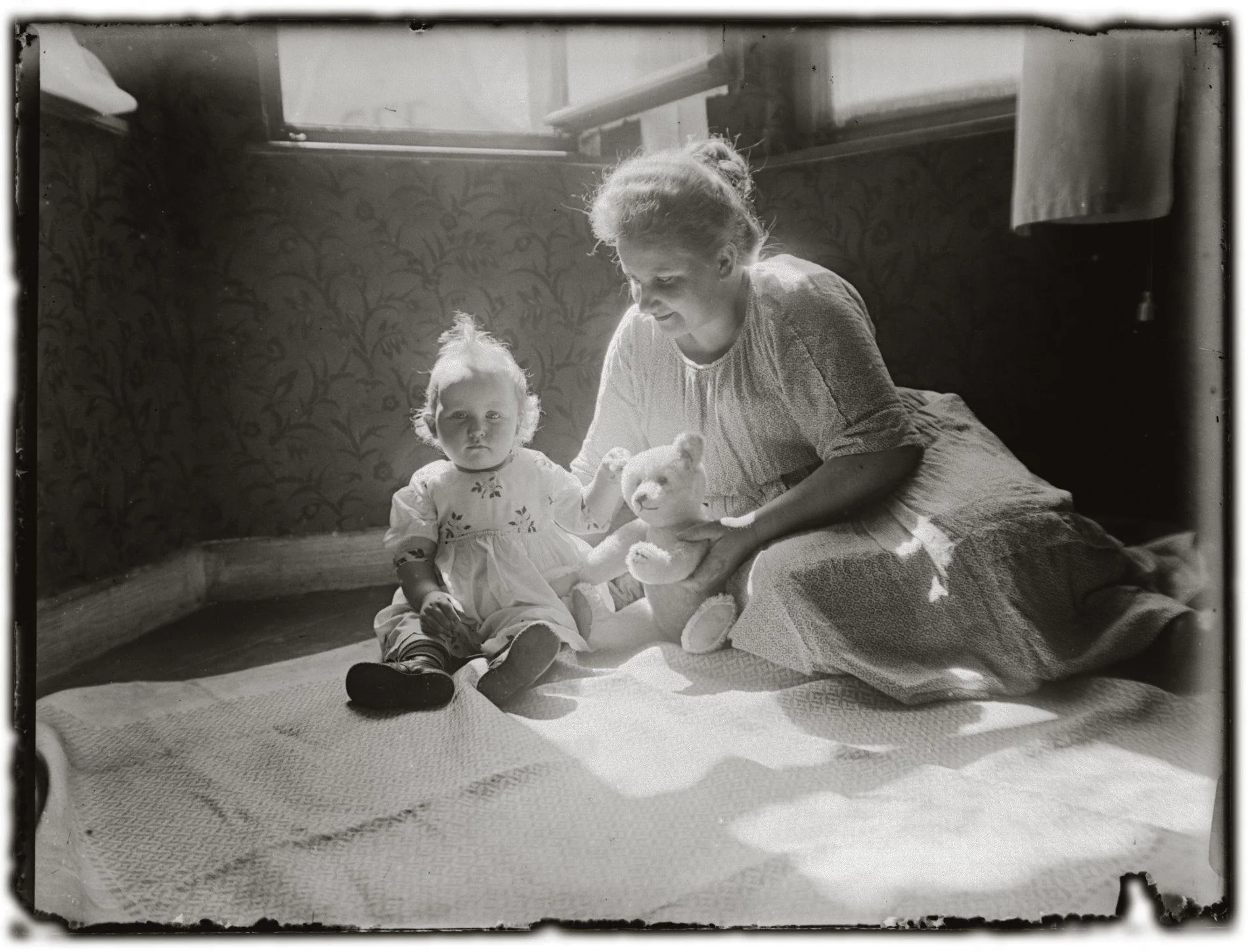
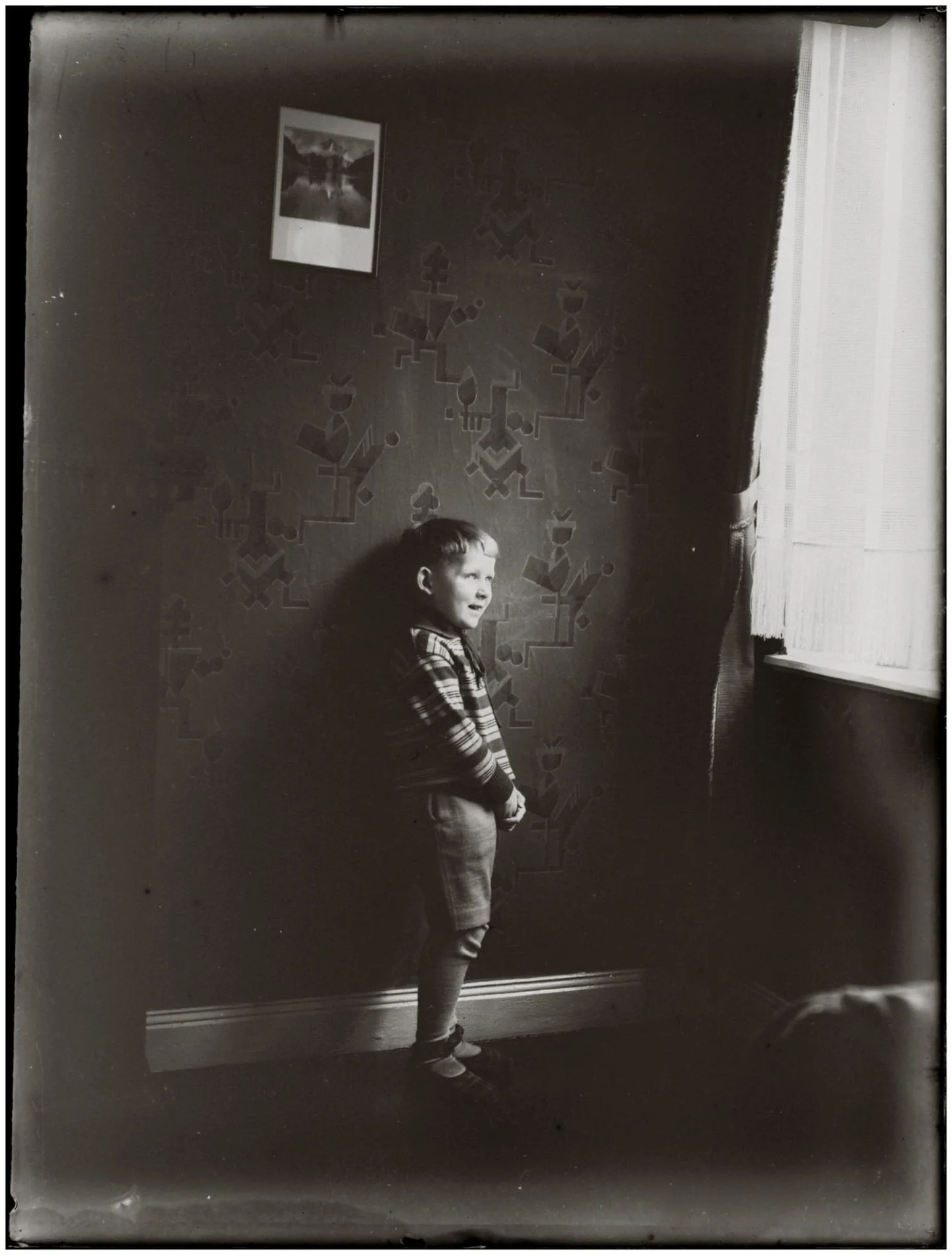
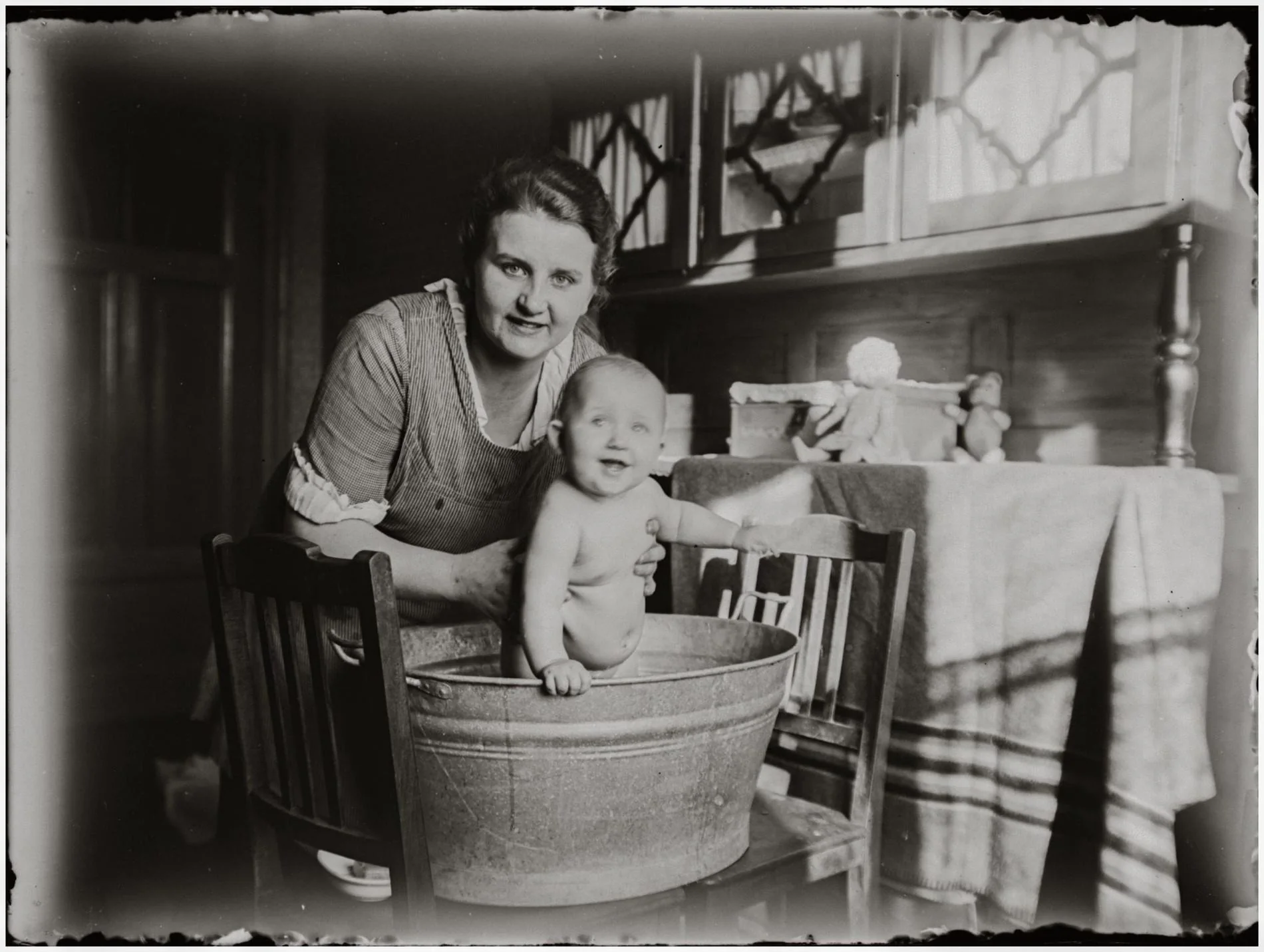
A woman lies on a blanket in the sunlight beside an open window. In another photograph, she plays with a baby in the same spot. A boy stands alone in a room; light from a side window picks out his small figure against the dark surroundings.
These are everyday scenes that required no special occasion. The photographer pointed his camera not only at events considered worth remembering, but also at the life unfolding before his eyes each day.
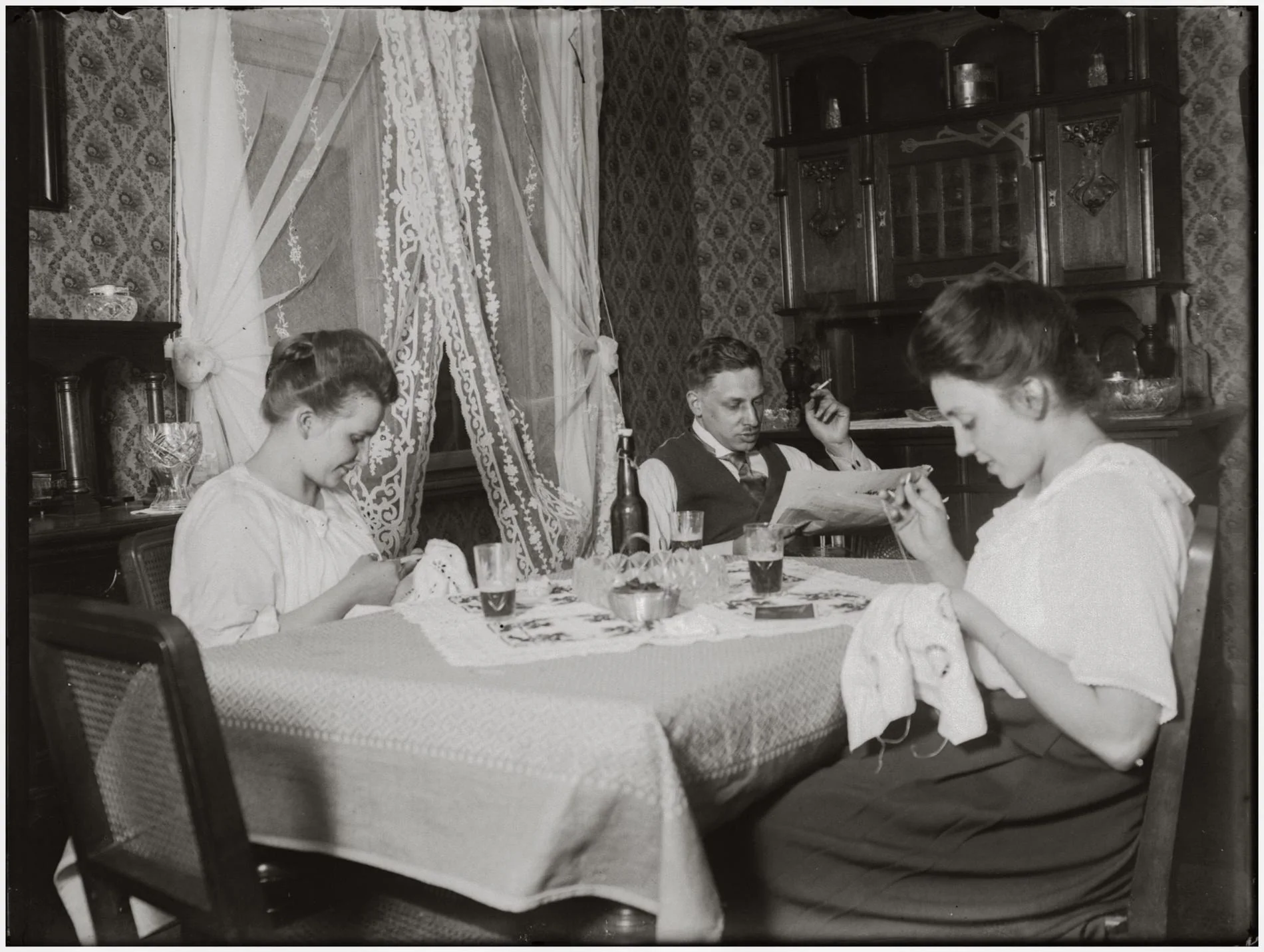
THAT SOMEONE APPEARS natural and relaxed in a photograph does not necessarily mean they were photographed unawares.
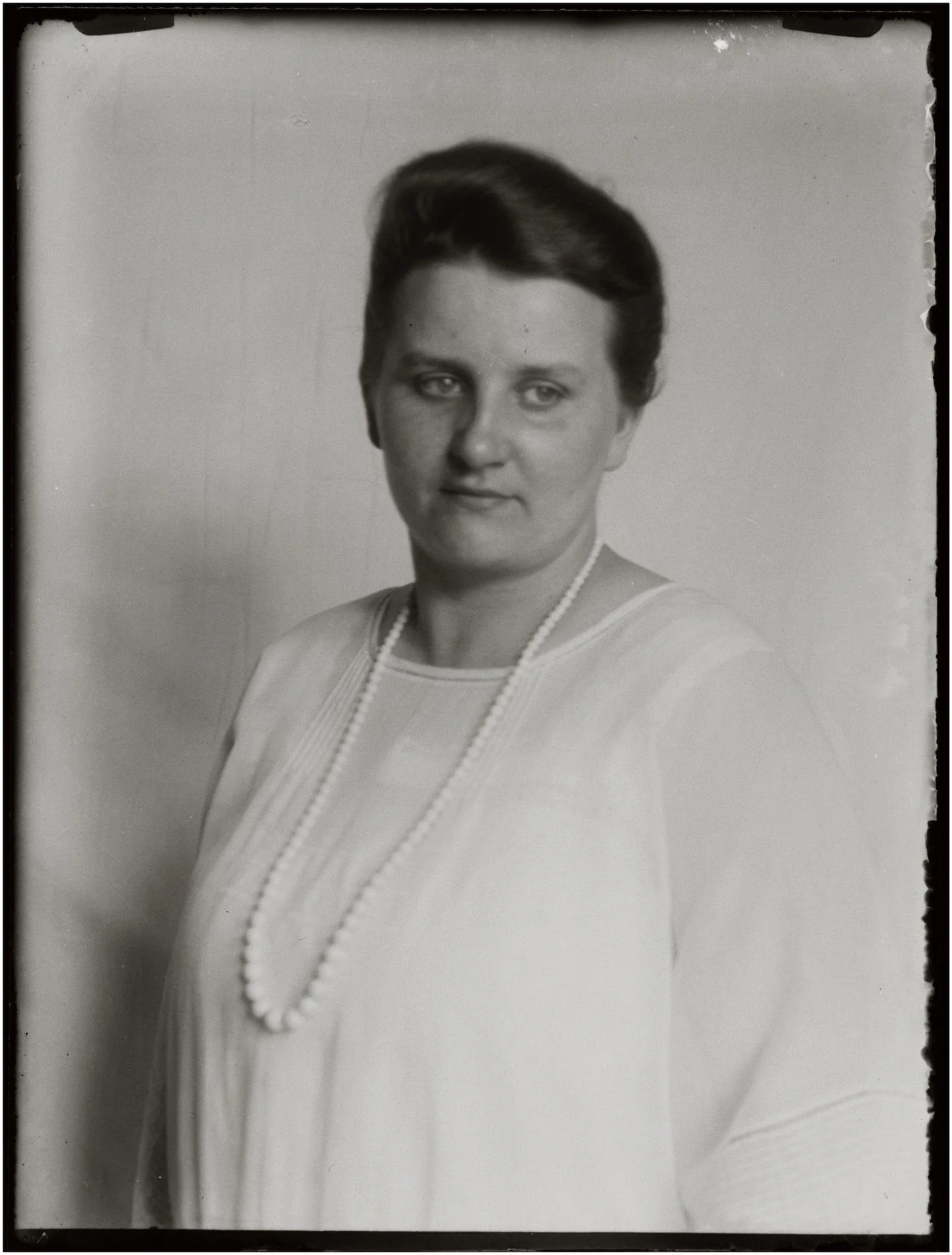
Early photographic equipment required preparation. The photographer had to set up the camera, choose the subject, focus and determine the exposure. Sometimes a plain backdrop was arranged to imitate a studio setting. Many photographs therefore resulted from deliberate collaboration between photographer and sitter.
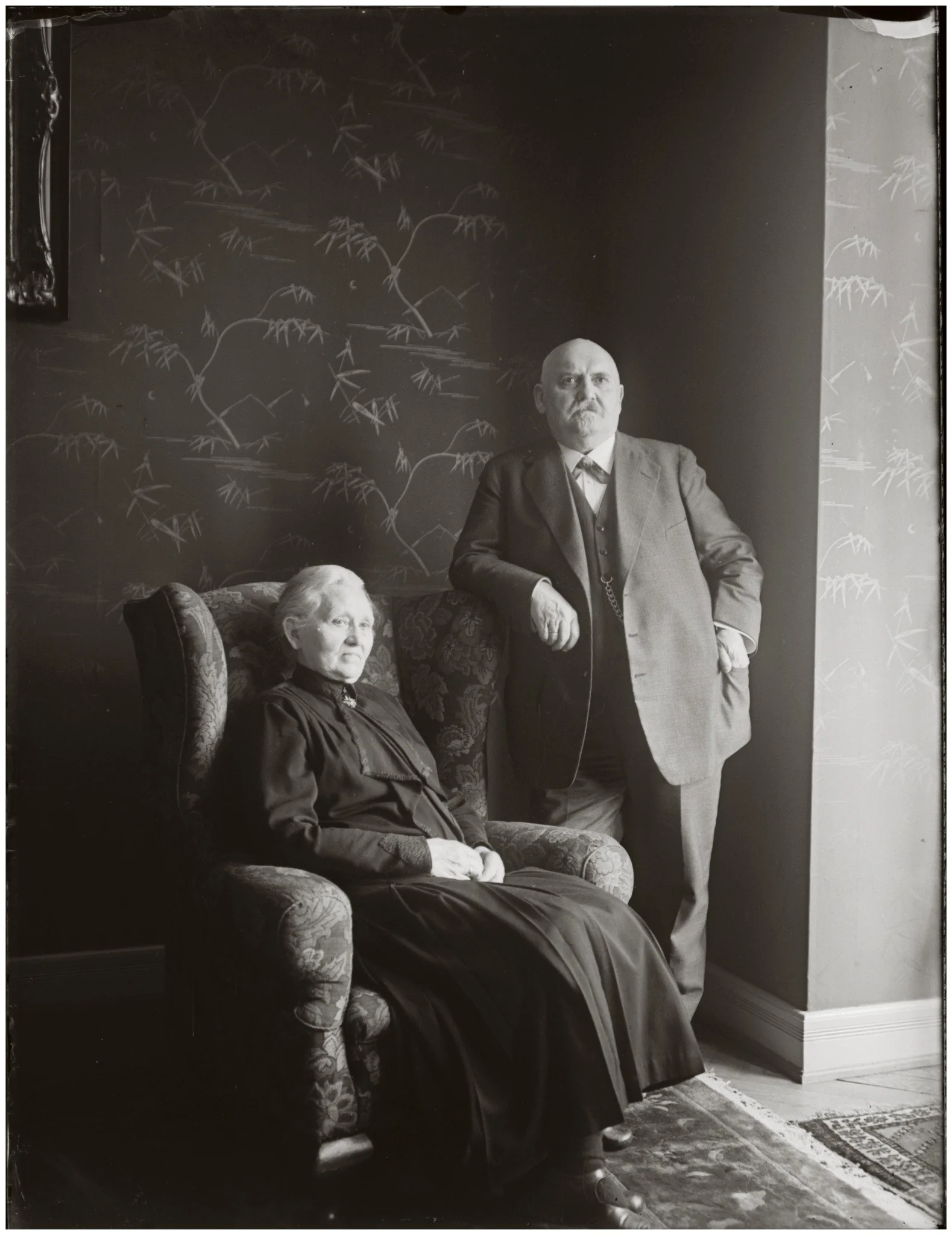
Many of these pictures also reveal how the family wished to be seen. The carefully chosen clothes, furnished interiors and deliberate poses present an image of middle-class family life. Photography was used not merely to preserve memories, but also to construct a particular image of the family itself.
For all the preparation and posing, the results were not always stiff.
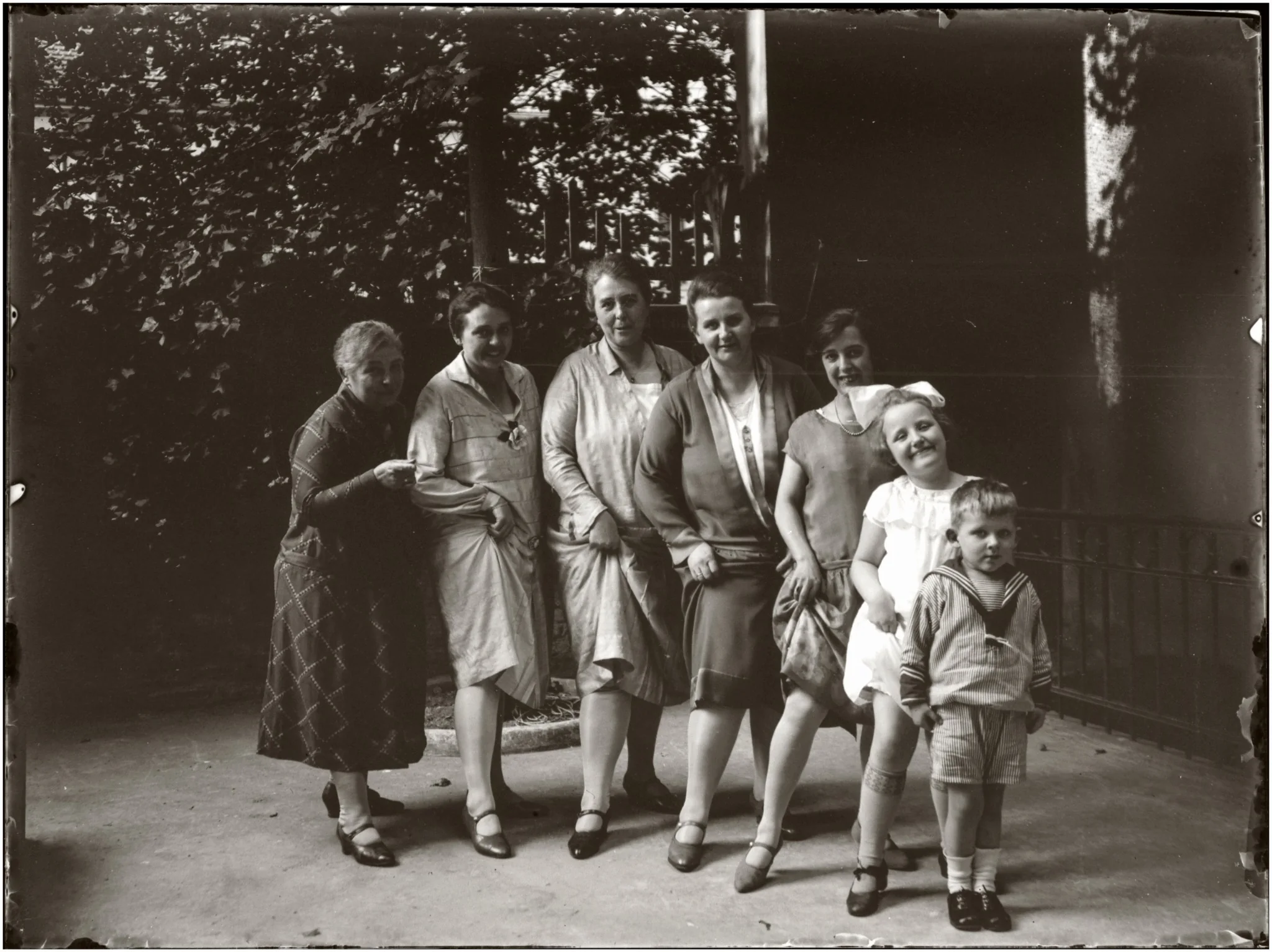
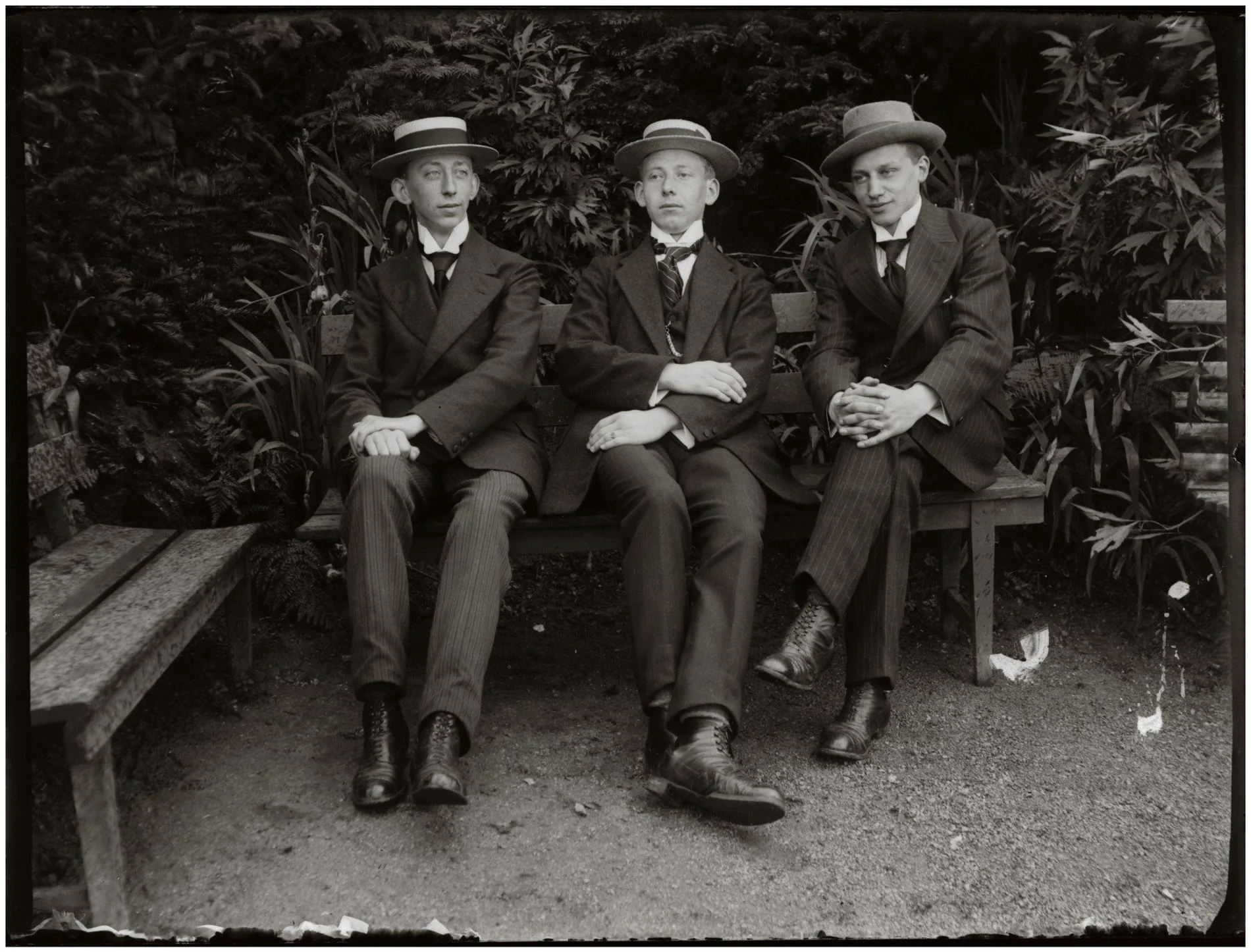
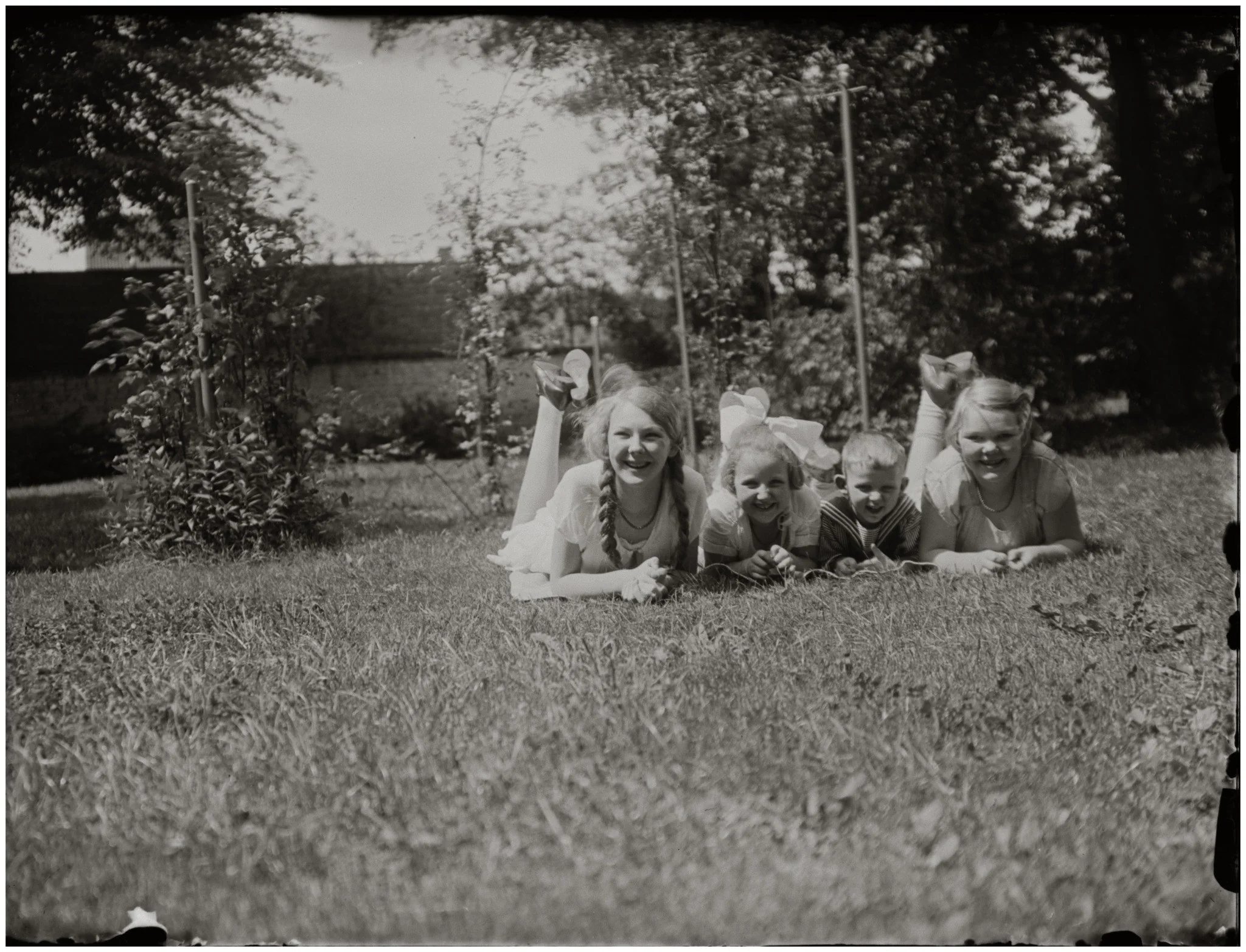
Women lift their skirts to their knees. Three young men sit on a garden bench wearing hats. Girls lie cheerfully on the grass, and a baby is bathed in a zinc tub.
From Improvised Studio to Finished Photograph
The photographs offer an insight into the photographic process. A cloth was hung in a living room to create a plain background, much like that of a photographic studio. Later interventions can also be traced: on one negative, the intended crop was scratched into the surface; on another, parts of the image were masked off.
Composition did not, therefore, necessarily end when the shutter was released. Only the negatives have survived, however, not the finished prints. We do not know what those prints looked like or which exposures were ever enlarged. This is precisely what makes the material so valuable: it records not only the subjects, but also the process from exposure to finished photograph.
The Crop Marked on the Negative
The Masked Negative
SOME PHOTOGRAPHS STAND OUT less for their subjects than for the way they were taken.
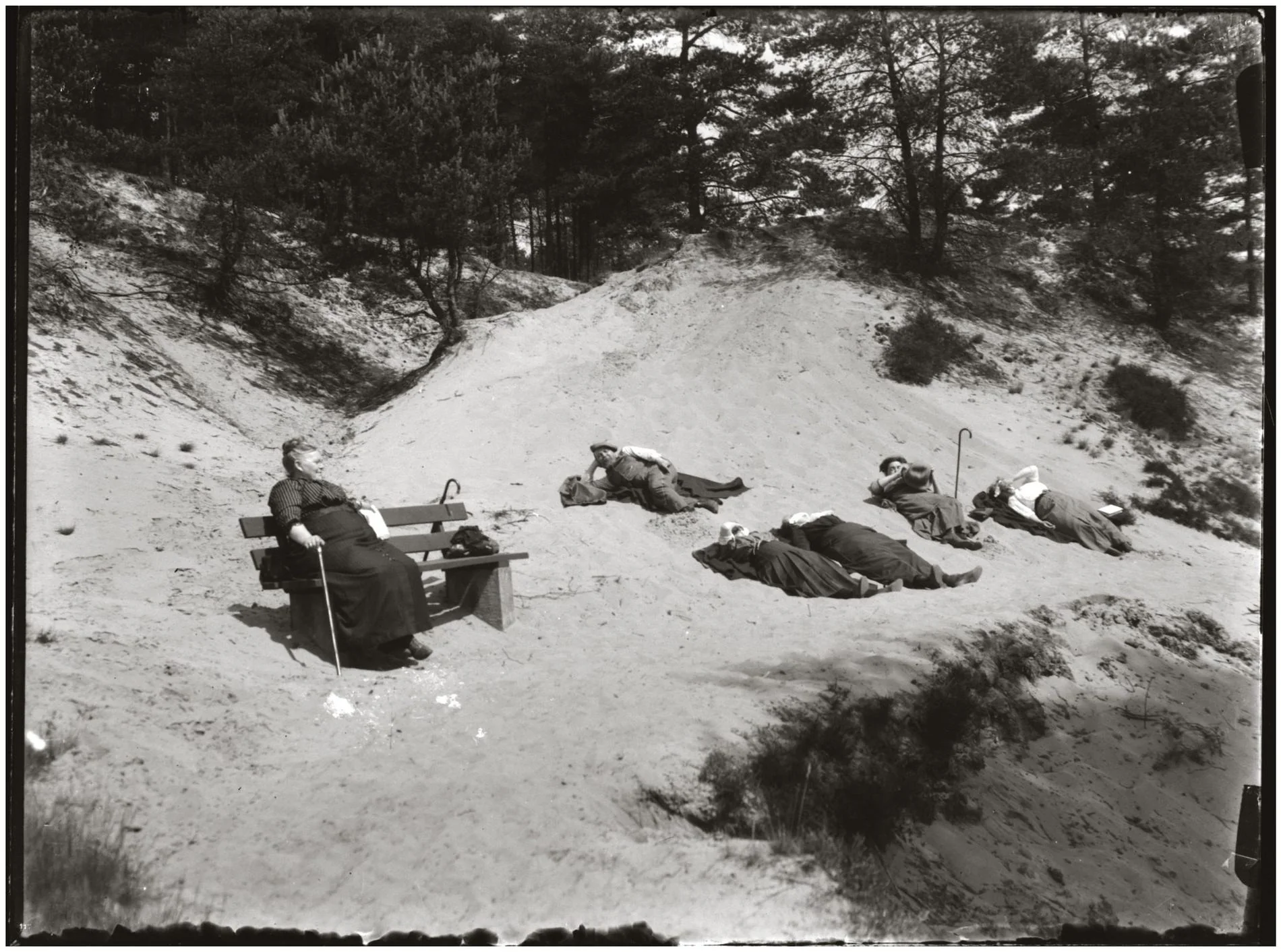
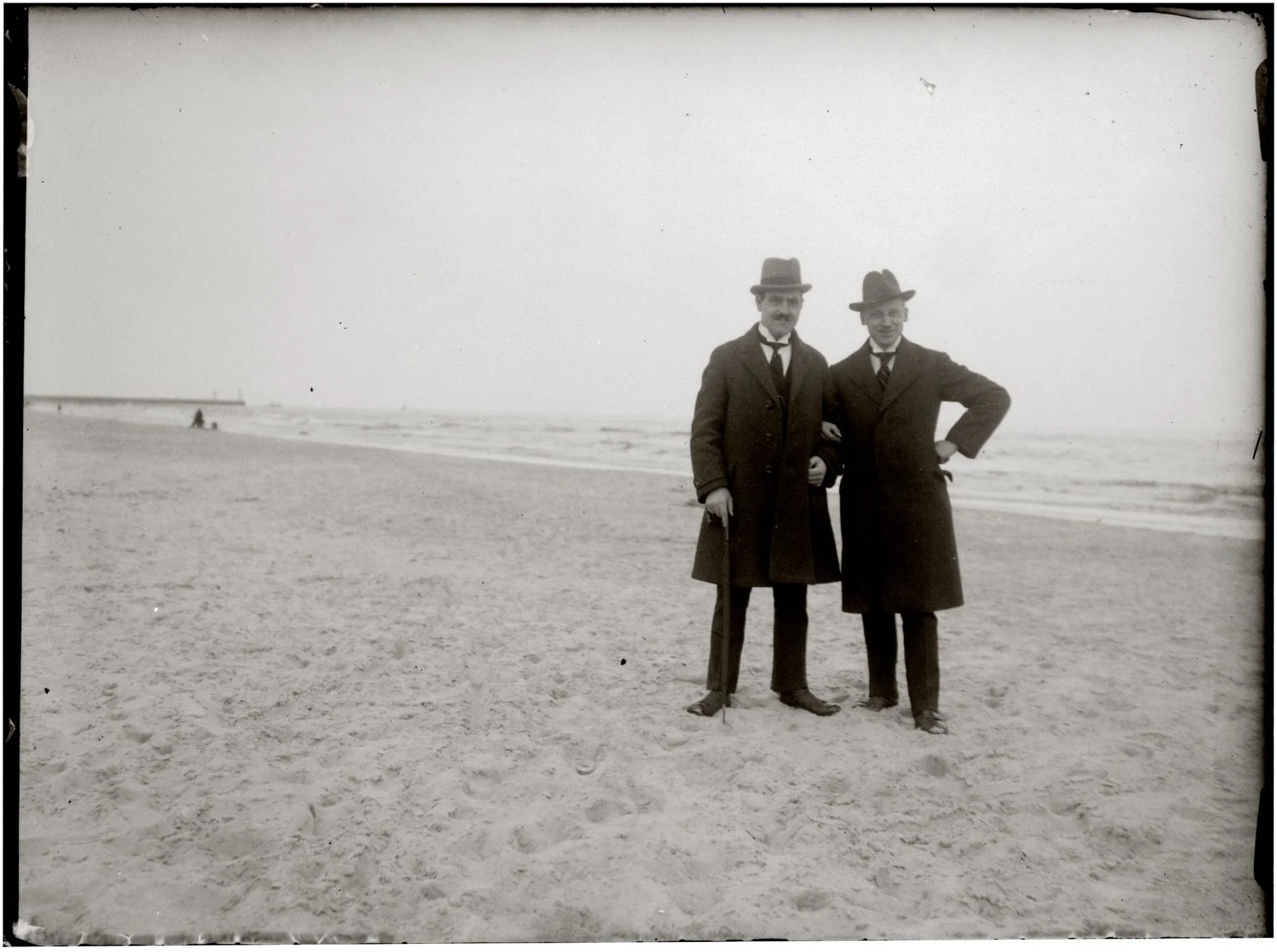
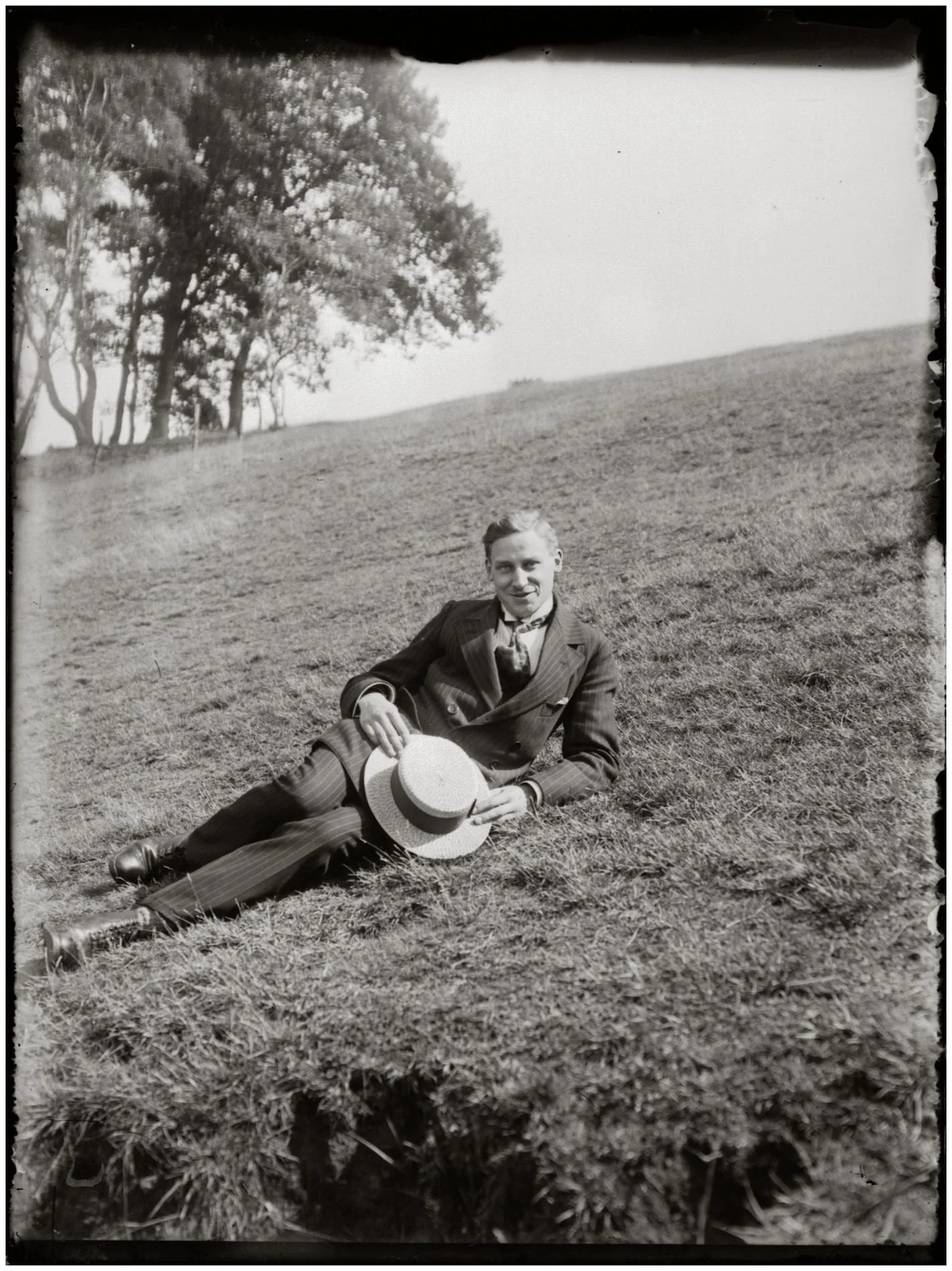
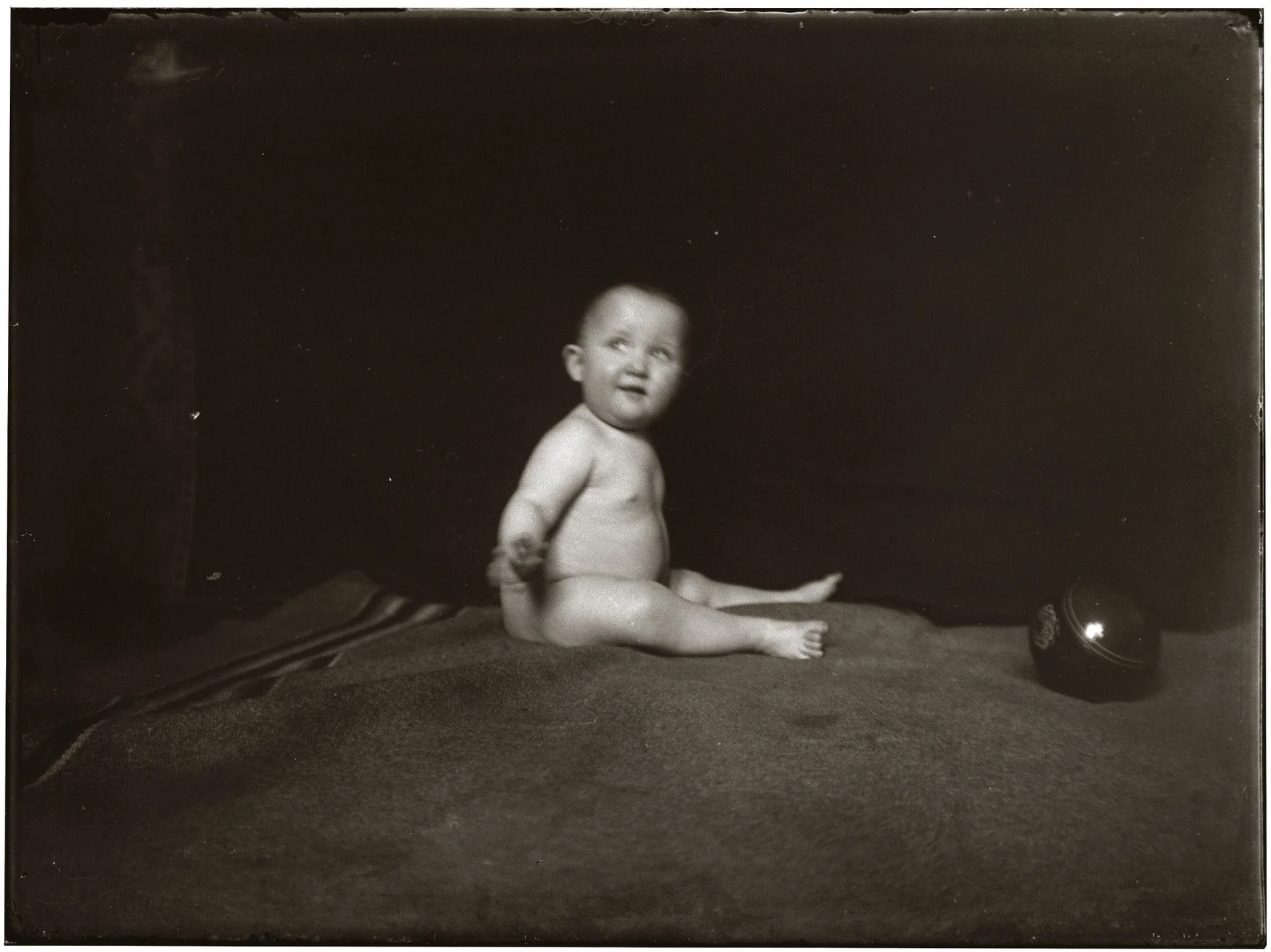
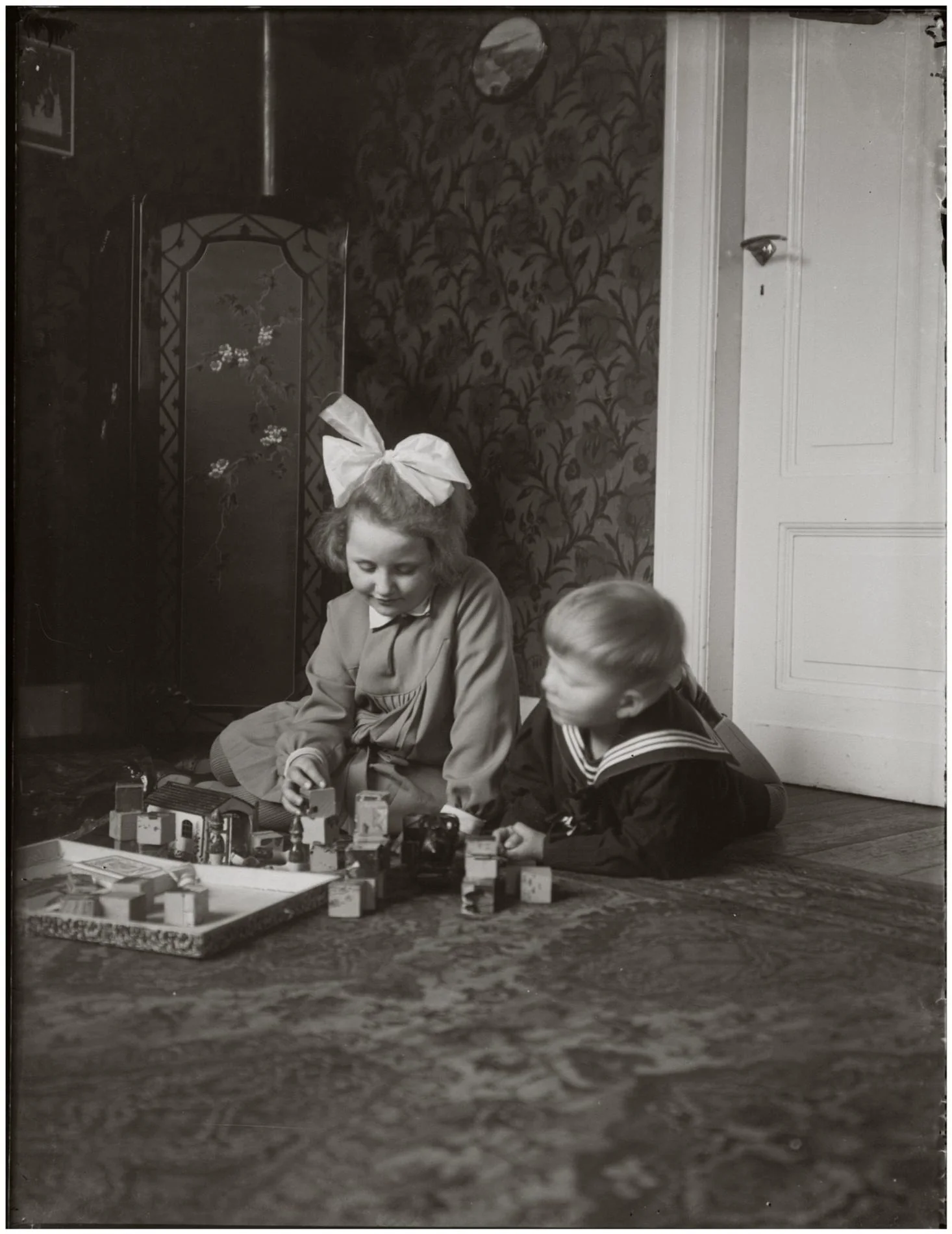
A group relaxes on the sand while an older woman remains seated on a bench. Two men in suits are photographed on the beach from some distance away. A young man and a baby are carefully placed in the light and composed in relaxed poses. Two children appear absorbed in play, unaware of the camera.
These photographs reveal an eye for light, space and composition.
The photographer could make a carefully composed portrait, but was just as interested in situations whose appeal lay in their spontaneity. He knew how to use his camera in different ways.
We should not, therefore, try to regard every photograph as a small work of art. Some are ordinary snapshots, while others are remarkably accomplished photographs. Taken together, however, they reveal an amateur who did more than simply operate his camera: he understood it and evidently enjoyed using it.
IN THE EARLIER PHOTOGRAPHS, women wear long dresses and men formal suits. Other pictures show shorter skirts, changing hairstyles and new ways of presenting oneself to the camera. Many years evidently separate them.
The passage of time becomes even more apparent in the people themselves.
Children grow older. Adults reappear at different stages of their lives. Some faces become familiar across a series of pictures; others disappear from view.
What emerges is not a complete family album. But we can see that photography remained important over a long period, and which moments the photographer considered worth preserving: gatherings, outings, portraits of people close to him and scenes from everyday life together.
This is what he has left us in his negatives.