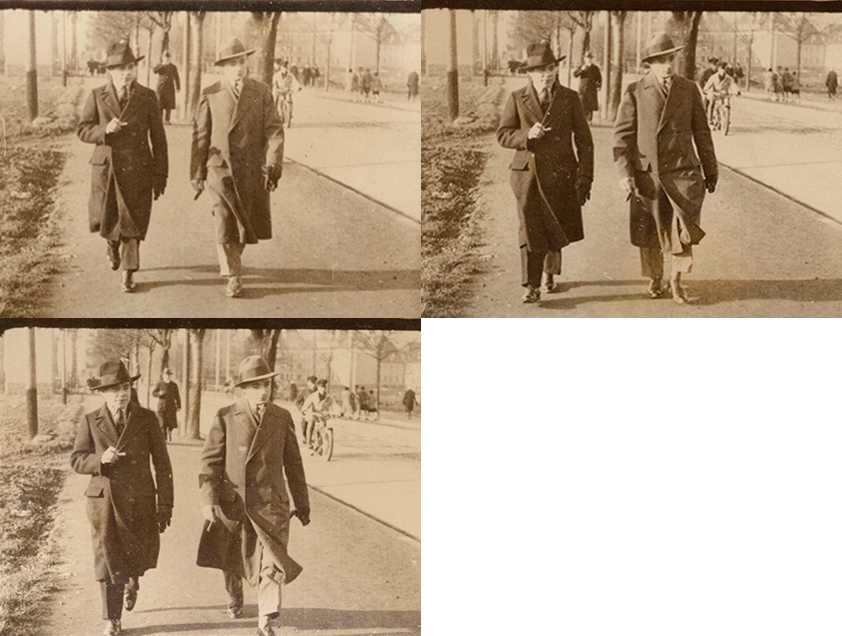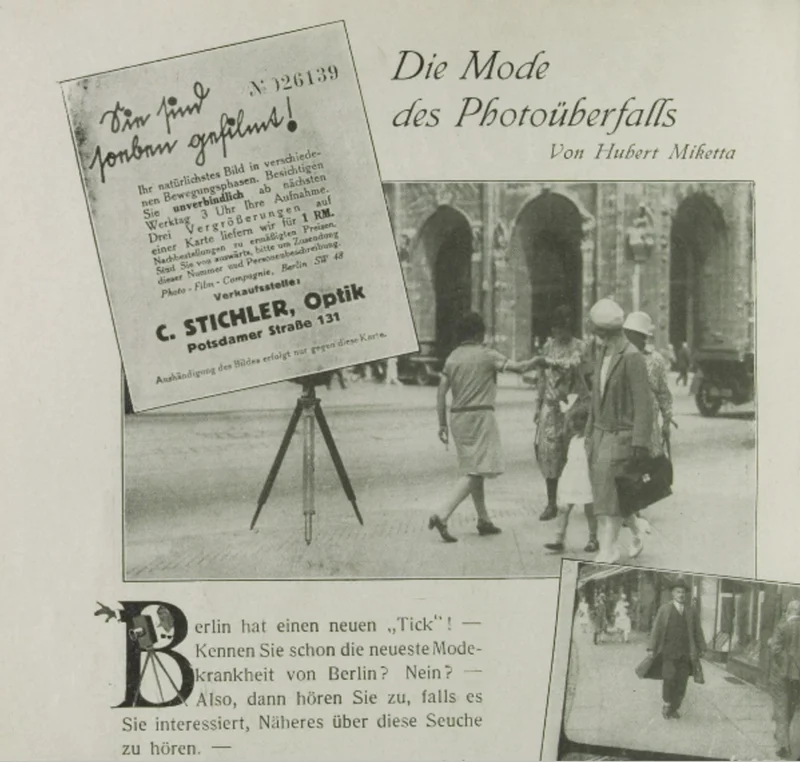
‘The Fashion for Photographic Ambushes"
This was Hubert Miketta’s headline in the December 1927 issue of the Revue des Monats, which he edited. He used it to describe a new ‘epidemic’ spreading through Berlin’s streets:
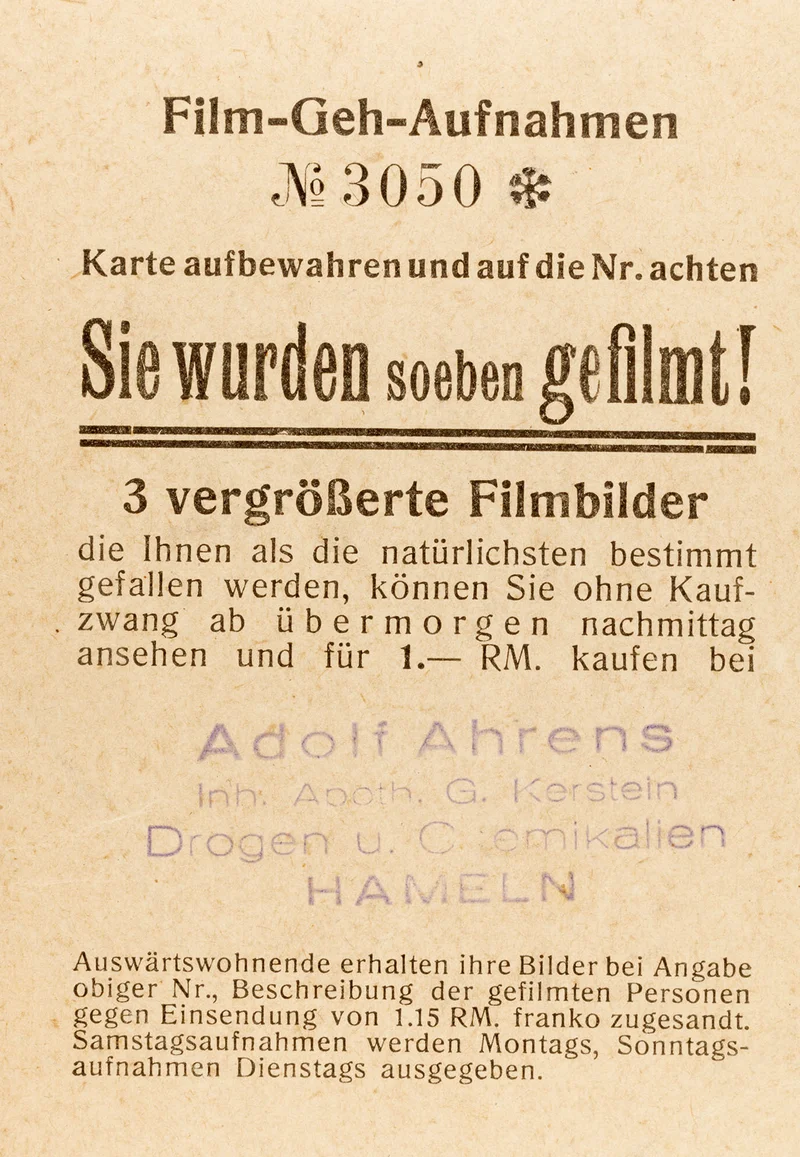
‘Berlin has a new craze! Have you heard about the latest fashionable affliction? No? Then listen, if you would like to know more about this epidemic. You stroll unsuspectingly along Leipziger Straße, look at the shop windows, observe the passers-by and consider a pair of pretty legs — in short, you do what Berliners so aptly call “bummeln”. Suddenly a good-looking, clean-shaven young man in a stylish ready-made suit steps into your path and throws a few mysterious words into your more or less intelligent train of thought: “You have just been filmed!” At the same time, a numbered slip is pressed into your hand, providing further explanation.’
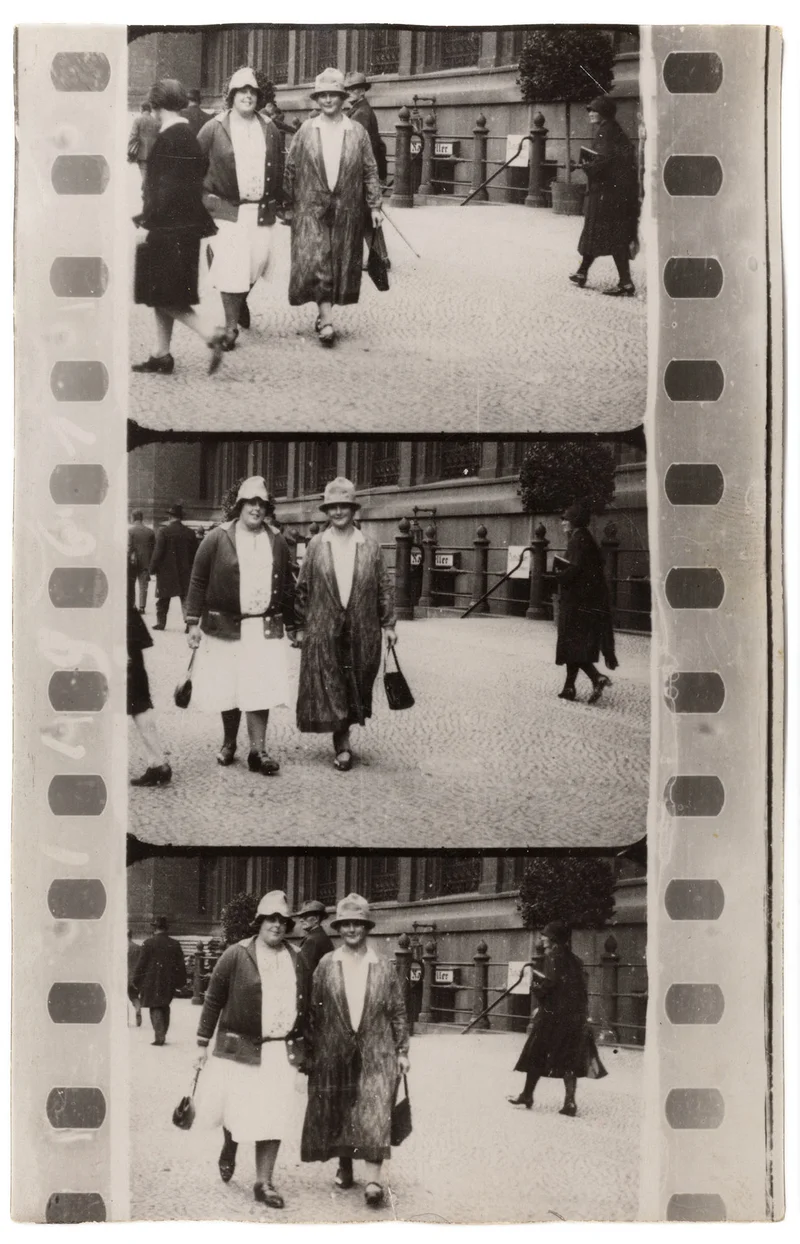

AKICE — Steinborn’s Walking-Film Photographs
The process behind these so-called walking-film photographs was developed by Gerhard Steinborn, a little-known photographic experimenter from Bad Neuenahr. Numerous street photographers appear to have adopted his technique, probably under licence.
Steinborn operated Photohaus Gerhard Steinborn at Poststraße 12 in Bad Neuenahr. He is also listed as managing director of Photolux, a company engaged in photographic wholesale trading, particularly the distribution of motion-picture cameras, which was dissolved in 1931.
Only sparse evidence of his activities survives, including a British patent for a photo booth. A Spanish patent issued in his name in 1927 probably concerns walking-film photography
:
‘Un procedimiento para la producción de series positivas fotográficas de objetos movibles’ — a method for producing photographic positive sequences of moving objects.
No German patent, however, has been identified.
Steinborn’s system was probably based on redundant silent-film cameras, allowing three consecutive exposures to be made using a hand crank. The resulting images were then printed in postcard format.
A classified advertisement dated 29 June 1927 provides revealing evidence. It offers equipment ready for use and gives an insight into the apparatus required:
‘Photographer! Owing to circumstances, complete equipment for walking-film photographs offered at a low price. Film camera, tripod, special enlarger, darkroom equipment, etc. Darkroom available for inexpensive rental. Profitable earnings!’
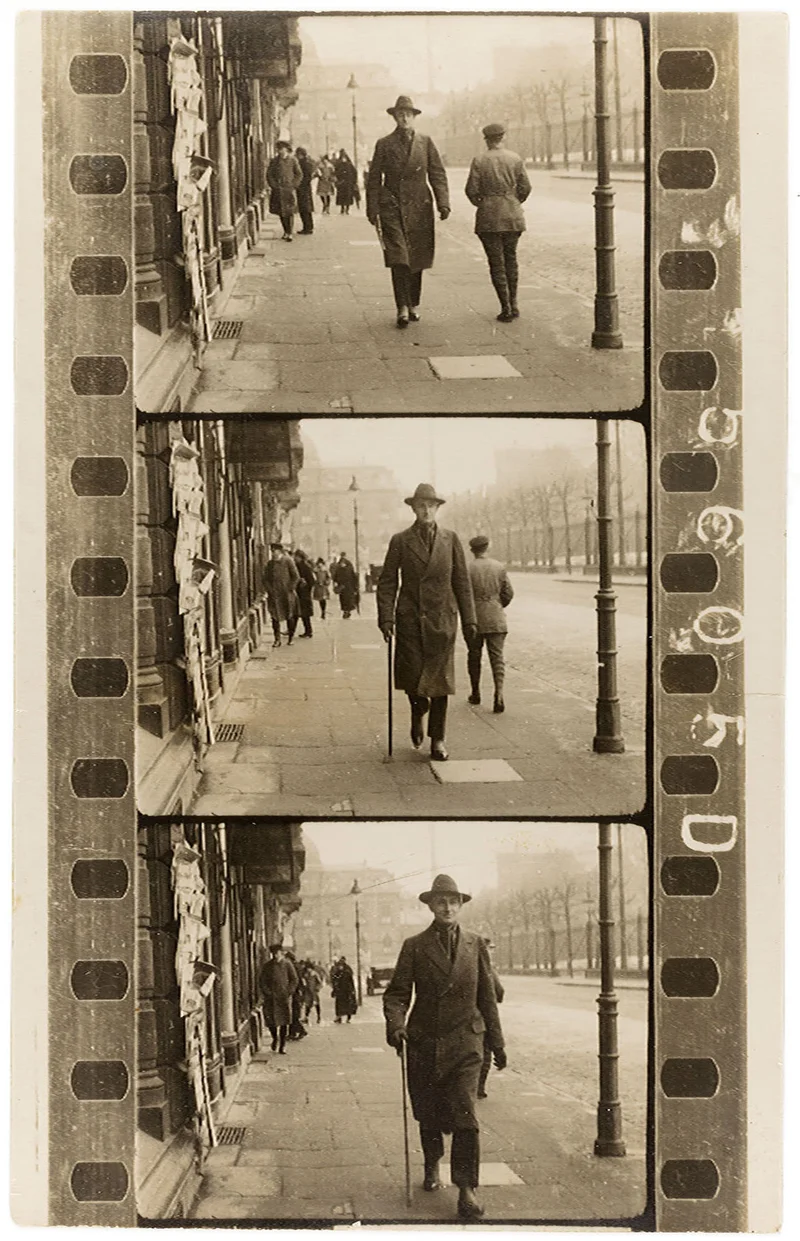
Hubert Miketta’s article continues :
„Not everyone is filmed — some outward characteristic must catch the cameraman’s attention. At least you have attracted notice through your personality and feel flattered. Besides, the amusement costs only one mark, should you wish to purchase the result. When you collect the strip of three moving pictures the next day, you are initially, to be frank, rather disconcerted. At least I was. Am I really that distinctly casual-looking passer-by hurrying along with flapping trousers and an open coat? Suddenly I understand the difference between a studio photograph, for which we deliberately prepare, and a picture taken abruptly without our knowledge. A picture, as it were, without the mask of photographic convention. This is what we really look like, for the lens does not lie. Such a picture describes us better than words could.’
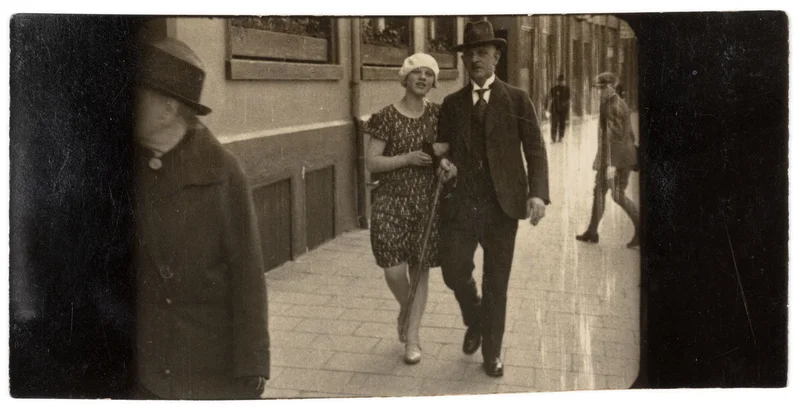
Not every ‘photographic ambush’ was without consequences, as Miketta goes on to report:
‘Of course, not everyone suffers the fate of a Rhineland wholesaler who recently took a pleasure trip to Berlin with his very charming girlfriend and was filmed there. A few days later, his rather less charming wife also visited Berlin and was filmed at the same corner. When collecting her photographs, she suddenly spotted her husband among the pile, pictured beside his blonde amusement. He had told her he was attending a supervisory-board meeting in Düsseldorf for several days. Tableau! Things need not always turn out quite so badly. Another older gentleman, meeting an acquaintance in the street, simply introduced his much younger companion as a “daughter kept secret until now”.’
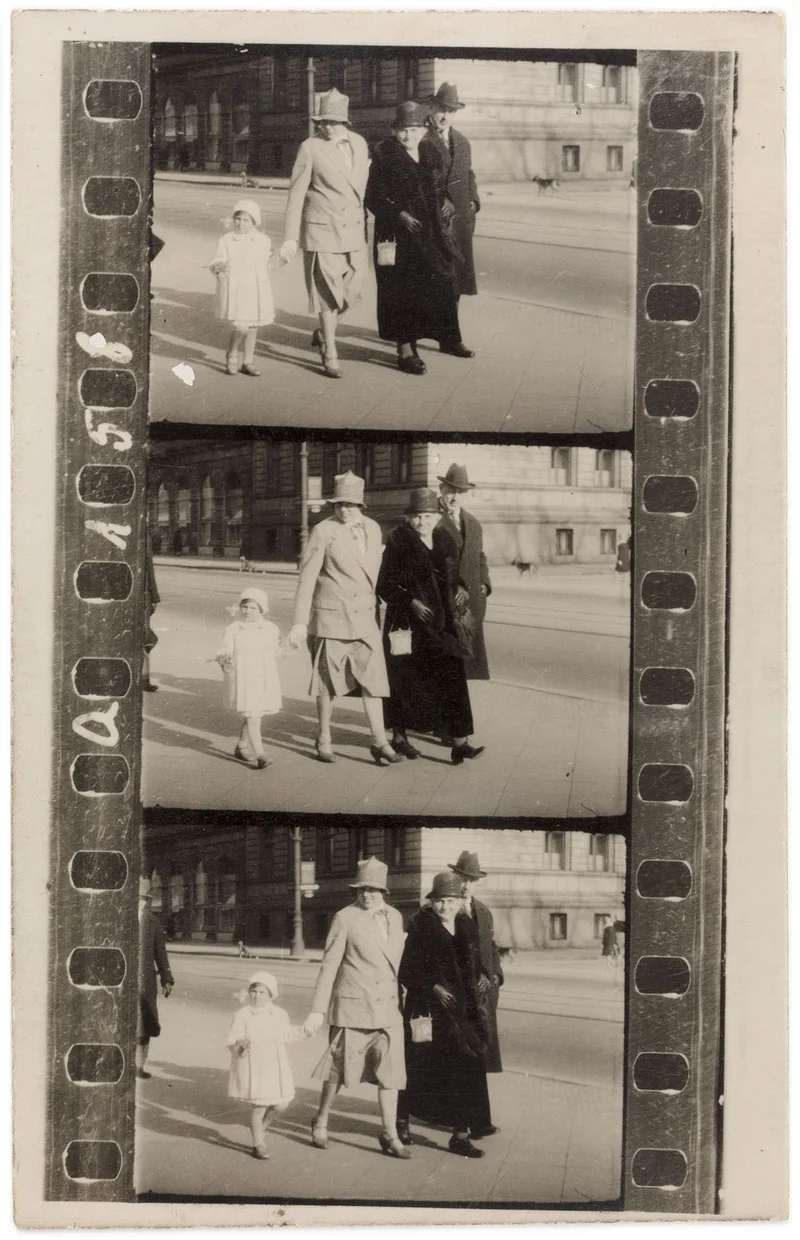
Photography as a Historical Record:
Although made for purely commercial reasons, these pictures are among the earliest forms of documentary street photography. Despite sometimes modest quality, they offer an authentic glimpse of urban street life along the fashionable promenades of large cities and spa towns in the 1920s, precisely where photographers preferred to position themselves.
Little is known about these quick photographers. During the crises of the Weimar Republic, they sought ways to earn a living.
Their social position was probably precarious. Equipped with the simplest tools, they likely worked on society’s margins.
Their business was not especially popular with the authorities, according to contemporary newspapers in several cities. The Neue Mannheimer Zeitung reported on 11 June 1927:
‘Walking-film photography now requires police permission —
When the first street photographers appeared a few weeks ago to surprise the public with the new walking-film pictures, the innovation was generally welcomed. Since then, what began with occasional photographers has developed into an entire trade. These crank-operated boxes now stand at every corner and square, becoming a nuisance. Frankfurt’s police president has therefore ordered that commercial photography in all streets requires police permission. Any harassment arising from demands for deposits, the positioning of equipment, stopping pedestrians and similar activities is forbidden.
There were also dishonest photographers. The Volksblatt für
Harburg, Wilhelmsburg und Umgegend reported on 22 August 1927:
‘Cranking an empty camera — Karl Rigge, a twenty-year-old trader from Westphalia, made walking-film photographs in various towns in and beyond Bavaria in recent weeks, taking deposits of one or two marks. In reality he cranked in vain, for his camera box was empty. The fraudster has now been apprehended in Würzburg.’
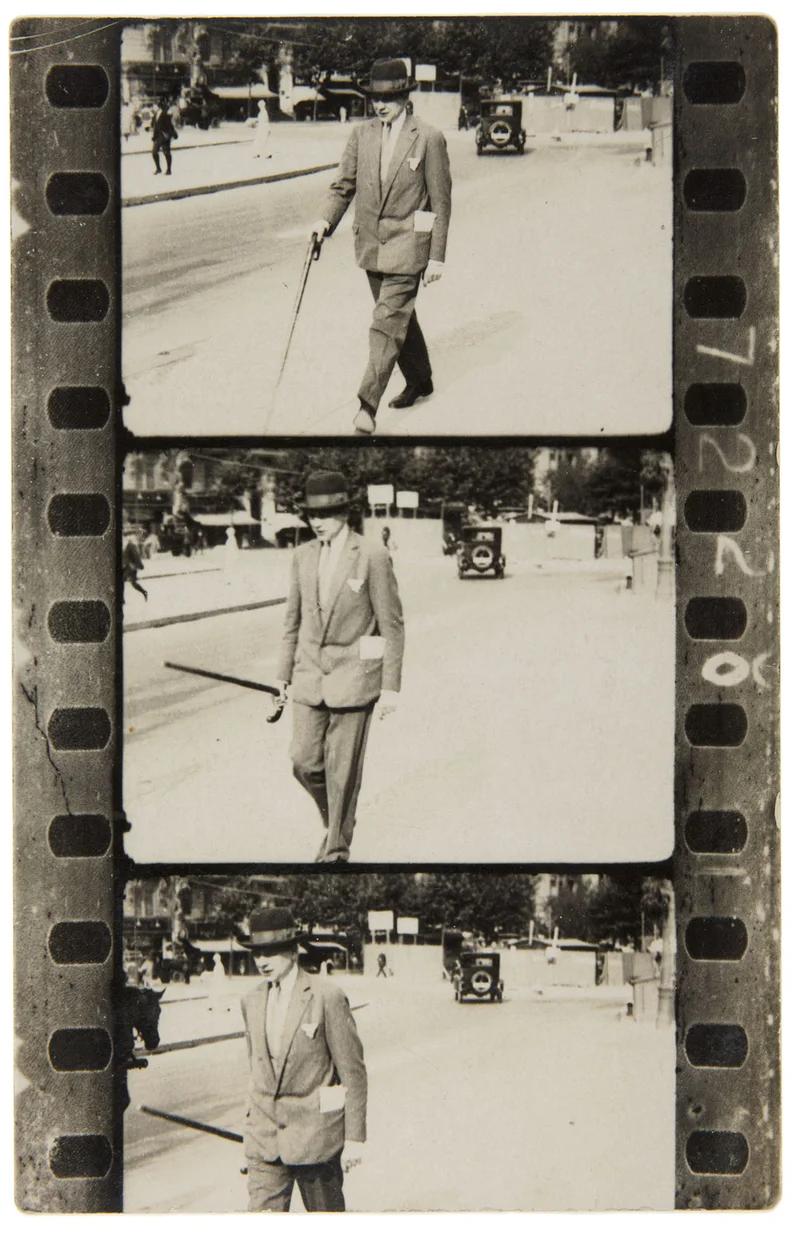
Photography as Street Art:
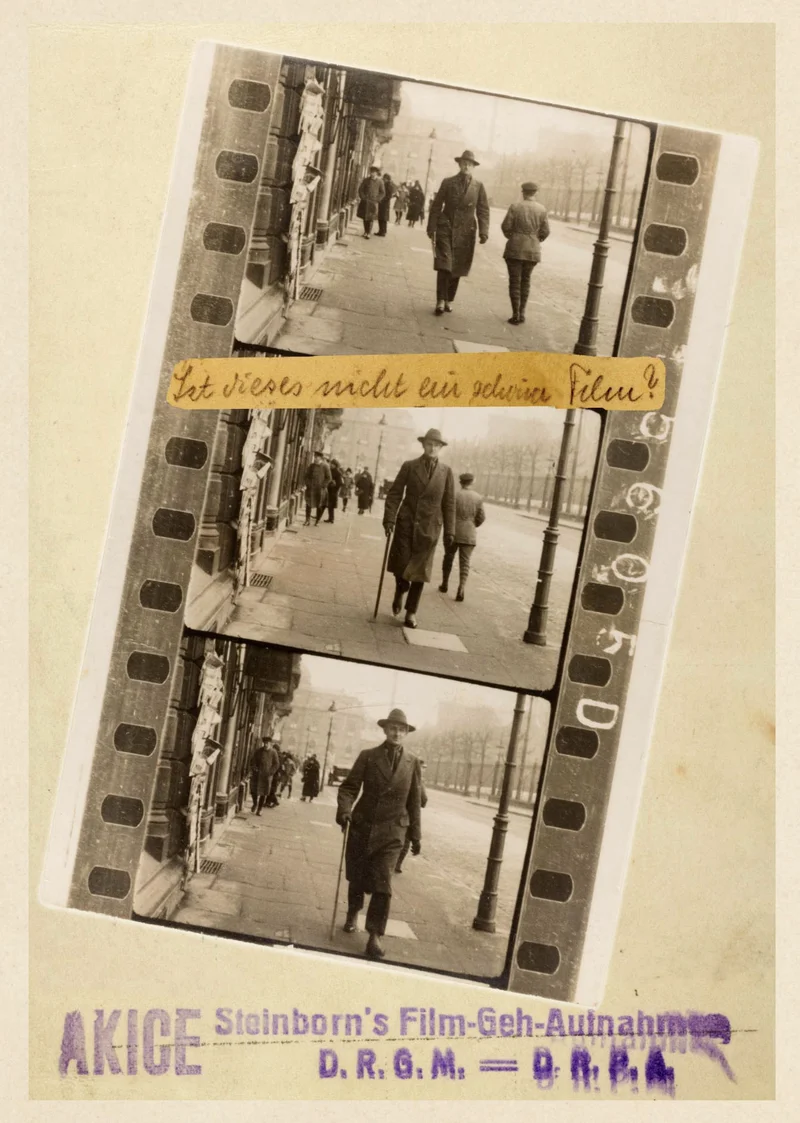
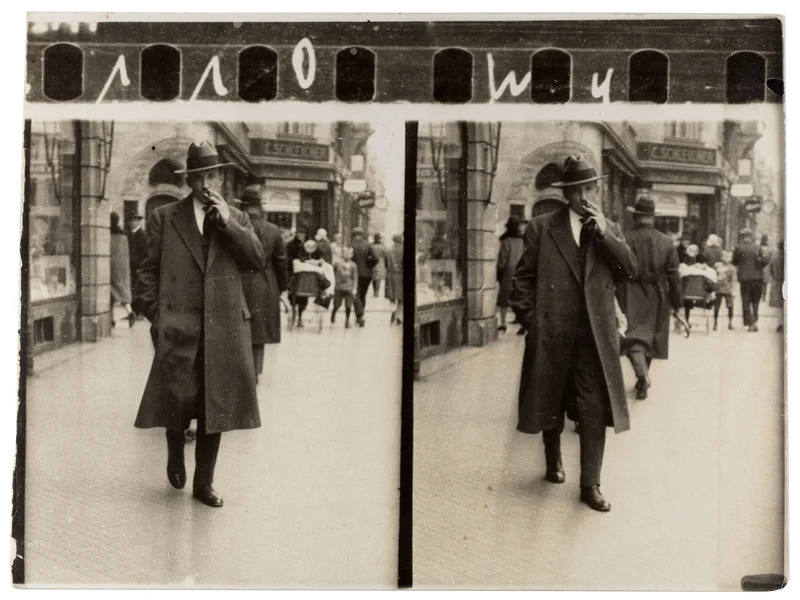
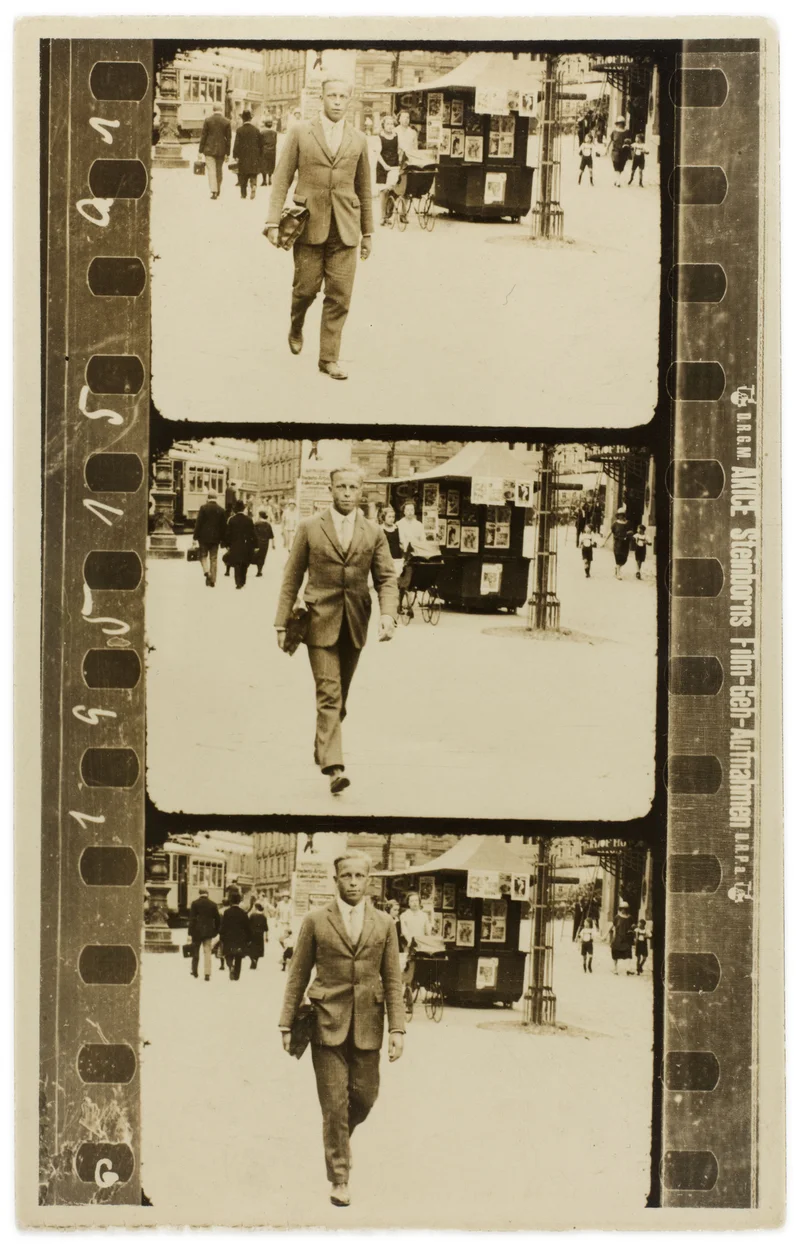
In three consecutive pictures, a well-dressed man crosses a broad street: a stylish appearance in the urban life of the 1920s. The photographer remains in the background, but has a trained eye. He seems to have recognised the man’s deliberate self-presentation, perhaps hoping to win the elegantly dressed passer-by as a customer.
The scene resembles a short film clip, an impression strengthened by the visible perforations along the edge of the film strip.
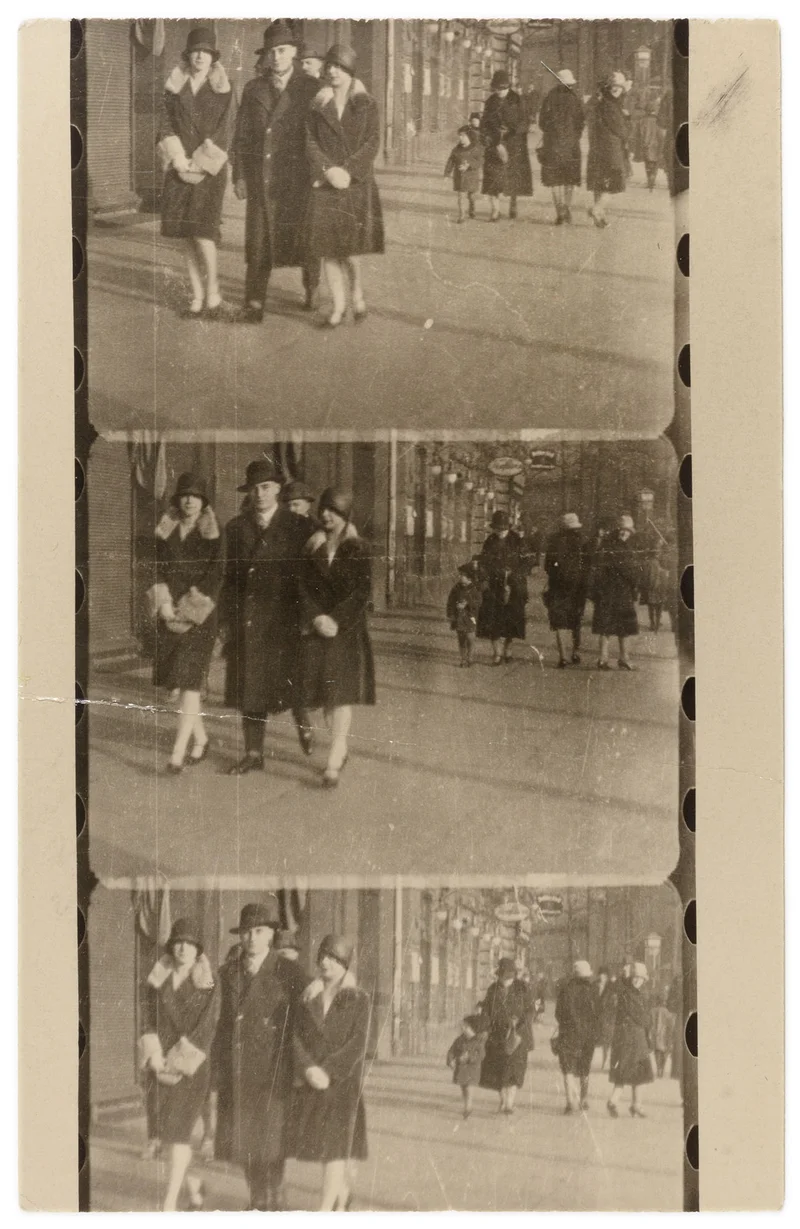
Authenticity Despite Staging:
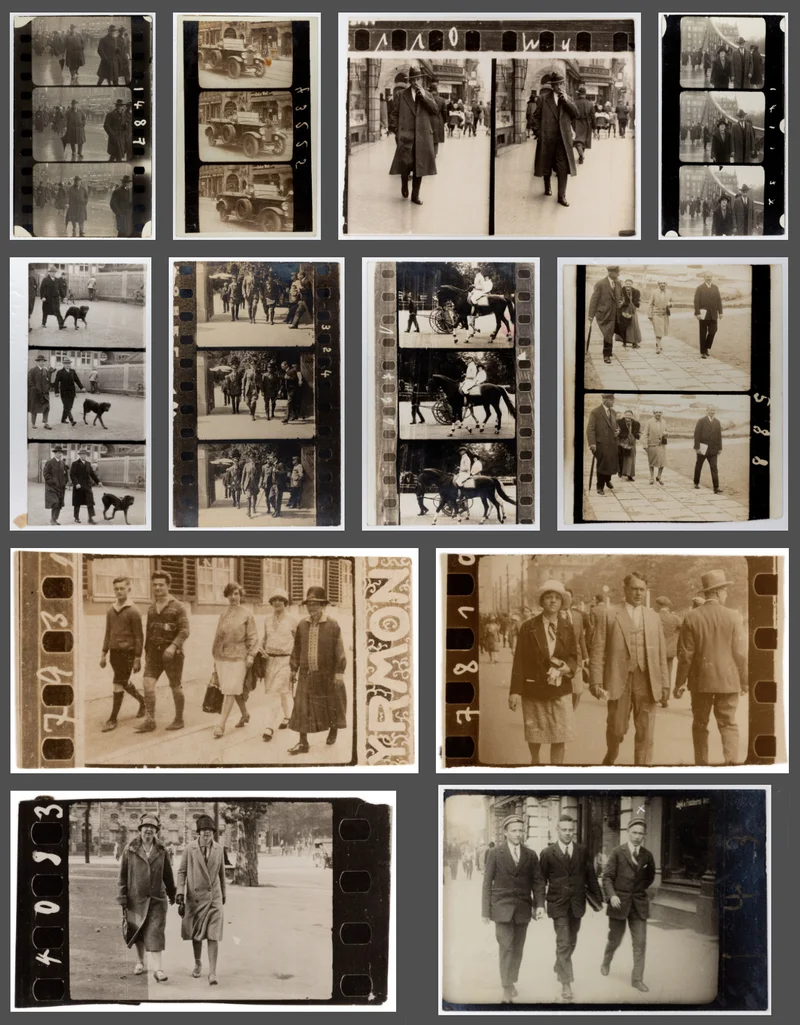
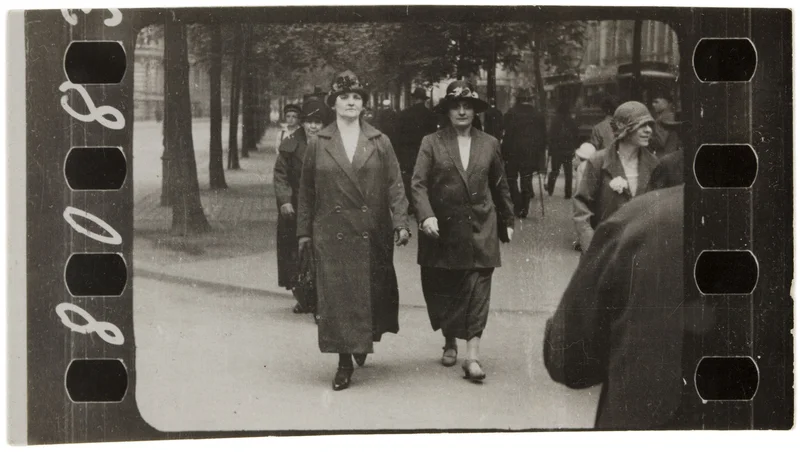
Two elegantly dressed young women stroll down the street with a gentleman. Perhaps warned by the photographer, they try to look relaxed and keep moving. A woman in the background turns curiously, pointing to the public attention these photographic encounters attracted.
Many pictures show staged or partly staged scenes. Some passers-by notice the photographer and respond visibly; others appear not to notice at all. Despite, or precisely because of, this mixture of conscious posing and spontaneous movement, the images convey an authentic sense of urban life at the time.
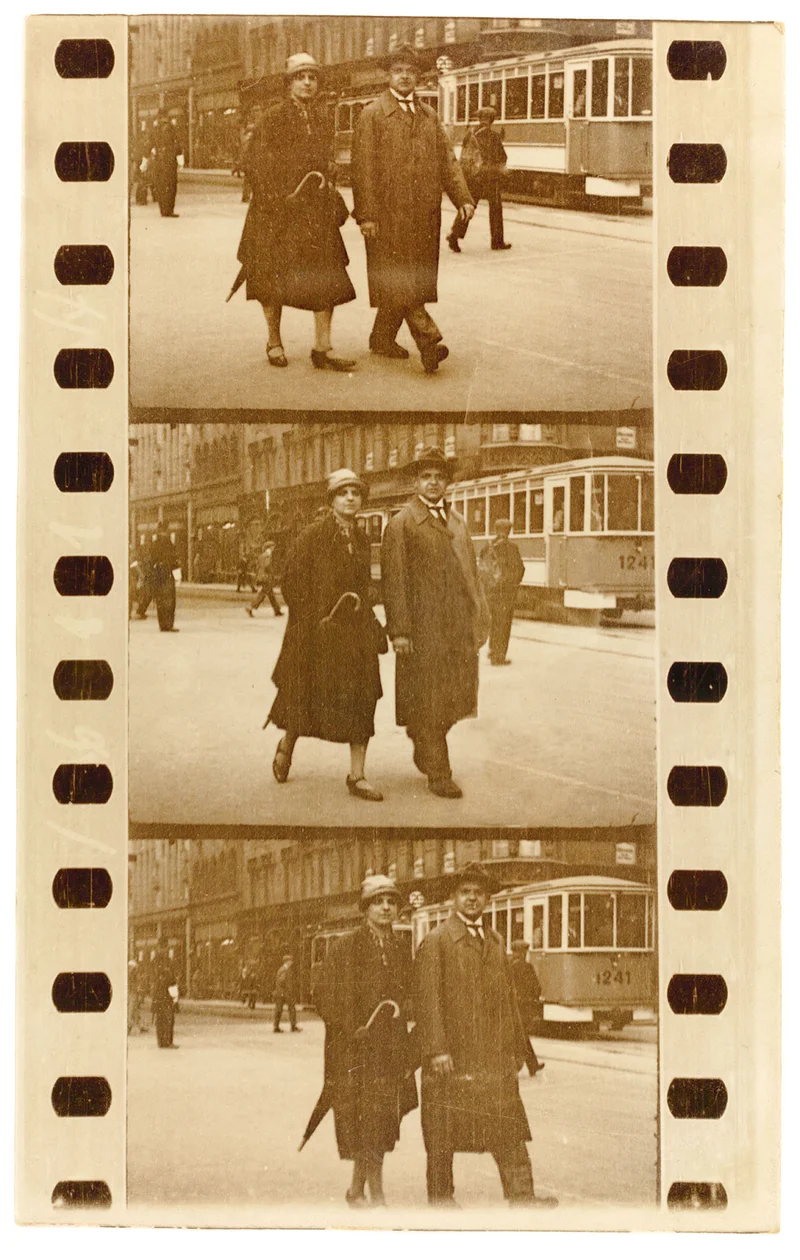
Commercial Motivation:
A stylish couple crosses the street, looking directly at the camera. Their deliberate pose contrasts with the unobserved everyday activity behind them, such as a passing tram. Although the scene resembles a spontaneous snapshot, it reveals a strong visual composition, reflecting the experience and instinct of a photographer making pictures that would sell. Commercially motivated, these photographs aimed to turn passers-by into customers. They mark a shift in photographic history: the camera leaves the studio for the street, towards movement and chance, becoming an early forerunner of modern street photography.
The Street Becomes a Stage:
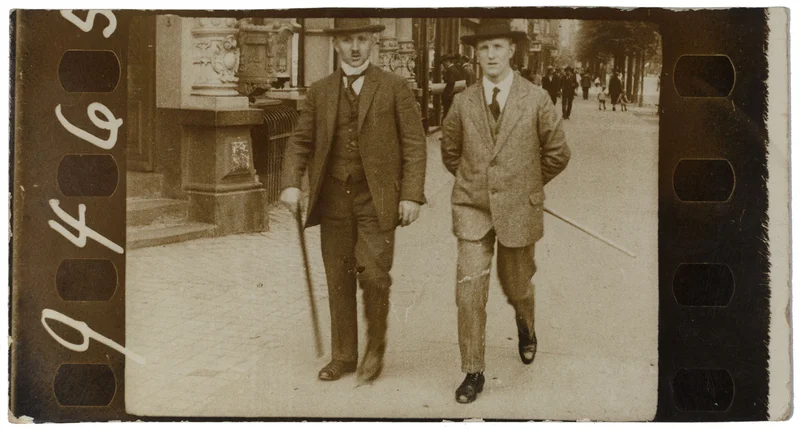
Stylishly dressed men and women move towards the camera, their posture controlled and self-assured. They present themselves in public space as though it were a display setting. The photographer recognises this moment of self-presentation, a play between everyday movement and photographic posing, and also a sales opportunity. The sitters are meant to recognise themselves in the picture and subsequently buy it.
The Visual Qualities of Chance:
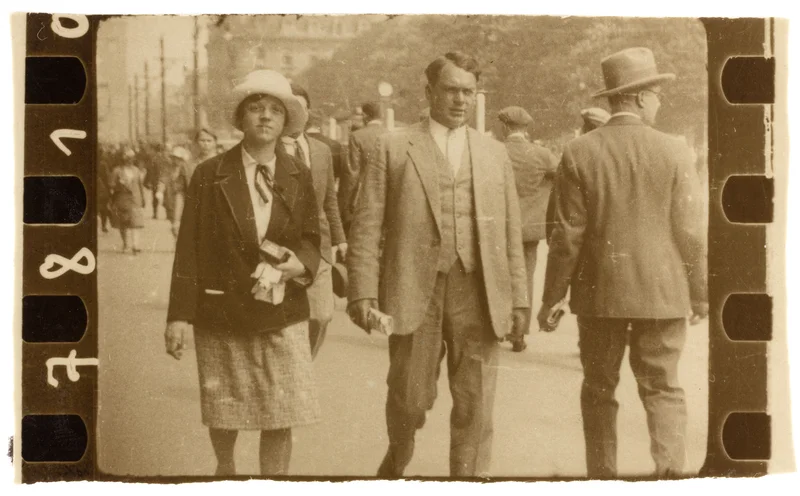
A fashionably dressed man and woman walk towards the camera. The woman looks directly into the lens, perhaps having noticed the photographer. Despite this conscious response, the overall scene feels authentic, a moment of everyday urban life. The photograph exemplifies a new practice in the interwar period. Technological developments, particularly mobile cameras permitting quick exposures in public, fundamentally changed photographic production. Although still commercially motivated and intended for sale to its subjects, the picture documents much more: clothing, posture and movement all make it a historical record
.
Forerunners of Modern Street Photography:
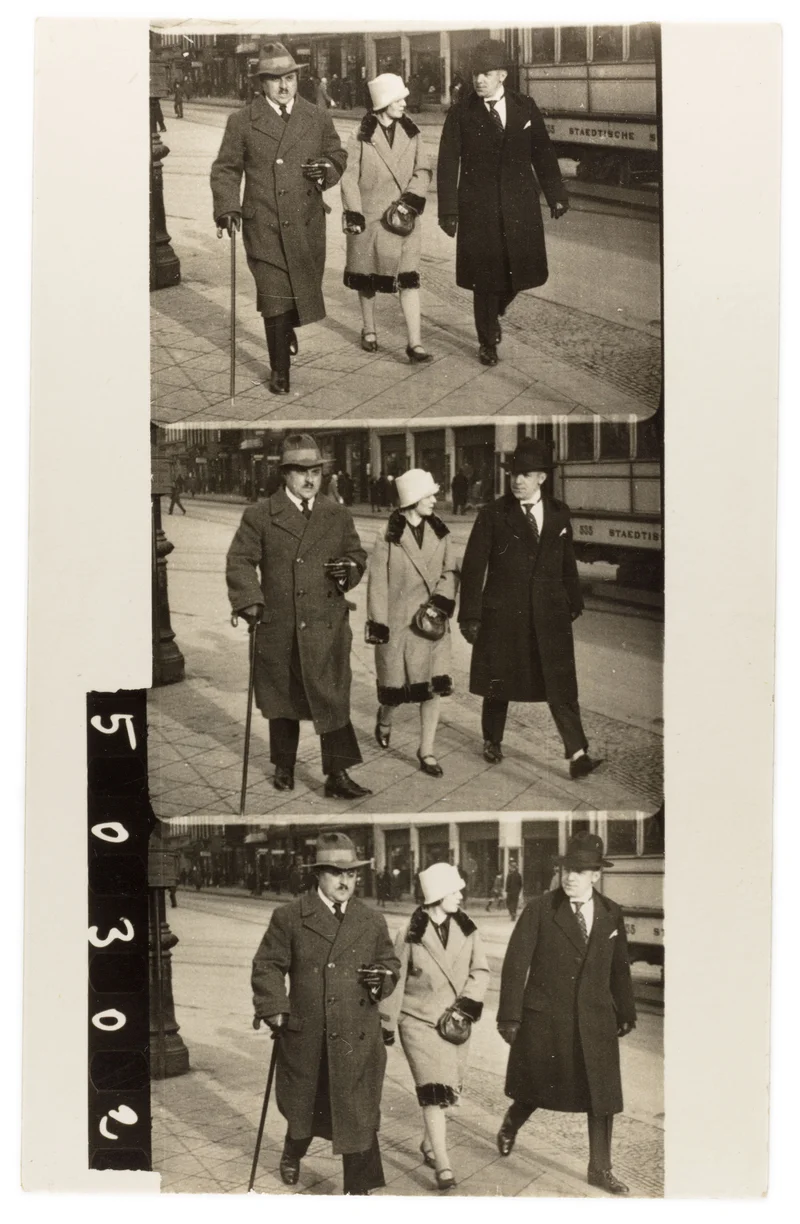
Three elegantly dressed people stroll along a city boulevard while a tram bearing the word ‘Städtische’ points to Berlin’s transport system in the background. Clothing, posture and appearance seem carefully chosen, like a small scene on the stage of urban life.
The photographer remains unseen but appears deliberately to have captured this self-presentation, not least because the affluent-looking group represented potential customers.
Documenting Social Reality:
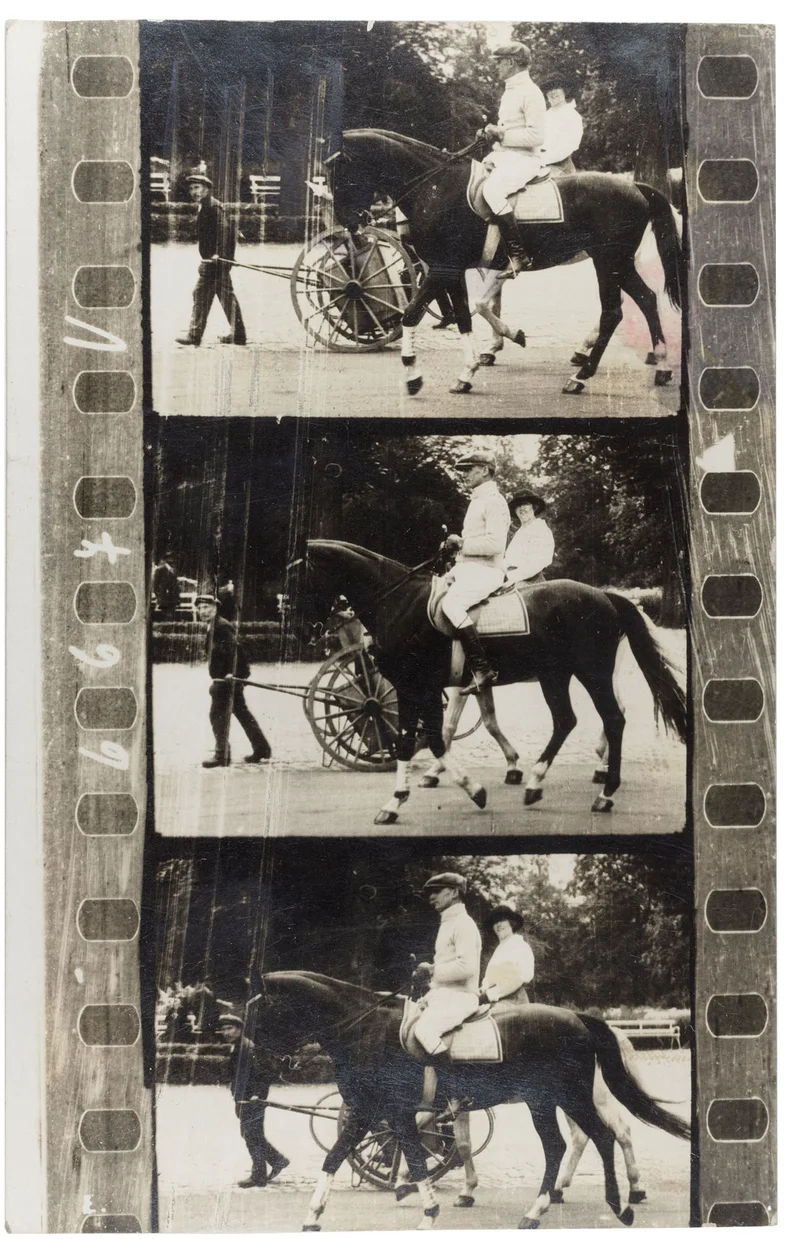
An affluent couple on horseback is photographed. A worker with a handcart happens to appear in the background. The contrast in social position becomes unintentionally visible, and the result is a picture of social reality that reveals differences the photographer probably neither planned nor consciously noticed.
The Influence of Film:
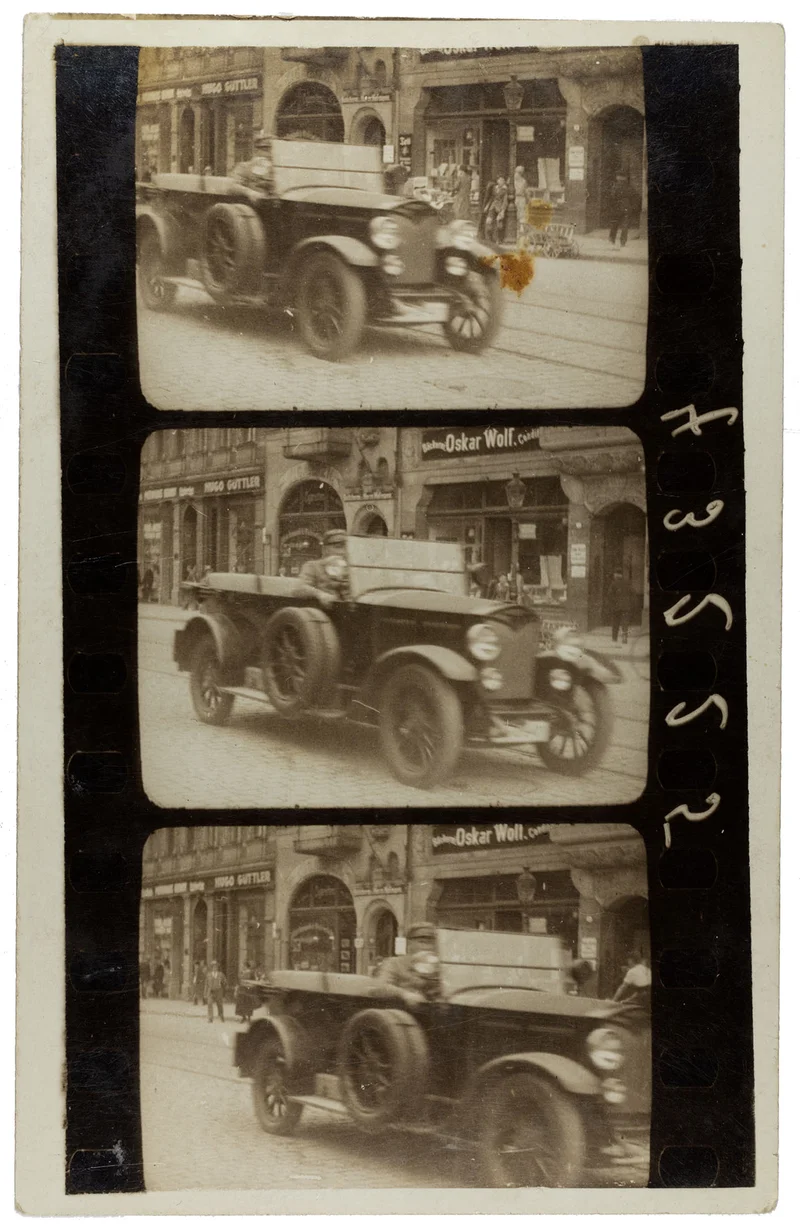
A blurred photograph of a moving car recalls cinema in its energy and framing, approaching the modern culture of moving images. The sequence shows a car passing by, with blurred movement and visible film perforations strengthening the impression of a running film. The picture points to cinema’s influence on contemporary photography both in subject and form, while also reflecting urban life in the Weimar Republic.
Use within Postcard Culture:
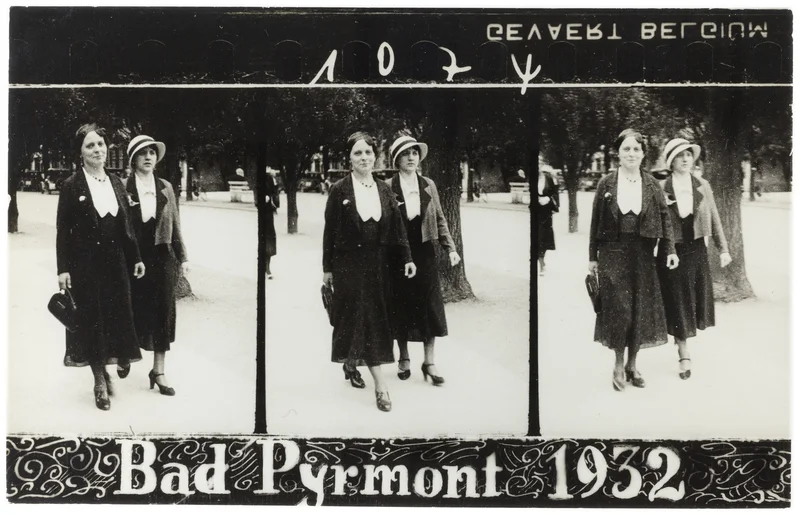
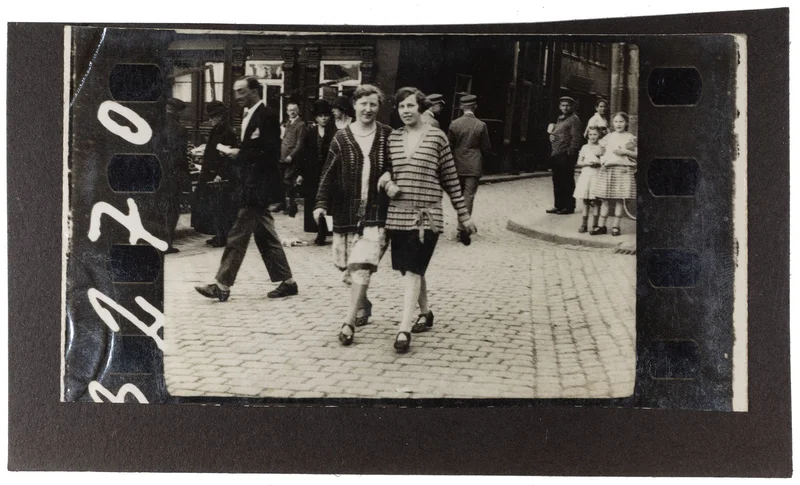
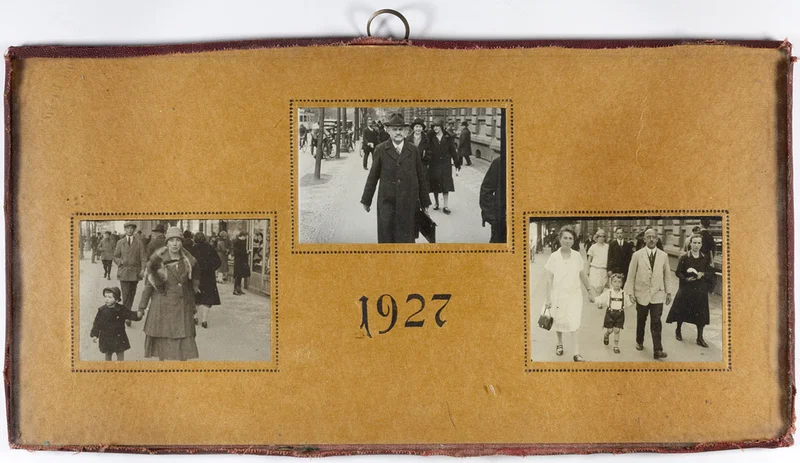
Two elegantly dressed women stroll through Bad Pyrmont in 1932, posing for the camera, while another pair in summer clothing responds spontaneously to the photographer. A man and several children watch curiously in the background. These walking-film pictures were printed in the popular postcard format and used in many ways: pasted into family albums, sent as greetings, sometimes with comments referring directly to the image, such as ‘at the film photographer’s’ or ‘isn’t this a lovely film?’, or cut up to isolate individual portraits or scenes.
Technical Flaws as a Visual Characteristic:
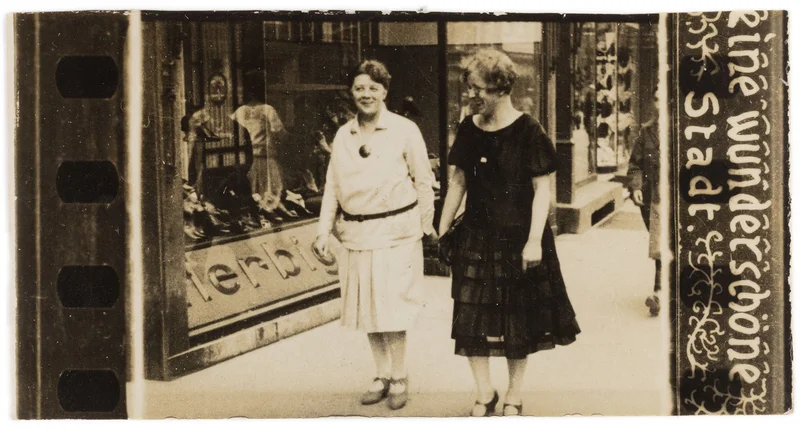
Two women window-shopping have noticed the photographer and respond with pleasure and uncertainty: a spontaneous moment in public. The often modest quality of these pictures was no accident but reflected the photographers’ precarious working conditions. They used simple, sometimes outdated equipment, developed their photographs under improvised conditions and had to react quickly in the street.Precisely these technical imperfections — blur, contrast and image faults — give the pictures their particular immediacy and make them authentic historical records.
Today these pictures appear in a new light: not as nostalgic curiosities, but as raw, early records of visual modernity and valuable social-documentary sources for urban everyday life. Walking-film photography established a visual language that lives on in selfies and contemporary street photography. Its imperfections, serial form and spontaneous aesthetic make it surprisingly contemporary.
Further examples are available in this magazine as a PDF download: