Historicbits


kaufhaus44

The Face from the Department Store


Portrait photography in Berlin department stores (1900–1933)

kaufhaus04

kaufhaus53

How pricing strategies created a new visual language:
The emergence of minimalist portrait photography as a mass-produced product

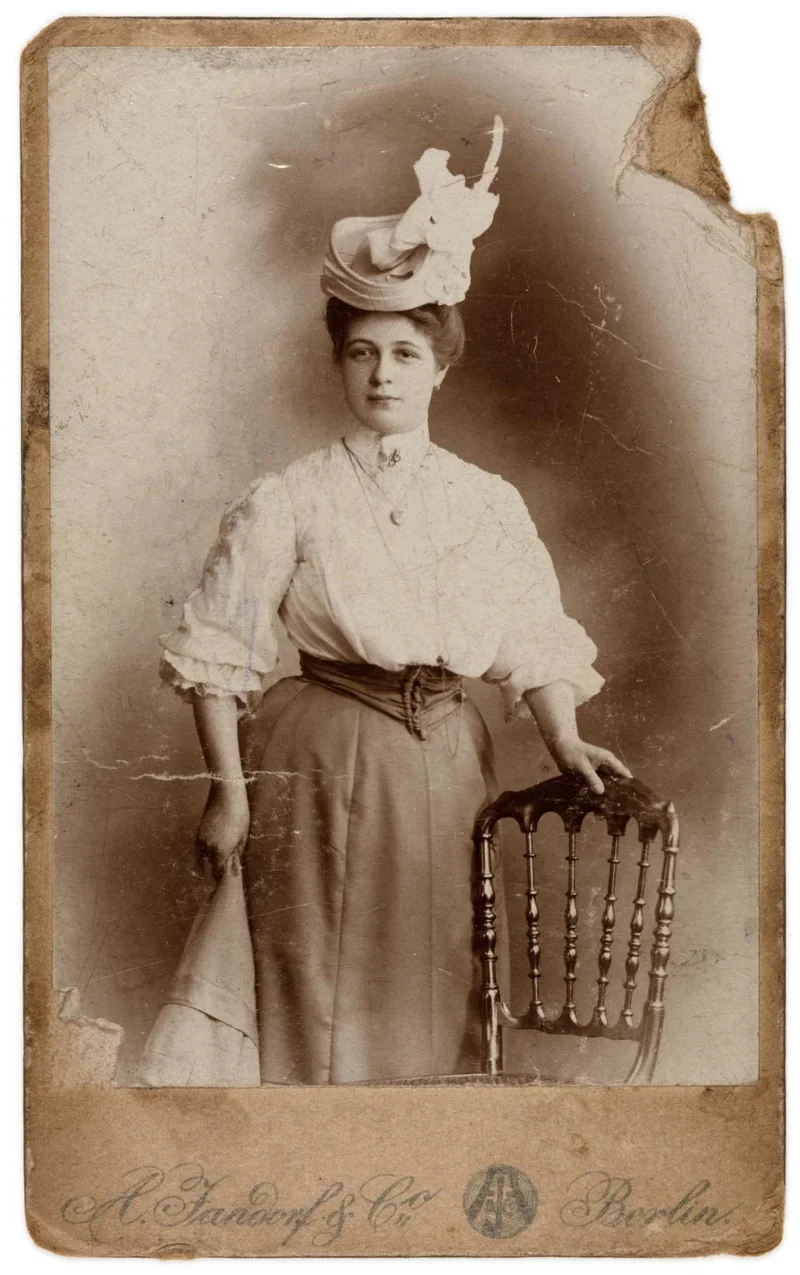
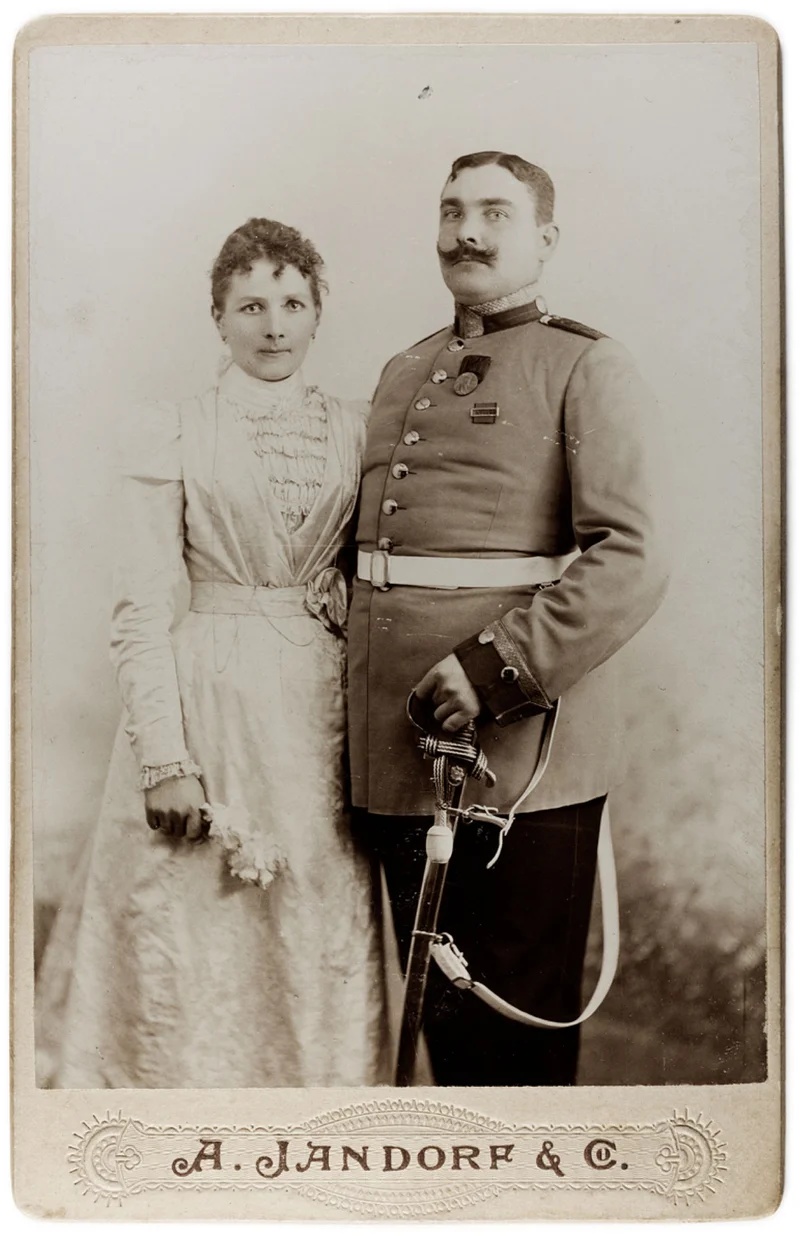
Around 1900, Berlin department stores became centres of photographic innovation as well as temples of consumption. Adolf Jandorf established a studio in his Kreuzberg store in 1898; others, including Jacob Gebrüder Nachfl., Tietz and Wertheim, soon followed. These photographic studios became an integral part of the department stores’ services, offering professional portraits on the premises alongside the processing of amateur photographs.

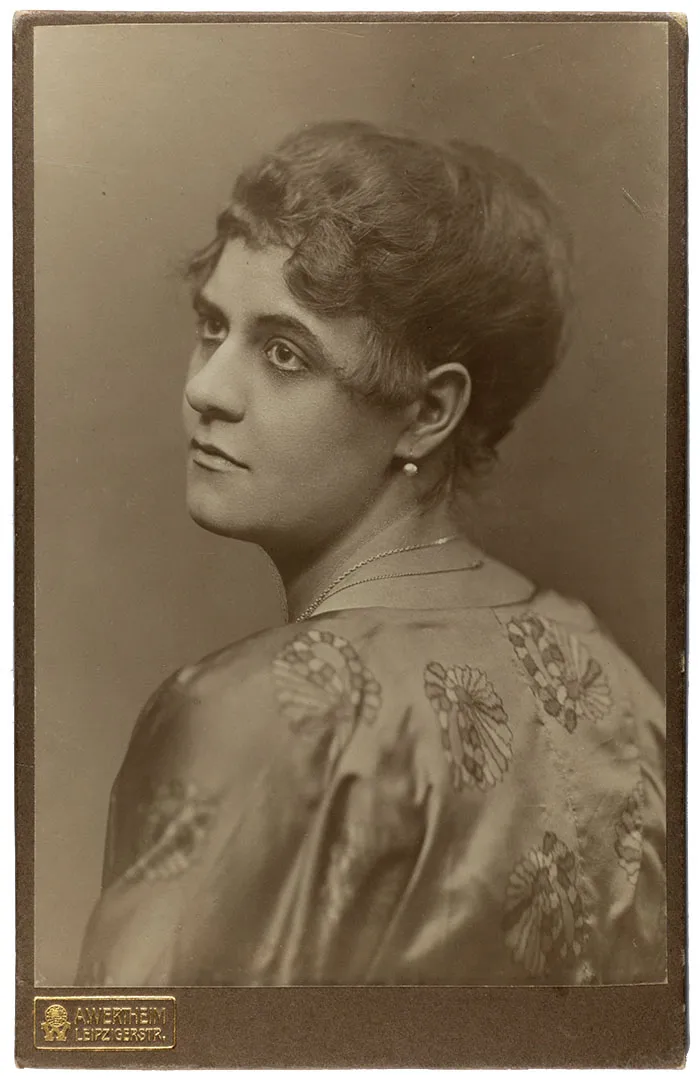
Organisationally, the studios were part of the department store. They contributed to its brand image and offered a modern, luxurious setting. Each portrait bore the store’s individually designed emblem, serving both as everyday advertising and as a symbol of exclusivity. The studios thus strengthened customer loyalty and acted as effective marketing tools.


kaufhaus1kaufhaus48kaufhaus50

Democratisation through affordable prices

Depending on how much customers spent, department stores offered free portrait photographs and deliberately lowered prices to attract customers with special offers:
At Jacob Gebrüder Nachfl., a dozen portraits in carte-de-visite format cost 1.80 marks — considerably less than independent photographers charged. Formats such as postcards were also available for under 2 marks.

For the first time, this pricing policy enabled less affluent sections of the population to have professional portraits taken, often without any special occasion. The need to collect the finished photographs later brought customers back to the department store.

A visit to the department-store studio thus became a natural part of a shopping trip: convenient, affordable and prestigious at the same time.


The response of established photographers

Department stores’ mass production brought profound changes for traditional studio photographers working as craftspeople. Their usually elaborate, expensive portraits came under pressure. They often regarded department-store photography as inferior in both technique and design.
The standing of department-store photographers and their assistants and laboratory staff in comparison with established photographic studios was also disputed.

Yet the success of department-store studios rested precisely on their efficiency and their ability to make luxury accessible. Despite the low prices, customers experienced a studio visit as a high-quality service, supported by the prestige of the department stores themselves. A. Wertheim and KaDeWe were regarded as places of modern elegance, and their photographic studios benefited considerably from that image.

This democratisation of photographic luxury forced the established profession to rethink its practices. Photography was being redefined somewhere between a craft, an industrial product and an urban service.


kaufhaus63
kaufhaus64
kaufhaus28

kaufhaus16
kaufhaus 41

kaufhaus61

kaughaus62

A new photographic ideal

As demand grew, portrait photography developed a form of assembly-line production that also changed the style of the images. They became simpler and more functional, with elaborate painted backdrops and props used more sparingly. This reduction was economically efficient and also reflected contemporary modern tastes.

The person being photographed became the focus: plain, direct, against more neutral backgrounds and within a standardised visual language. Poses were prescribed; the aim was to conform to an established photographic pattern rather than to depict an individual. Emphasis was placed on clothing and personal accessories that signalled prosperity, and on presenting the sitter as favourably as possible.

The clear, minimalist composition — an expression of a rationalised production process — produced a serial aesthetic that appears anonymous from today’s perspective. It anticipated photographic techniques that would only be adopted in documentary and conceptual photography decades later.


kaufhaus65

kaufhaus66

kaufhaus23
kaufhaus49
kaufhaus56
kaufhaus20

Photography as a family ritual

Alongside formal portraits of married couples and parents with their children, photographic appointments were often associated with important stages of life: baby photographs, small children with toys, starting school, confirmation or first communion, and enlistment, marked by a photograph in uniform.


Many of these images survived in family albums, often without further clues to their context or the sitters’ identities. Nevertheless, they now offer insights into everyday realities, visual language and the cultural rituals of a society shaped by middle-class values.


kaufhaus25

kaufhaus30

kaufhaus 32


kaufhaus58

Studios specialised particularly in photographs of children, who represented a potential target group of customers. Photographing them was more demanding and time-consuming. Here too, standardised poses were used, frequently supplemented by the same recurring toys as props.


kaughaus31

kaufhaus11

kaufhaus60


kuafhaus6

kaufhaus42

kaufhaus36

kaufhaus10


Staging prosperity

These portraits stage middle-class identity through conspicuous displays of luxury, fashion and social status. Clothing, jewellery and accessories may have been purchased in the department stores and recorded there in photographs. The images vividly document changes in taste and perceptions of luxury from the turn of the century to the 1930s.


kaufhaus18
kaufhaus19

kaufhaus2
kaufhaus33


Studio portraits as play and self-presentation

Some photographs show allegorical or seasonal scenes: a girl as an angel, a young woman as a fairy, posed with outspread veils or wings. A costumed group and a boy with a pipe dressed as a ‘little adult’ were probably photographed for carnival or a
fancy-dress party.
Such portrayals, perhaps produced during seasonal studio promotions or as private keepsakes for family and friends, underline the creative range possible even within standardised processes.

In addition to standard portraits, Wertheim offered photographs with greater artistic ambitions, such as large-format images from the ‘Photographisches Kunst-Atelier A. Wertheim’, which differed markedly from the usual small formats.

kaufhaus 68


Schnell-Photo: portraits in series

kaufhaus 54

kaufhaus46

In the 1910s and 1920s, a new form of photography became established in many department-store studios: the so-called ‘Schnell-Photo’, also known as ‘Leimrücken’ or ‘American Automatic Photo’. The entire process, from taking the photograph to handing over the finished prints, was highly standardised and designed for efficiency. The result was fast, serial portraits at extremely low prices.

For the first time, this method enabled almost every section of the population to have photographs taken, for practical purposes as well as social or family reasons. The pictures were produced in small series, like the sheet of twelve Schnellfoto portraits of a German railway or postal official shown above. Individual prints could easily be cut out and used, for example, as passport or identity photographs.

kaufhaus52
kaufhaus34

kaufhaus27
kaufhaus28

Alongside passport formats, Schnellfoto services included miniature pictures to insert into decorative postcards or a wallet. Quickly produced portraits were also offered in postcard format, ready to take away immediately, although of lower quality. Later, Photomaton booths were installed in department stores as well. However, the photographs taken in them cannot be attributed to particular stores because they contain no indication of the booth’s location.


kaufhaus
                                                          57

kaughaus
                                                          40

Portrait photography as a reflection of social change

Portraits from Berlin department-store studios between 1900 and 1933 document prosperity, middle-class pride and social belonging that remained largely unchanged despite dramatically altered political and social realities. This staging of the ‘familiar’ can be understood as an attempt to preserve a sense of stability and continuity in a period of uncertainty and change.


Despite the profound political, social and historical upheavals of the German Empire and the Weimar Republic, these ruptures are barely visible in department-store portraits. Even as photographic studios opened up to wider sections of the population, the images continued to show a society strongly oriented towards middle-class norms. Photography staged a middle-class identity defined by consumption and status symbols such as expensive clothing and exclusive department-store goods.

The Nazi seizure of power brought the era of department-store studios to an end. On 11 July 1933, the ‘Regulation on the Reduction of Independent Craft Businesses in Department Stores’ came into force. Its purpose was to drive small craft businesses, including photographic studios, out of the large department stores. This measure was part of an ideologically motivated economic policy intended to strengthen craftspeople regarded as traditionally ‘German’ while systematically excluding Jewish business owners. For many department-store studios, the regulation meant the end of their business; others continued under former employees acting as
subcontractors .


Source:
This article draws substantially on the ethnological study by Jeanne E. Rehnig: ‘Das photographische Atelier im Warenhaus. Fotografie bei A. Wertheim (1898–1933) und Wolf Wertheim (1909–1914)’
Würzburg: Ergon Verlag, 1999 (Veröffentlichungen zur Volkskunde und Kulturgeschichte, vol. 71)


More photographic examples are available in this magazine as a PDF download:

pdf19