A picture and its story
Group portrait
with a lion
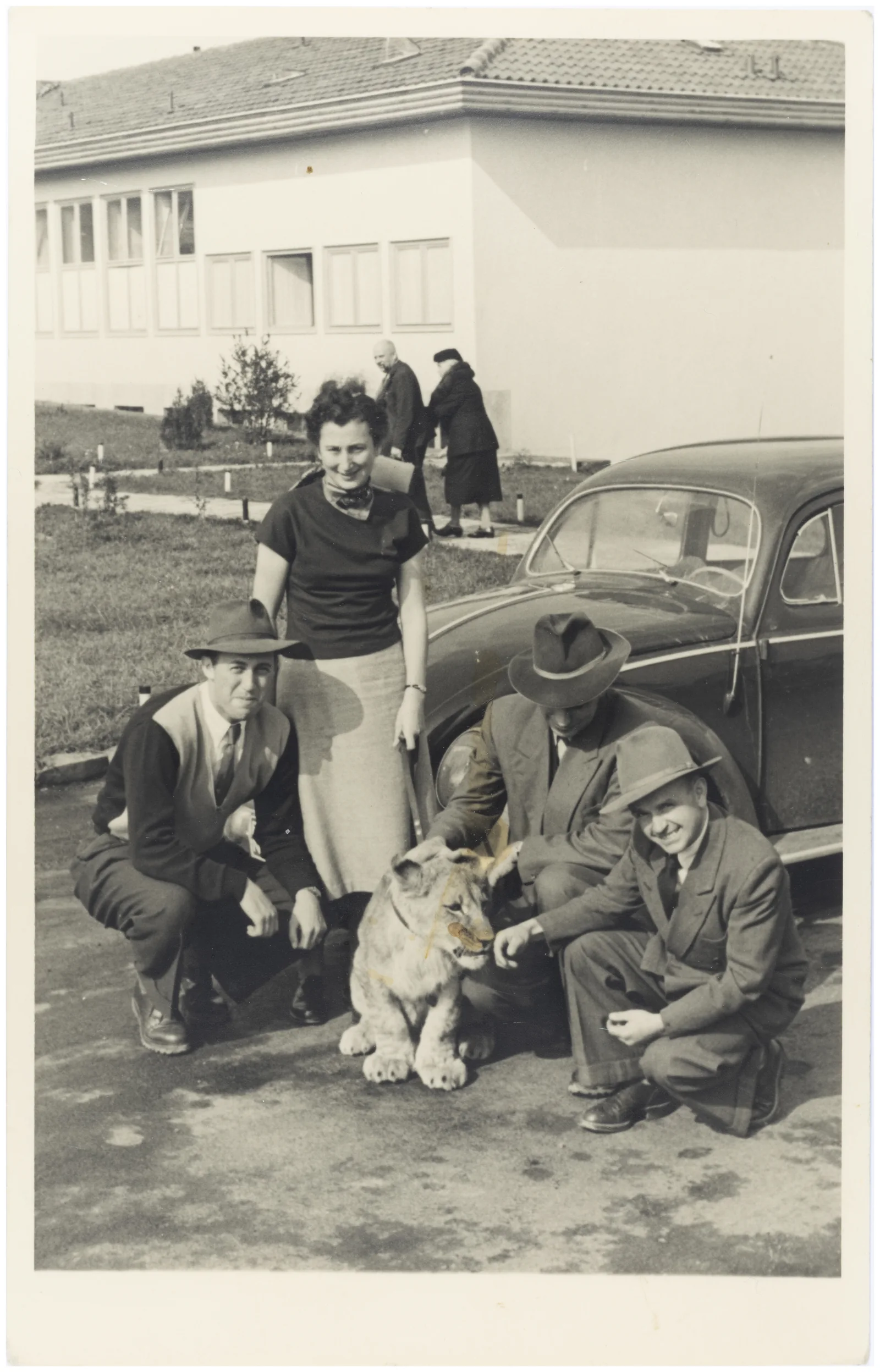
Four people, a VW Beetle and an unusual guest.
Read the story ↓At first glance, the scene seems almost ordinary. Four people have gathered for a photograph. The young lion sitting between them does not seem to worry anyone very much.
Three men are immediately beside the animal, with a woman a little further back. One man touches the lion, while another kneels beside it. The animal appears to be wearing a collar.
In the background stands a VW Beetle. Beyond it are a long building, well-kept lawns and paths along which two passers-by are walking. It all looks like an ordinary everyday scene — were it not for the lion.
Judging by the clothes, photographic style, surroundings and car, the picture probably dates from the second half of the 1950s or the early 1960s. We do not know where it was taken, who the people are or who owned the lion.
Young lions in private homes
Two television reports made by Bayerischer Rundfunk in 1962 document young lions growing up outside zoos. They take us into private homes where living with a predator was part of everyday life — although by no means without difficulties.
In Bayreuth, the Barbary lion Pacha lived with a man named Luther and his family. The report shows the animal in a domestic setting, but also the dispute over keeping it: the city authorities wanted its owner to give up the lion. Even then, this unusual closeness between people and predators was far from universally accepted.
A few weeks later, a television report from Augsburg featured the lioness Katja. She had come to the Issel family at just three days old and had been hand-reared there. The parents were zoologists with experience of working with animals.
Neither case can be linked to our photograph. They do show, however, that young lions were indeed kept in private care at the time.
The lion cub as a photographic business
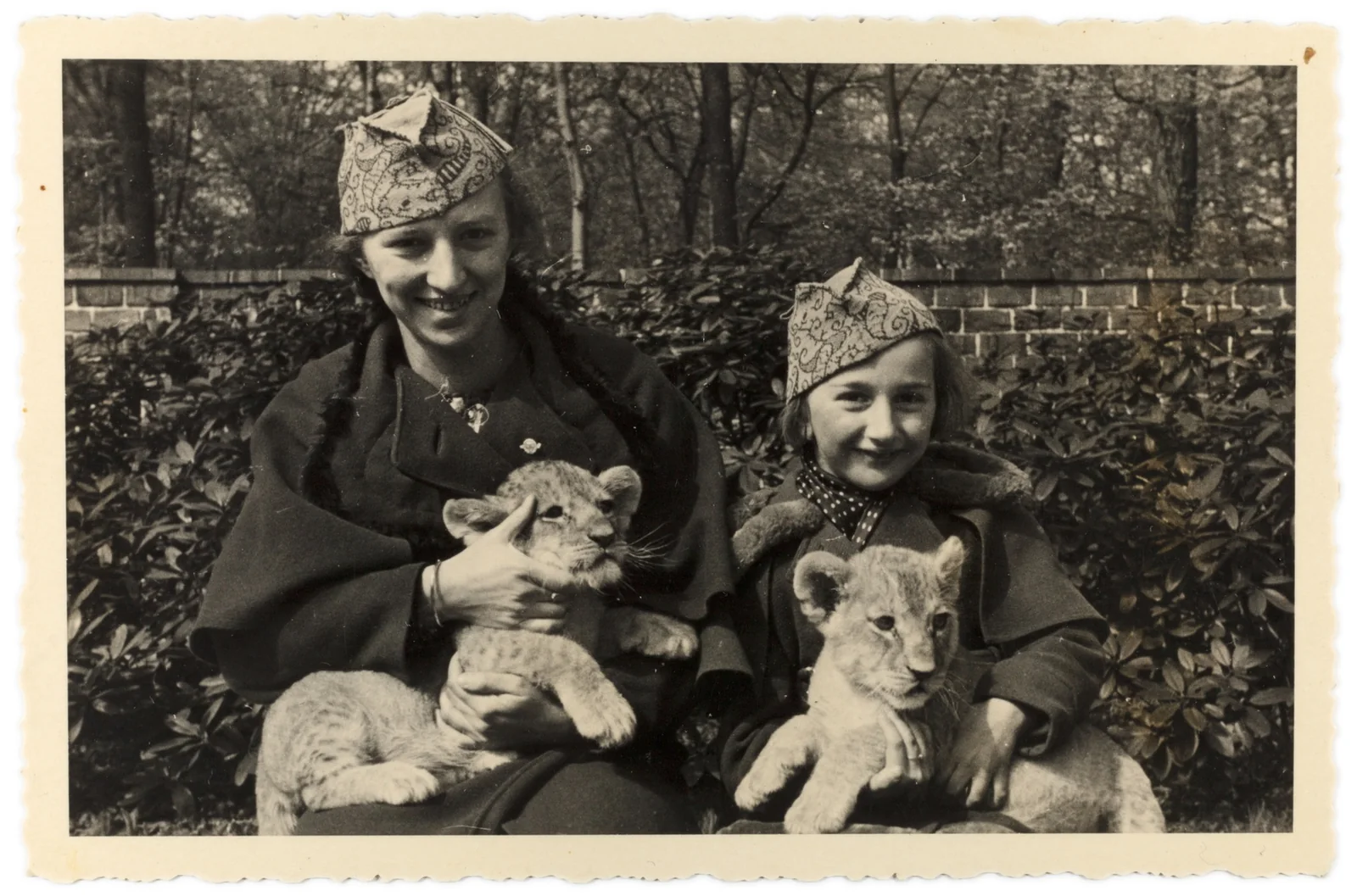
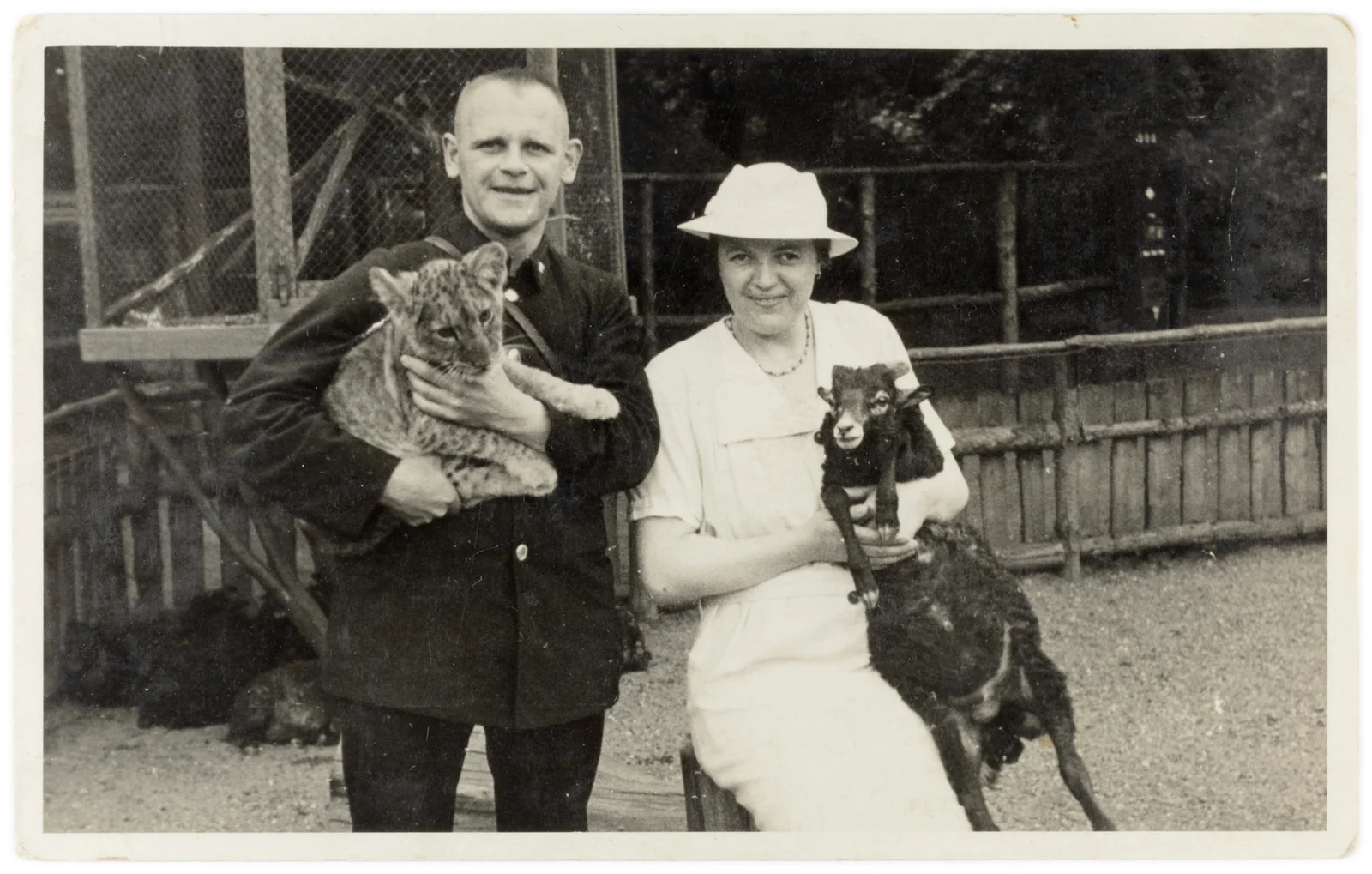
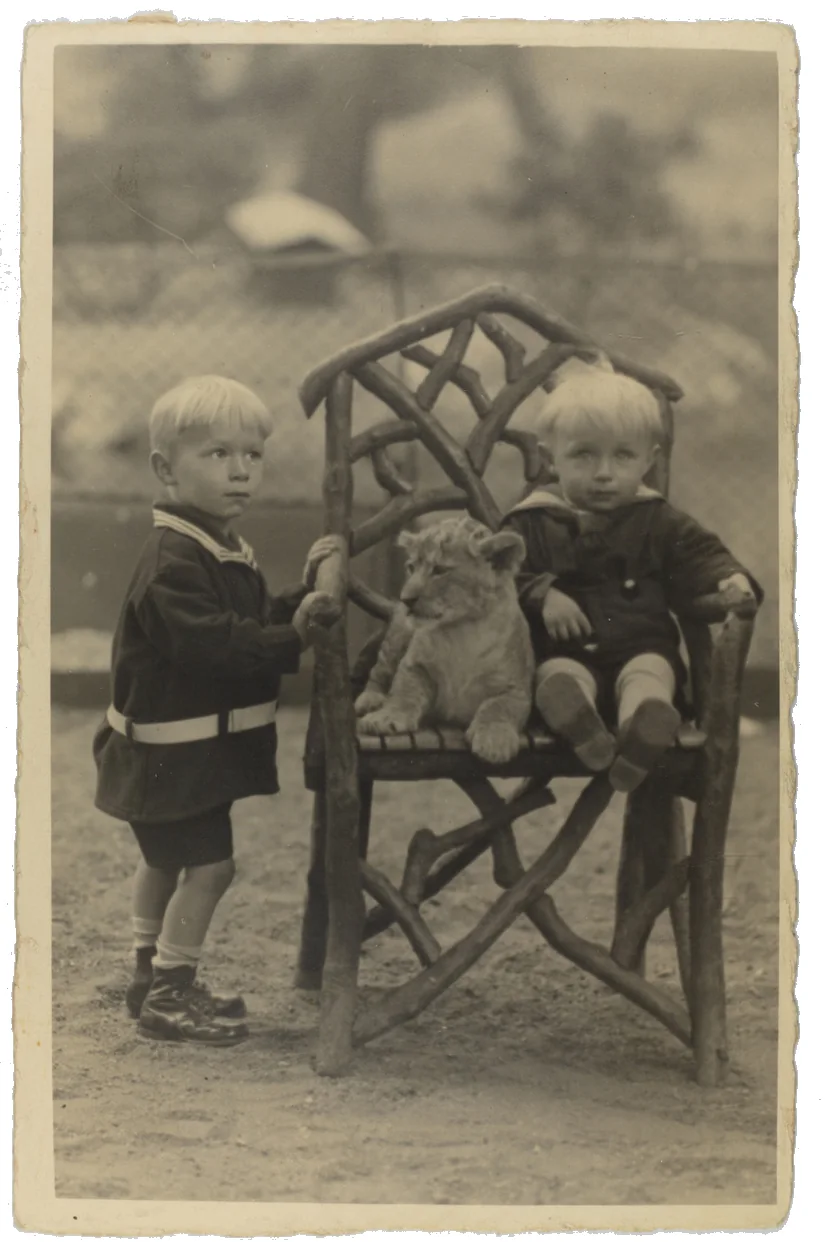
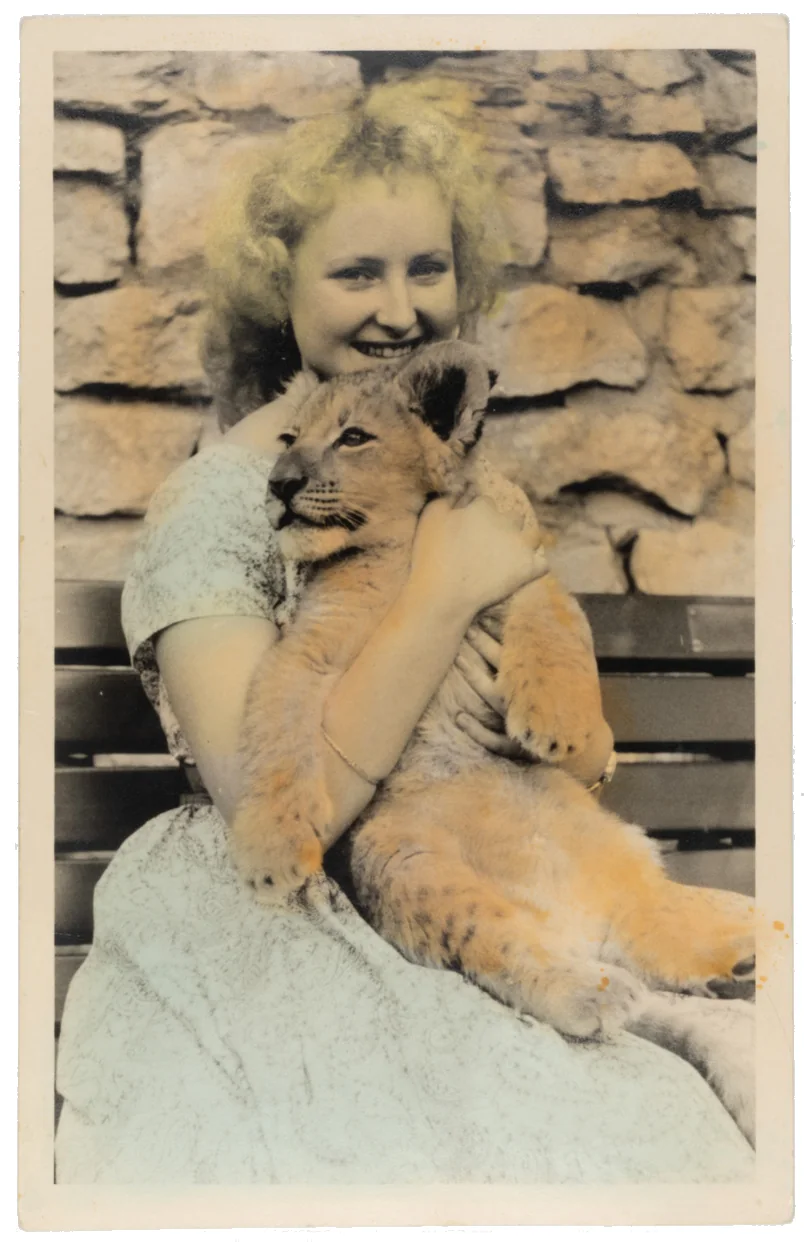
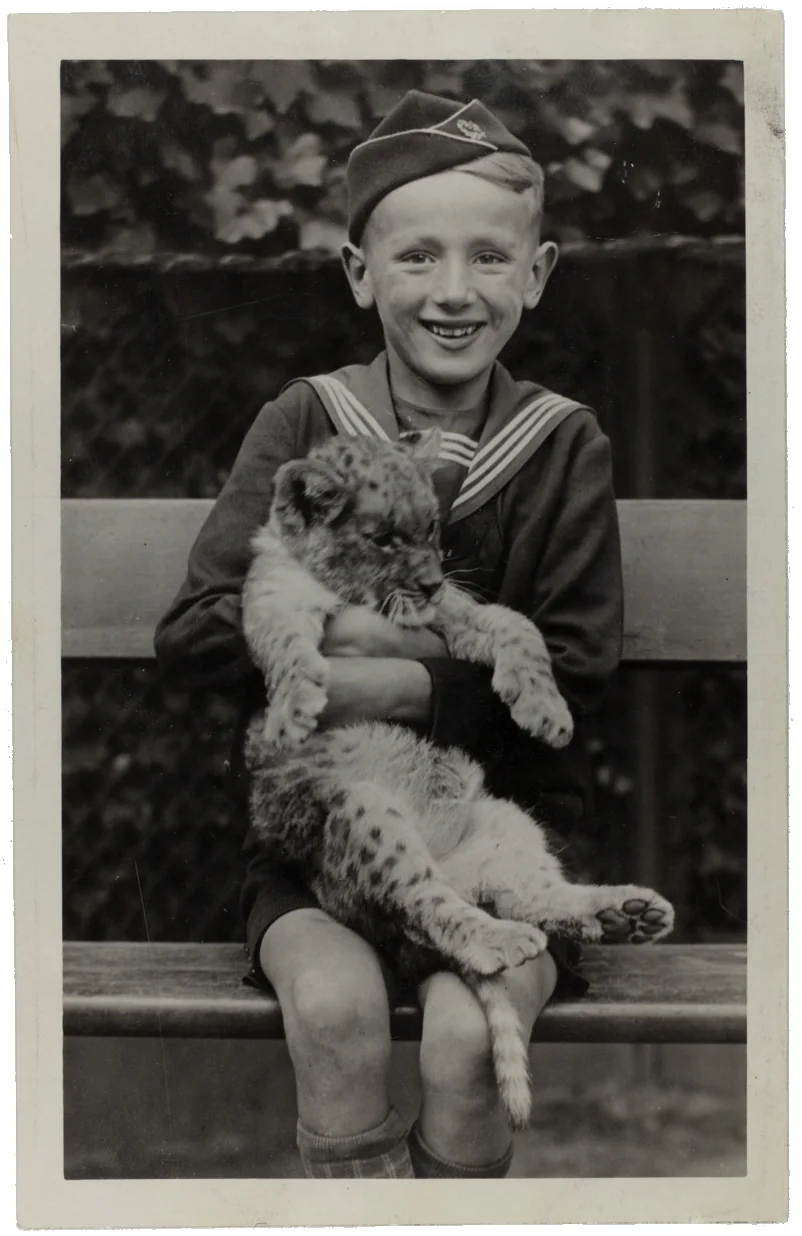
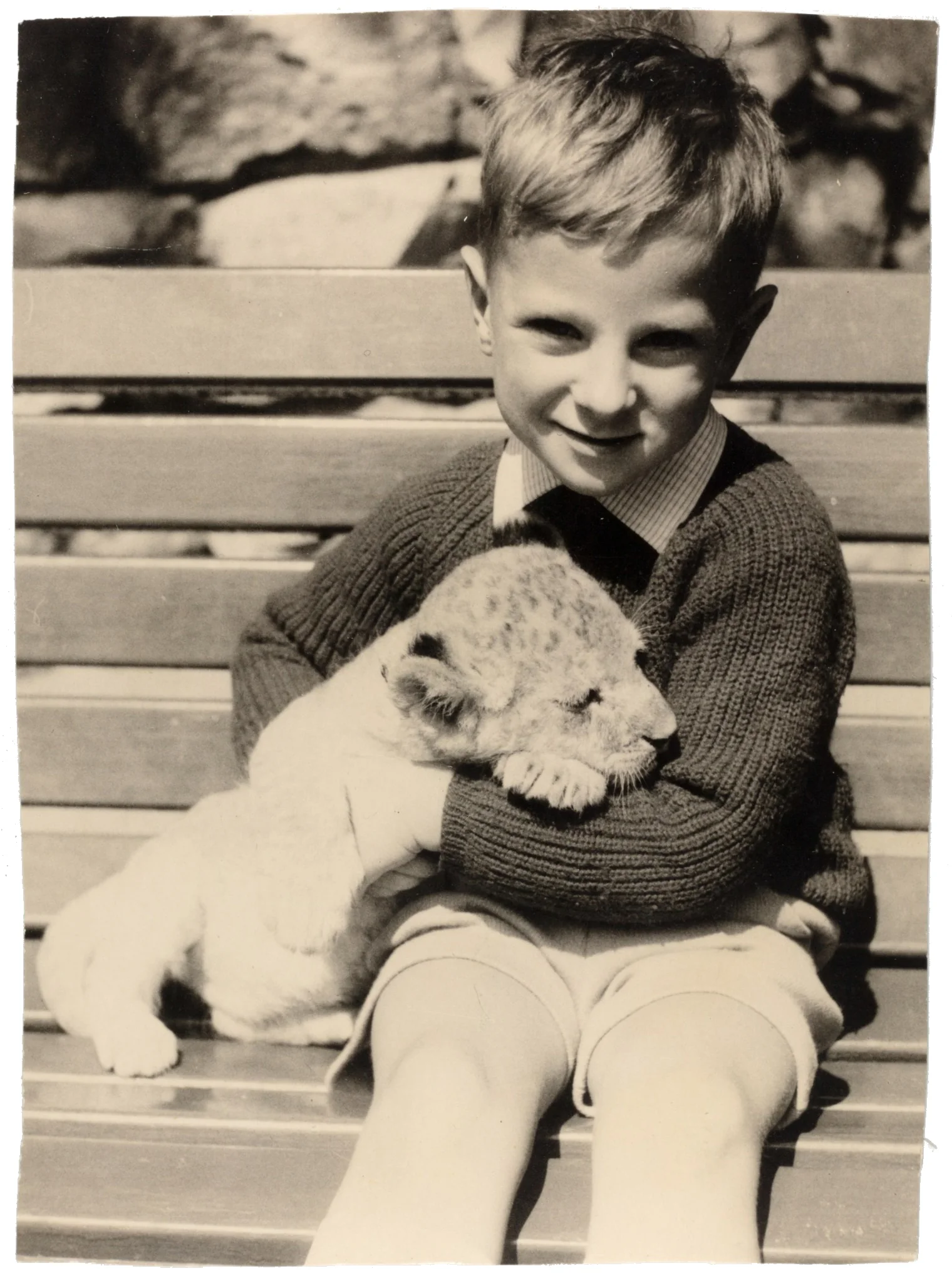
Far more often than in private homes, lion cubs appear in souvenir photographs taken at zoos. Visitors could hold a young animal on their lap or in their arms and have their photograph taken with it. For a moment, they came close to an animal they would normally see only behind a barrier.
This kind of photography was an established practice in zoos over many decades. Young lions held a particular fascination: unmistakably predators, they were still small enough to stroke or pick up. The photograph recorded an encounter that was hardly possible in ordinary life.
For professional zoo photographers, this was a business model. Visitors took their pictures home, showed them to relatives and friends, and perhaps pasted them into an album. A brief encounter with an extraordinary animal became a lasting memento.
And our lion?
Our starting photograph differs from the classic souvenirs made by zoo photographers. Rather than the familiar scene of a lion cub on someone’s lap, it shows four people gathered with a young lion for a group portrait.
We do not know whether the animal was privately owned, belonged to a circus or came from an entirely different setting.
The historical film reports and photographs show that such encounters did occur. But they do not explain the circumstances in which our picture was taken. Without further information, we have only what the photograph itself shows.
Four people and a young lion, presenting themselves to the camera together for a moment as though it were the most ordinary thing in the world.
Sources and references
- BR Retro: Barbary lion Pacha at home in Bayreuth — Television report, 1 May 1962.
- BR Retro: A family in Augsburg adopts lion cub Katja — Television report, 25 May 1962.
- Mareike Vennen: “Pictures with lion cubs” — Research project “Animals as Objects?”, on the history of zoo photography with young lions.