Photomaton
Portraits from the Photo Booth
A Machine and a Society in Transition
This book brings together photographs made in a photo booth: anonymous and direct, without a photographer’s gaze. The Photomaton, which became widespread in Germany from the late 1920s, was more than a technical innovation.
Its history begins in 1925 with Anatol Josepho’s invention in New York. Within a few years, the machine reached Europe and Germany, becoming part of a new, modern everyday culture in the cities of the Weimar Republic: quick, inexpensive and accessible to everyone.
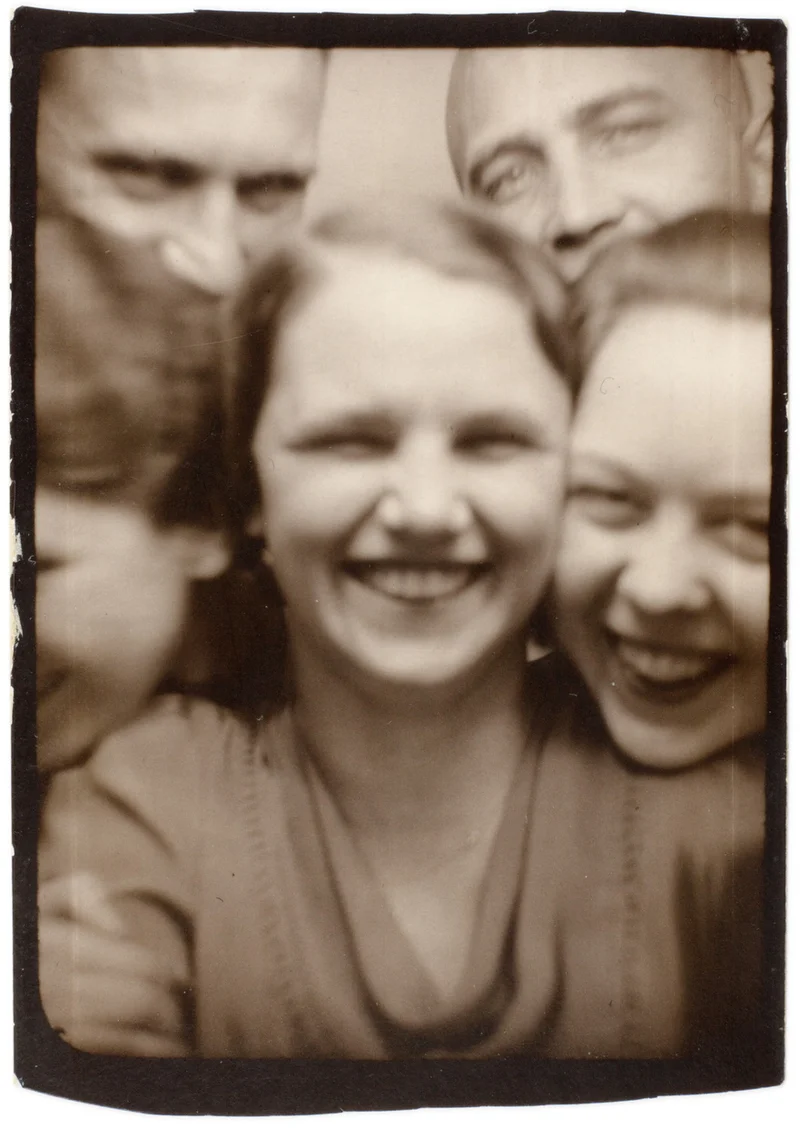
The absence of a photographer fundamentally changed the moment of exposure. People could move freely before the camera, without instructions or a prescribed pose. Instead of being positioned, they decided for themselves how they wished to be seen. The Photomaton thus enabled portraits that were more direct, spontaneous and less staged than conventional studio photographs.
The enclosed machines produced fully automatic picture sequences: exposure, development, fixing and drying followed mechanically after a coin was inserted. This process became a milestone in the democratisation of portrait photography: anonymous, inexpensive and available within minutes, and used by people from a wide range of social backgrounds.
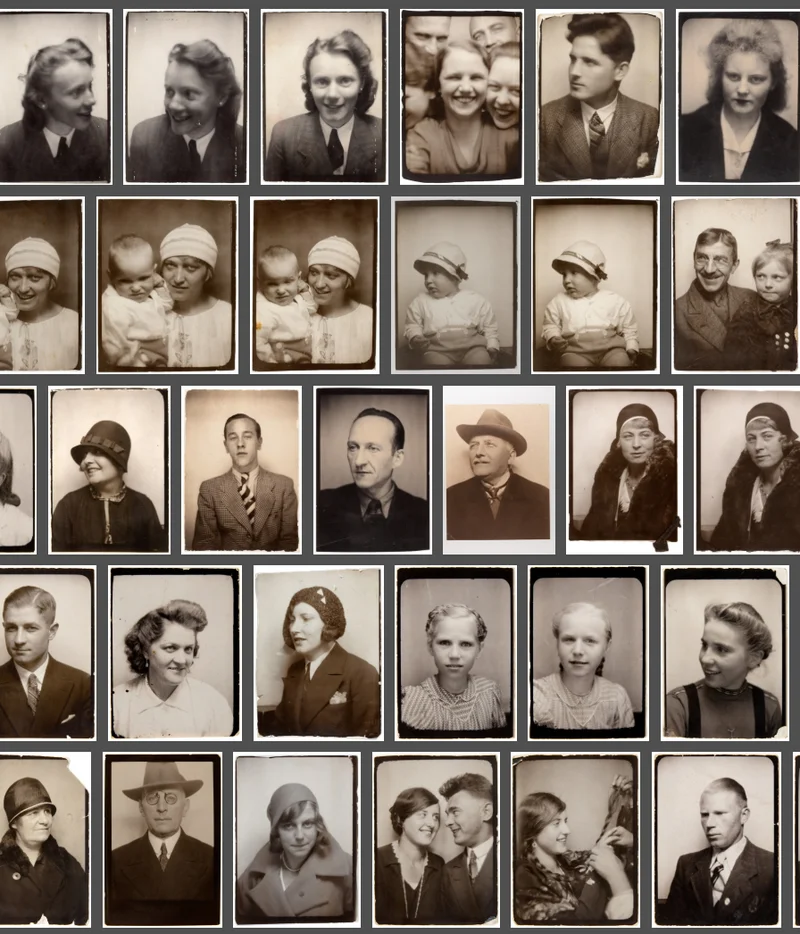
Originally developed for official passport pictures and installed in railway stations and department stores, the Photomaton’s inexpensive, rapid and anonymous operation also made it a place for self-presentation. Spontaneous self-portraits, playful pictures, groups and couples appeared without outside direction. At the same time, these photographs, found by chance and assembled into a collection, record social change: from the open, experimental 1920s through the ideological conformity of the Nazi period to the traces of war. They reveal changes in the appearance and self-image of an entire society.
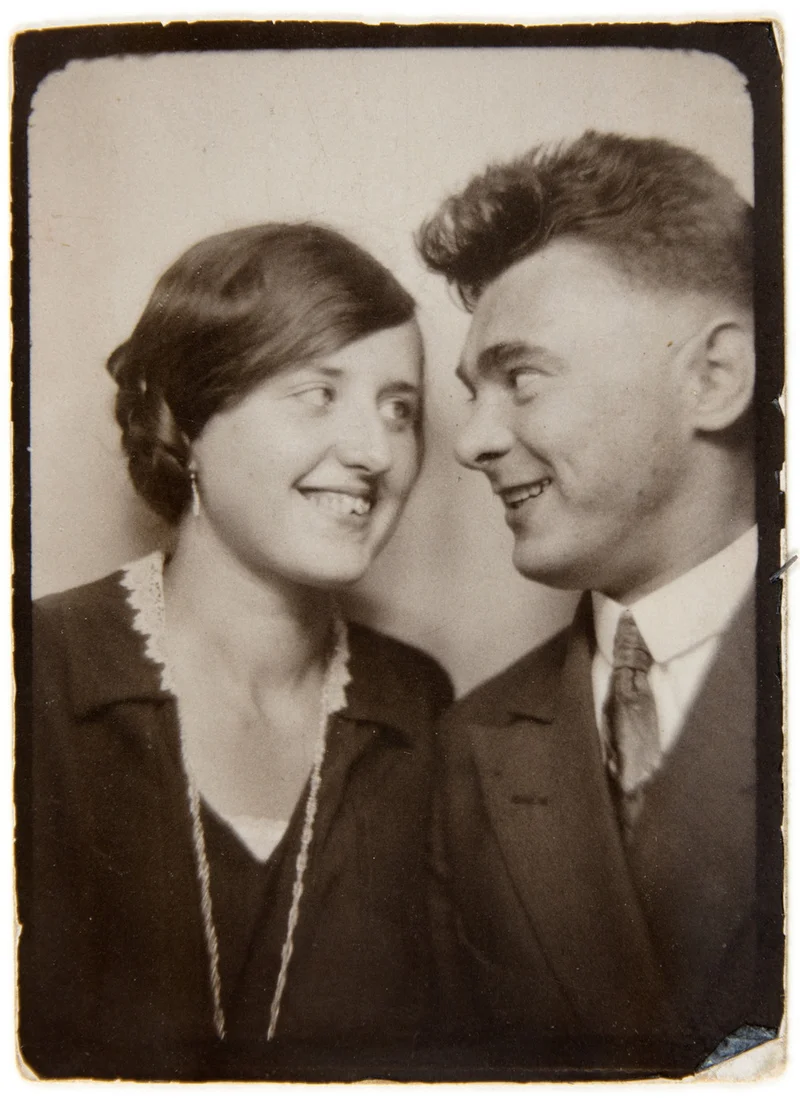
In the late 1920s, the photographs show a world of openness. Young women with fashionable hairstyles, men in hats, couples and friends look into the camera, try out roles, laugh or deliberately remain serious. The machine permits a form of self-presentation without outside control. The pictures are spontaneous and playful, sometimes uncertain in their presentation of the self. They show individuals within a society undergoing change.
During the early 1930s, this appearance slowly changes. Faces grow quieter, poses more fixed, clothing and posture more standardised. The machine remains the same, but its use shifts, quietly yet perceptibly.
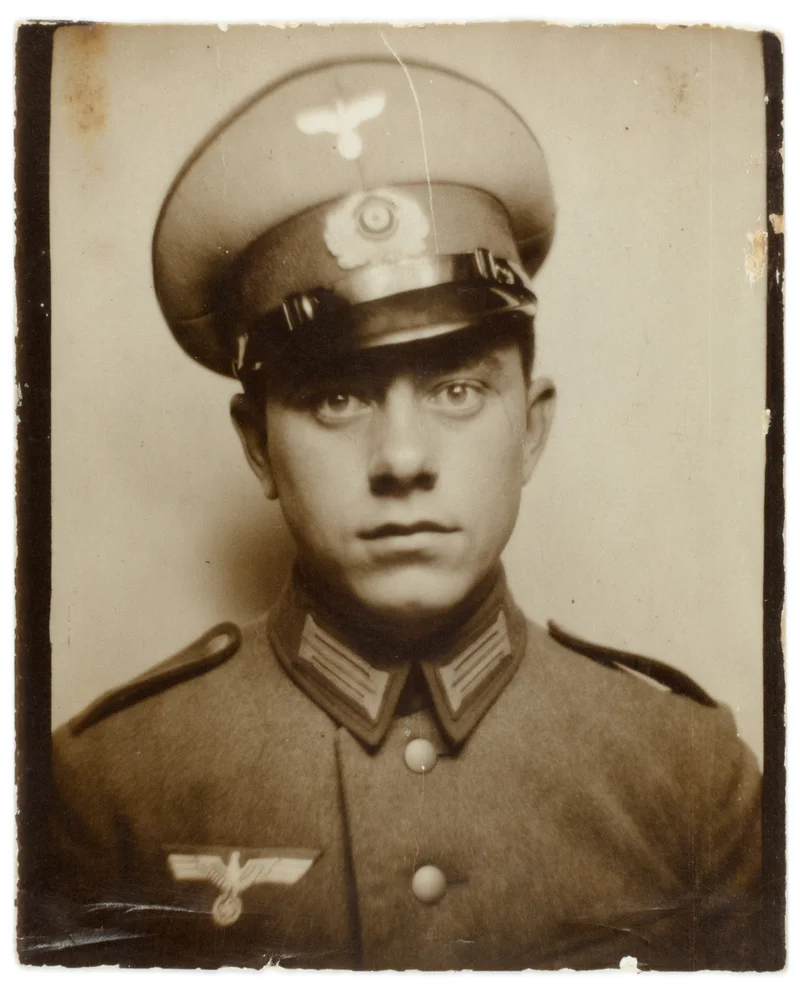
From 1933, following the National Socialists’ seizure of power, increasing uniformity becomes visible in the photographs. Their visual language changes: pictures appear more formal, expressions more restrained, and individual gestures less prominent. Uniforms become a central and deliberately displayed element in many portraits.
As time goes on, the effects of war can also be seen. Yet the photo booth remains a place where informal pictures are made alongside formal portraits. Spontaneous photographs, for instance of comrades, continue to appear among the more standardised images.
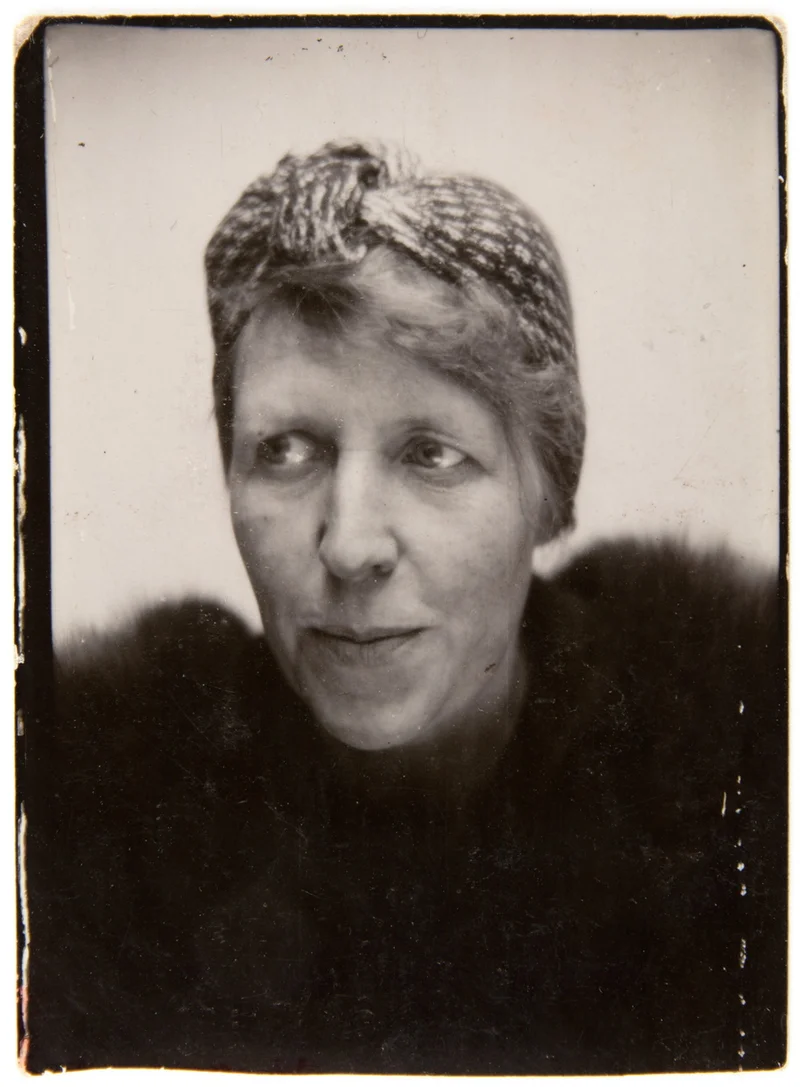
Despite these developments, the moment before the camera is never entirely controllable. Even more formal photographs occasionally contain small departures — a glance, posture or gesture — that suggest individual forms of expression.
The use of the Photomaton in Germany from the late 1920s into wartime runs parallel to the social changes of those years. The pictures record freedom and conformity, individuality and standardisation, and increasing militarisation reflected in the many uniforms. This book is therefore more than a collection of portraits. It is a visual record of an era, revealing what people wanted to show of themselves and what their time demanded of them.