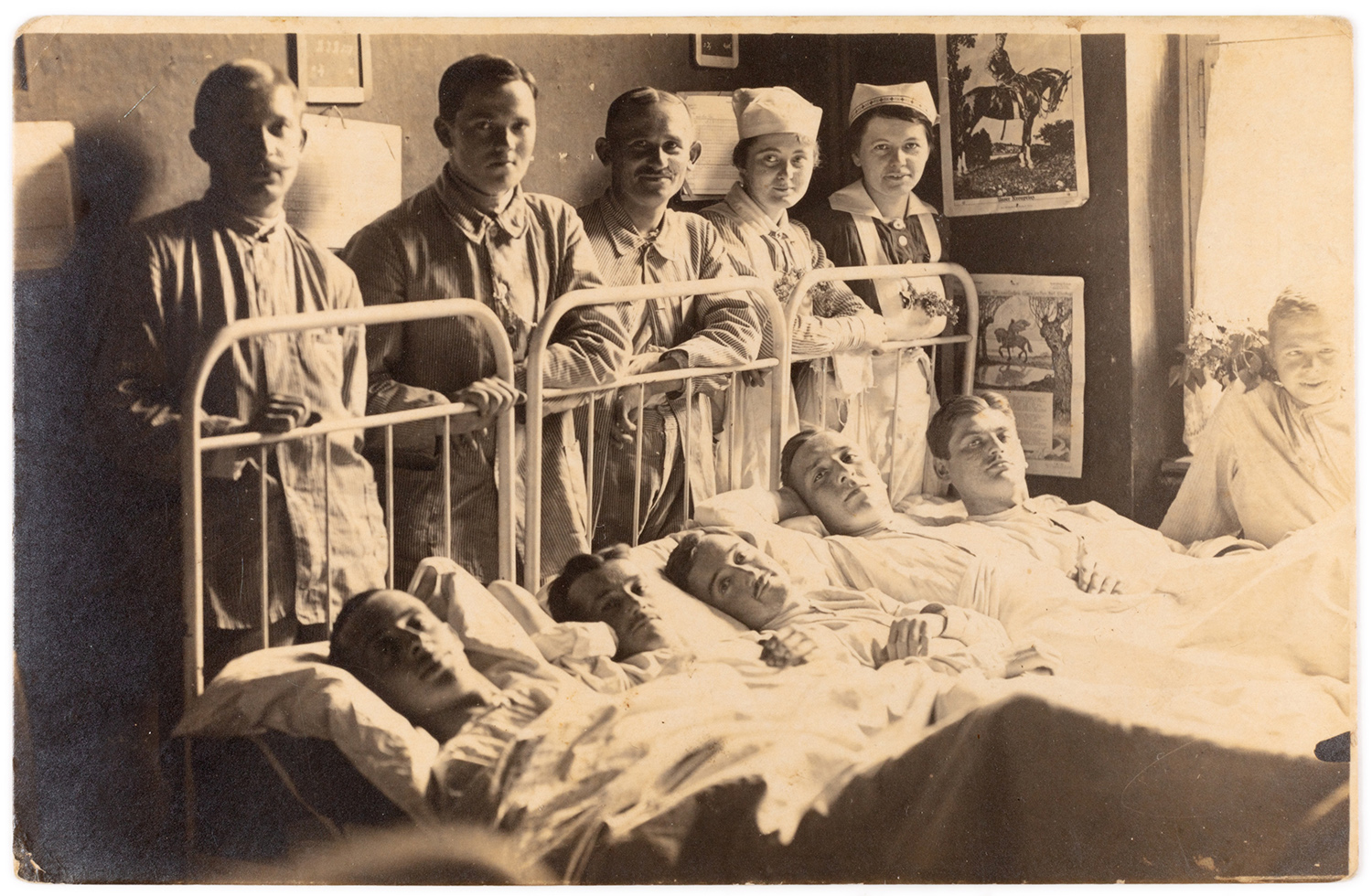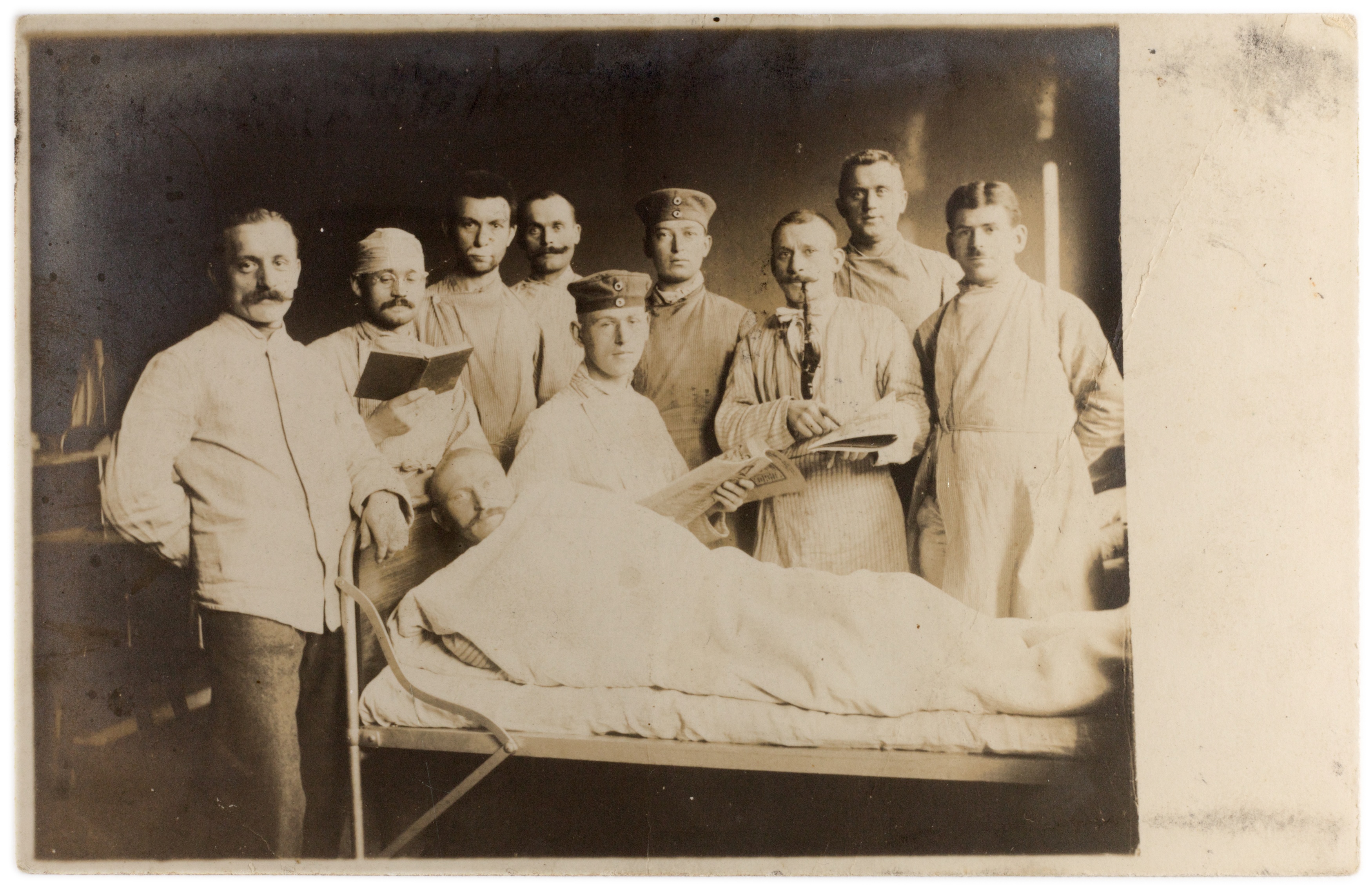
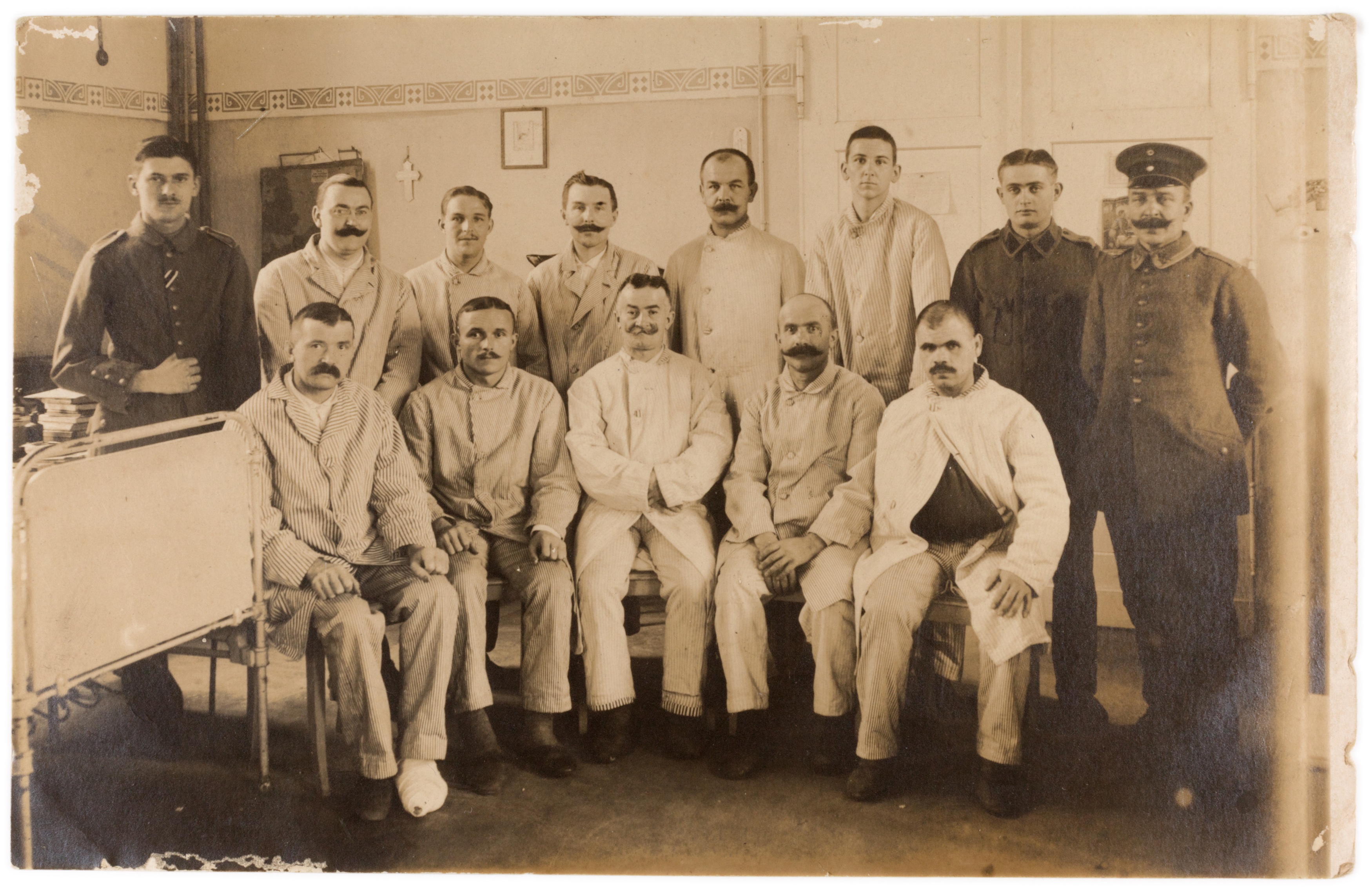
Ten men have gathered in front of the camera. Some are standing, three are sitting on a staircase. They carry visible traces of wounds: arm slings, head bandages, a bandaged leg. They wear the characteristic clothing of a military hospital.
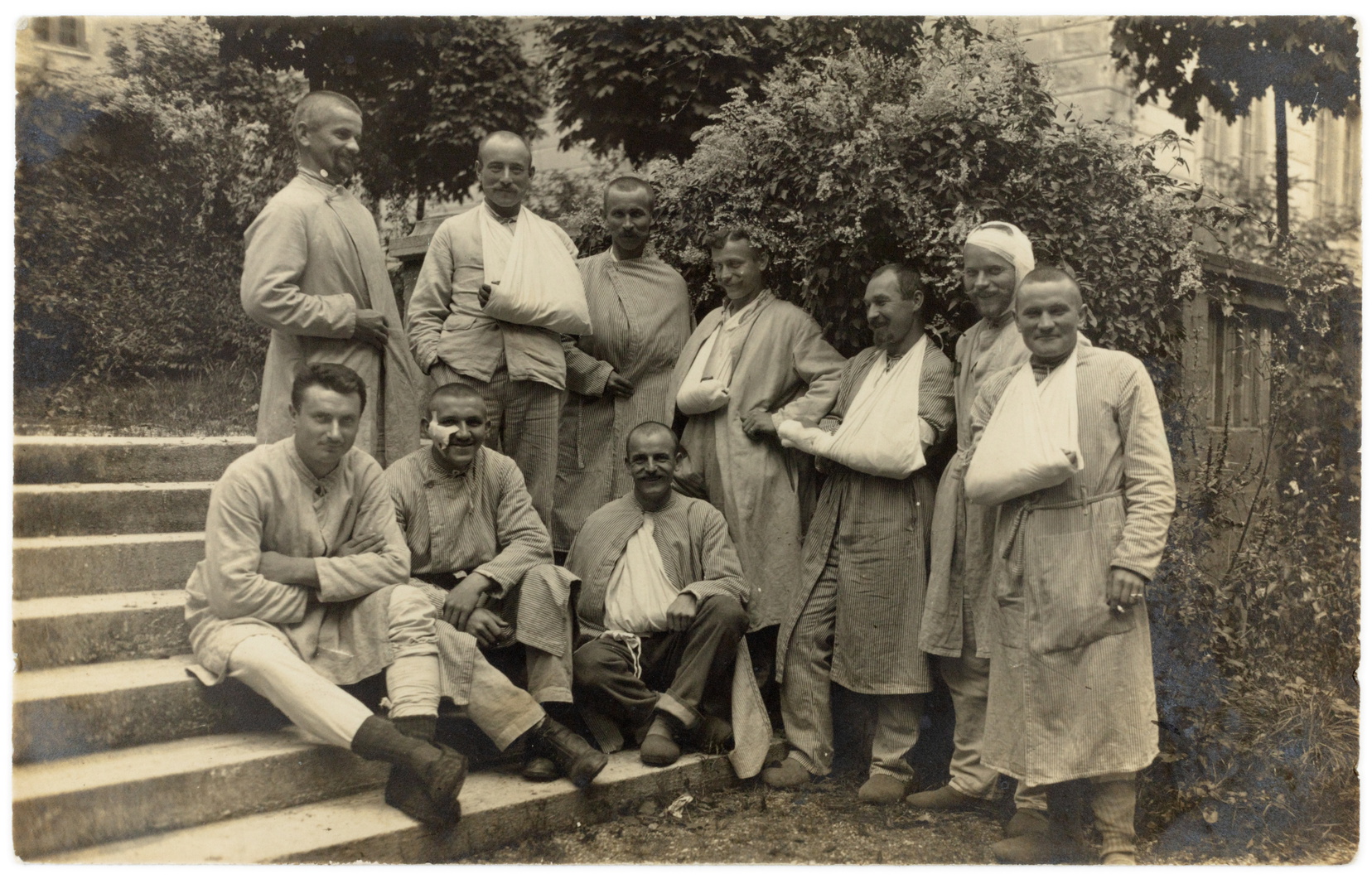
And yet the photograph feels surprisingly relaxed. The men smile, apparently in good spirits. It is not an image of suffering, even though the injuries are unmistakable. No blood, no hospital bed, no operation, no visible pain. Instead there is a garden, daylight and a group of men posing cheerfully together for a moment in front of the camera.
The wound was by no means hidden. On the contrary. Bandages, splints and arm slings are deliberately visible in many of these photographs. They testify to what has happened. At the same time, the experience of war is brought into a reassuring form. The wounded man is standing upright again, sitting among comrades, looking into the camera and smiling.
The men show their injuries, but not their suffering. The military hospital appears as a place of recovery and temporary distance from the war: no longer the front, not yet home again. A place between wounding and recovery, between war and return.
Not all of the photographs seem so relaxed. Many show the men in a strikingly strict order. They stand and sit in clear rows, close together and precisely aligned toward the camera. Even the wounded men in the foreground are part of this carefully arranged formation.
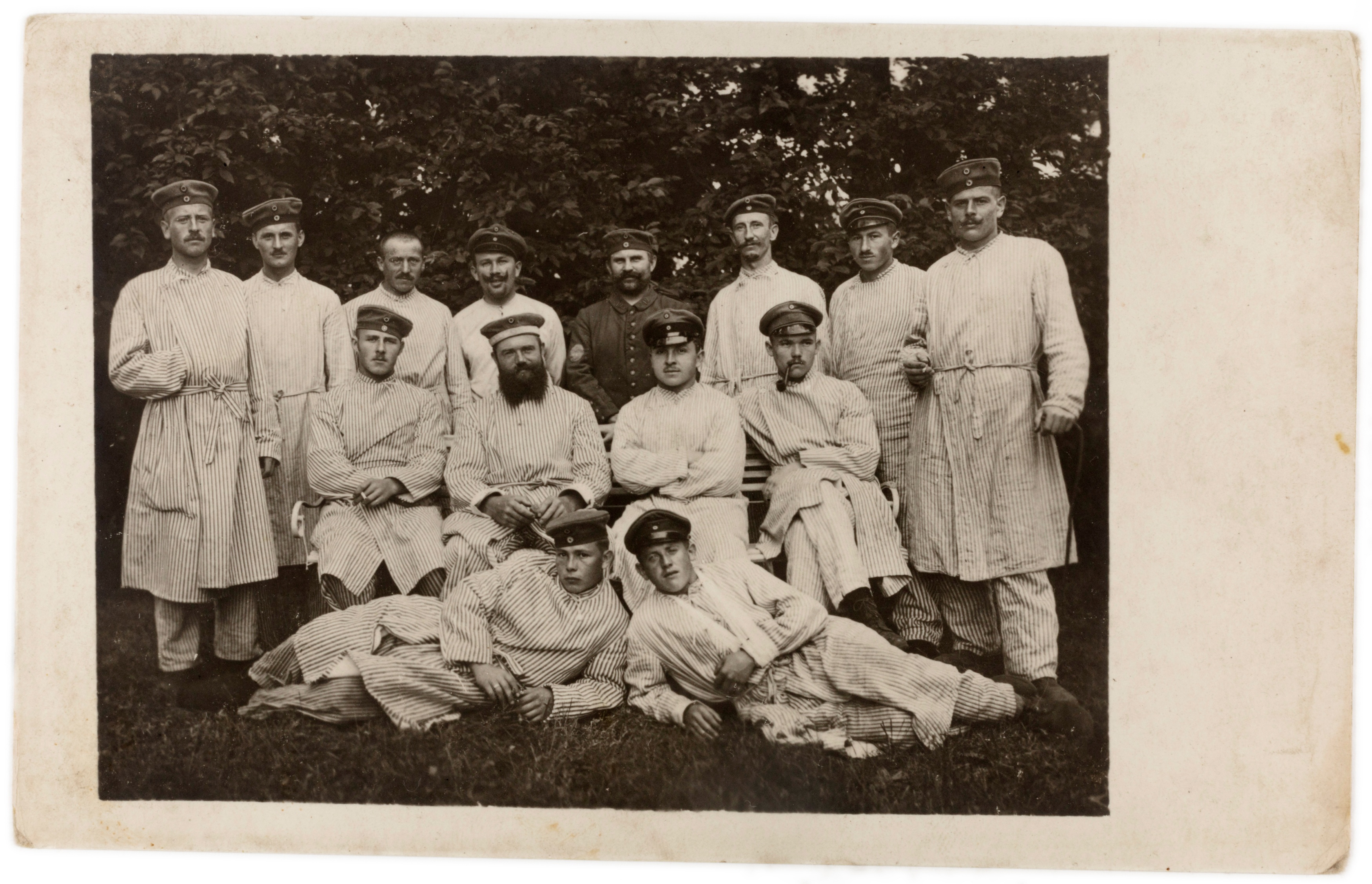
As a result, the image recalls less a random group of patients than a classic military group photograph. The men are wearing hospital clothing, but the familiar order of the military remains: rows, discipline and a shared alignment toward the camera. Even away from the front and during recovery, the military structure does not disappear. It continues to shape how the men present themselves as a group and how they are photographed.
That is precisely where the particular character of these images lies: the men are wounded men and patients, but at the same time they remain soldiers. The military hospital therefore appears not only as a place of recovery, but also as an intermediate space in which military order continues.
For relatives, such an image may have been reassuring. The son, brother or husband was wounded, but alive. He was being cared for and surrounded by others, by comrades and nursing staff. What lay behind the moment of the photograph – pain, operations, fear or uncertainty about the future – remained outside the image.
During the First World War, countless photographs of wounded soldiers were made in military hospitals. Photographers came into these institutions and made individual portraits and group pictures in postcard format. The images were sent to parents, wives, siblings and friends. They were keepsakes, but above all they were one thing: a sign of life.
The message was immediately understandable: I am alive. I am being cared for. I am not alone.
At the same time, these photographs were also a business. Photographers recognized early on the demand for such images. Wherever many wounded soldiers came together, there was potential clientele. Group photographs were especially profitable because many prints could be ordered from a single exposure. The military hospital thus also became its own market for professional and semi-professional photographers.
These photographs therefore always tell several stories at once: of wounding and survival, of comradeship and staging – and also of a photographic trade that turned the need for images of life in the midst of war into a business model of its own.