One image and its story
Four occupations
by the sea
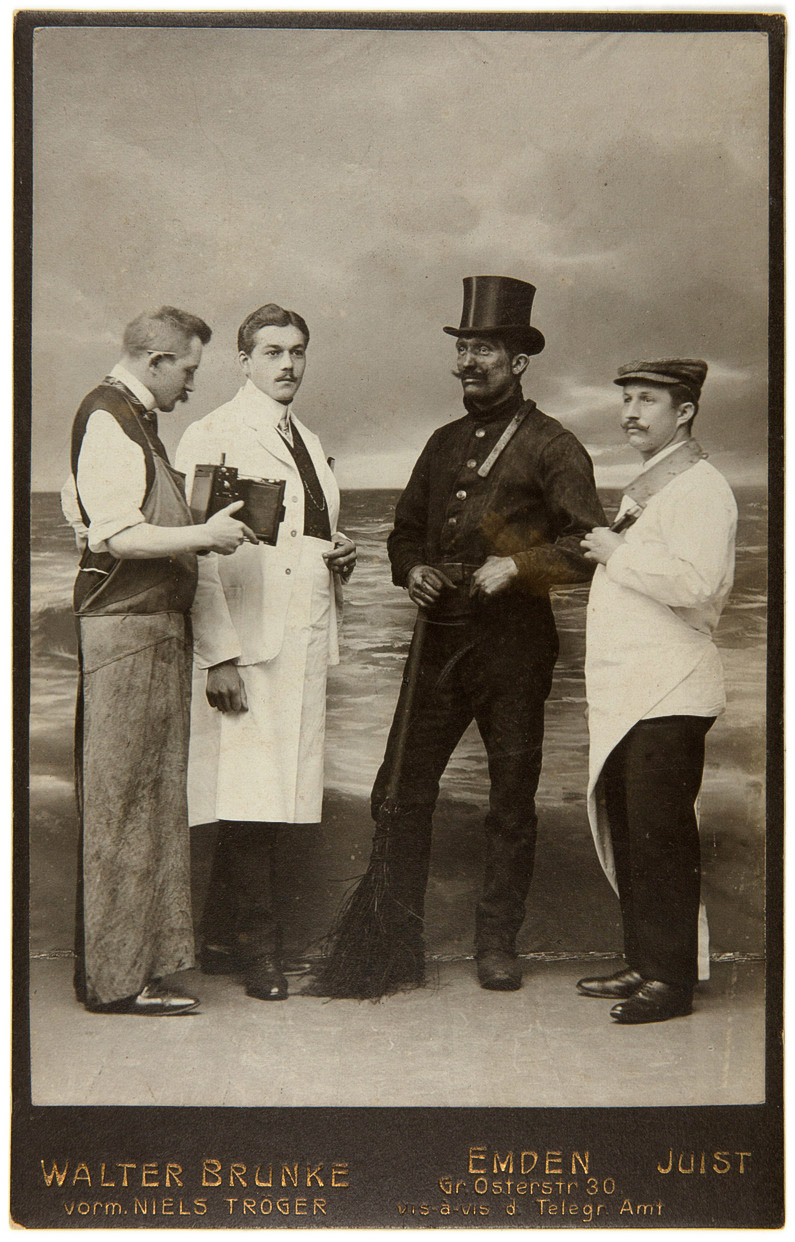
Photographer, waiter, chimney sweep and butcher in front of a painted seaside backdrop. A carefully staged occupational scene – but why was it made?
Read the story ↓Four men are standing on a beach. At least, that is how it is meant to look. Behind them are the sea and clouds – but both are painted. The photograph was taken in a studio.
The studio imprint on the photograph identifies the photographer: Walter Brunke describes himself as the successor to Niels Tröger. Two locations are listed: Juist and Große Osterstraße 30 in Emden, opposite the telegraph office. Judging by the clothing, the photographic style and the camera shown, the photograph was probably made in the 1910s.
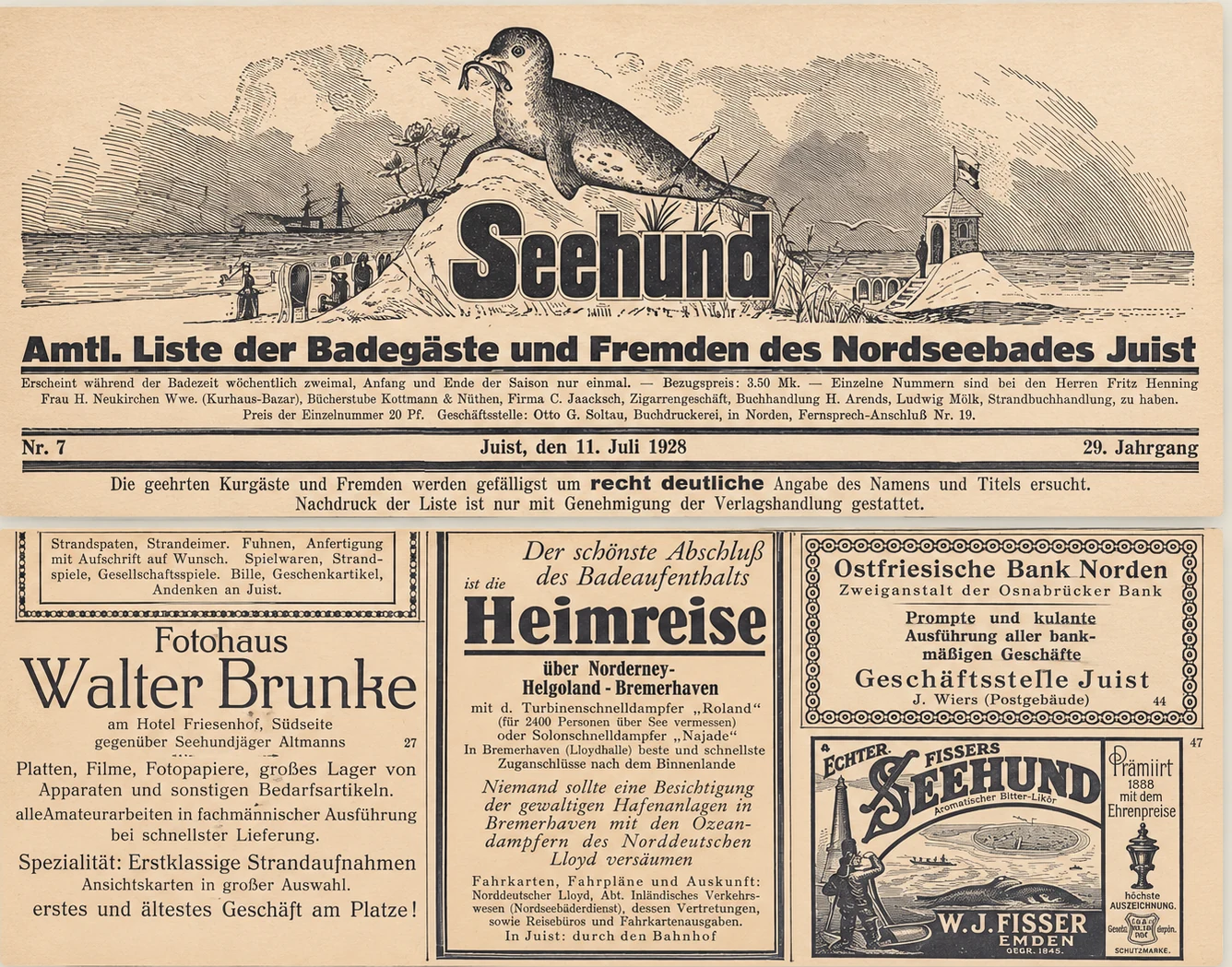
A considerably later advertisement from 1928 documents Brunke’s “Fotohaus Walter Brunke” on Juist, at the Hotel Friesenhof. Among other things, he advertised “first-class beach photographs” and a large selection of picture postcards. The advertisement shows that seaside motifs and the sale of photographs to visitors to the resort formed part of his business.
Many questions about the photograph remain unanswered. The men represent four occupations, clearly defined by clothing and accessories: photographer, waiter, chimney sweep and butcher. Nothing about this seems accidental. Whether the men actually worked in these occupations or merely adopted the roles for the photograph, we cannot know. Nor do we know why the image was made, or why these particular four occupations were brought together on a beach.
The chimney sweep not only wears his work clothes; his face and hand are also blackened with soot. The photographer holds a compact, portable plate camera and wears a laboratory coat. Curiously, he stands in front of a painted beach with a camera intended for use outside the studio. He would probably not have worn the laboratory coat while photographing on the beach either. But that was not the point. The point was to present each occupation through recognisable visual types.
What, then, was this image? An unusual group portrait? A humorous staging offered as a souvenir? Was the photographer depicted Brunke himself, and was the picture intended as advertising for his studio? There is no definitive answer.
on ice skates
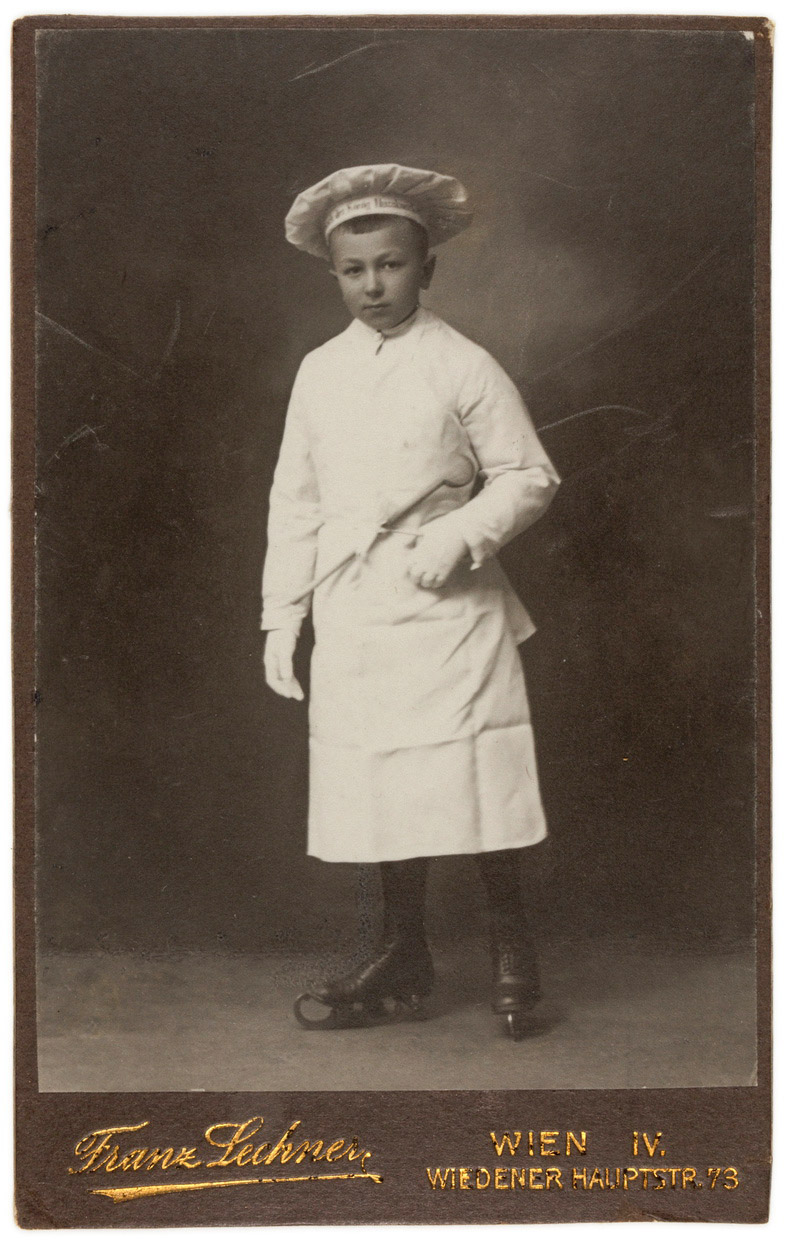
A boy in a cook’s outfit – and on ice skates. This cannot be an actual occupational portrait. The photograph from Franz Lechner’s studio in Vienna is clearly staged. But what are we looking at: a costume, a humorous photograph, or a collectible image produced for sale?
The “little cook” was a familiar motif in popular visual culture. Children in cooks’ clothing appear in photographs, stereographs, picture postcards, advertising images and collectible pictures.
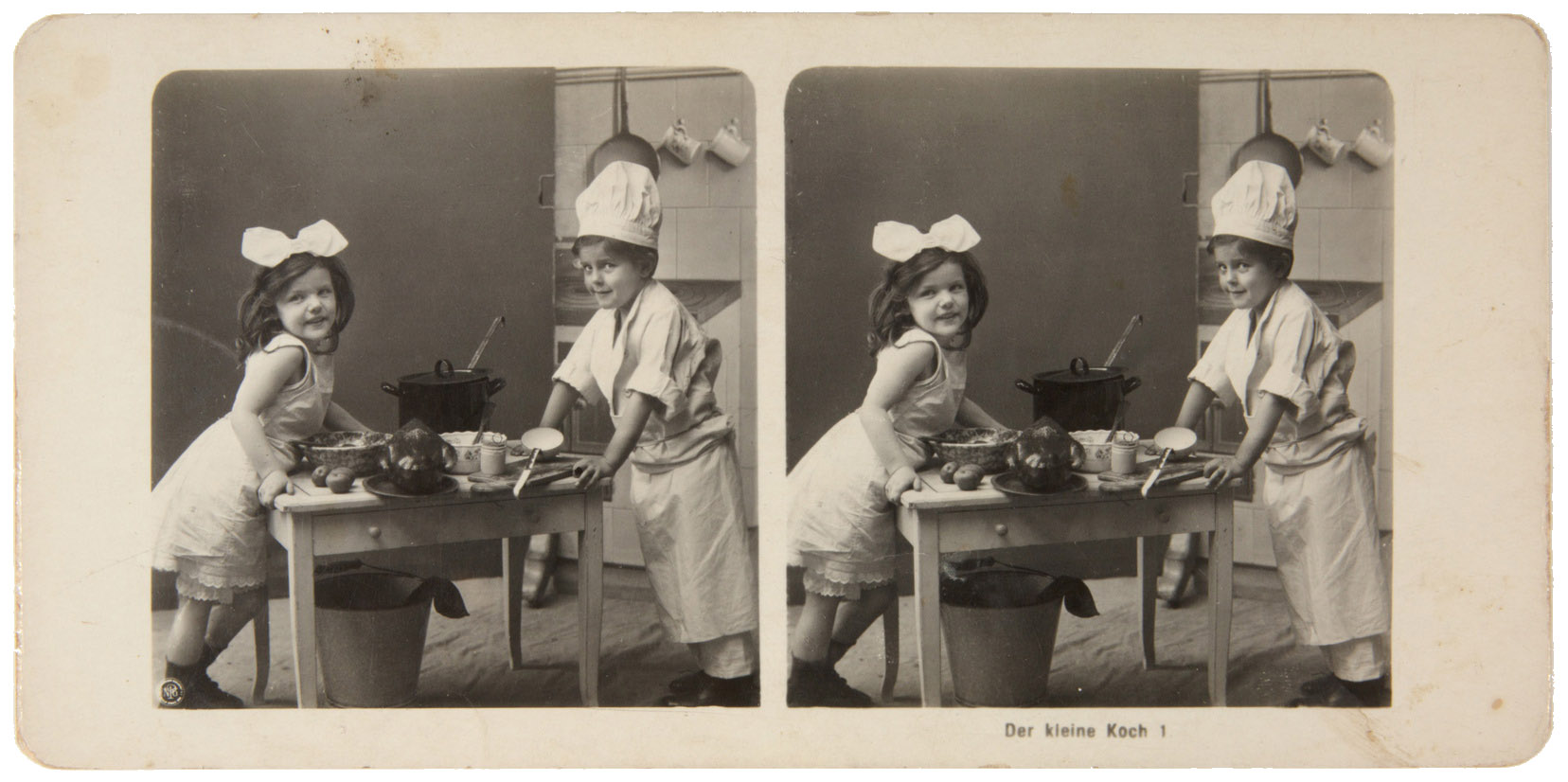
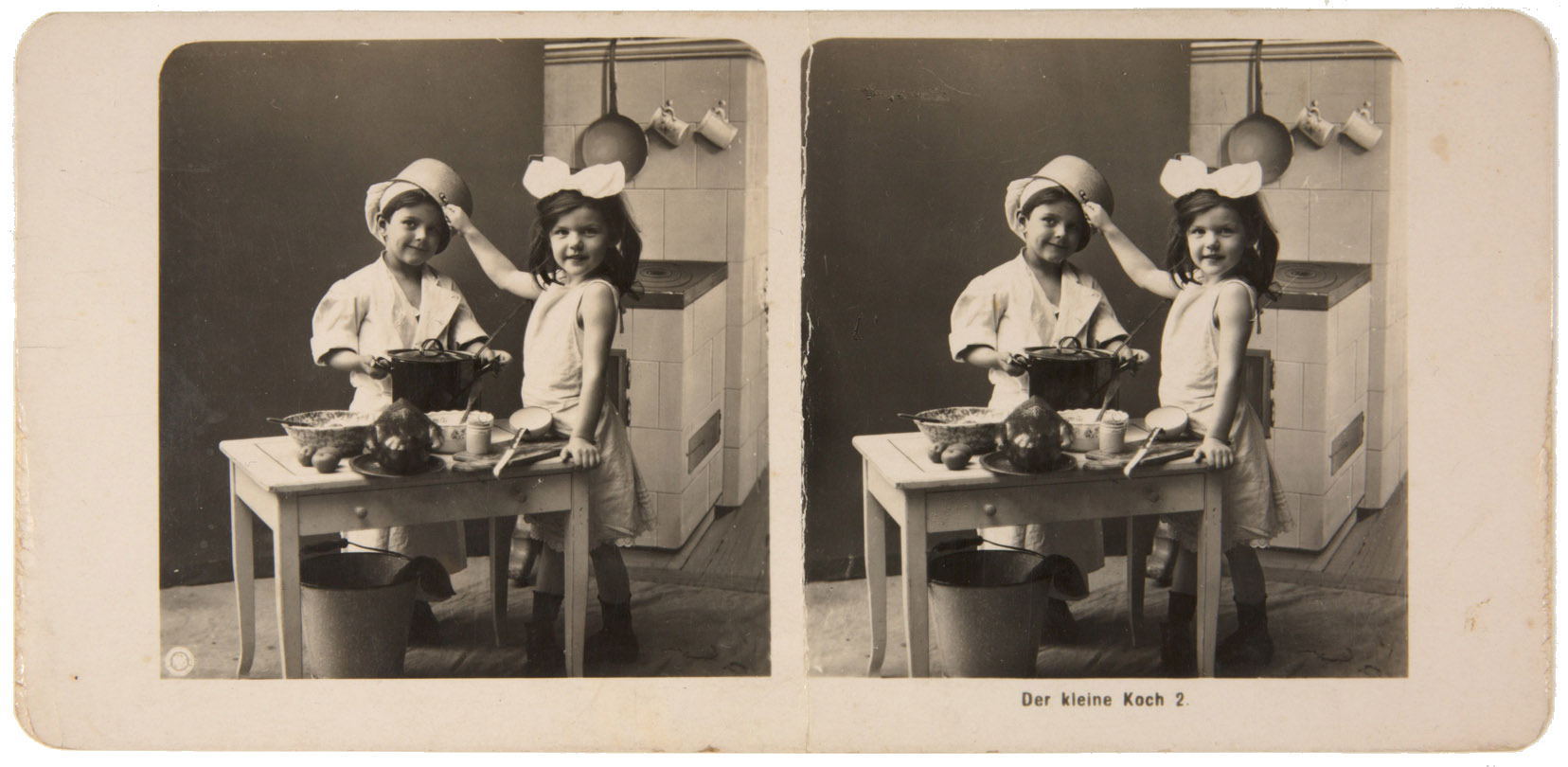
The two stereographs shown here date from the 1930s, belong to a series, and are titled “Der kleine Koch 1” and “Der kleine Koch 2” (“The Little Cook 1” and “The Little Cook 2”).
Such genre images were sold and collected. They do not primarily depict a particular person for their own sake, but rather a staged, readily understandable role or a small scene from everyday life. This tradition predates photography: as early as the 19th century, photographers drew on motifs and staging conventions from genre painting.
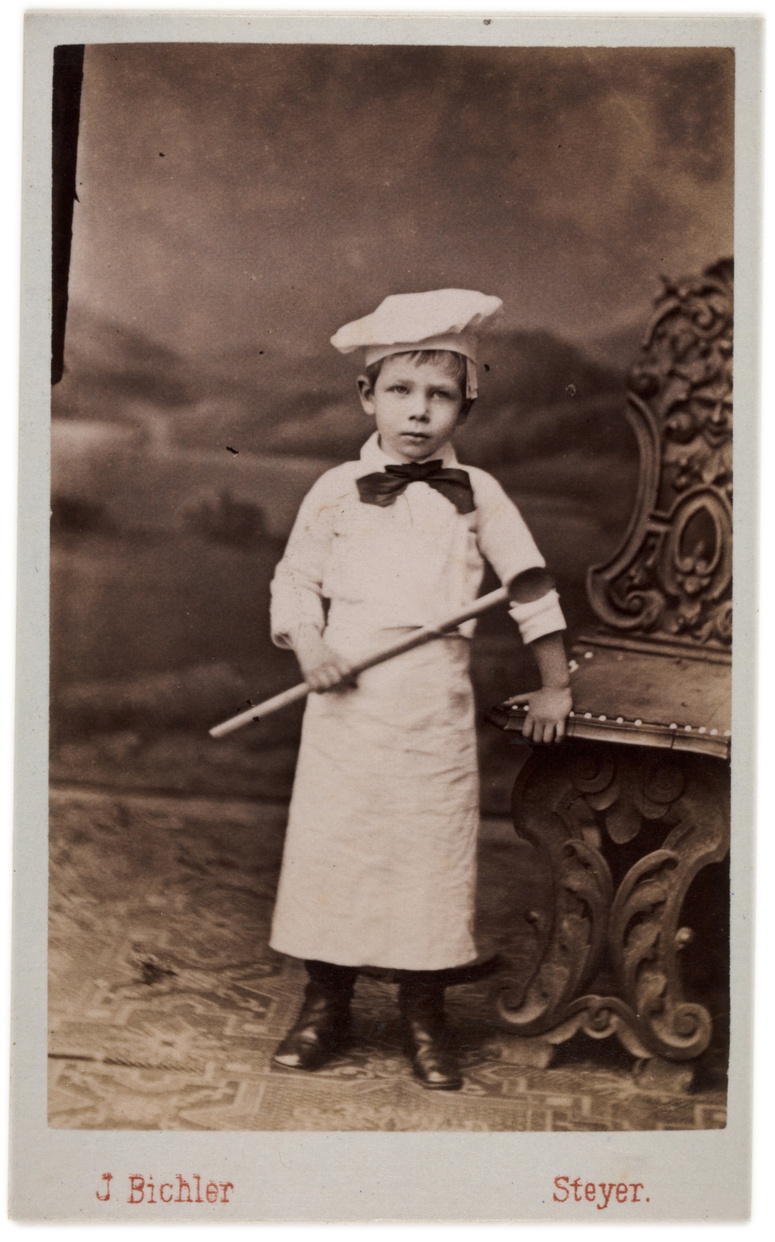
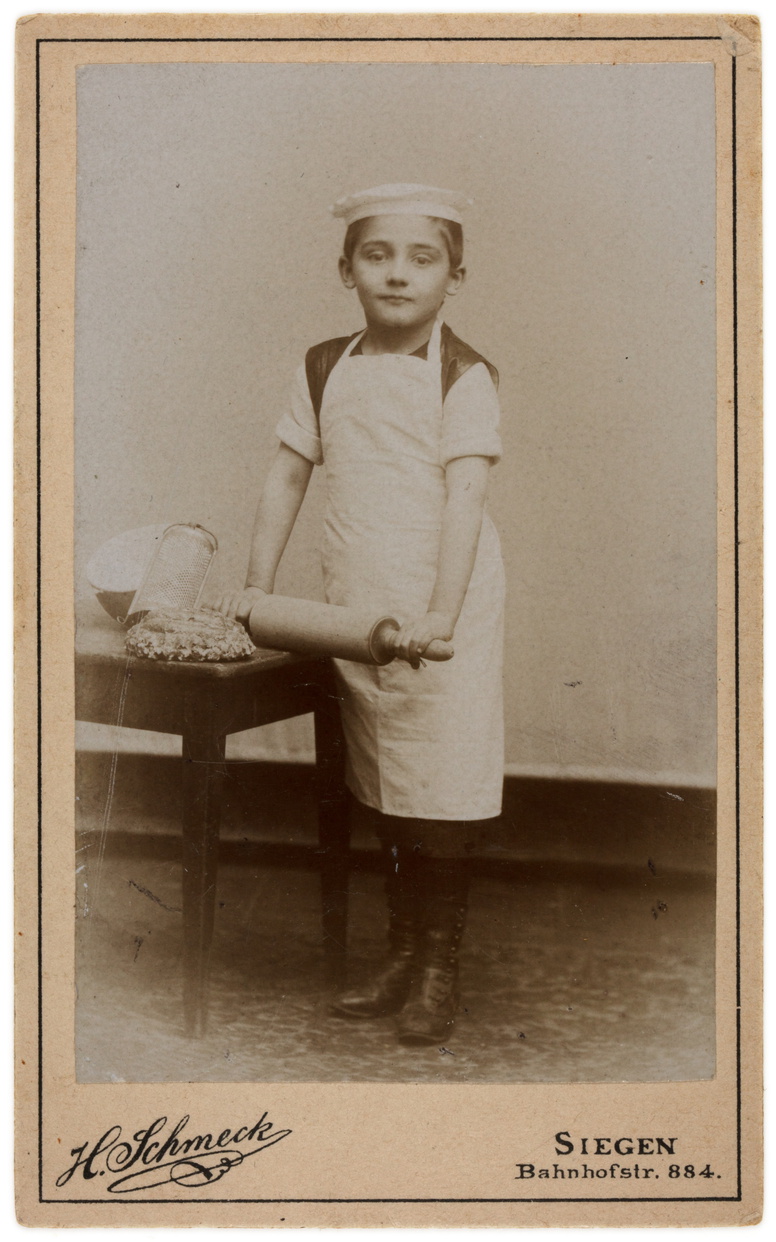
Whether all photographs of children in occupational clothing were made for this purpose, however, or whether some were private keepsakes of children dressed up for the camera – for carnival, for example – remains uncertain here as well.
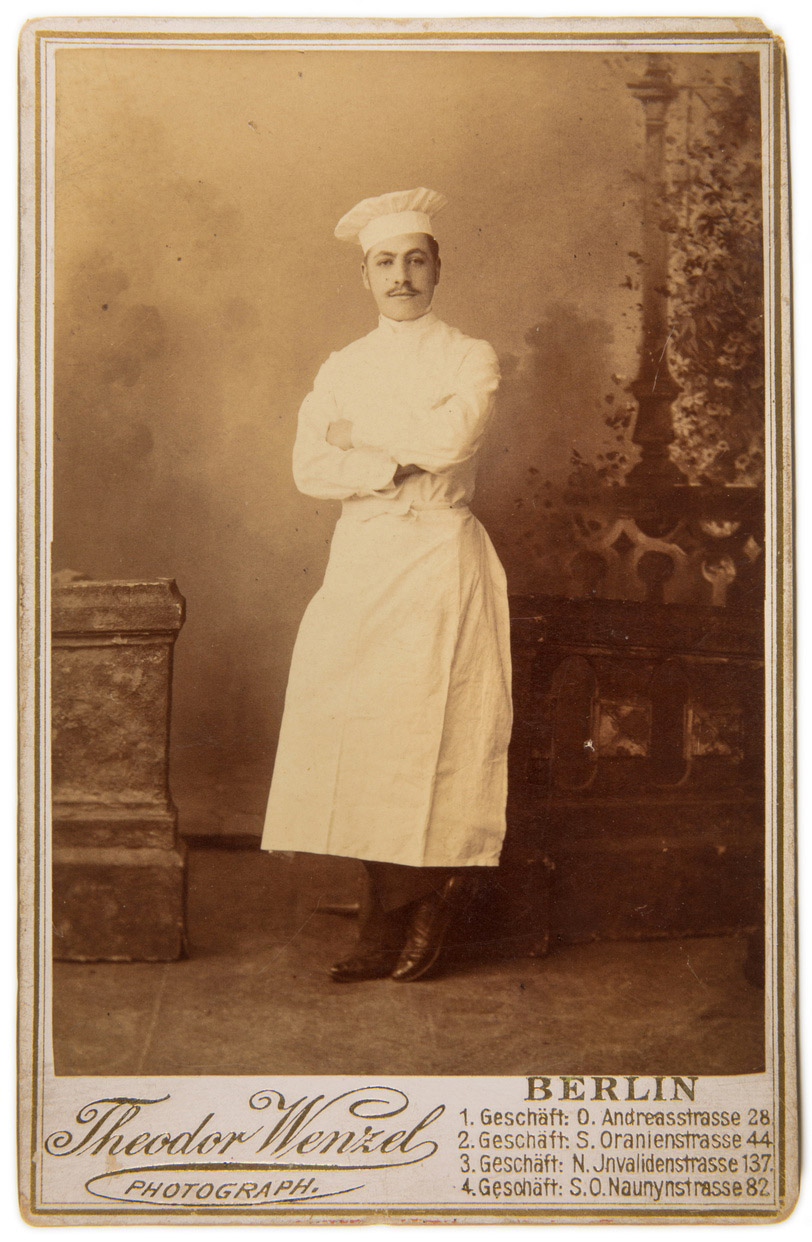
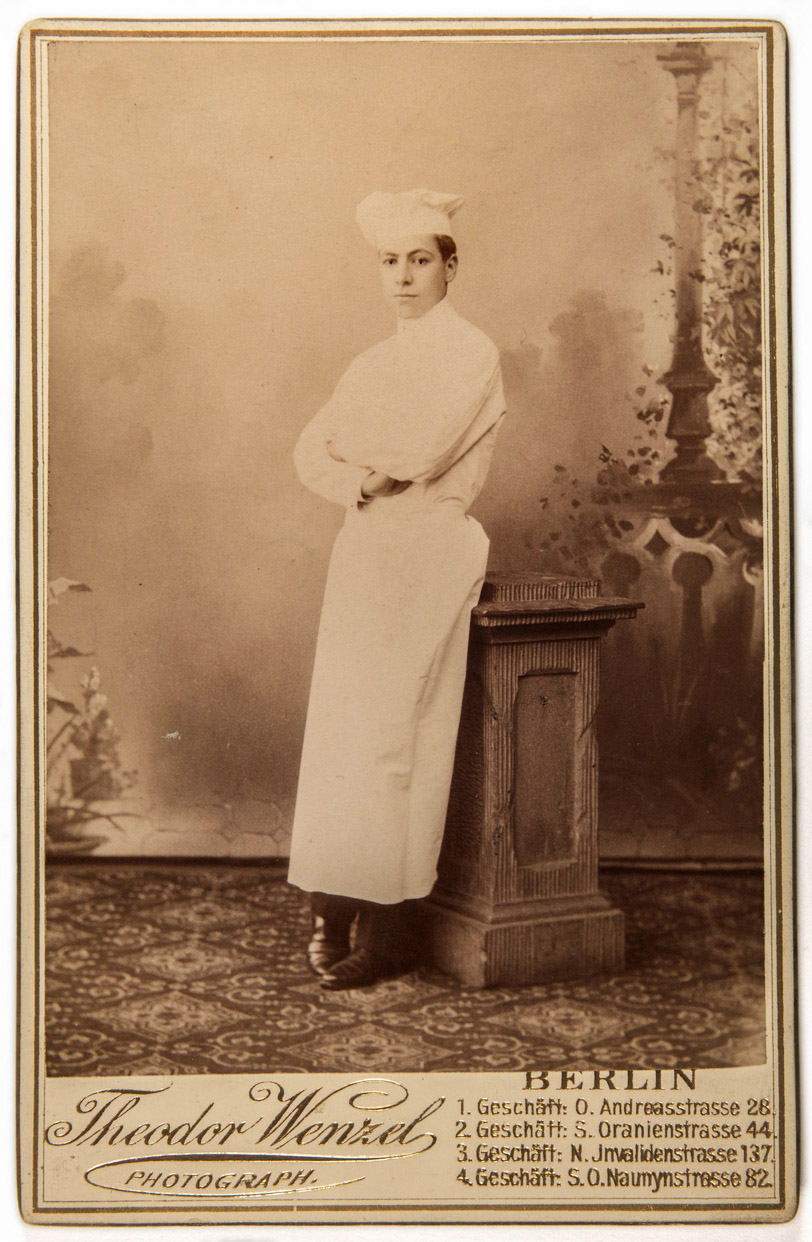
It was not uncommon in the 19th and early 20th centuries for people to have themselves photographed in occupational dress in a portrait studio.
Two portraits from Theodor Wenzel’s photographic studio in Berlin show men against a typical studio backdrop. They stand upright and self-assured before the camera, their arms folded in front of their bodies. Both wear complete white work clothing: a white cap, a light-coloured high-buttoned jacket and a long white apron. The clothes are clean, carefully arranged and deliberately displayed.
What is striking here is not, at first, the exact occupation the two men practised, but their decision to be photographed specifically in these clothes. They pose in their work clothes in the same representative studio setting in which other people had themselves portrayed as families or in their Sunday best. The work clothes thus become part of their self-presentation and convey a sense of occupational pride.
Cook, confectioner or butcher?
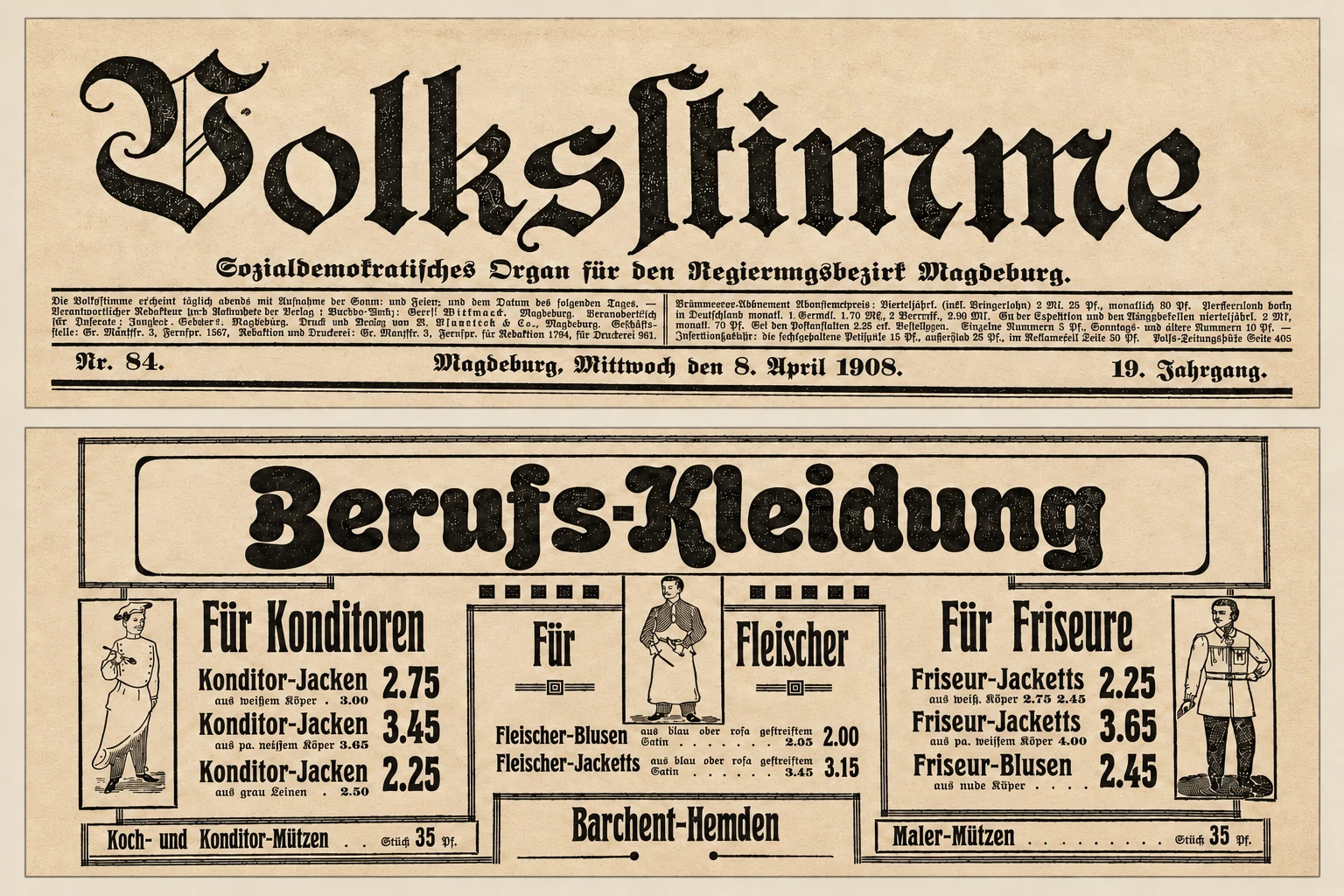
White occupational clothing alone does not always allow a firm identification. A contemporary piece of evidence is provided by an advertisement for occupational clothing in the Volksstimme of 8 April 1908. Among the items offered were confectioners’ jackets, “cooks’ and confectioners’ caps”, and butchers’ smocks and jackets.
and the sharpening steel
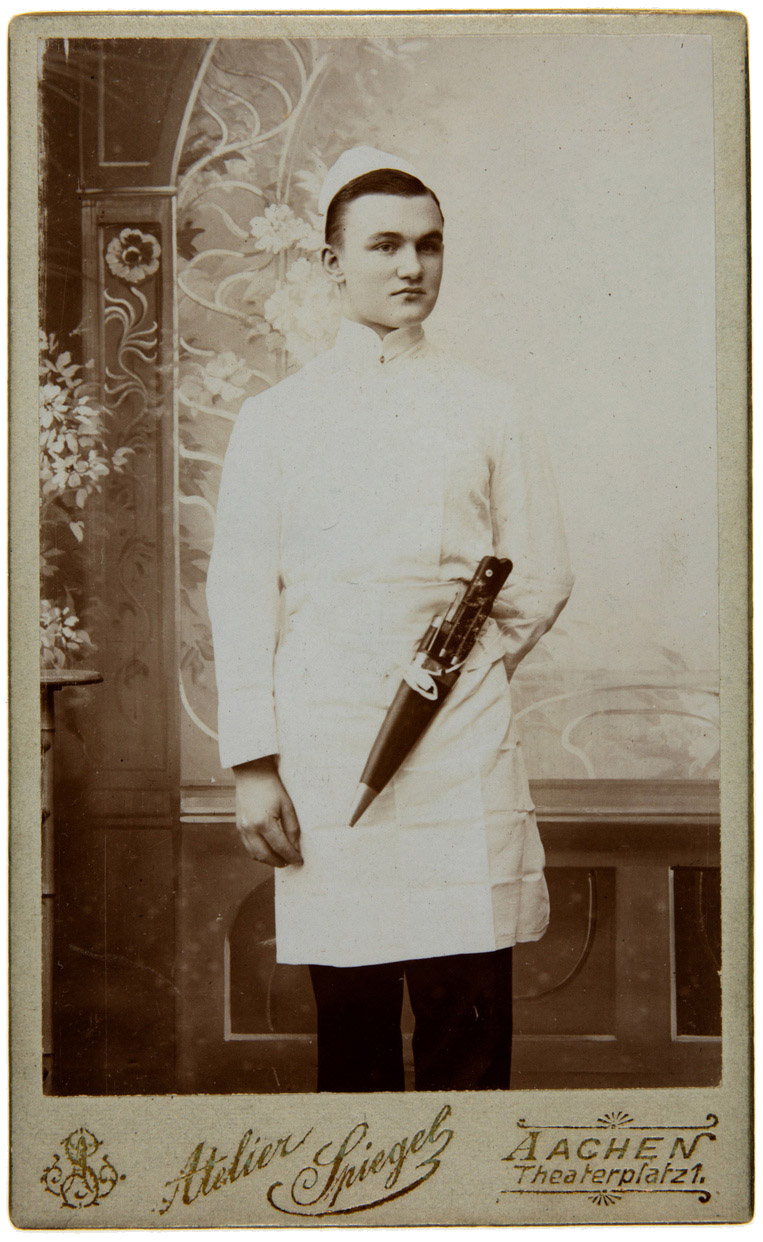
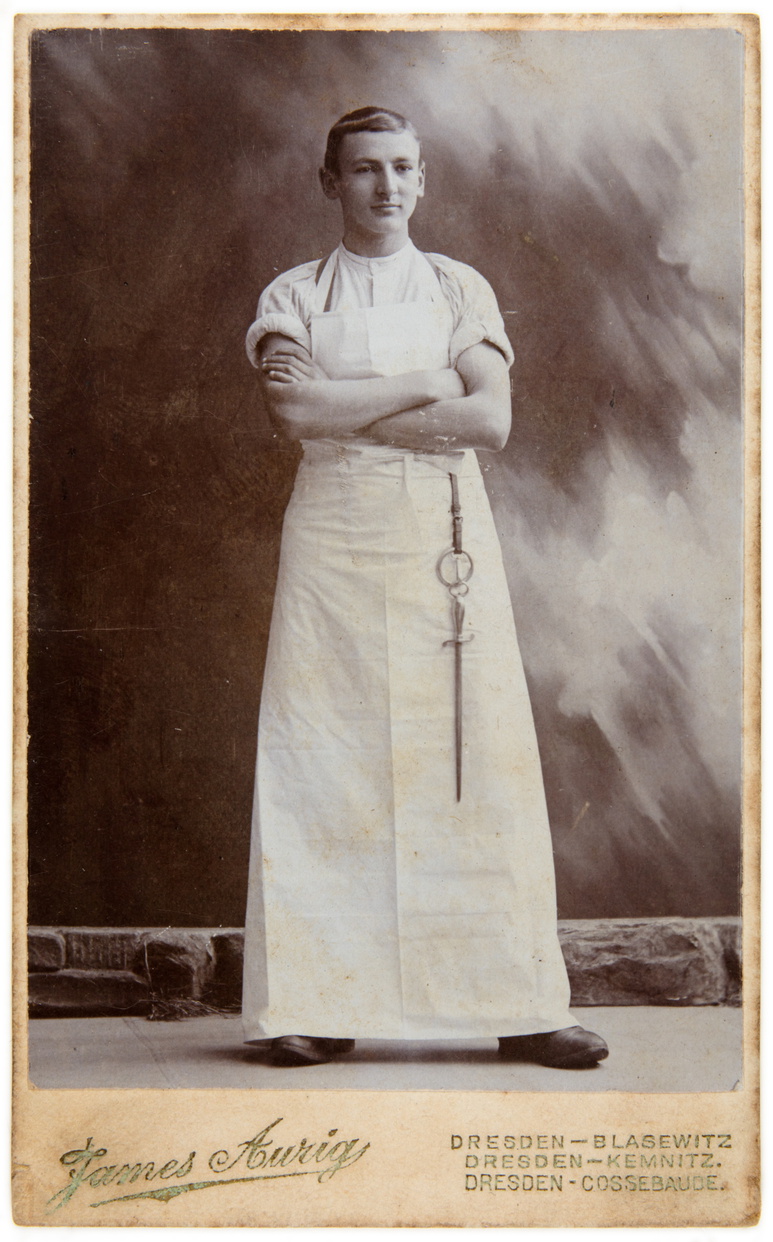
Here the carefully staged accessories provide the clue. In one photograph, a knife scabbard hangs from the belt. It holds several knives for different tasks. In the other, the sharpening steel is clearly visible, used to keep the blades keen during work. Both formed part of a butcher’s everyday, characteristic equipment.
In the studio portrait, the knife scabbard and sharpening steel also take on an additional role: while the white work clothes could suit other occupations as well, these objects point much more clearly to the butcher’s trade. They become visible signs of his occupation.
This, too, conveys a sense of professional identity. The man is not portrayed merely as an individual – he wants to be seen as a butcher.
From the studio to the workplace
Portraits in which a person’s occupational identity is made visible through work clothing, tools or other characteristic attributes are by no means exceptional. Numerous examples can be found in 19th- and early-20th-century photography.
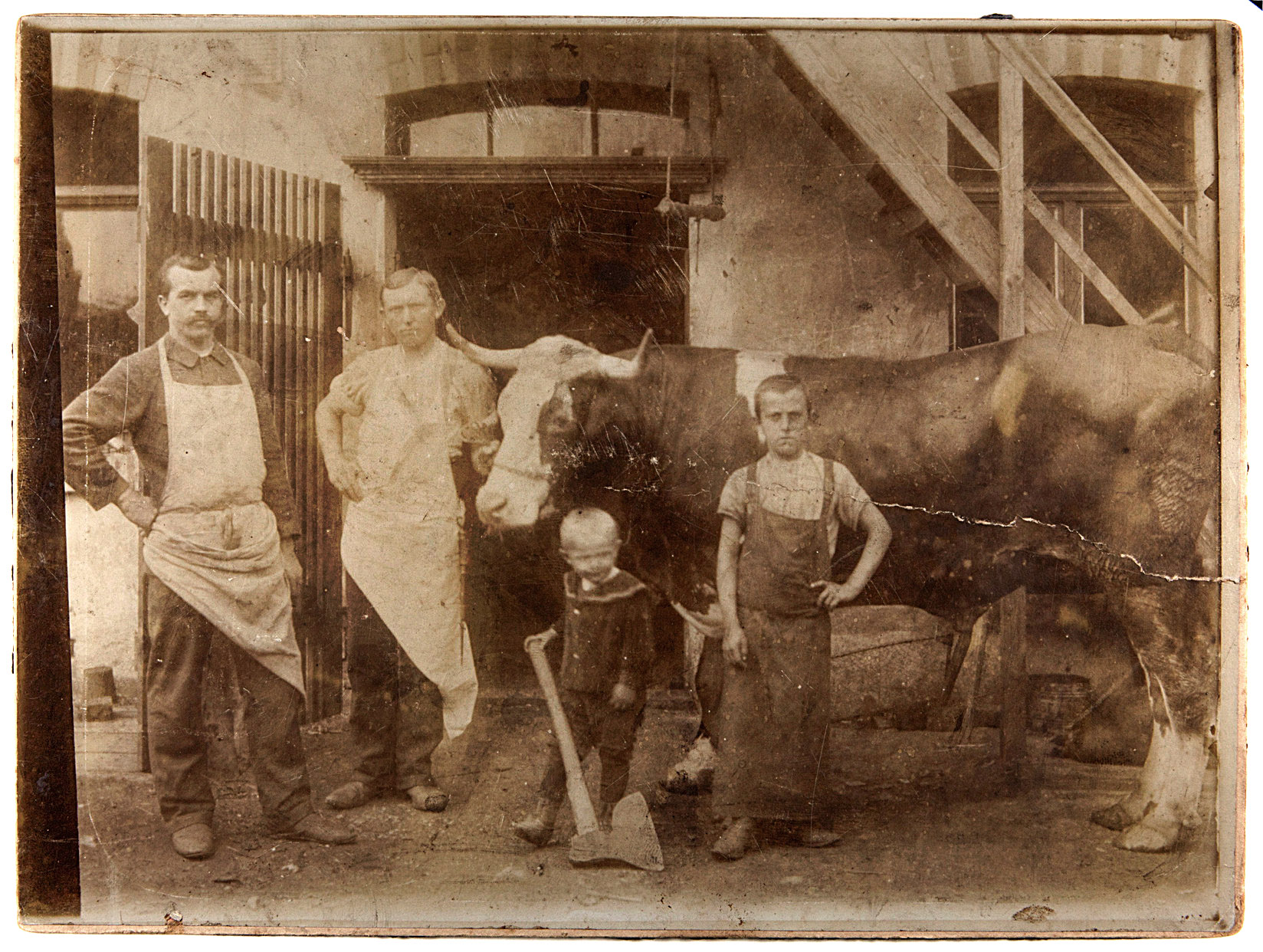
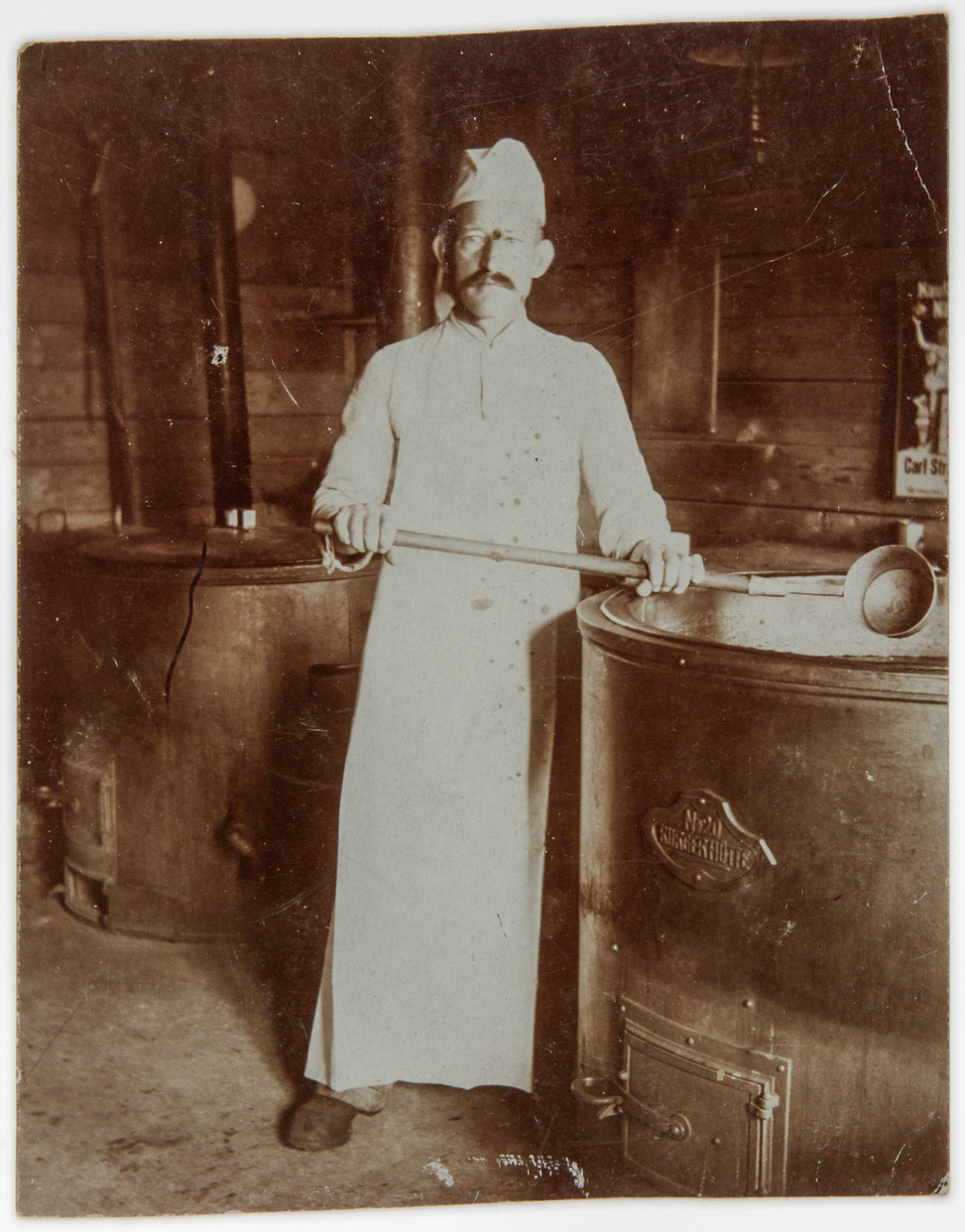
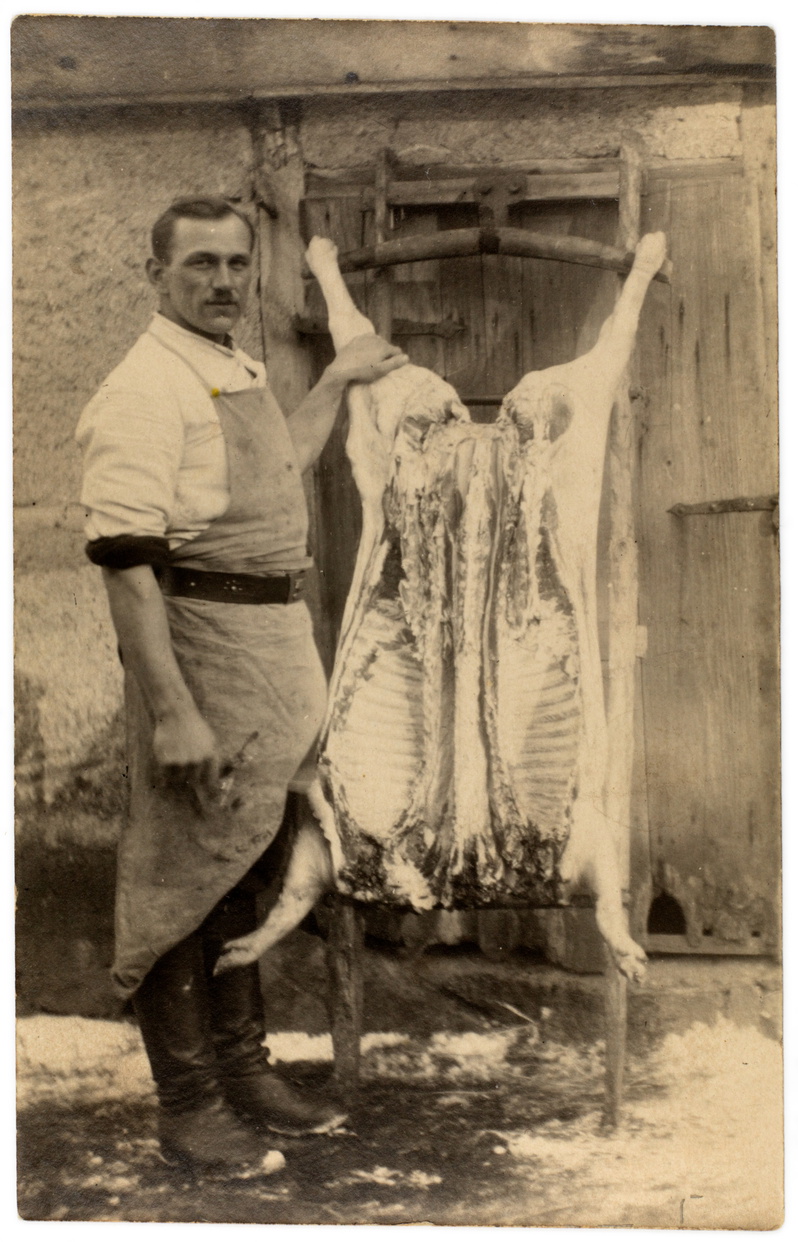
The range is broad. Alongside carefully arranged studio photographs, pictures were made directly in working environments. Itinerant photographers played a particular role, travelling from place to place and offering their services where their customers lived and worked. They photographed people in front of their homes, on farms and at work.
These photographs, too, are often posed: people interrupt their work, stand before the camera and present themselves with their work clothes, tools or products. Unlike in the studio, however, the actual working environment remains visible.
What remains of the photographs
Today we are often missing precisely the information that was taken for granted when the photograph was made. Names disappear. Dedications are lost. Photographs are removed from family albums and sold individually. What remains is the image.
This is why inscriptions, reverses, studio imprints, provenance and comparative images are so important. They can turn a plausible assumption into a documented story – or call an apparently obvious explanation back into question.
And so we return to the four men in front of the painted beach. We now know several ways of reading such images – but still not the specific occasion for this photograph. The picture tells us remarkably precisely how the men were meant to look. It does not tell us why they were meant to look that way.
HistoricBits
Review. Preserve. Make visible.
HistoricBits is dedicated to historical photographs preserved in private albums, collections and estates. The project seeks out, preserves, catalogues and publishes images that might otherwise be lost or forgotten.
At its centre are often overlooked forms of everyday and utilitarian photography: commercial photography, amateur photographs, local press images, studio photography, photo-booth pictures and rapid photography.
Many of these photographs were made neither as art nor with the intention of documenting history – yet today they are important historical sources.
They were made to preserve memories, provide services or earn a living from photography. It is precisely this direct connection to everyday life that makes them valuable today.
About the project