A photograph and its story
The dream
of flight
How travelling photographers used ingenuity and photomontage to create the illusion of an adventure.
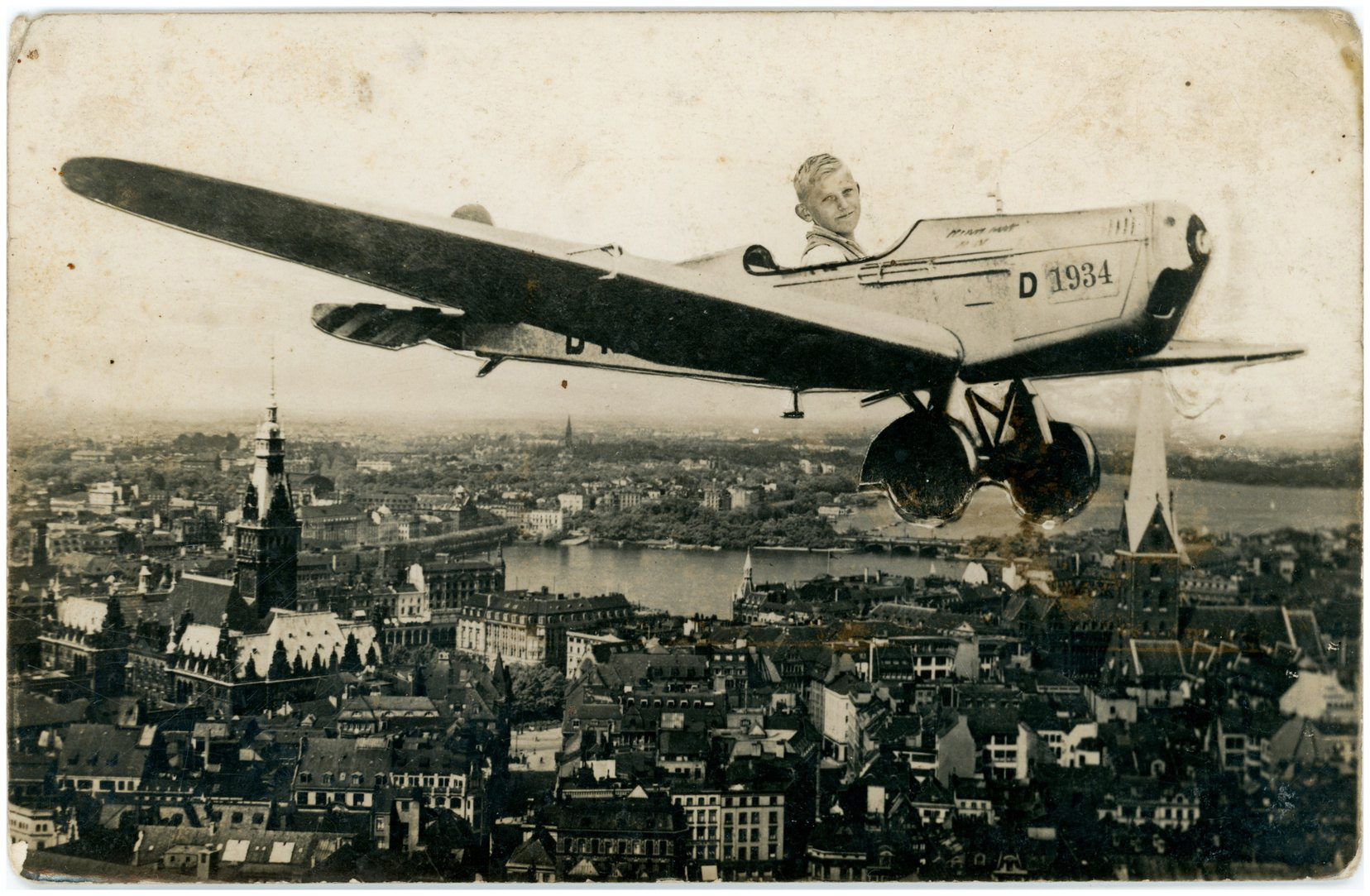
Read the story ↓A boy sits in the open cockpit of an aeroplane, smiling at the camera. The wing stretches across the picture, and the propeller seems to be spinning. Below the wheels lie the rooftops and towers of central Hamburg, with the Alster beyond.
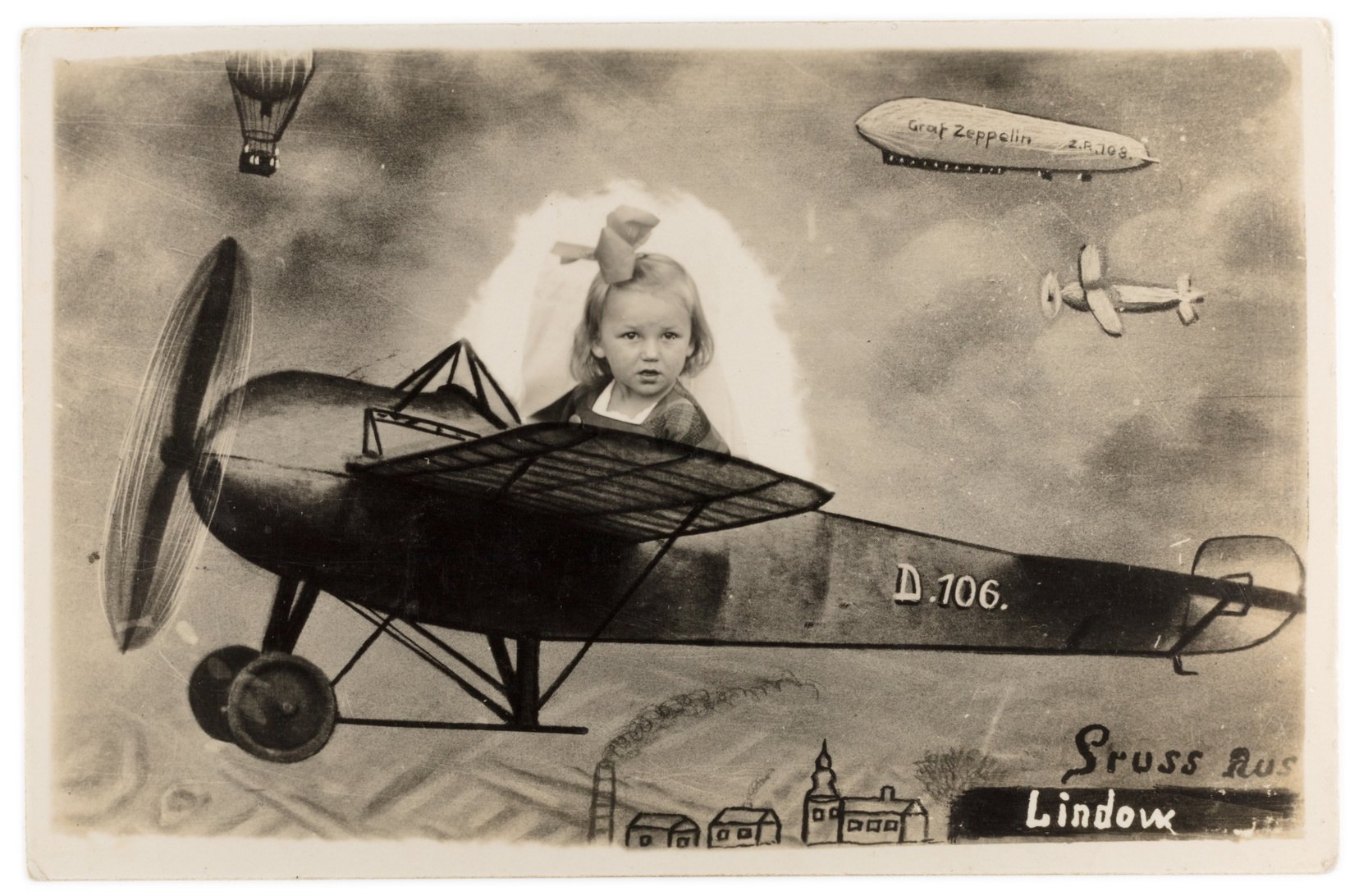
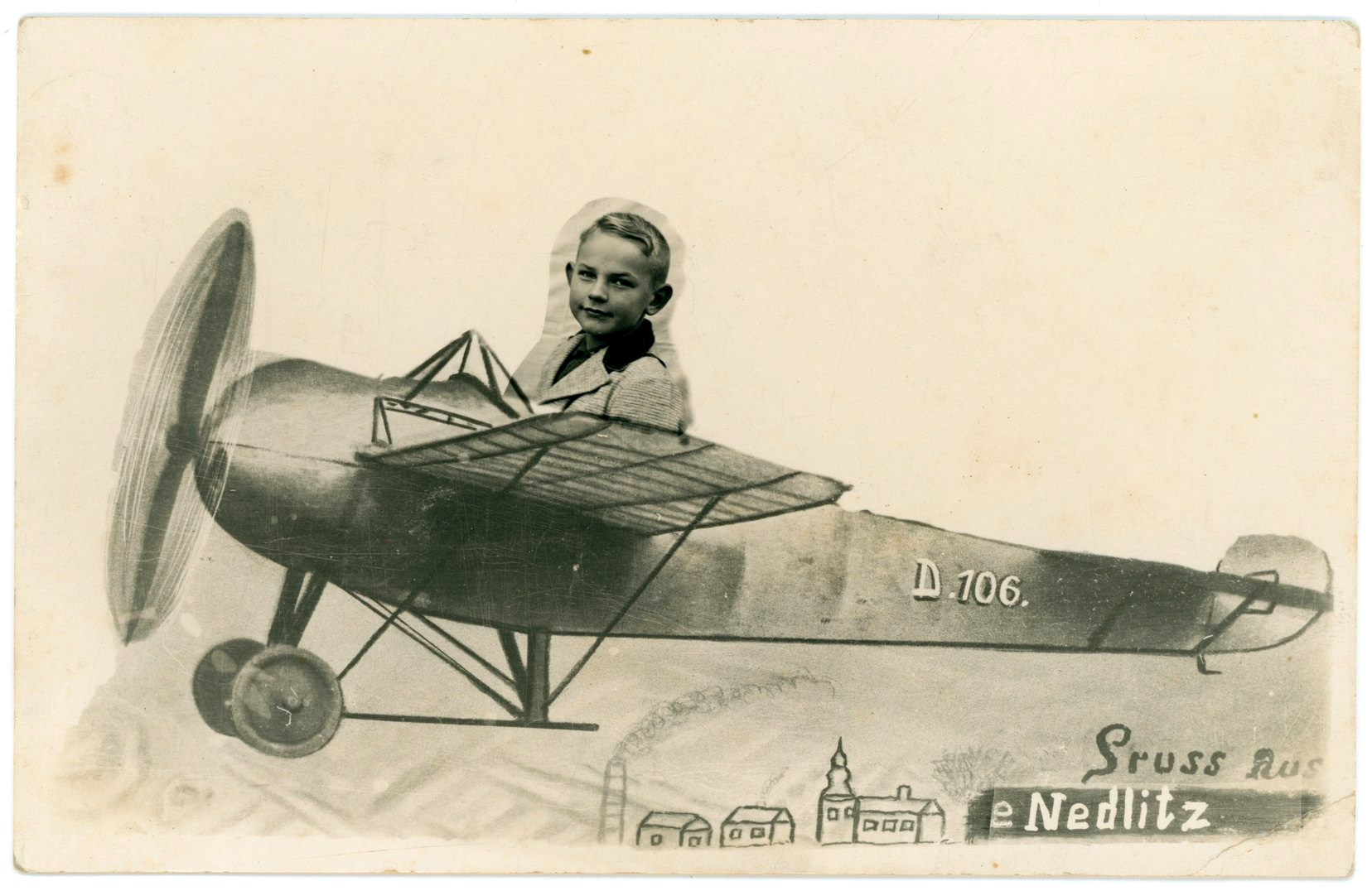
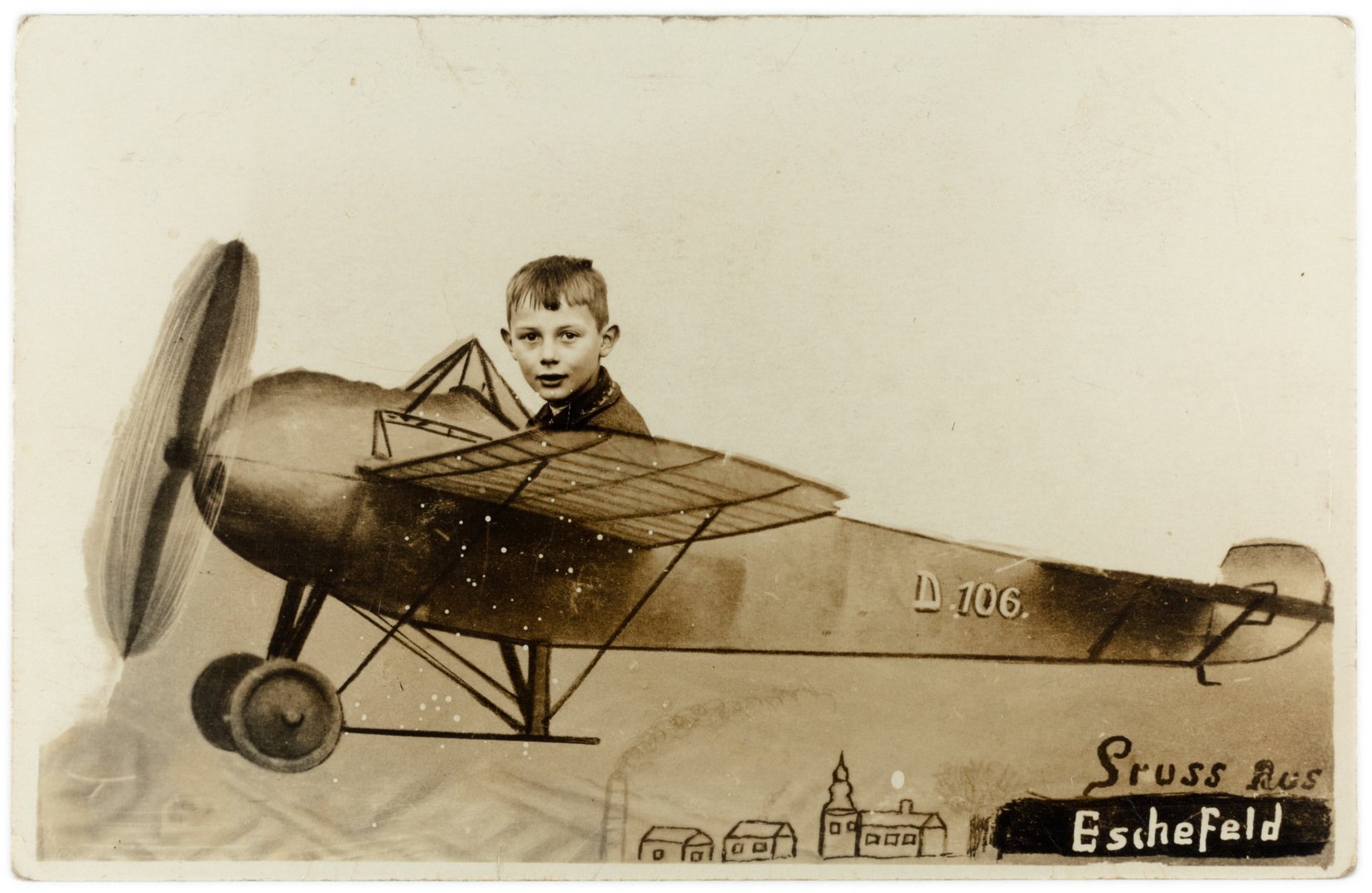
Another series of pictures shows the same aeroplane above an open landscape with a village and a church tower. We do not know which place is depicted. As the images fade into one another, the principle becomes clear: the portraits change, while the aeroplane and landscape stay the same. Different children take flight in the same scene. But these flights never happened. The pictures are clearly photomontages.
Flying — if only in a photograph
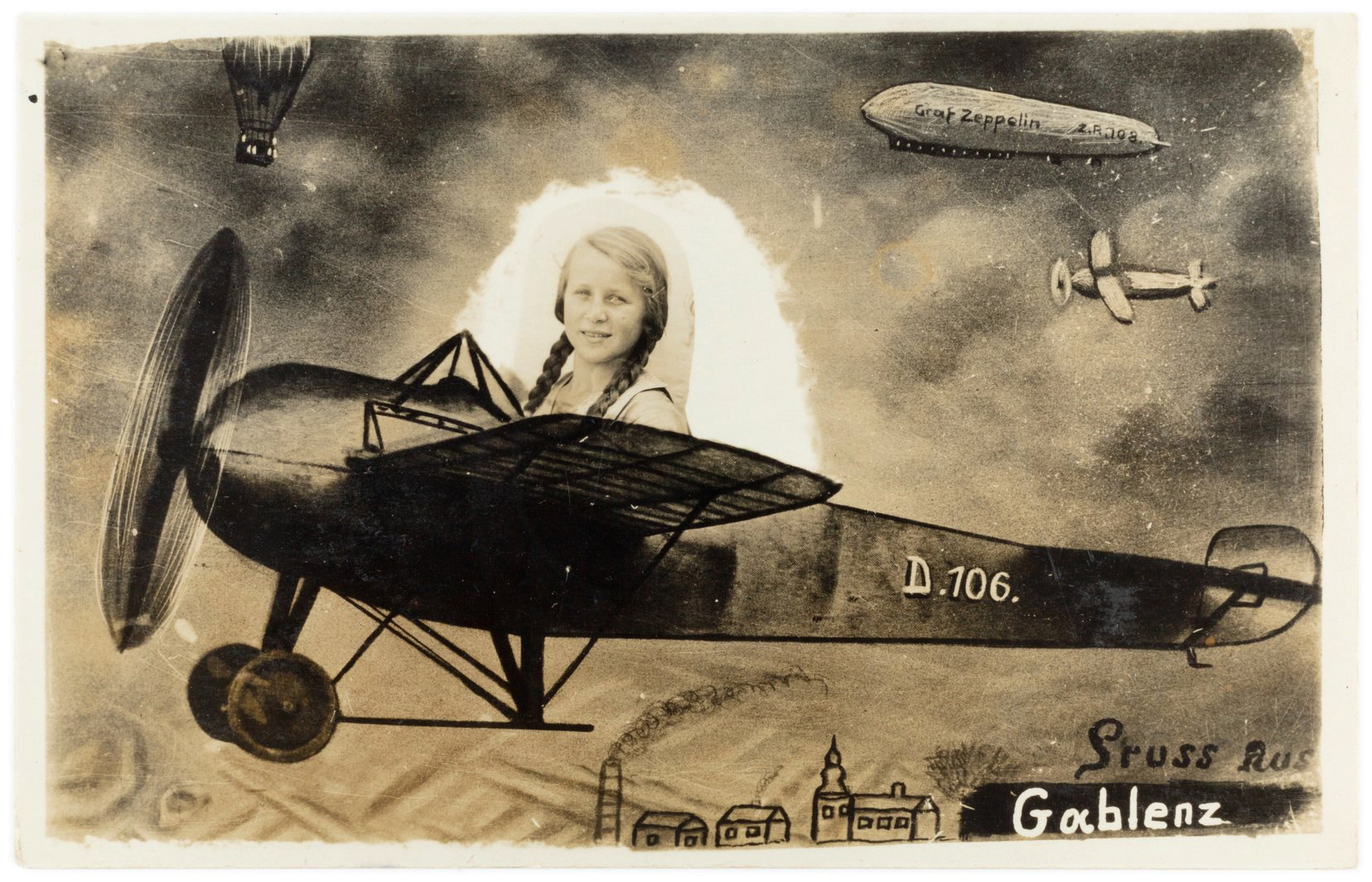
The children’s clothes and hairstyles, together with the aircraft depicted on these photographic postcards, suggest a date in the 1920s or 1930s. Scheduled air services already existed, and routes expanded during the 1920s. But flying remained expensive. For most families, it was a luxury and an adventure, far removed from everyday travel. A portrait incorporated into an aeroplane scene made that dream possible, at least in a photograph.
Tricks of the trade
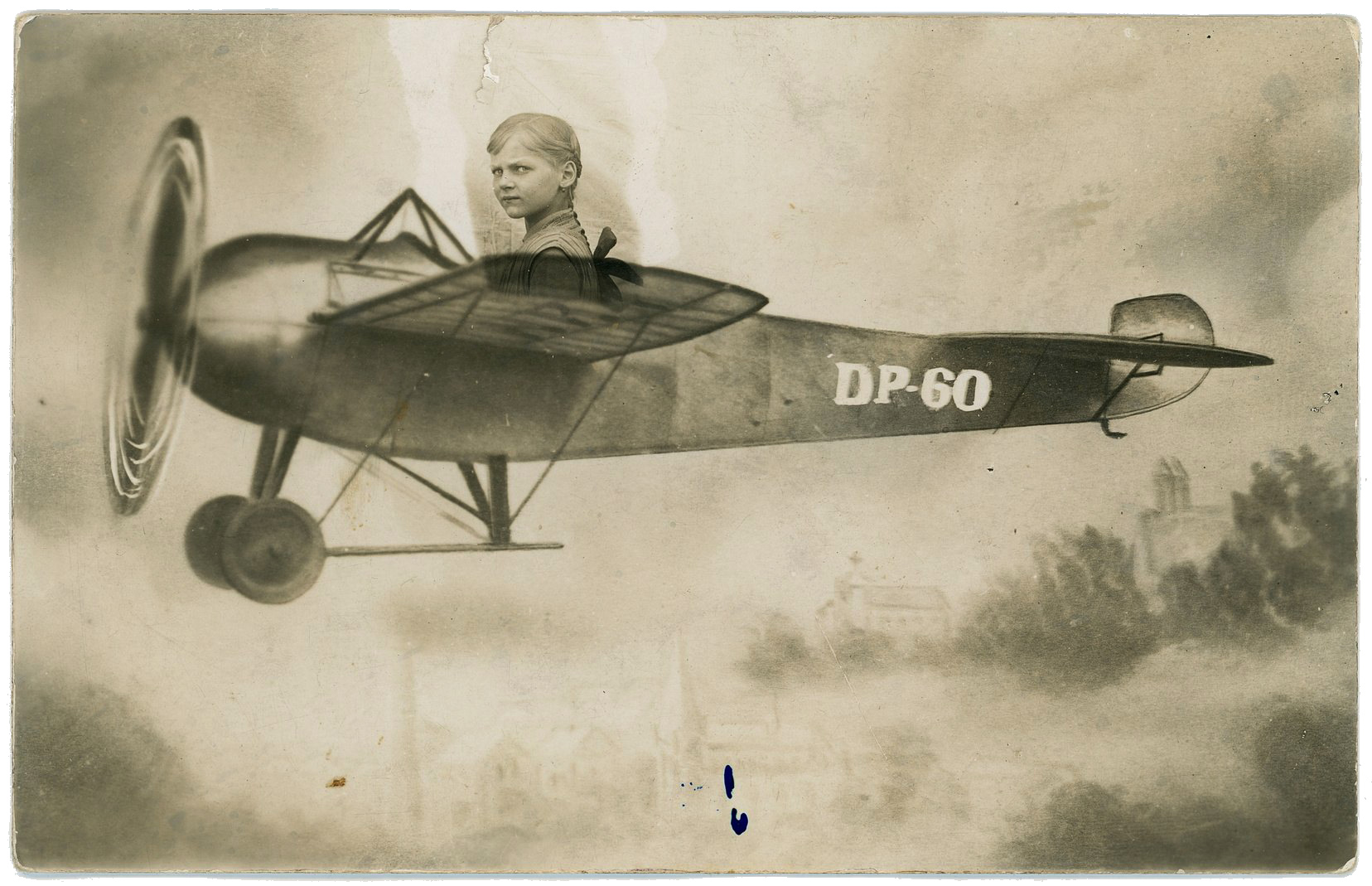
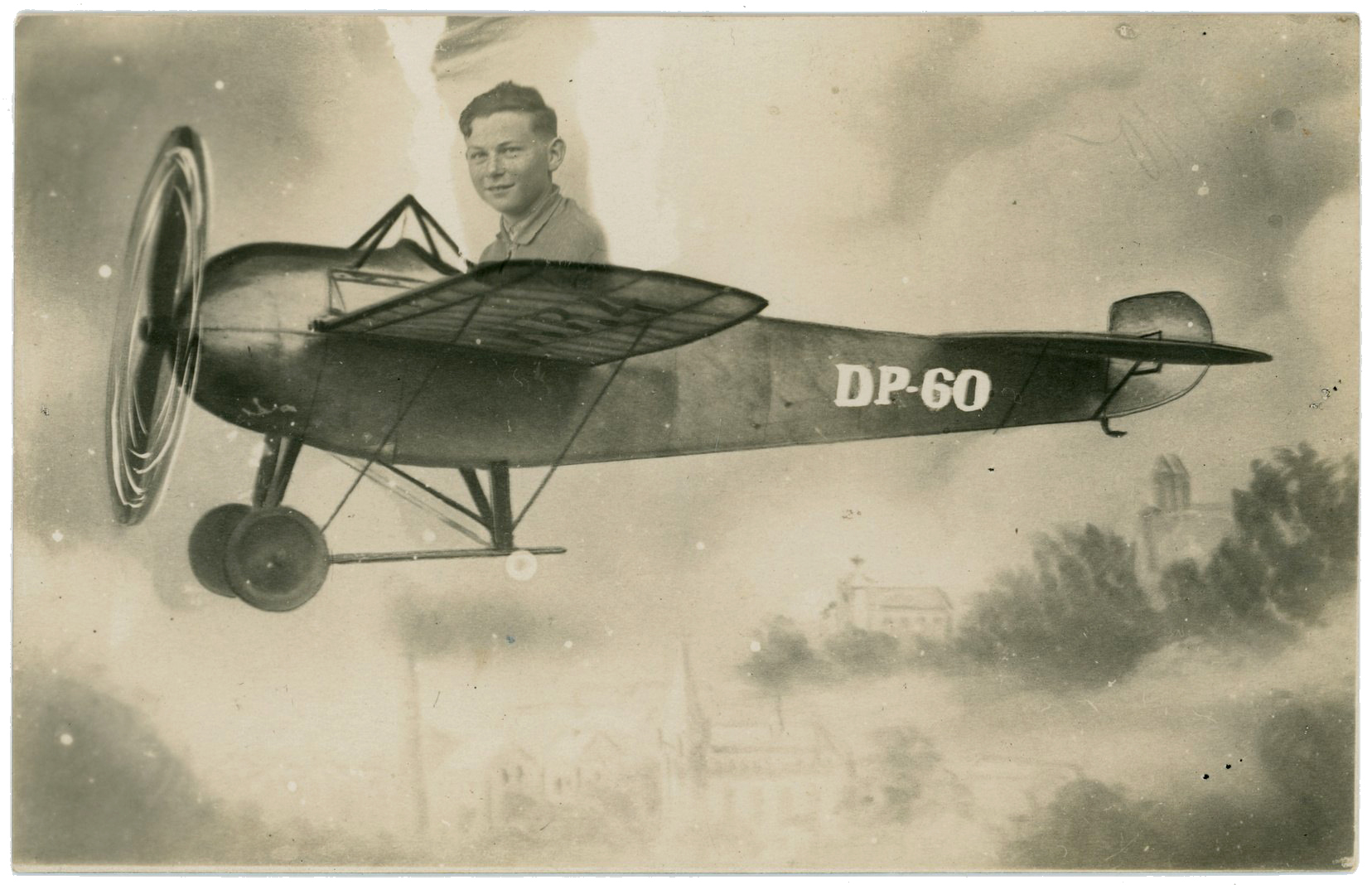
At first glance, the scene is surprising. A closer look, however, reveals cut edges and joins that show how the individual elements were brought together to form a montage. The precise techniques the photographers used remain uncertain: multiple exposures, collages made from paper negatives or other processes are all possibilities. The finished prints reveal little about the practical steps, tools and intermediate stages involved.
The pictures nevertheless show considerable ingenuity. Photographers may have devised their own working methods, adapted equipment, painted their own scenery or combined familiar processes to create new photographic tricks.
Taking the portrait, assembling the image and producing the finished print had to work together reliably. The prepared templates reduced the work needed for each additional picture. After all, the finished portrait was intended to be ready to take away straight away.
For customers, the appeal of the picture probably mattered most. Minor technical imperfections were likely outweighed by the charm of an unusual portrait.
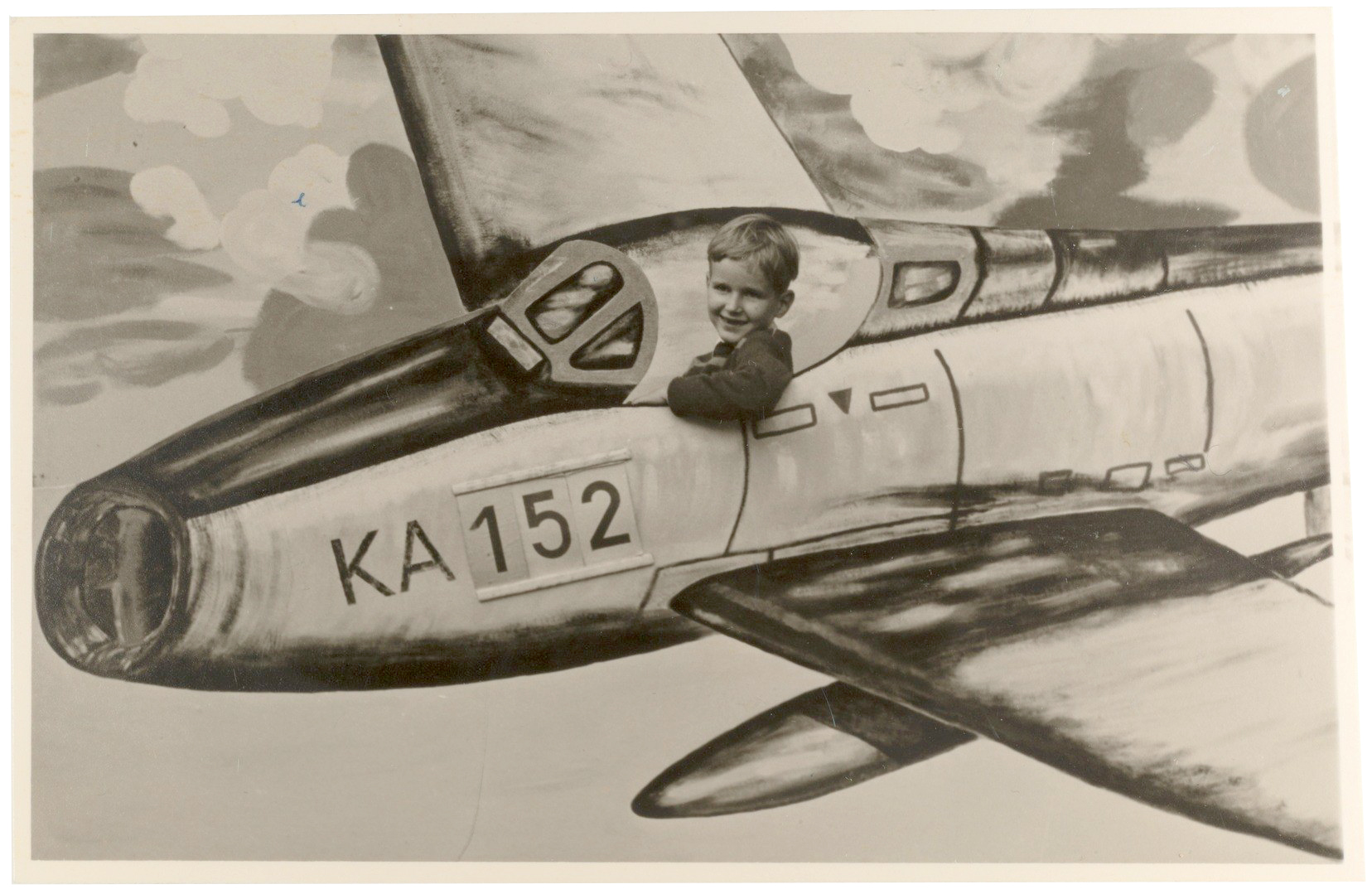
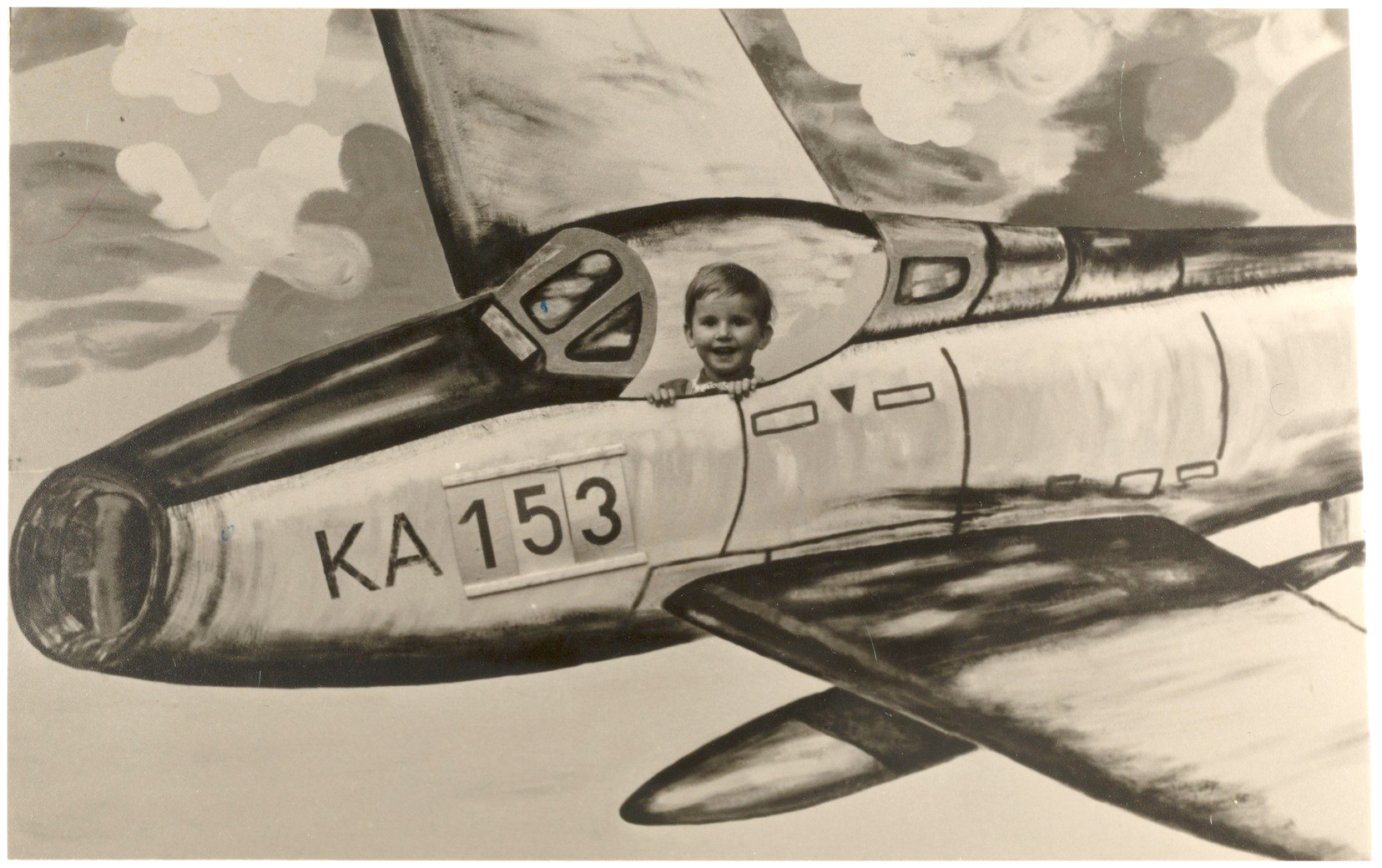
Life-size painted scenery and mock aeroplanes were also used as settings for photographs. They offered entertainment as well as a finished picture: children could climb into the props and pose among the scenery. Adults could take part too, and the attraction was particularly popular with soldiers.
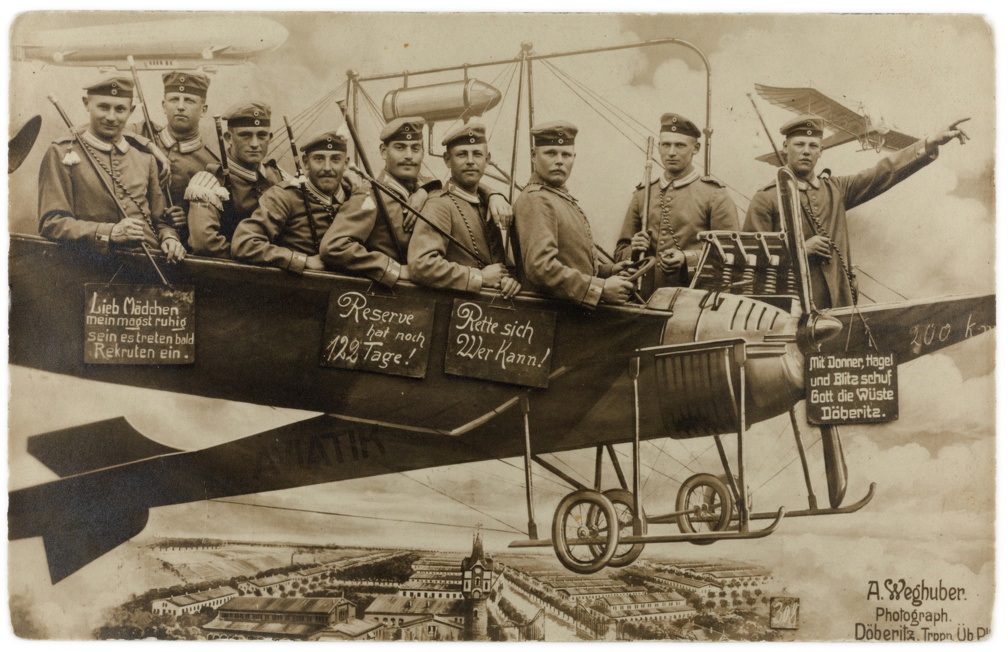
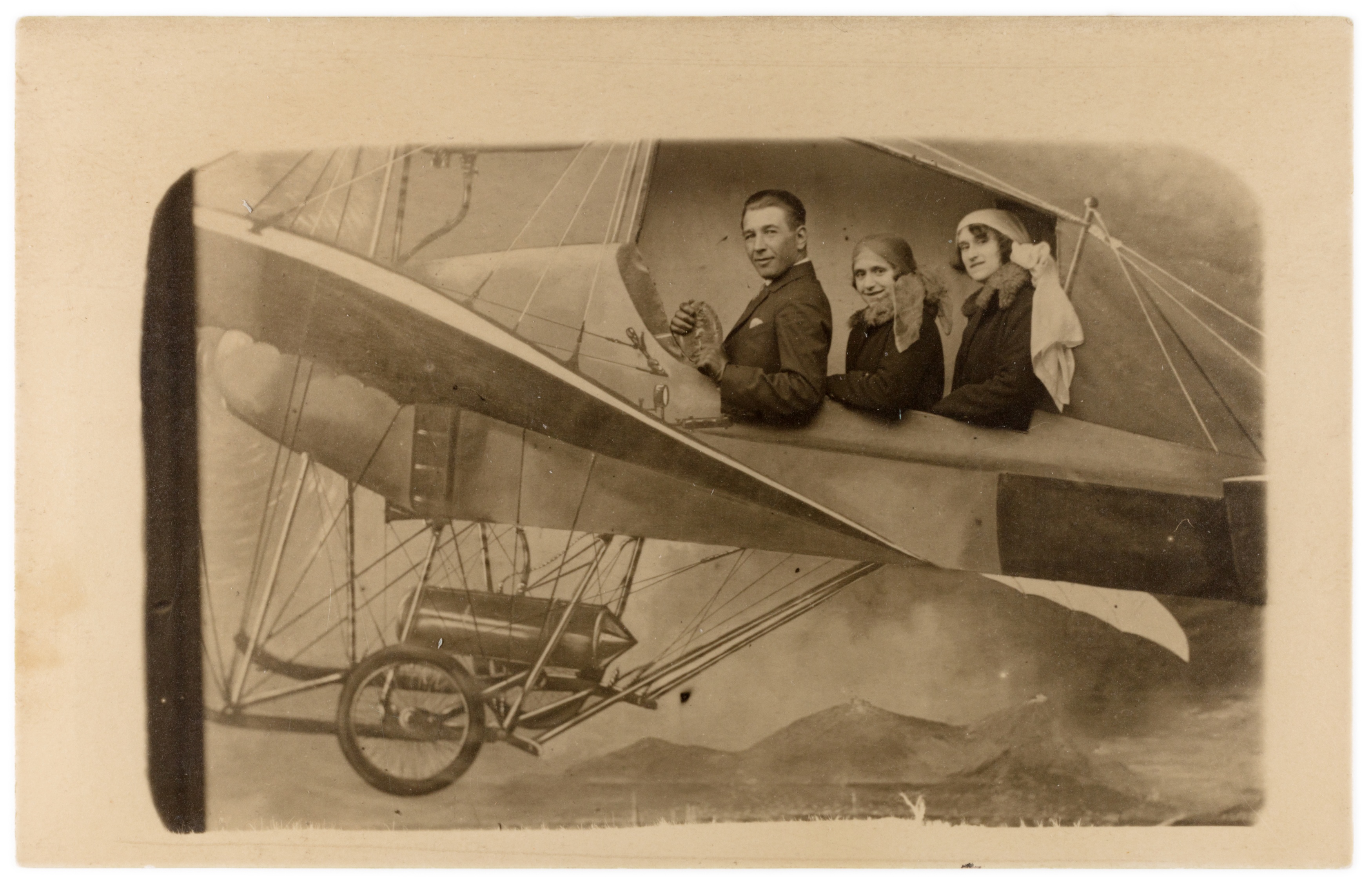
Piecing together a history
We know nothing about the photographers behind these pictures. Their names are missing. What survives is the photographs their customers took home and kept. Their unusual imagery and humour probably helped them survive and become collectors’ items long after any personal connection with the people shown had been lost. The photographs themselves are therefore our most important source. We piece together their history from what we can see, what is written on the backs and what comparisons with other pictures allow us to infer.
HistoricBits
Find. Preserve. Make visible.
HistoricBits explores historical photographs that have survived in private albums, collections and family estates. The project finds, preserves, researches and publishes pictures that might otherwise be lost or forgotten.
Its focus is on often overlooked forms of everyday photography: commercial work, amateur snapshots, local press photographs, studio portraits, photo-booth pictures and while-you-wait photography.
Many of these photographs were made neither as art nor as deliberate records of history. Yet today they are valuable historical sources.
They were made to preserve memories, provide a service or earn a living. That direct connection with everyday life is what makes them valuable today.
About the project