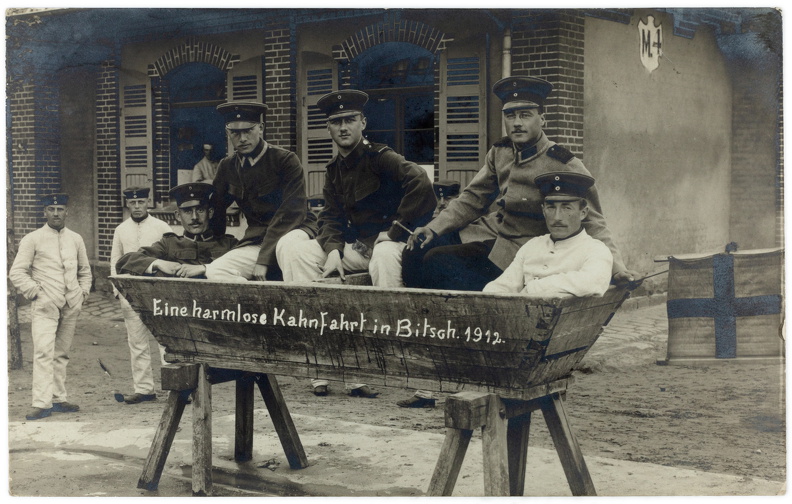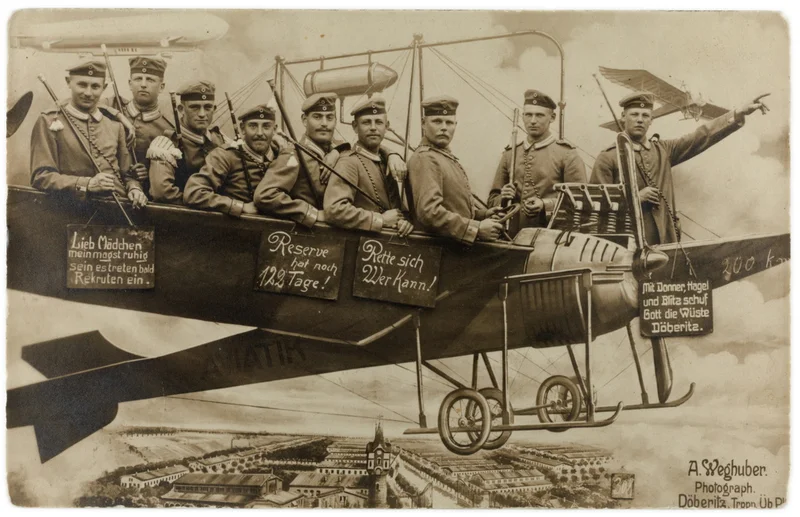
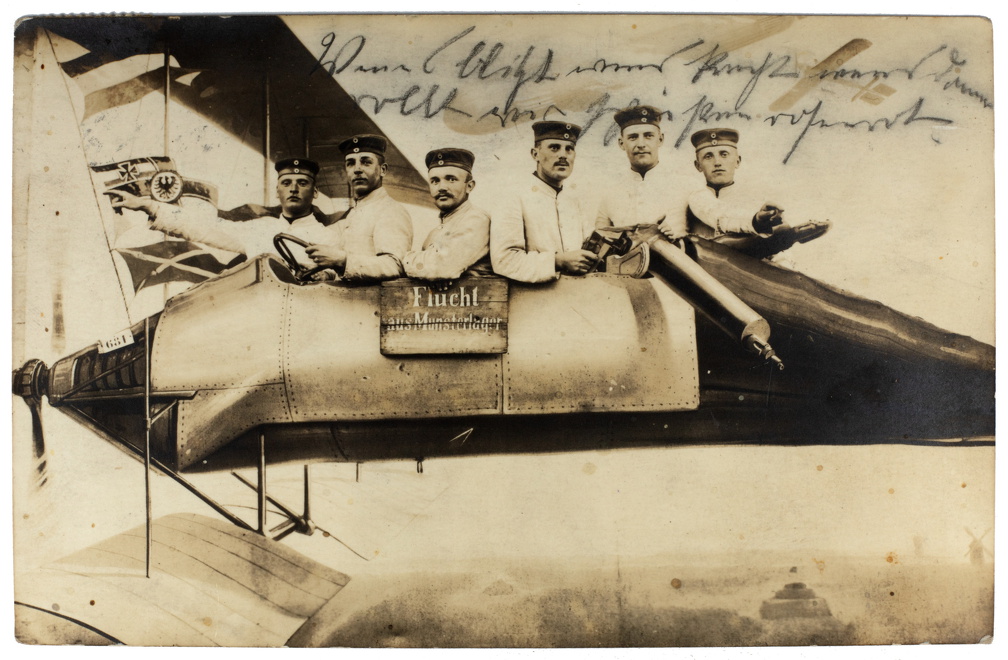
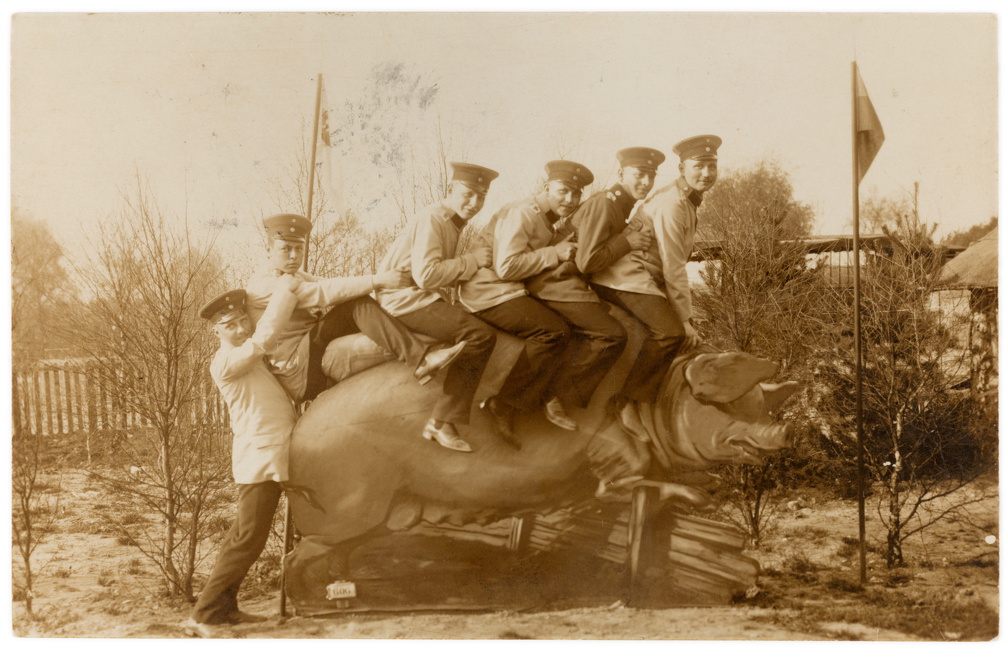
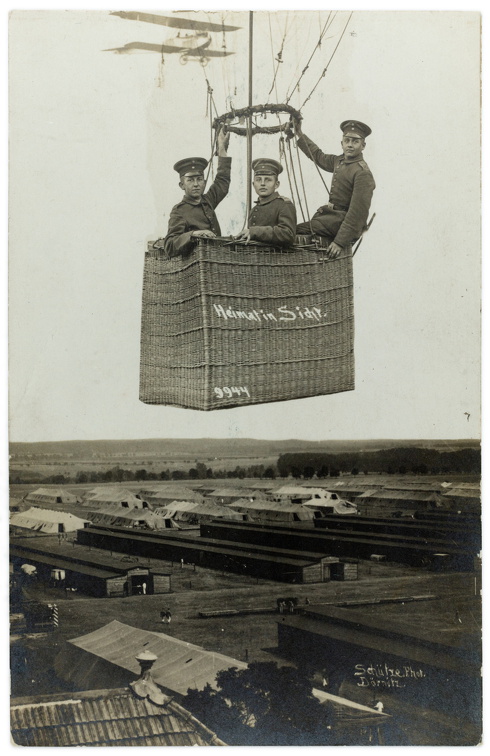
Between about 1910 and the 1930s, soldiers of the German Reich had themselves photographed with artificial props at military training grounds. Aeroplanes, airships, tanks, horses, carts, animals, shells, rockets and absurd everyday scenes were constructed from painted wood, cardboard and scenery.
Flight is the principal motif of this imagery: biplanes, airships, balloon baskets and later rockets briefly turned soldiers into pilots, aeronauts or heroes of the future. Alongside it ran a second, more comic strand: mock cars, donkey carts, stork carriages, pigs, moon backdrops and scenes such as peeling potatoes.
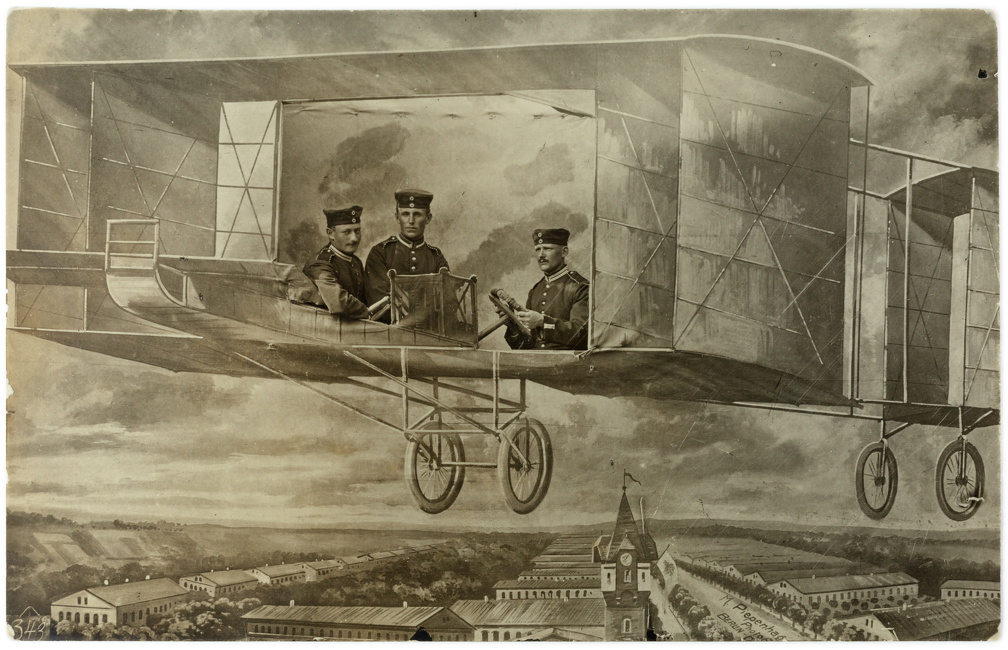
A contemporary studio stamp from Schubert in Munsterlager calls such pictures “Jokusaufnahmen”. The term is now uncommon; it means joke or comic photographs: deliberately amusing pictures with props and performed roles.
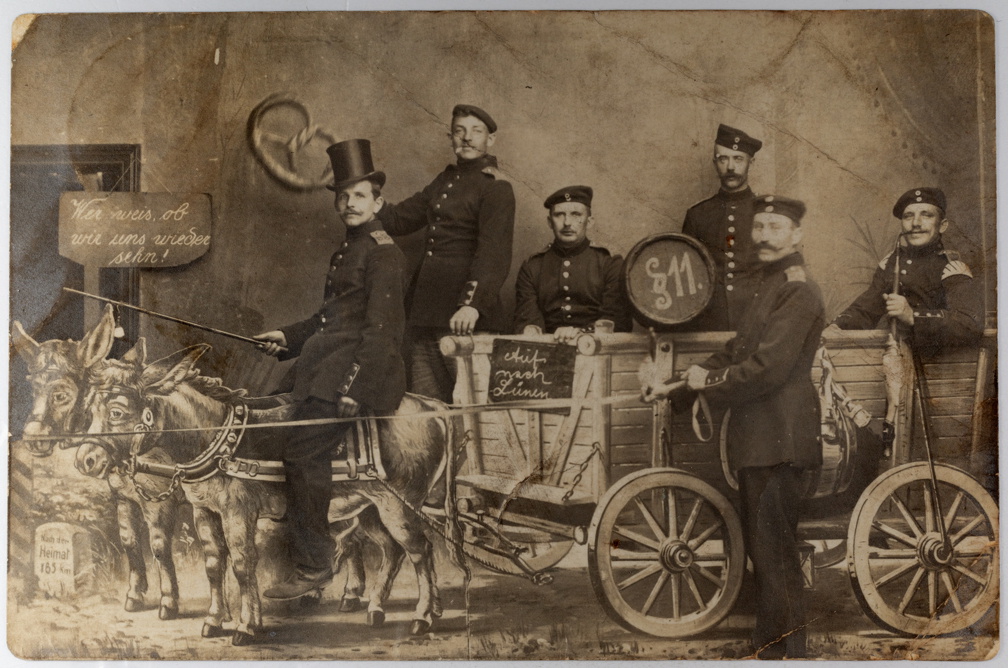
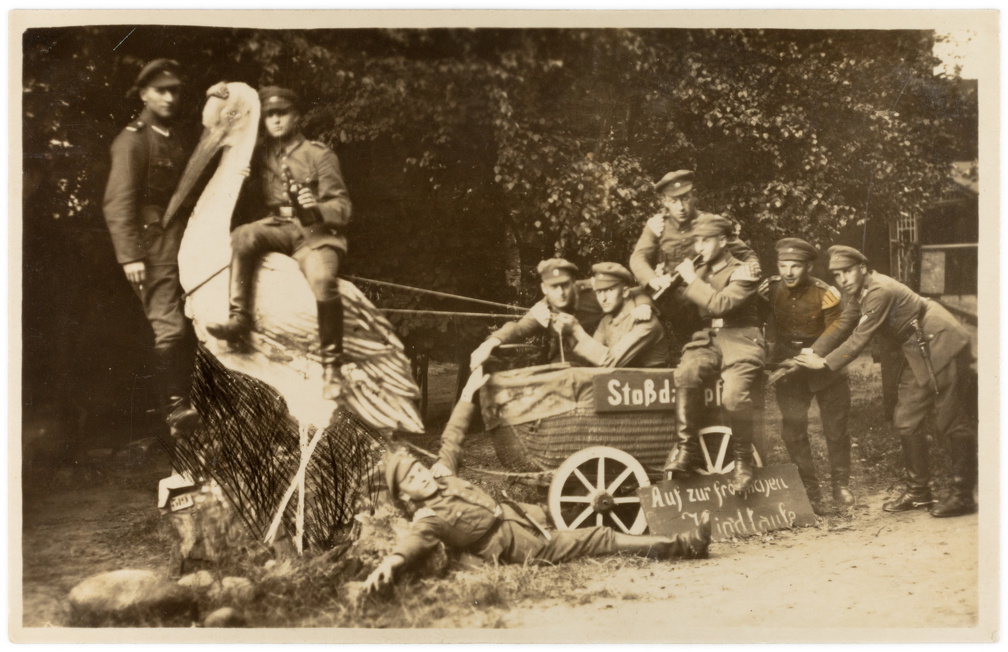
These pictures belong to the world of the photographic postcard: quickly produced, easy to post, affordable and immediately recognisable as souvenirs. They were keepsakes, pictures of comrades and greetings to families: a small performance in uniform, away from barracks drill.
A business model
This was more than private amusement. The photographs were also a profitable business. They were made where many soldiers gathered for short or longer periods: Bitsch, Döberitz, Dörnitz and Altengrabow, Jüterbog, Elsenborn, Heuberg, Munsterlager, Lockstedter Lager, Münsingen and Sennelager.
Photographers established businesses near barracks and training grounds. A high turnover of soldiers meant customers. Recruits, men on exercises, replacement units and soldiers passing through wanted pictures for themselves, their families and friends, or as reminders of service together. Group photographs with comrades were particularly popular. The more men in the picture, the greater its sales potential.
These photographs are examples of popular military remembrance. They belong to a world in which uniforms, enthusiasm for technology, comradeship and military role models were taken for granted. Today they seem contradictory: the men laugh, pose and play with the image, unaware of how close the horrors of the coming wars already were.
They are not official propaganda pictures. But they show military motifs turned into commercial photographic entertainment. War and preparation for war appear as amusement rather than horror, and this humorous tone is precisely what makes the pictures historically revealing.
The photographs offer a personal glimpse of soldiers’ attitudes at the time. Some men laugh openly; others exaggerate their seriousness until it becomes comic. Backdrops often bear ironic inscriptions promising escape, travel, adventure or a technological future, while the actual setting remains a camp.
A network of camp photographers
Such soldiers’ pictures were not an isolated local phenomenon but a widespread business model. They were popular at many training grounds at the same time and were deliberately promoted by photographers, studio branches and publishers. The resemblance between motifs appearing in similar forms at widely separated places is particularly striking.
- Bitsch in Lorraine
-
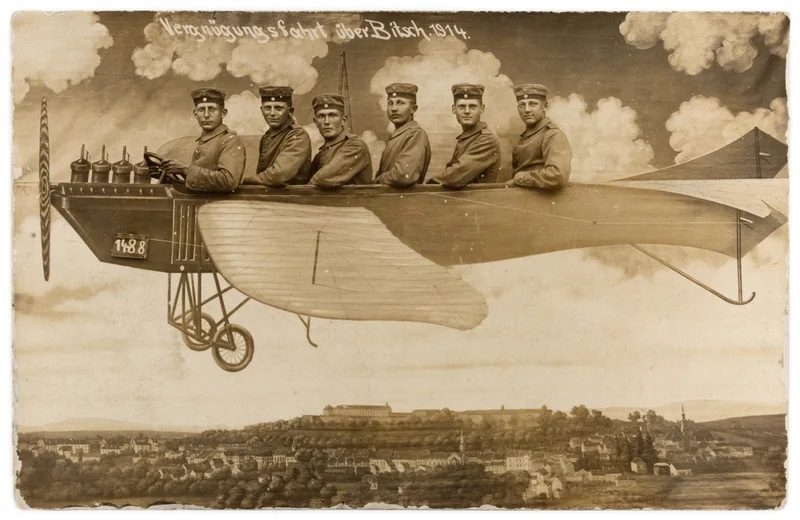 Otto Lehmann, Bitsch in Lorraine
-
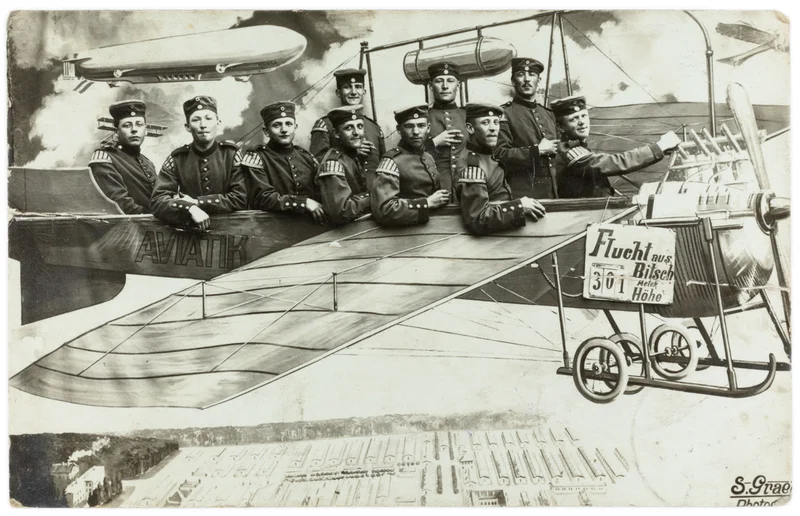 S. Graetz, Bitsch in Lorraine
-
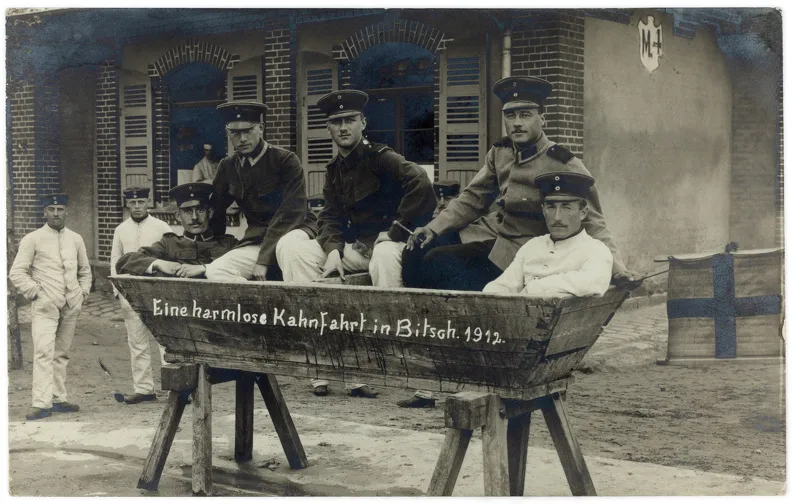 Karl Montag, Bitsch in Lorraine
- Darmstadt and Griesheim
-
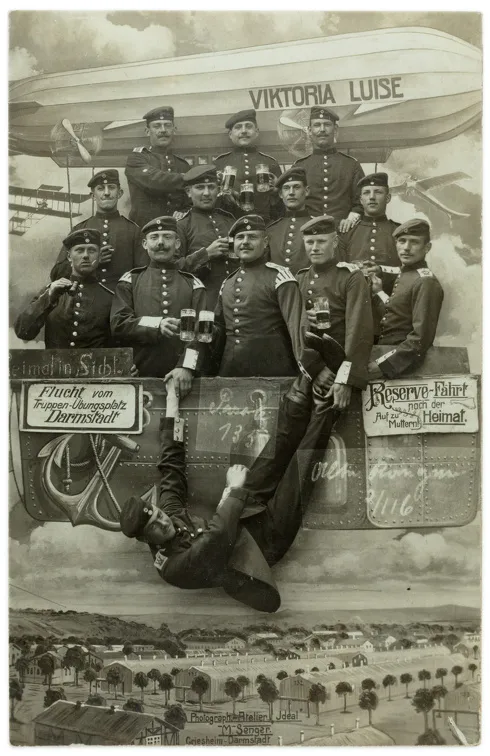 “Ideal” photographic studio, M. Senger / Fritz Senger’s widow, Griesheim-DarmstadtDarmstadt training ground, Nassauer Hof.
-
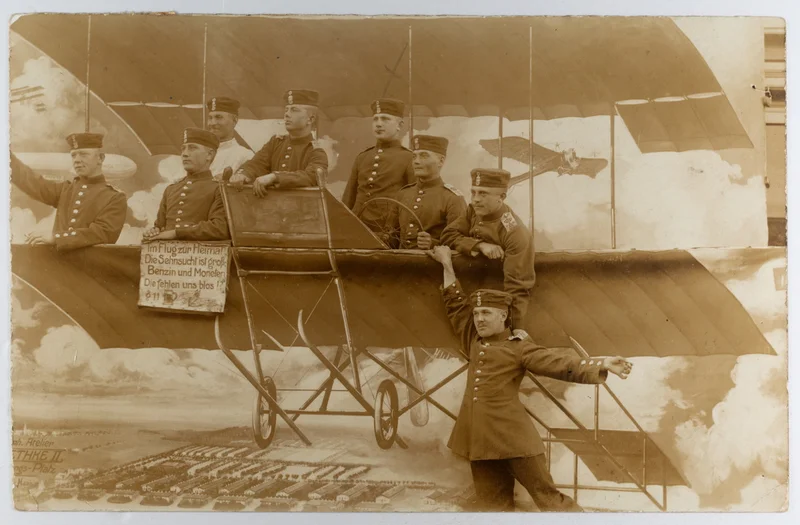 “Ideal” studio, proprietor Karl Bethke, Munsterlager and DarmstadtGriesheim/Darmstadt; at the Darmstadt training ground.
- Dörnitz and Altengrabow
-
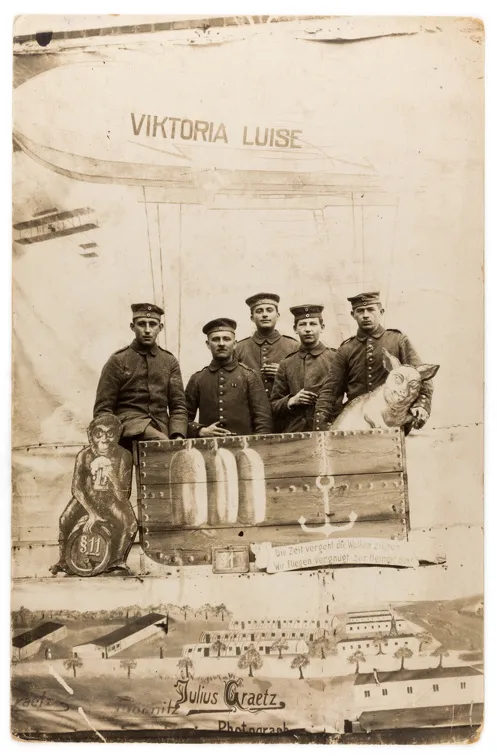 Julius
Graetz, Dörnitz
-
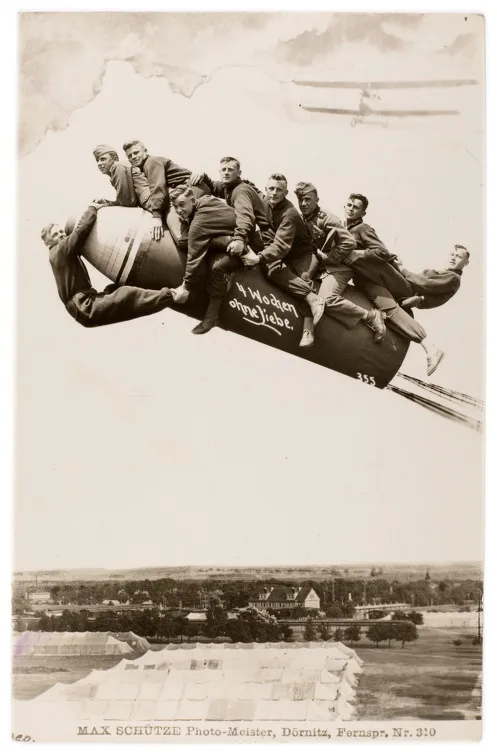 Max
Schütze, Dörnitz
-
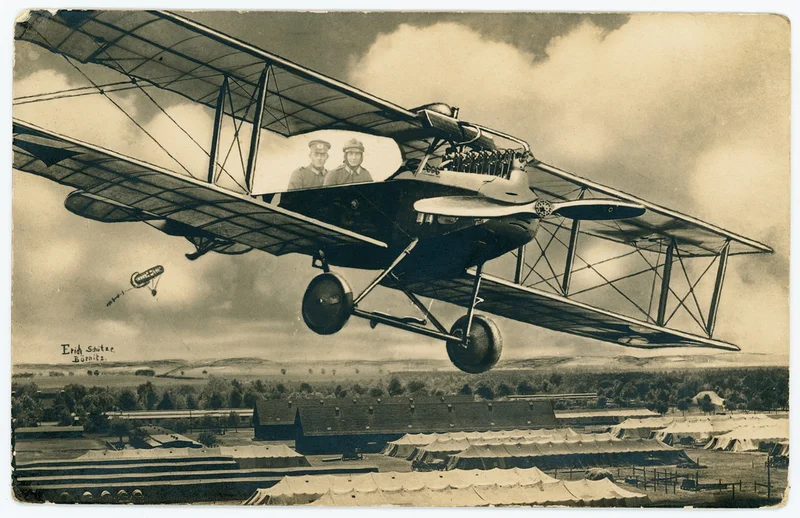 Erich
Schütze, Dörnitz
- Döberitz
-
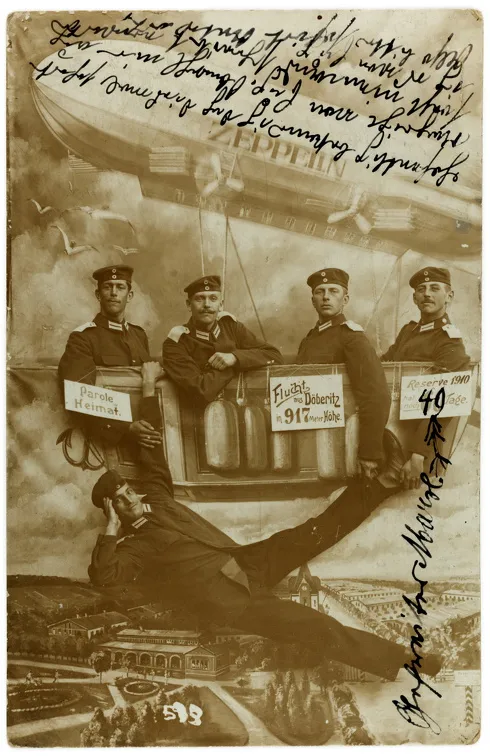 Max Piepenhagen, Berlin and DöberitzFriedrichstraße 122/123, Berlin; branch at Döberitz military training ground, beside the Deutscher Kaiser inn.
-
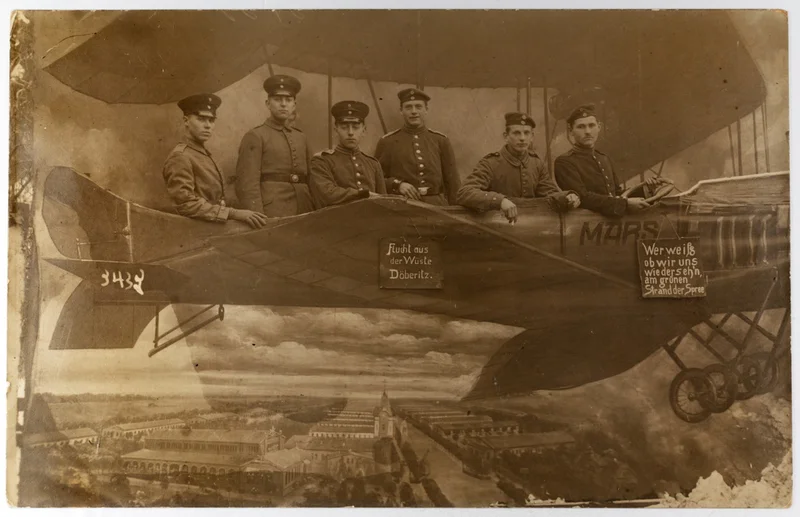 Alfons
Weghuber, Döberitz
-
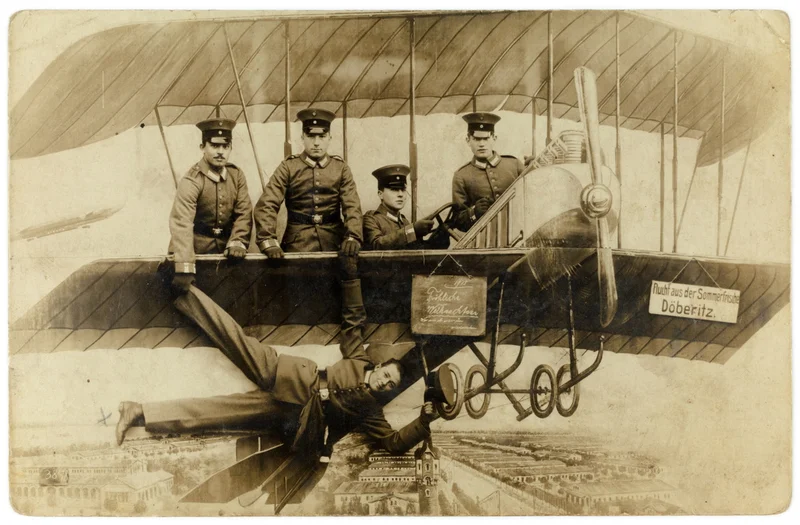 Emil Strobel, “Deutscher Kaiser” photographic studio, Döberitz military training ground
-
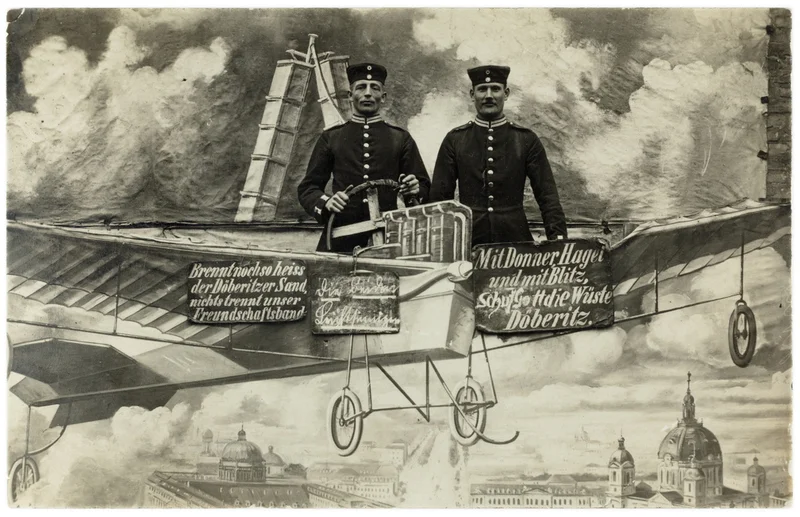 Oskar Streich, Döberitz, at the training ground, Hotel Gardestern
-
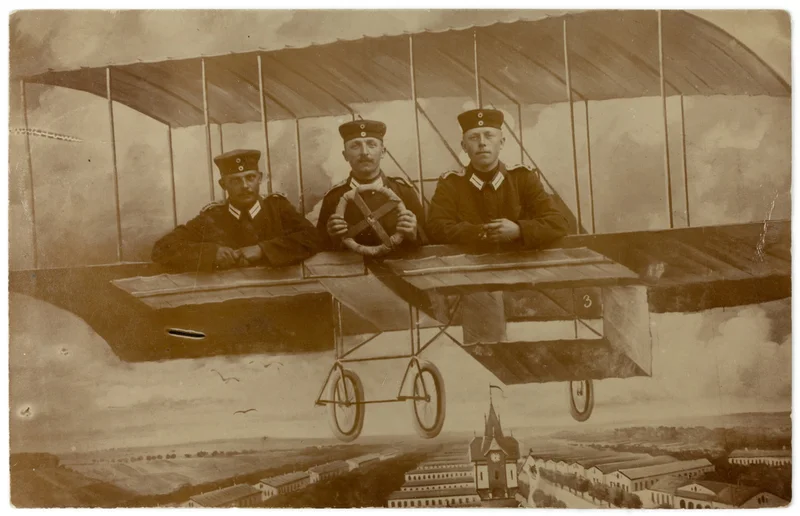 Otto Gerhardt, Döberitz, at the training ground
-
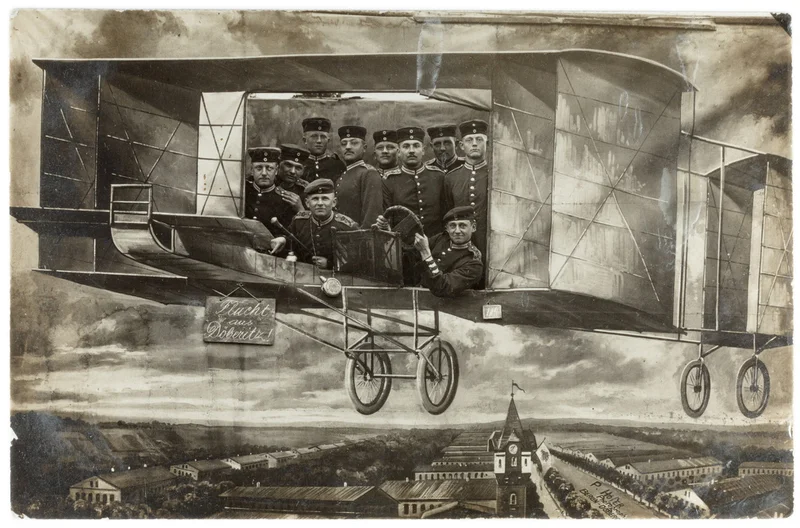 Paul Höfer, Berlin and Döberitz
- Elsenborn
-
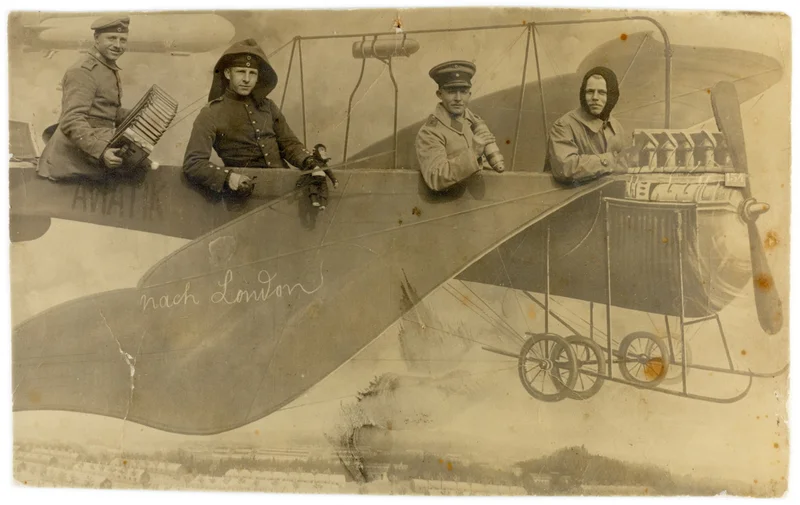 Alexander Herld, Elsenborn military training ground
-
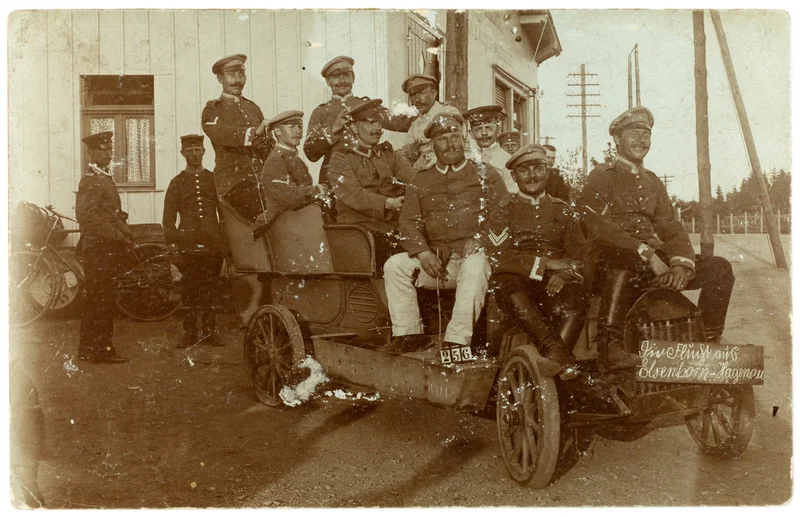 Fr. Oswald Kluge, Elsenborn military training ground
- Heuberg
-
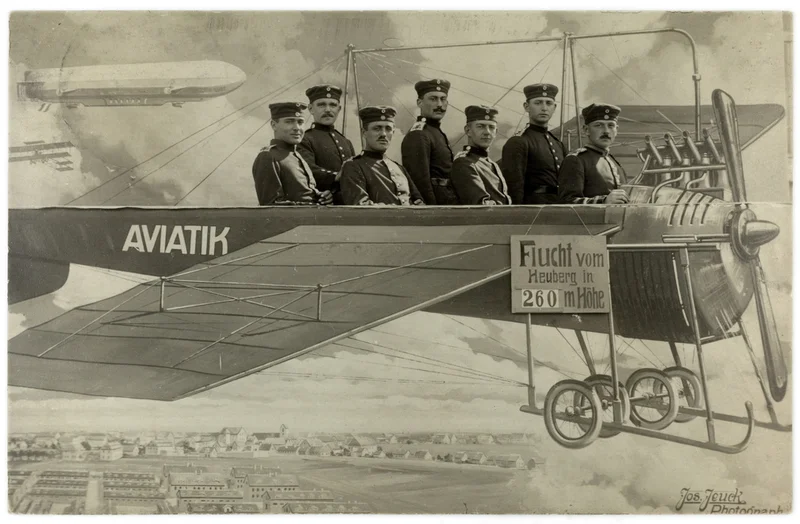 Josef Jeuck, Heuberg, at the military training ground
- Jüterbog, Old and New Camps
-
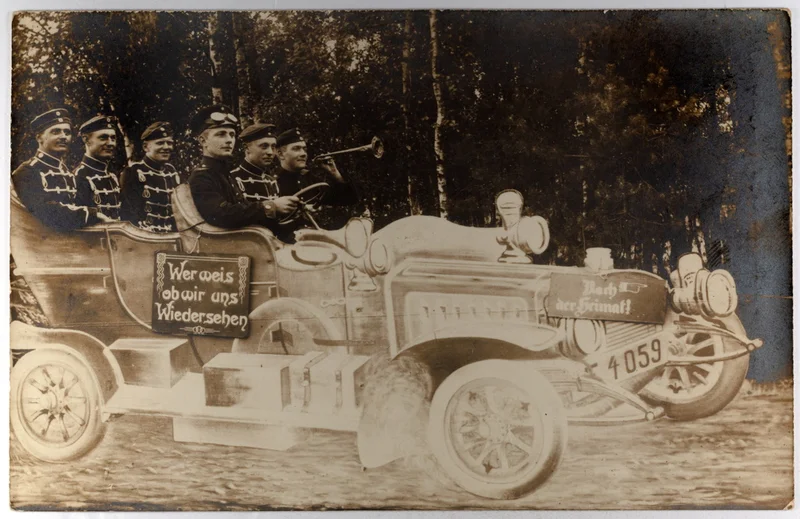 A. Gutenberg, Jüterbog, Old and New Camps
-
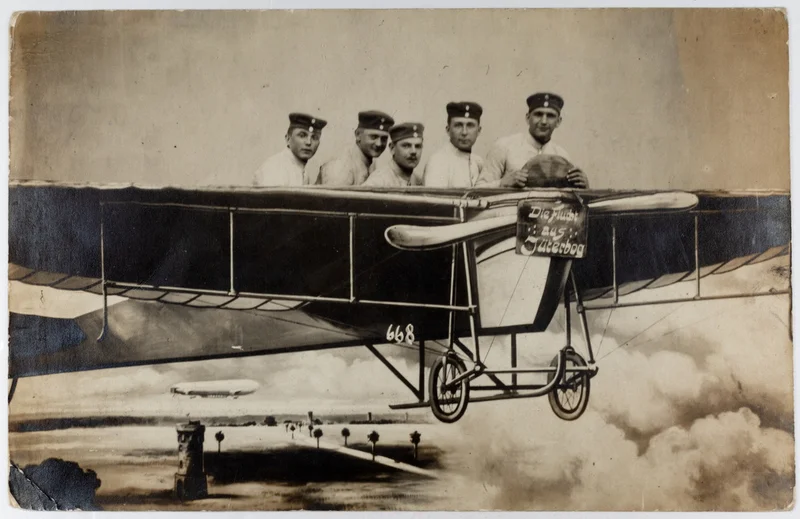 Ernst Löhn, Jüterbog, Old Camp
- Leipzig-Möckern
-
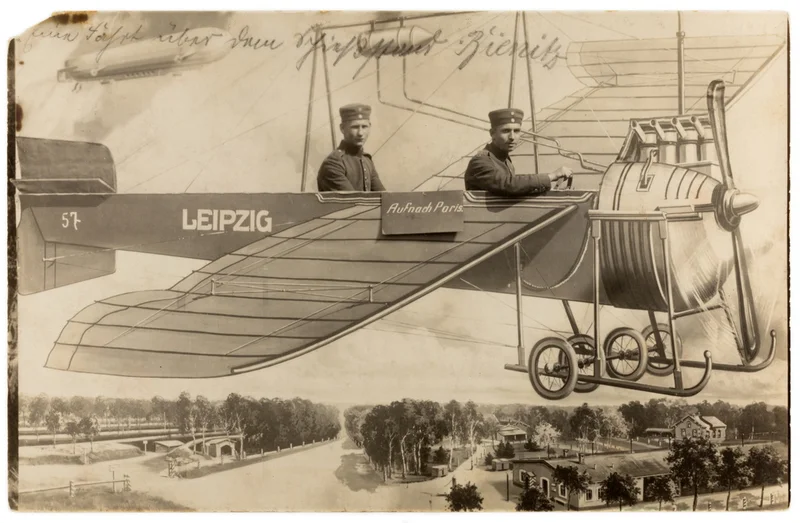 Ad.
Schimpff, Leipzig-Möckern
- Lockstedter Lager
-
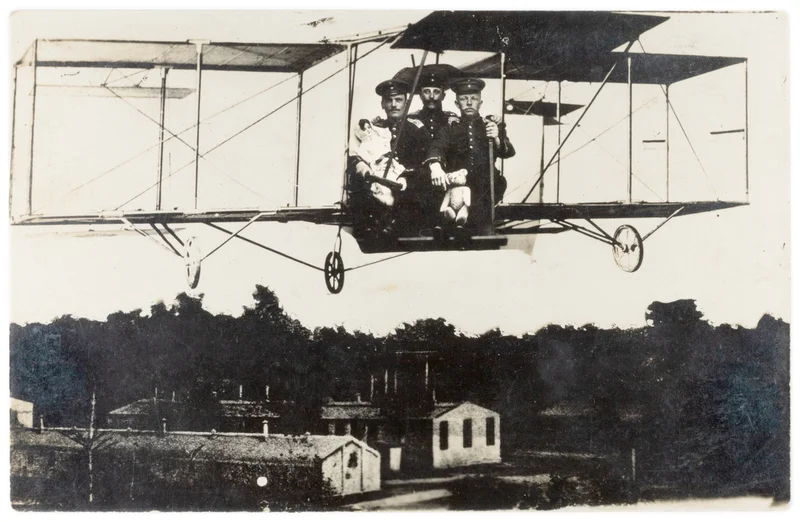 Published by W. Laukühn, Lockstedter Lager
- Munsterlager
-
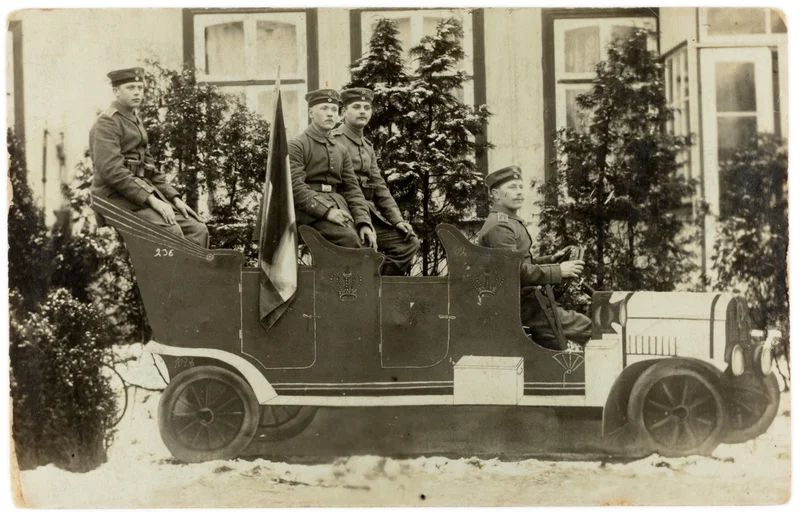 Otto
Dubielzig, Munsterlager
-
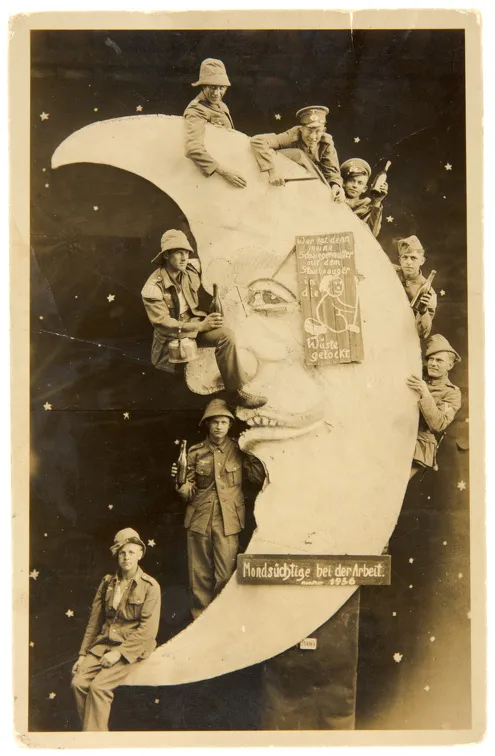 Richard Schubert / Schubert, Berlin and Munsterlager
-
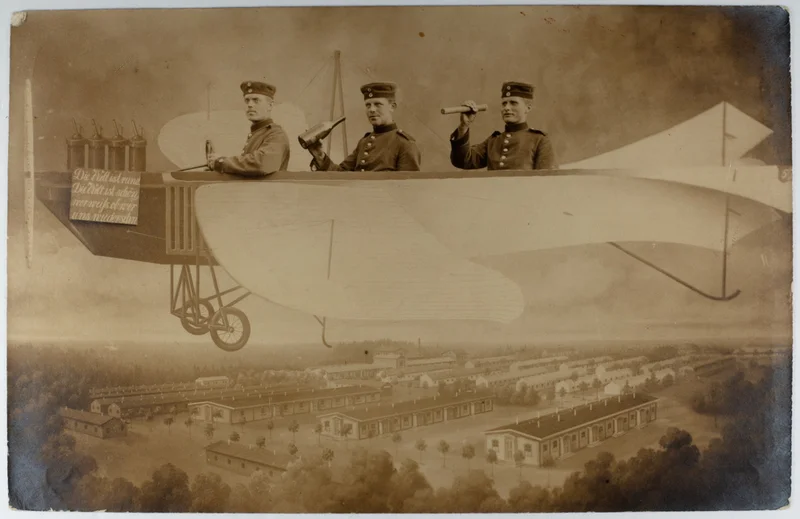 Rud.
Tegtmeyer, Munsterlager
- Münsingen
-
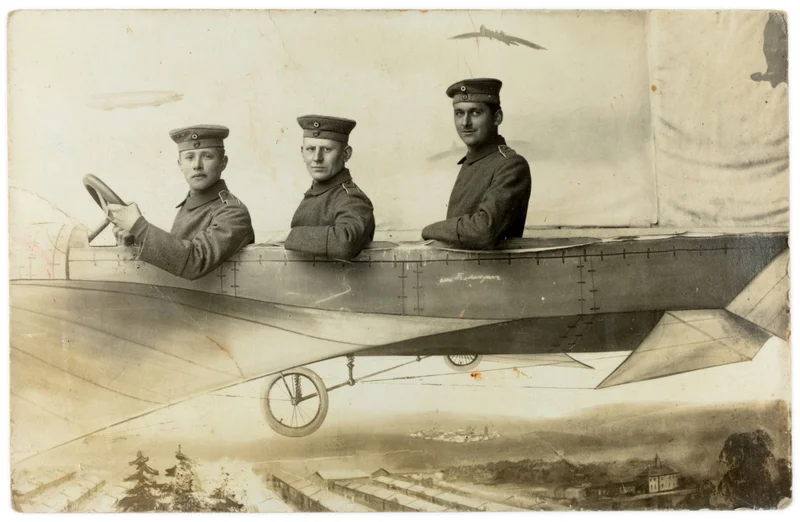 Schmid brothers, military training ground near Münsingen
- Neuhaus and Sennelager
-
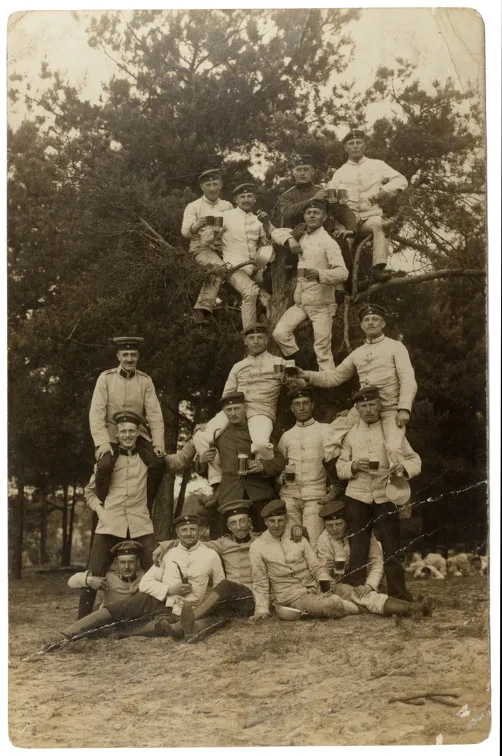 Wilhelm Herber senior, Neuhaus and Sennelager