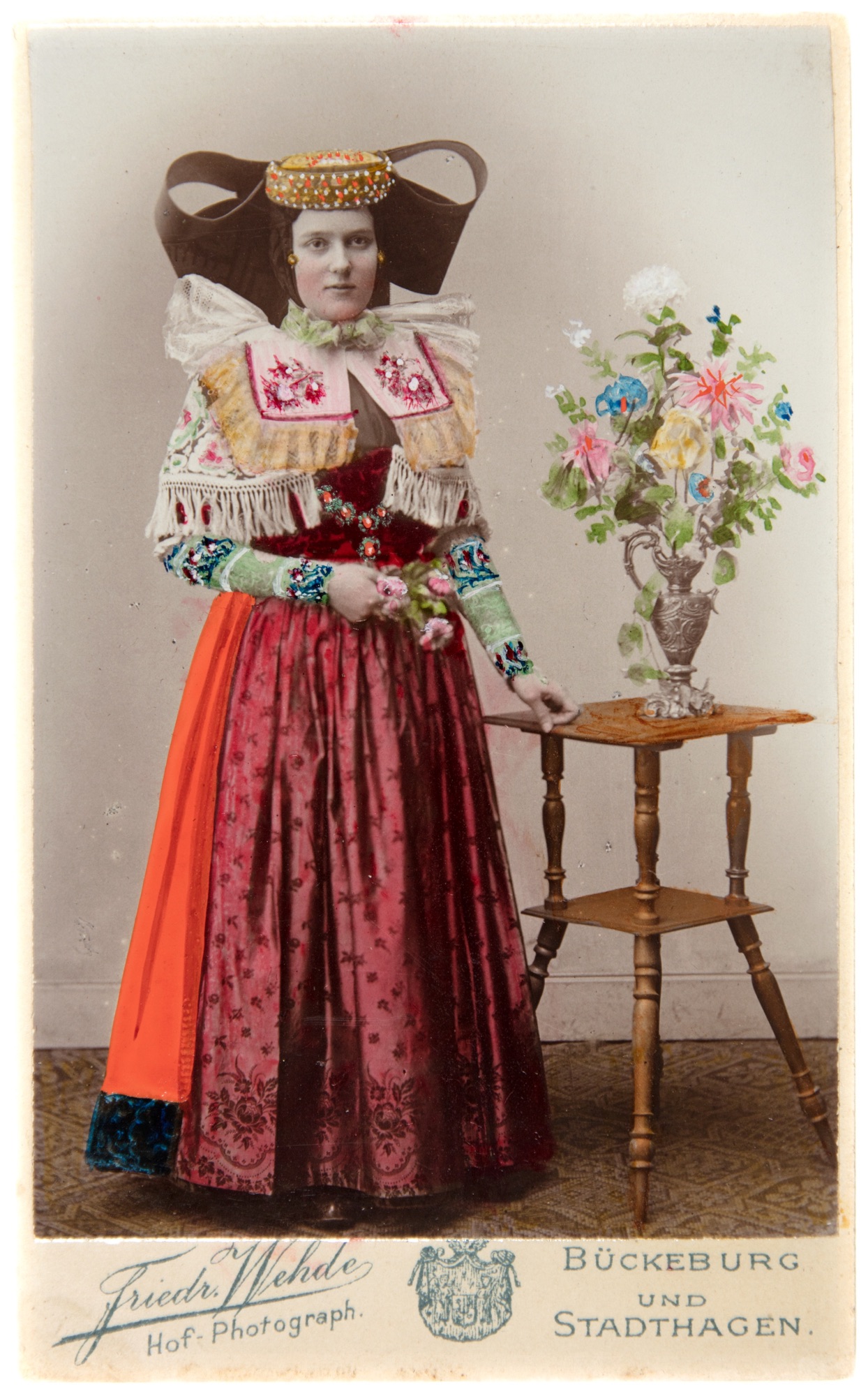
Hand-coloured portrait of a woman in Bückeburg festive dress by Friedrich Wehde

Schaumburg’s Photographic Heritage

The Business
of Traditional Dress

Portraits, staging and regional identity in the photography of Schaumburg.

Read the story

A SMALL WORK OF ART

A young woman stands upright before the camera. Beside her is a narrow, almost delicate table. On it stands a metal vase containing a bouquet of white, blue, yellow and pink flowers. The neutral backdrop and carpet form a setting typical of a photographic studio in the late nineteenth century.

The woman wears a long red skirt, richly decorated chest ornaments, embroidered sleeves, a broad white collar and the large black winged headdress of Bückeburg traditional dress. Her expression is focused but friendly. One hand rests lightly on the table; in the other she holds a few flowers. Beneath the photograph, flowing script identifies the photographer as “Friedr. Wehde – Court Photographer – Bückeburg and Stadthagen”, accompanied by a coat of arms.

Even at first glance, it is clear that this photograph aspires to be more than an ordinary studio portrait. Small flowers on the sleeves, jewellery, ribbons, folds in the skirt and even the flowers in the vase have been carefully picked out in colour. Red, pink, blue, green and yellow almost turn the photographic print into a small painting.

Carte de visite shown at approximately its original size
Original size 6.5 × 10.5 cm
Enlarged view of the face, hands and bouquet
Detail

Friedrich Wehde

The underlying image is a black-and-white photograph. As a practical form of colour photography was not yet available to studios, colour was applied to the paper print afterwards. It is precisely this combination of photography and painting that gives the image its distinctive appeal.

The image raises questions that apply to the collection as a whole: who stood before the camera, who owned the clothes, for whom was the photograph made — and what happened to the negative afterwards?

The surviving photographs reveal different uses of traditional-dress photography: private portraits, staged scenes and, later, commercially distributed images. The following examples show how these forms overlapped and how photographs of individuals gradually became images of an entire region.

Geographical scope: This study focuses on the historic Schaumburg region, particularly Bückeburg and Stadthagen, as well as the studio locations and spa towns of Bad Eilsen, Rinteln and Bad Nenndorf. Photographic practice extended beyond these boundaries, however, so connections with Minden and other neighbouring places are also considered.

01

HOW COLOUR ENTERED THE PICTURE

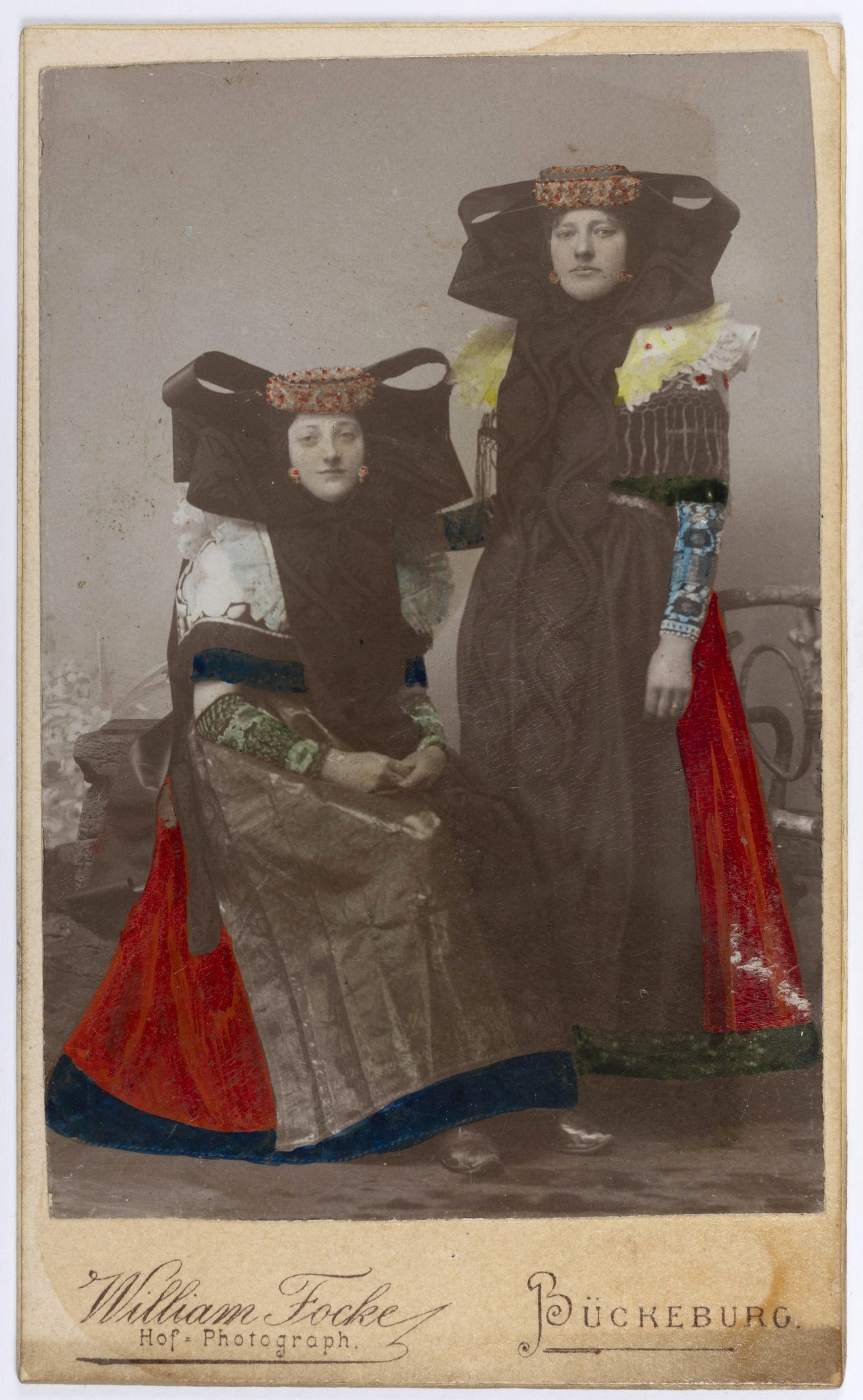
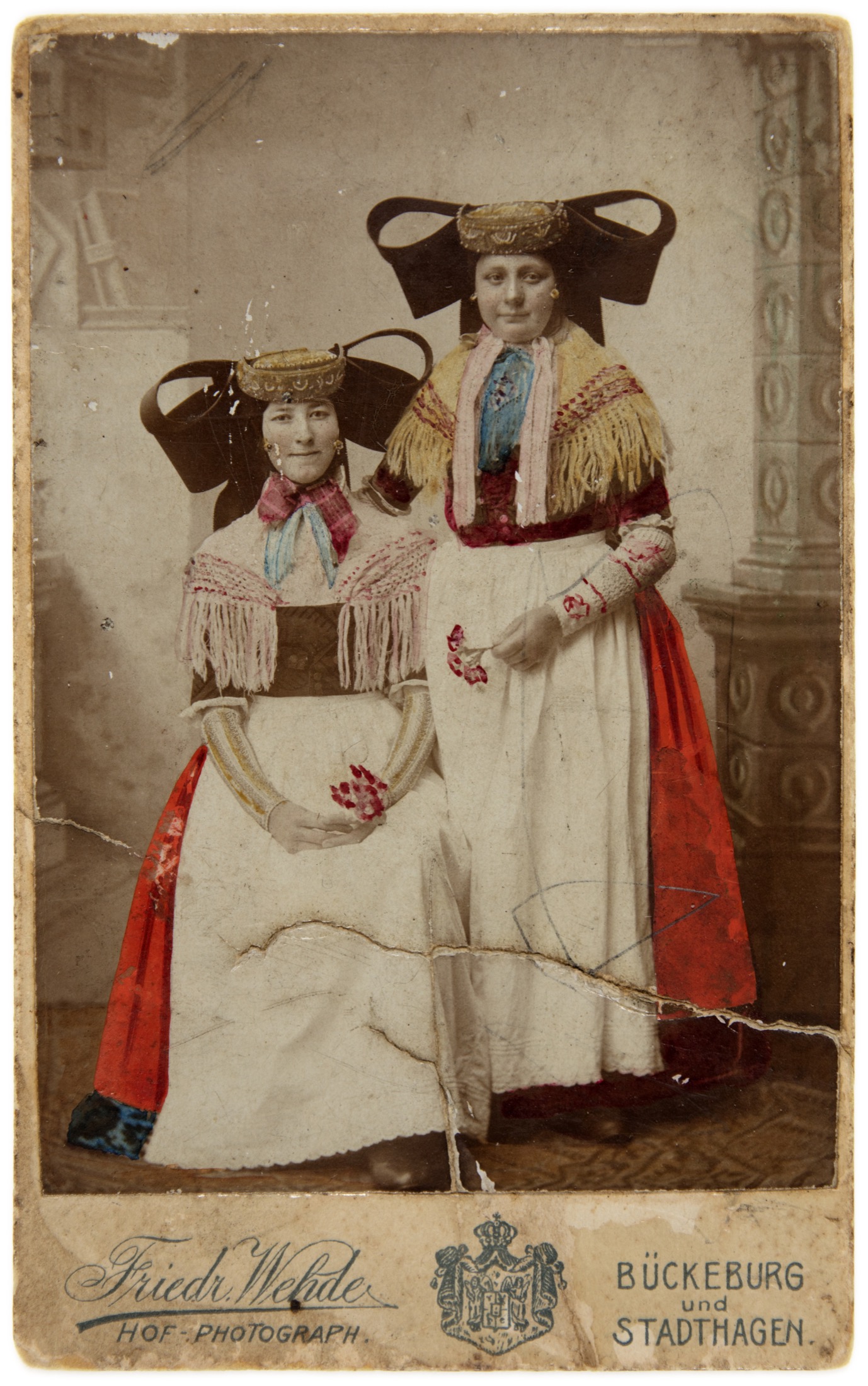
Hand-colouring is a striking feature of many photographs of traditional dress from the Schaumburg region. Colour was applied to the finished print with fine brushes. Outlines, shadows and details came from the photograph; colour chiefly emphasised the elements that defined the appearance of the traditional dress.
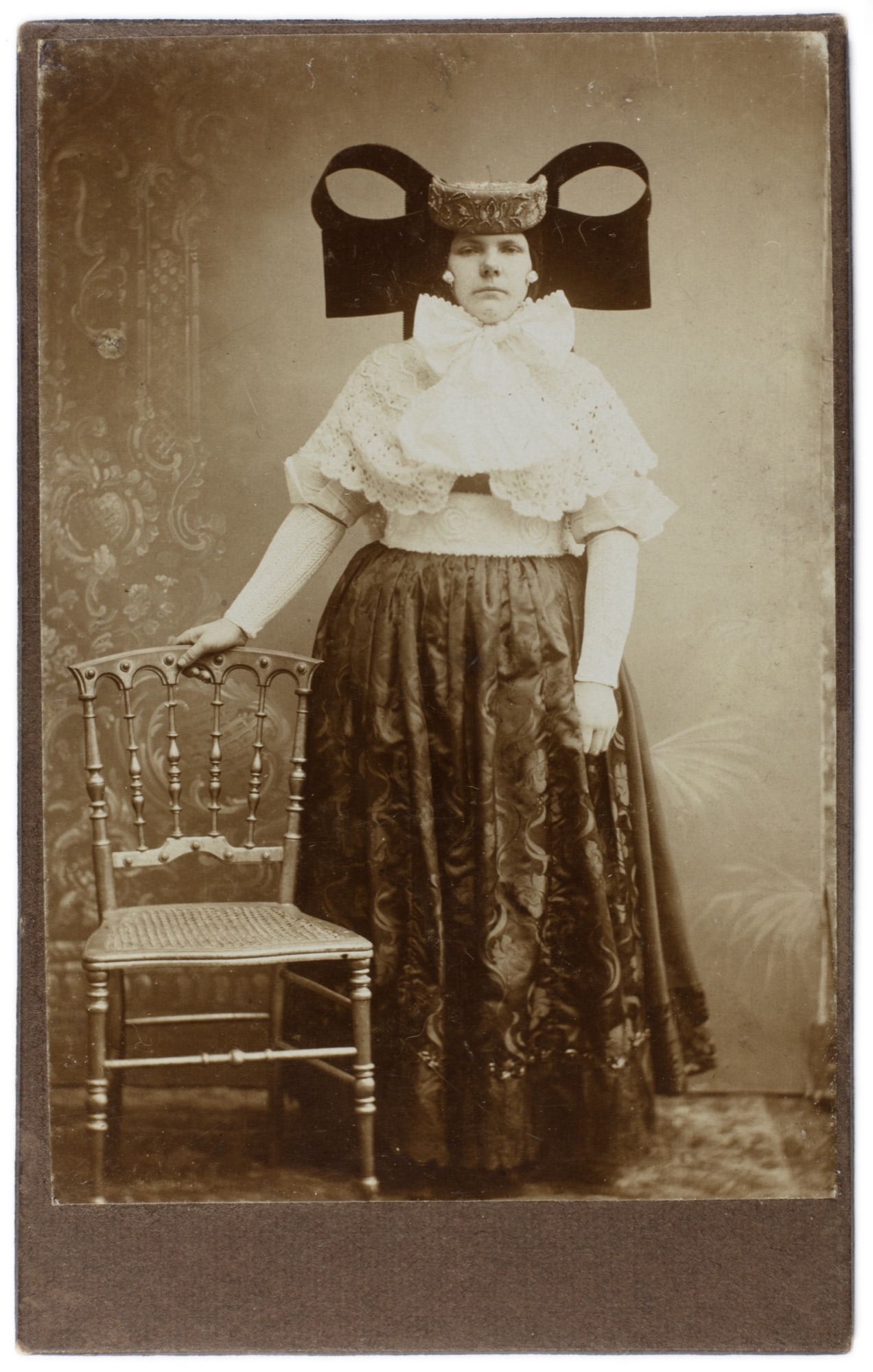
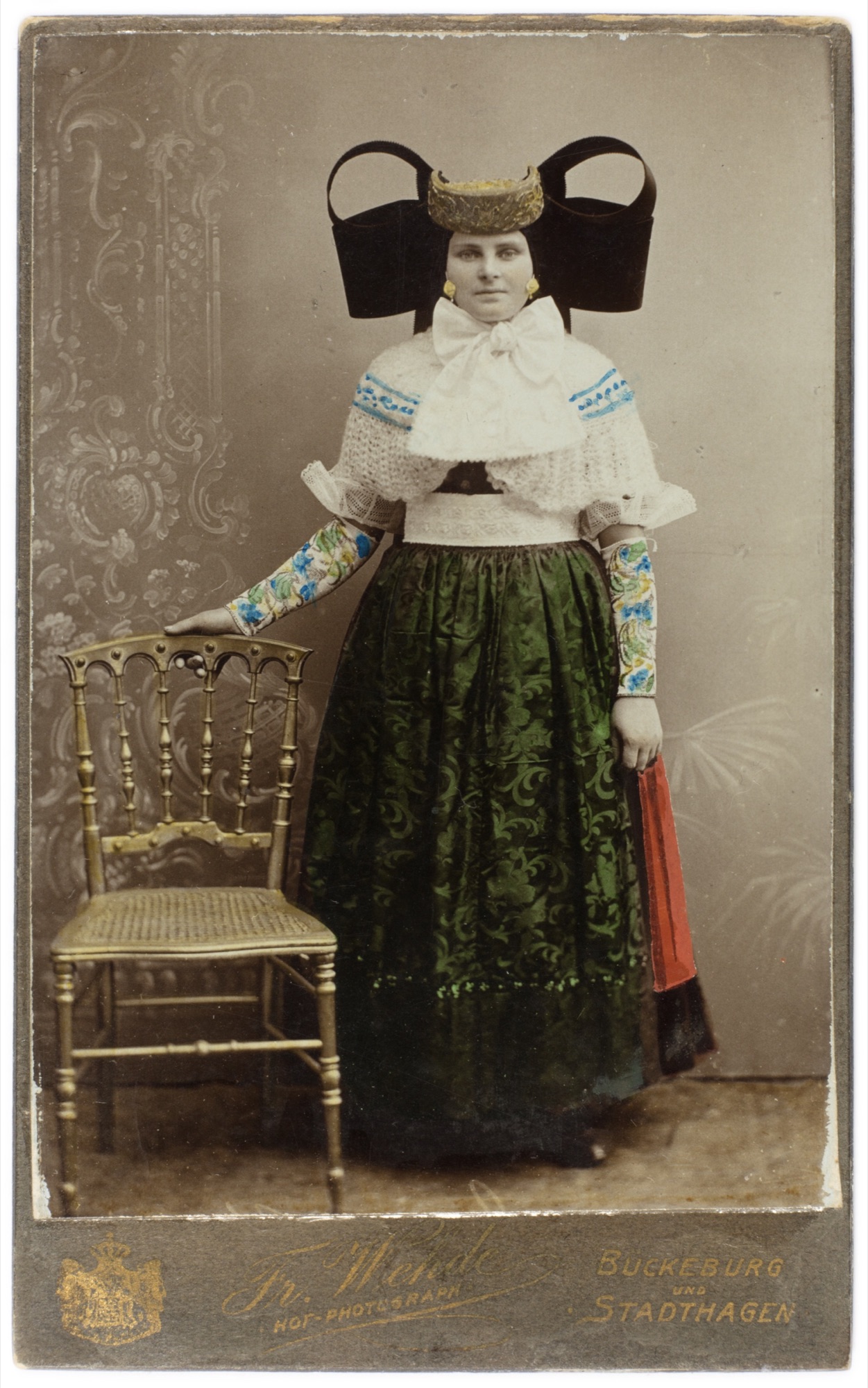
Historic hand-coloured photograph of a woman in Bückeburg traditional dressHistoric hand-coloured photograph of a woman in Bückeburg traditional dress
Hand-colouring reveals the colour effects of skirts, ribbons, jewellery and embroidery.Studio unidentified

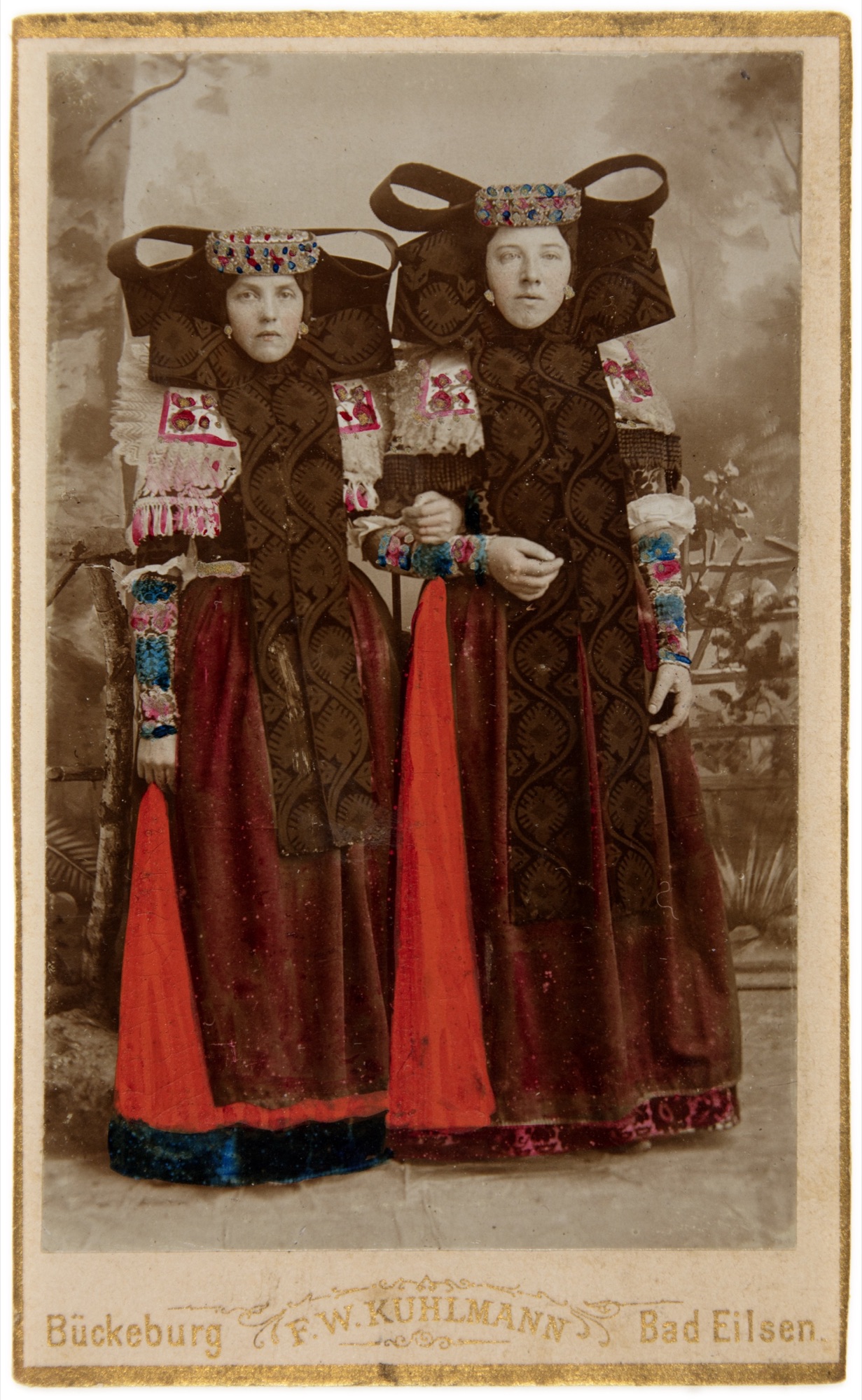
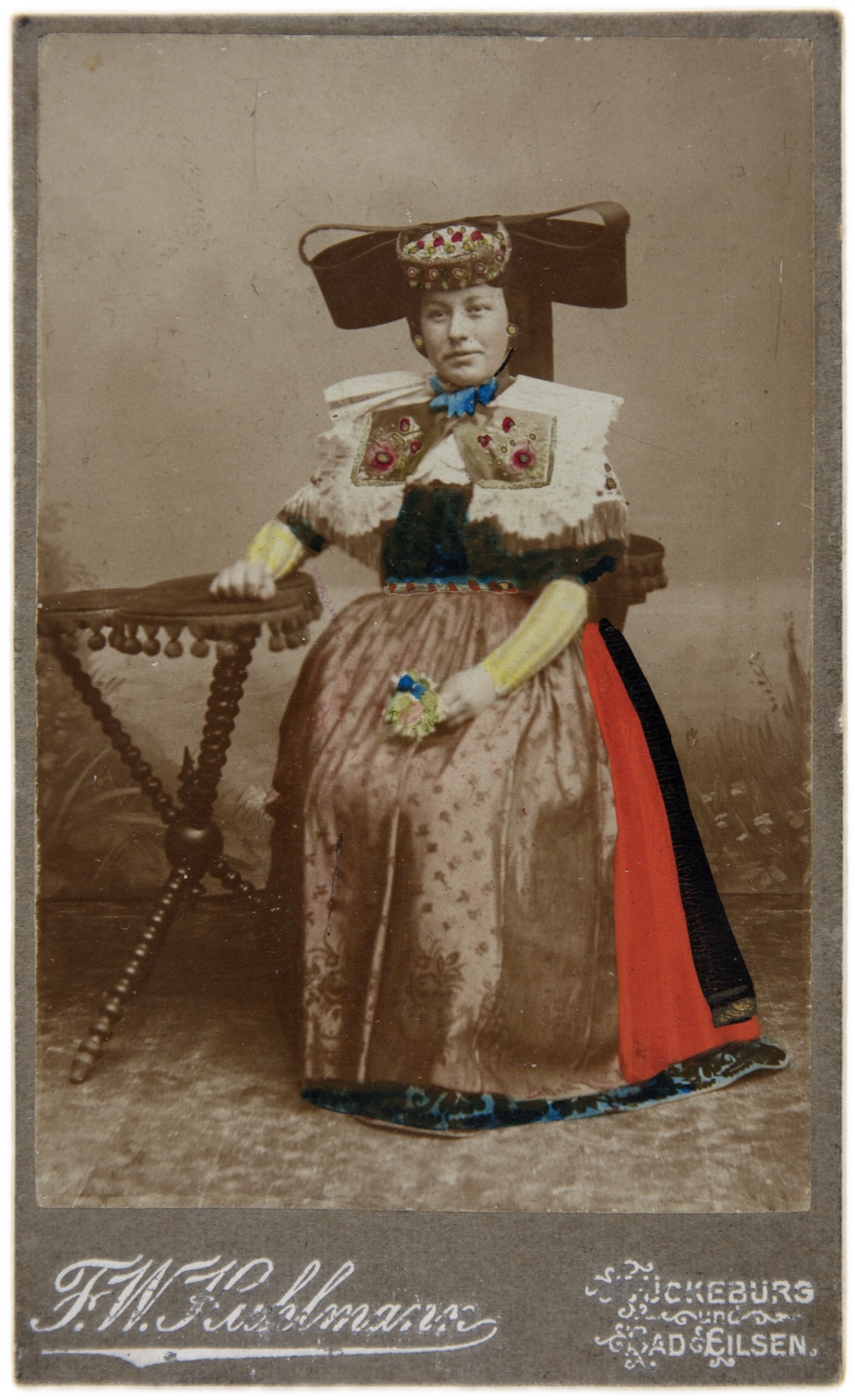
The amount of work varied considerably. Some photographs were carefully coloured down to the smallest ornaments, pieces of jewellery and flowers; others received only a few bold areas of colour.
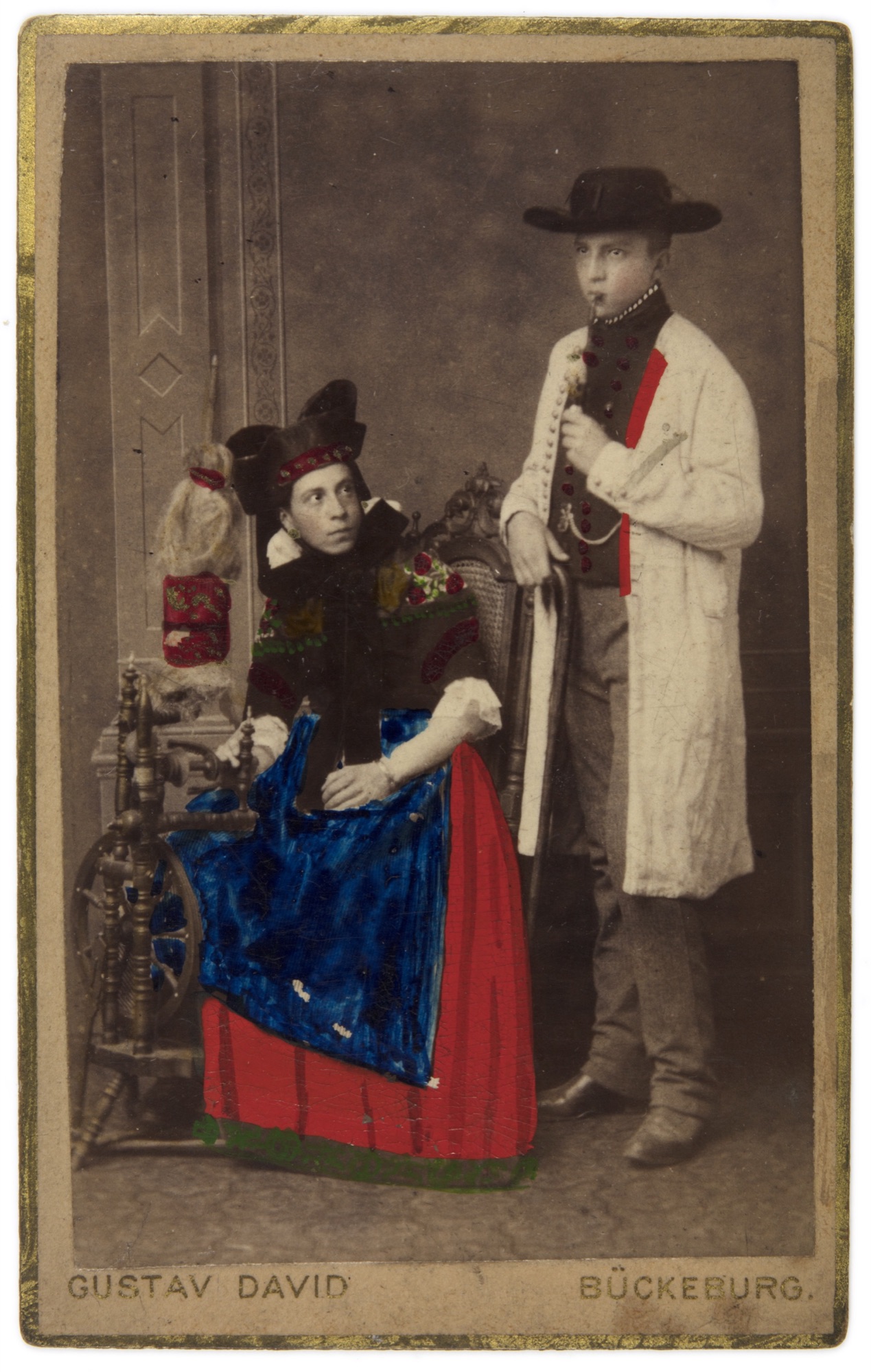
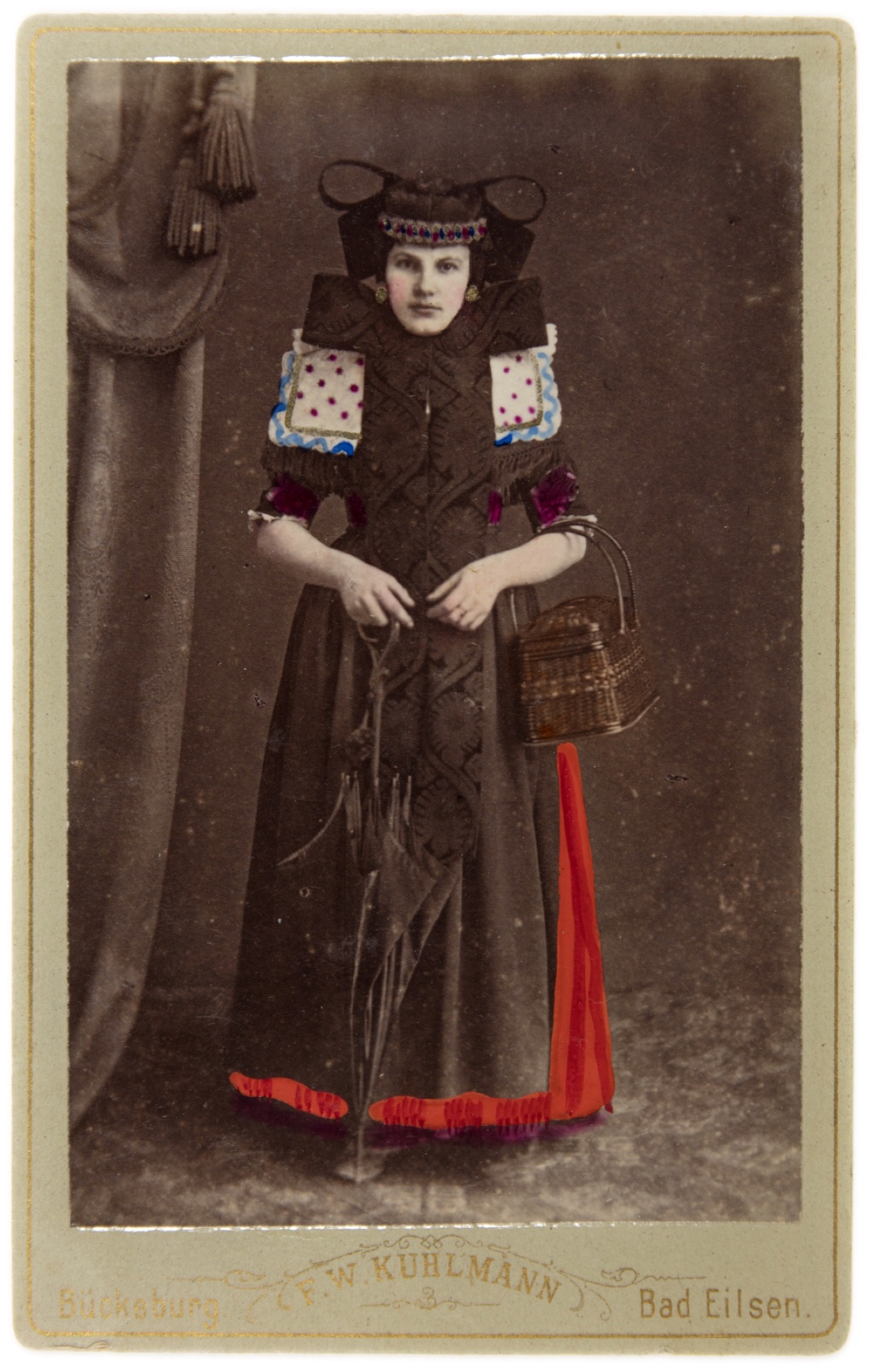
Vividly hand-coloured scene with two people in traditional dress and a spinning wheel, from Gustav David’s studioHand-coloured portrait of a woman in Bückeburg traditional dress from the studio of F. W. Kuhlmann
Relatively simple areas of colour emphasise the distinctive elements of the clothing.Gustav David · F. W. Kuhlmann

These differences may have reflected price and intended use. Elaborately coloured photographs may have been made for private clients, while more simply coloured prints were better suited to larger production runs.

Hand-coloured photographs of traditional dress are also known from other regions. In Schaumburg, however, the number of studios involved and the frequency of recurring motifs are striking. There was evidently a sustained demand for colour images of regional clothing.

Colour thus did more than enhance an individual photograph. It made traditional dress an eye-catching subject and helped disseminate a recognisable image of Schaumburg.
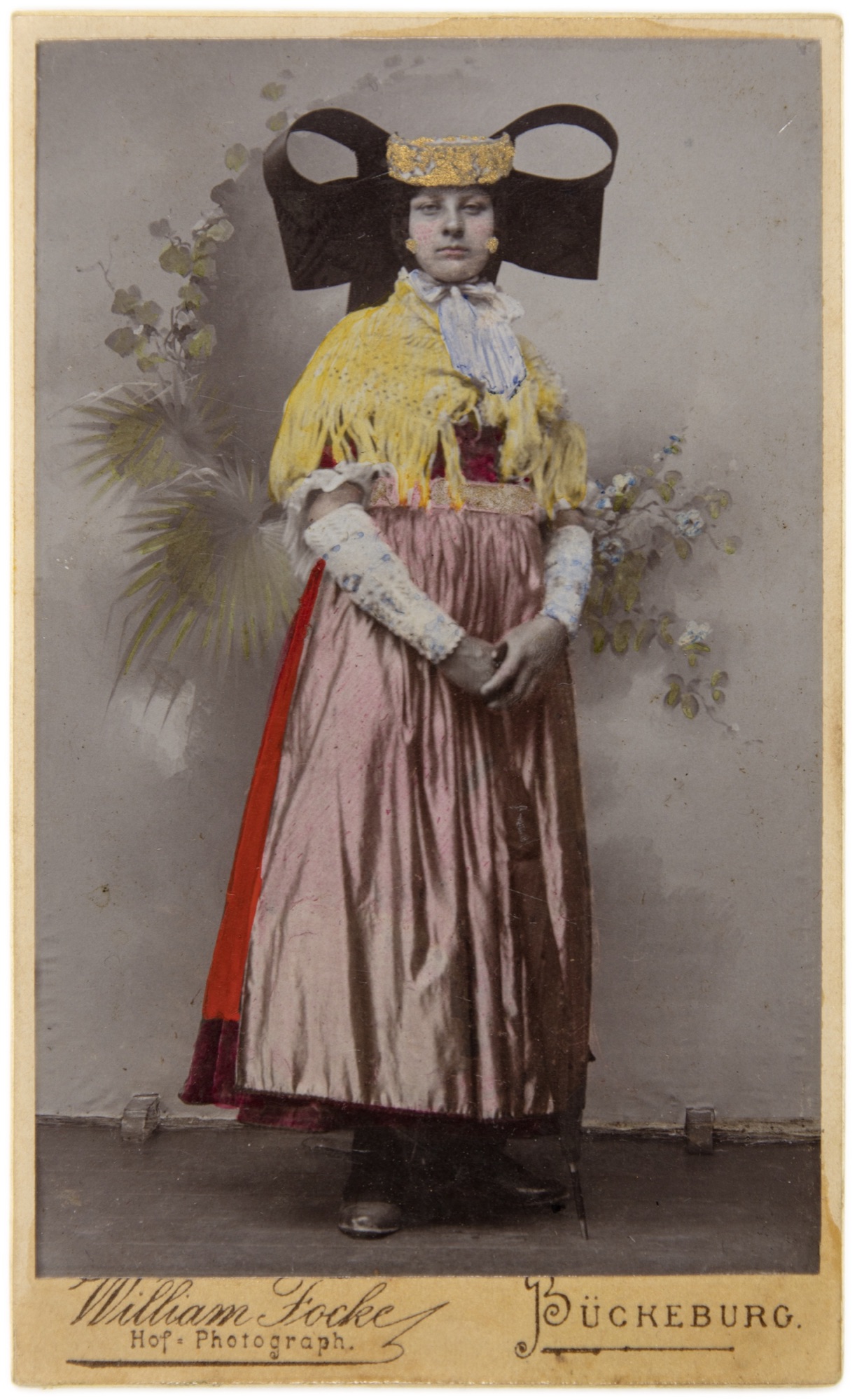
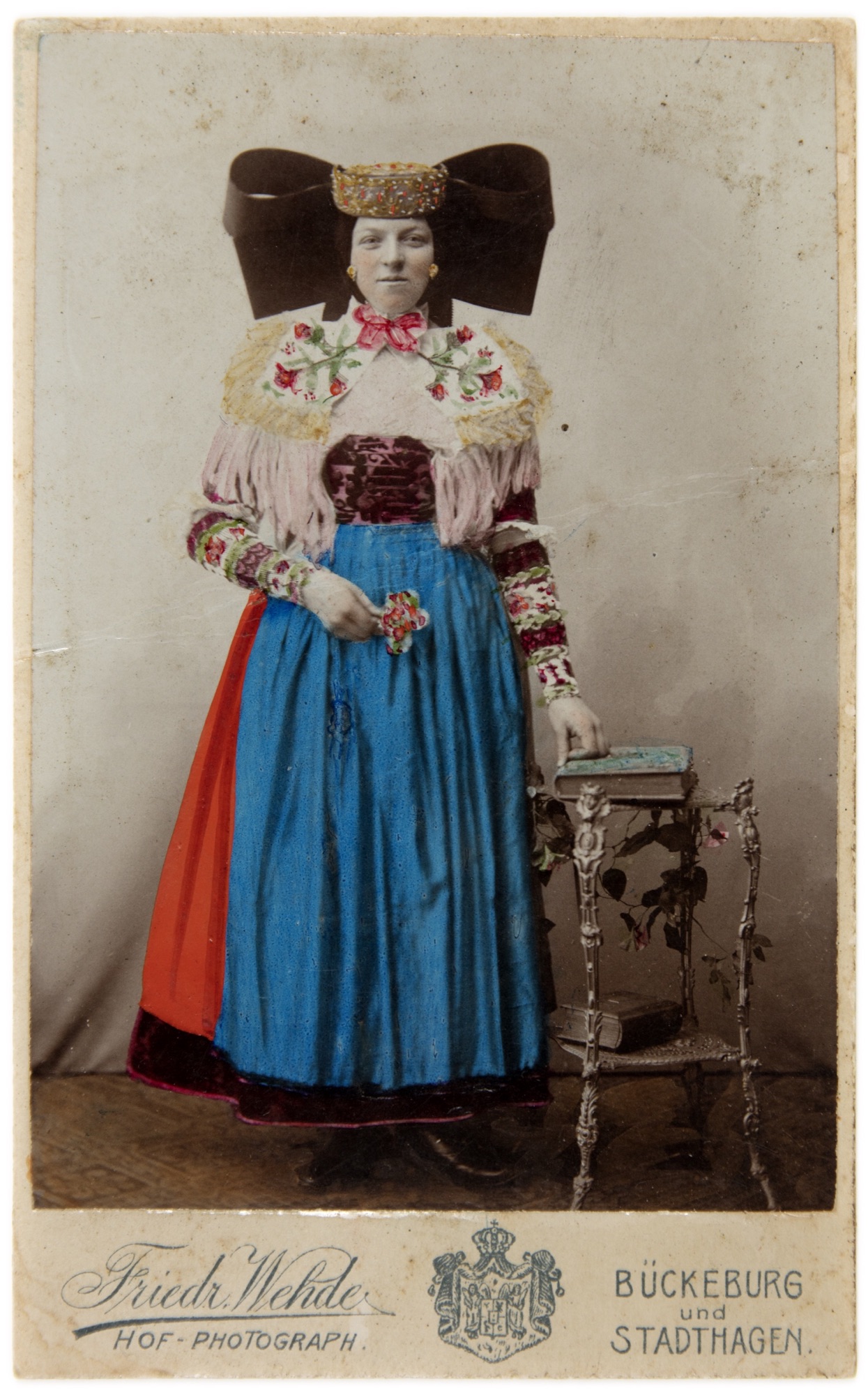
Hand-coloured photograph of Bückeburg traditional dress by William FockeHand-coloured photograph of Bückeburg traditional dress by Friedrich Wehde
Hand-coloured photograph of Bückeburg traditional dress by F. W. KuhlmannHand-coloured photograph of Bückeburg traditional dress by F. W. Kuhlmann
William Focke · Friedrich Wehde · F. W. Kuhlmann
02

WHAT TRADITIONAL DRESS MEANT

Traditional dress was originally not a costume worn for disguise or performance, but a regionally distinctive form of clothing. It developed and changed over a long period. Materials, local crafts, economic circumstances, religious affiliation, fashion and social conventions meant that clothing differed from one area to another, sometimes even between neighbouring villages.

Traditional dress made origins and belonging visible. Particular garments, colours, jewellery and headdresses could also indicate age, marital status, wealth and occasion. Clothing was thus part of everyday life, a social language and an expression of regional identity.

Schaumburg was long known as the “land of red skirts”. Yet there was no single form of Schaumburg dress. Distinctions include the Apelern, Österten, Westerten, Frille and Holtrup traditions. One important distinguishing feature was the ribbon headdress, whose shape varied by locality; the long red woollen skirt was common to the women’s dress traditions.

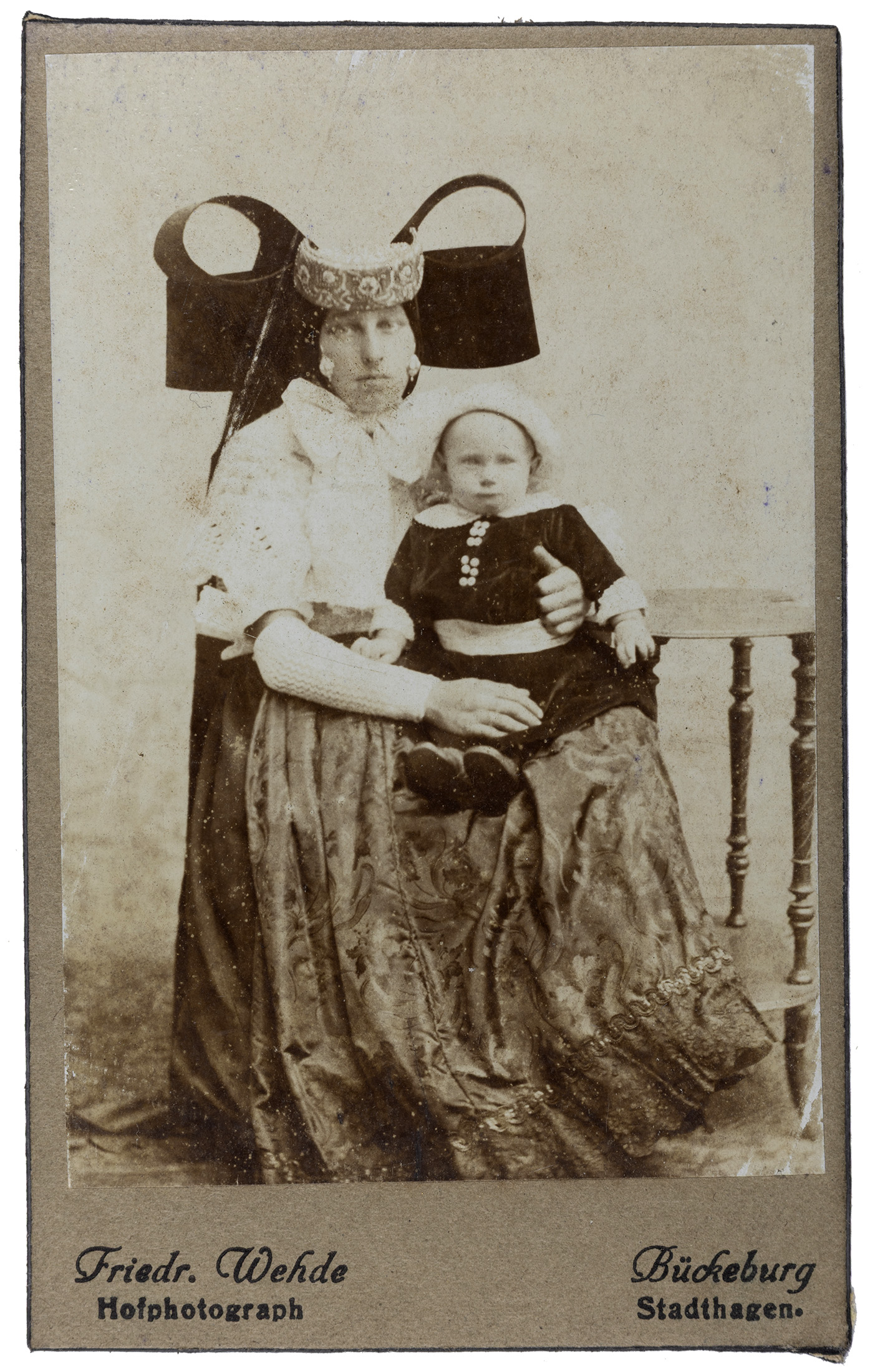
Bückeburg dress belongs to the Westerten tradition, which was found west of Stadthagen as far as the Schaumburg Forest. Women’s festive clothing included a linen shift, bodice, red ribbon-trimmed skirt, embroidered apron, shoulder shawl, white collar, knitted “Handschen” or mitts, as well as necklaces and silver clasps. The large black winged headdress was particularly striking. Its sweeping loops gave Bückeburg dress an unmistakable silhouette, and grew larger over time. This too shows that traditional dress was not a uniform that had remained unchanged for centuries. As prosperity increased, embroidery and jewellery became more elaborate; trade brought new fabrics, ribbons and beads into the region.1

1 See Lücking, Wolf / Sturma, Jürgen: Trachten im Schaumburger Land, Münster 2002; Kästing, Friederike / Mensching, Sophie: Rote Röcke. Trachten und Brauchtum im Schaumburger Land, Stadthagen 2000.
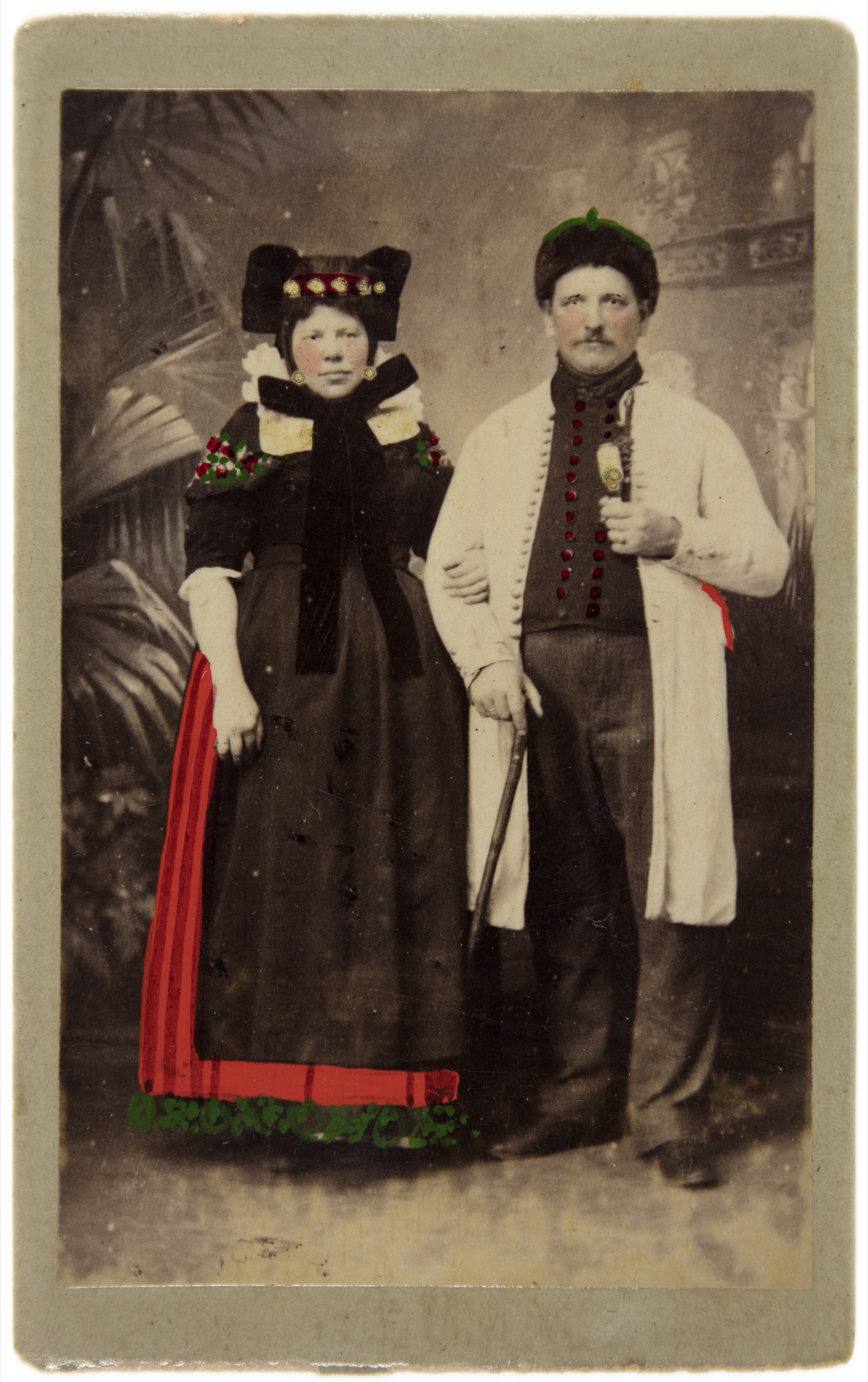
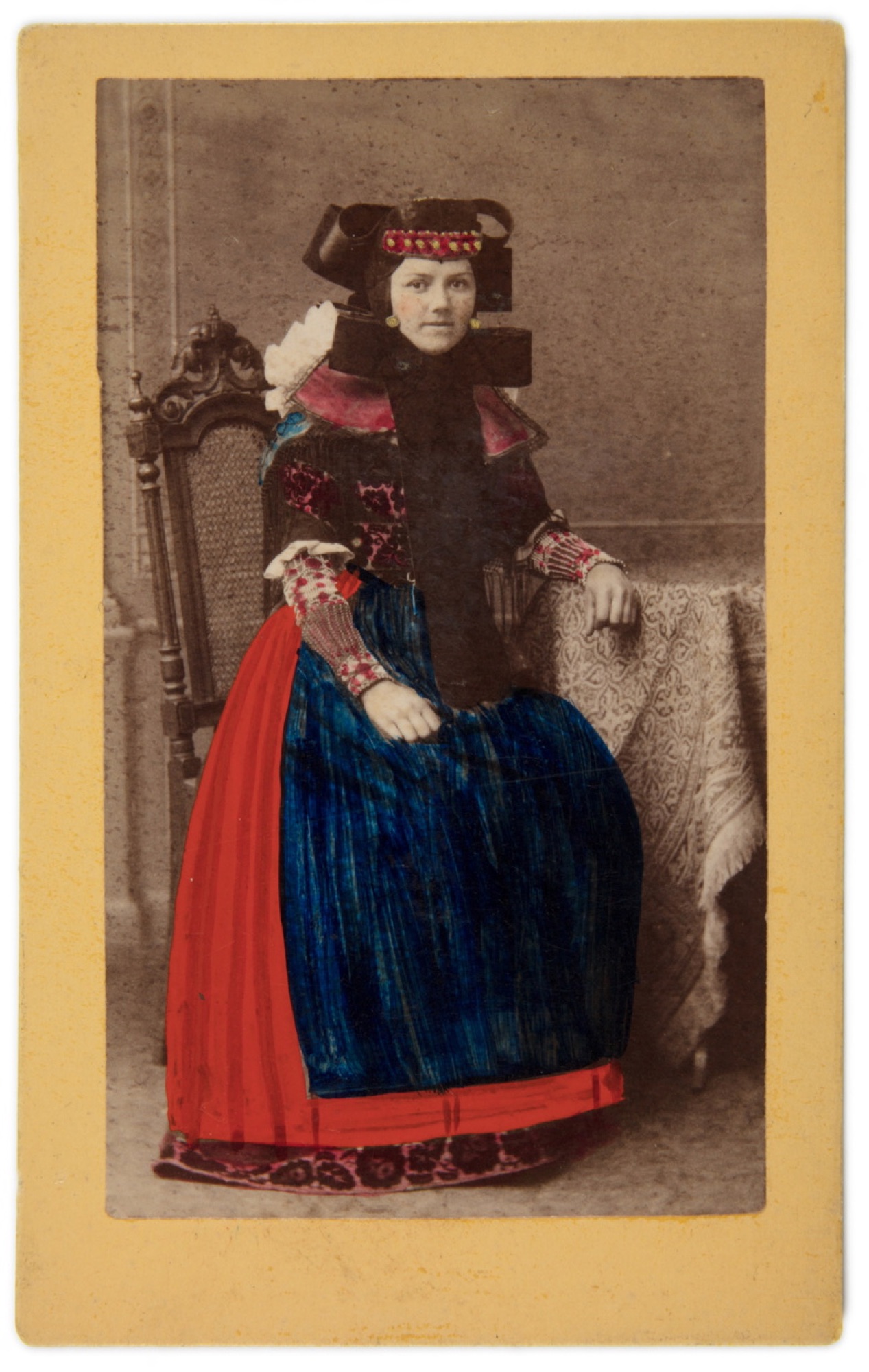
Historic hand-coloured photograph of a couple in Bückeburg traditional dressHistoric hand-coloured photograph of a seated woman in Bückeburg traditional dress from Gustav David’s studio in Bückeburg
Hand-coloured portrait of two women in Bückeburg traditional dress from William Focke’s studioHand-coloured portrait of two women in Bückeburg traditional dress from Friedrich Wehde’s studio
Studio unidentified · Gustav David · William Focke · Friedrich Wehde

Between 1860 and 1880, photography spread, became more accessible and attracted increasing numbers of studios to the region. A costly studio visit was usually reserved for a special occasion. Those who had their photograph taken dressed with corresponding care, in their Sunday best or festive clothing — often the traditional dress they normally wore for such occasions. Many surviving images from this period probably show local people photographed for their families or personal circles. The private portrait is therefore an important possible original purpose of these early photographs of traditional dress.

Particularly revealing are late nineteenth-century portraits of couples in which different ways of dressing meet. The women still wear traditional dress, while the men appear in smart middle-class clothing or uniform.
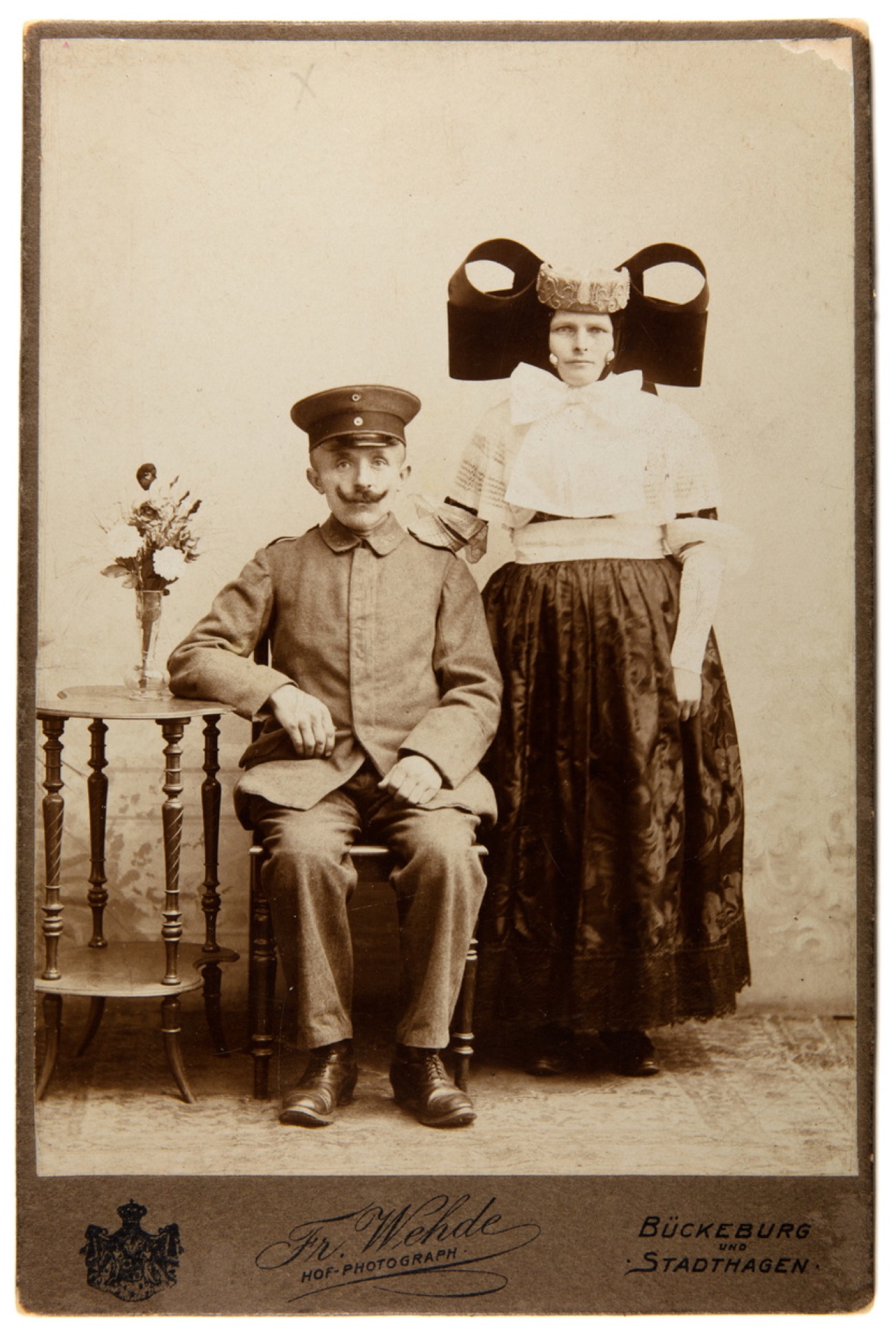
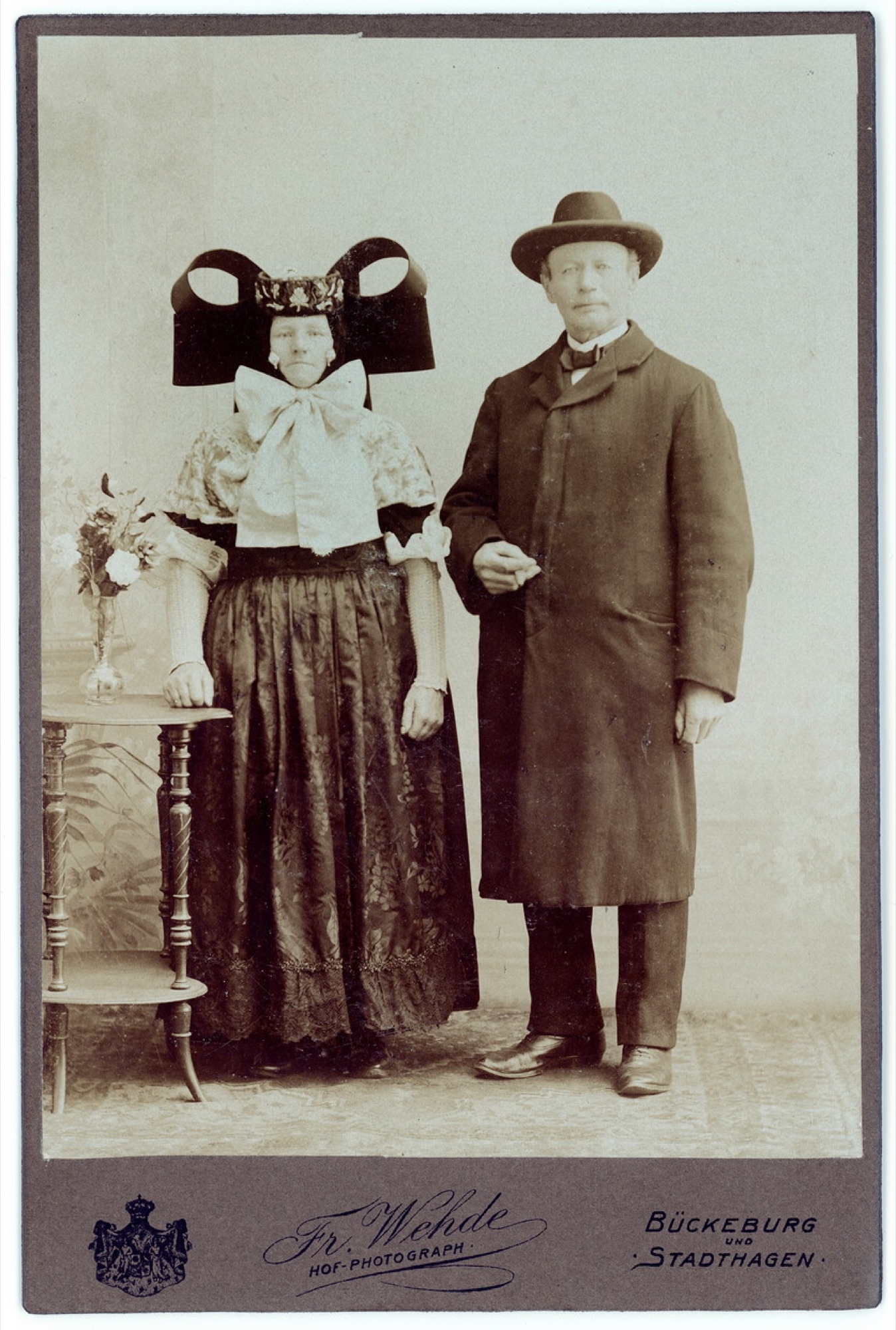
Woman in Bückeburg traditional dress beside a seated man in uniformWoman in Bückeburg traditional dress beside a man in dark middle-class clothing
Traditional dress, middle-class clothing and uniformFriedrich Wehde

Such combinations point to a period of social transition. The more restrained men’s traditional dress — linen shirt or smock, waistcoat, trousers and cap — apparently fell out of general use earlier than women’s dress. While men were already wearing suits or uniforms, women continued to appear in traditional clothing. Older and newer styles could thus coexist within the same family.

THE IMAGE OF A REGION —
A
BUSINESS

Photographs of Bückeburg traditional dress were made both as private portraits for local people and as souvenirs and collectors’ images. They therefore document only part of the lived tradition of regional dress, while also helping to shape an idealised image of the region.
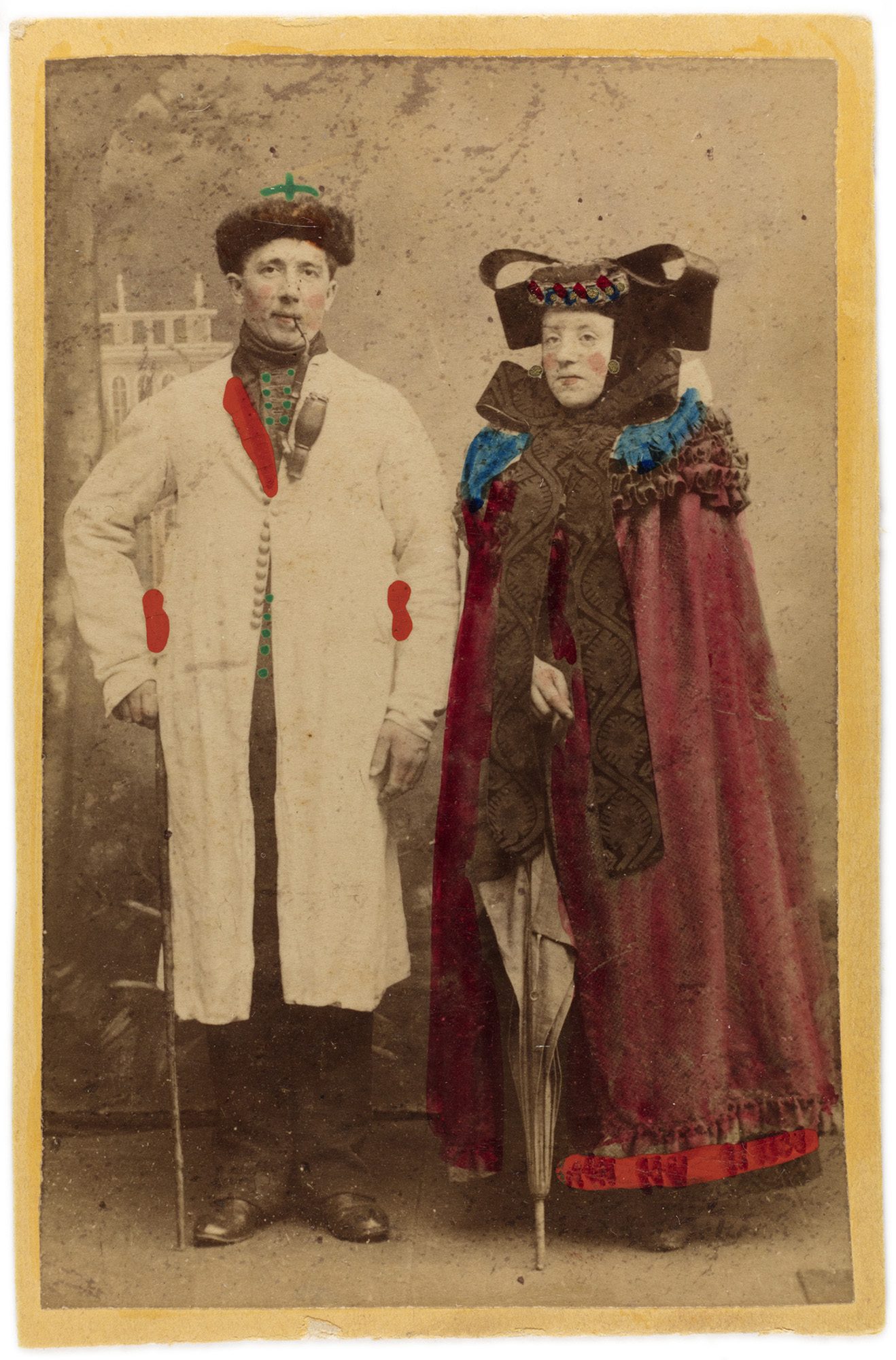
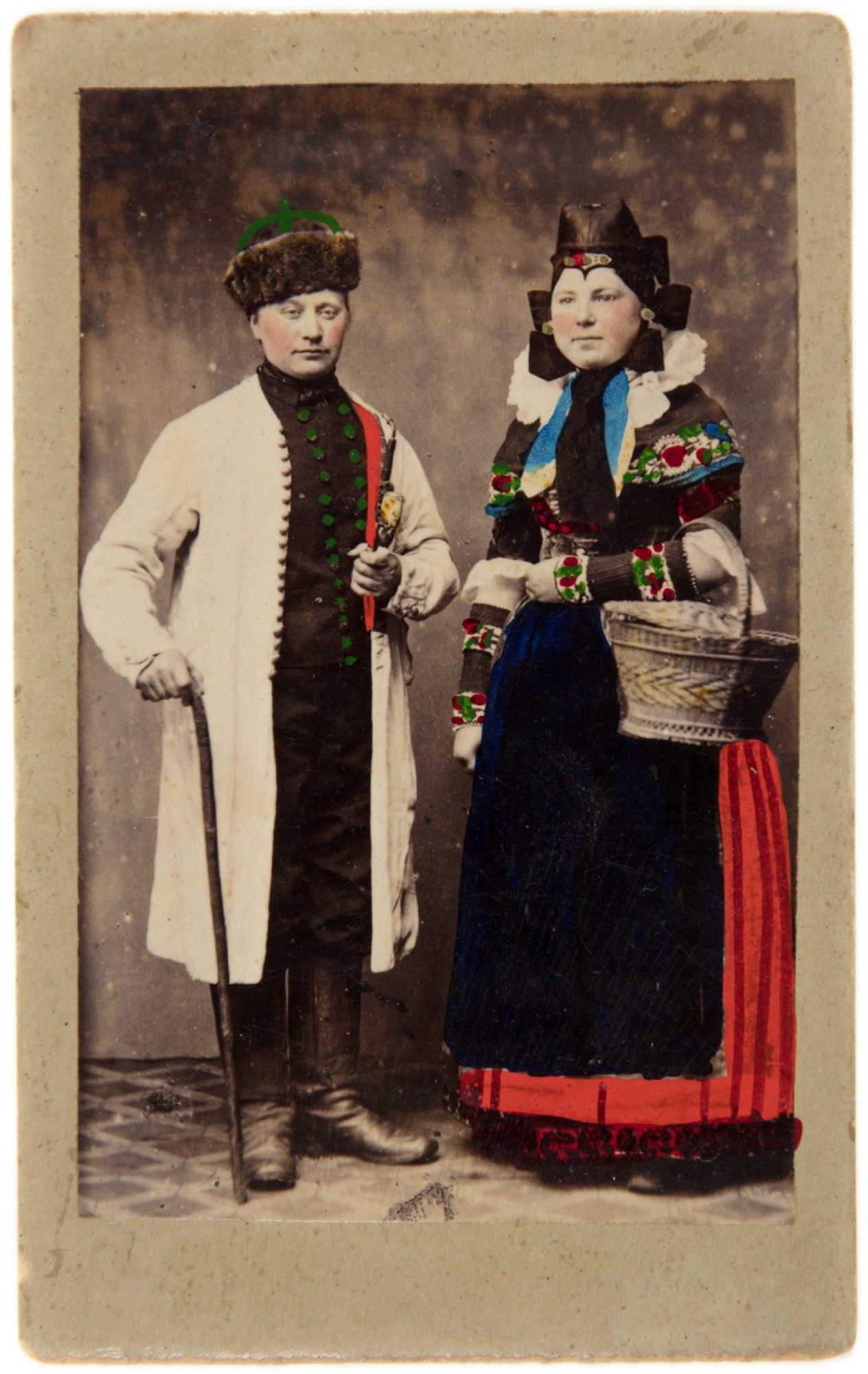
Hand-coloured portrait of a couple in traditional dress, studio unidentifiedEarly hand-coloured portrait of another couple in traditional dress
Without personal details, it remains unclear why the photographs were taken and whether the prints served as private keepsakes or as souvenirs.Studio unidentified

Studios had several sources of business: private portraits, photographs of visitors in regional dress and staged traditional-dress scenes. Clothing, poses, props and backdrops could be deliberately combined, and the negatives subsequently reused.
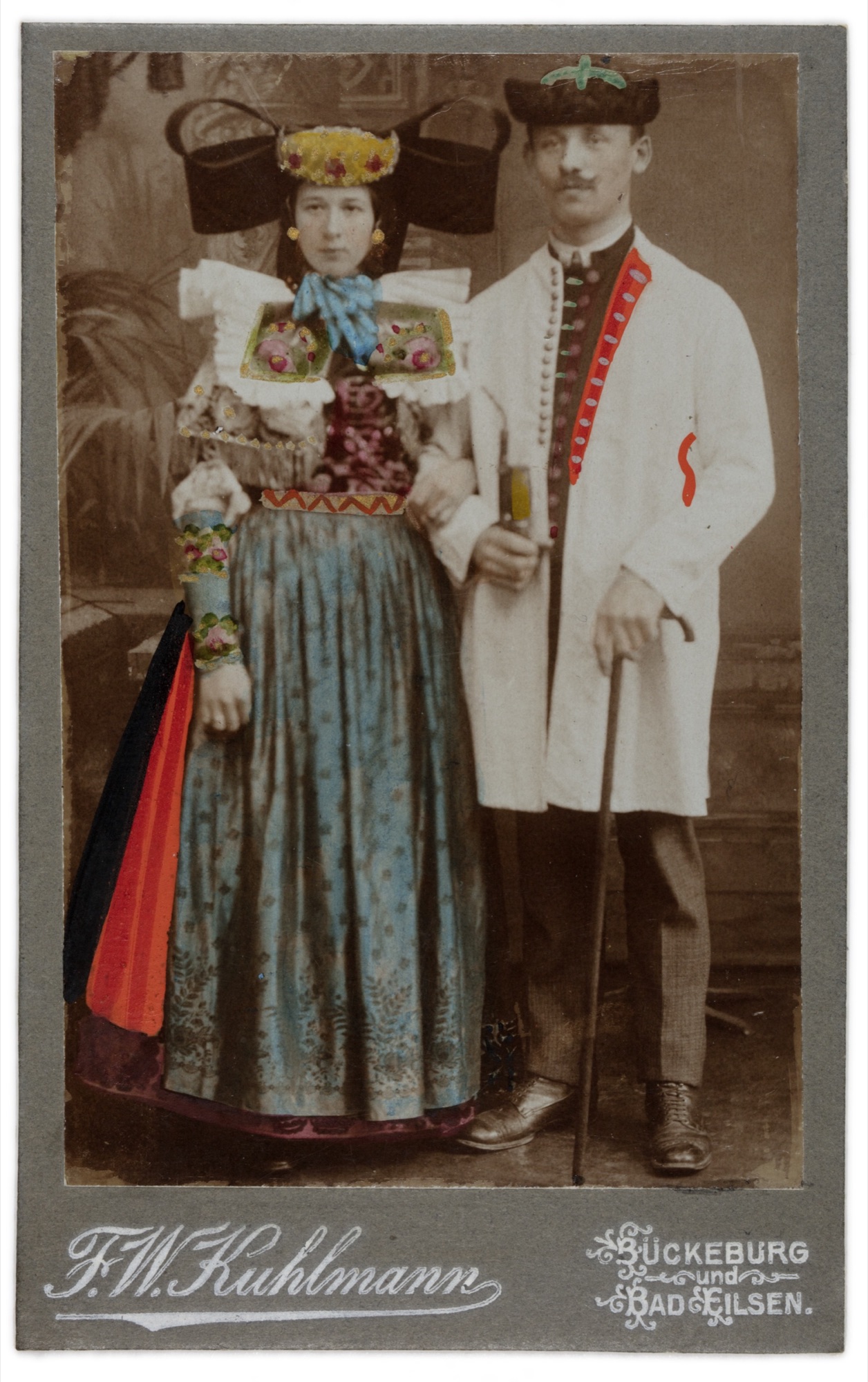
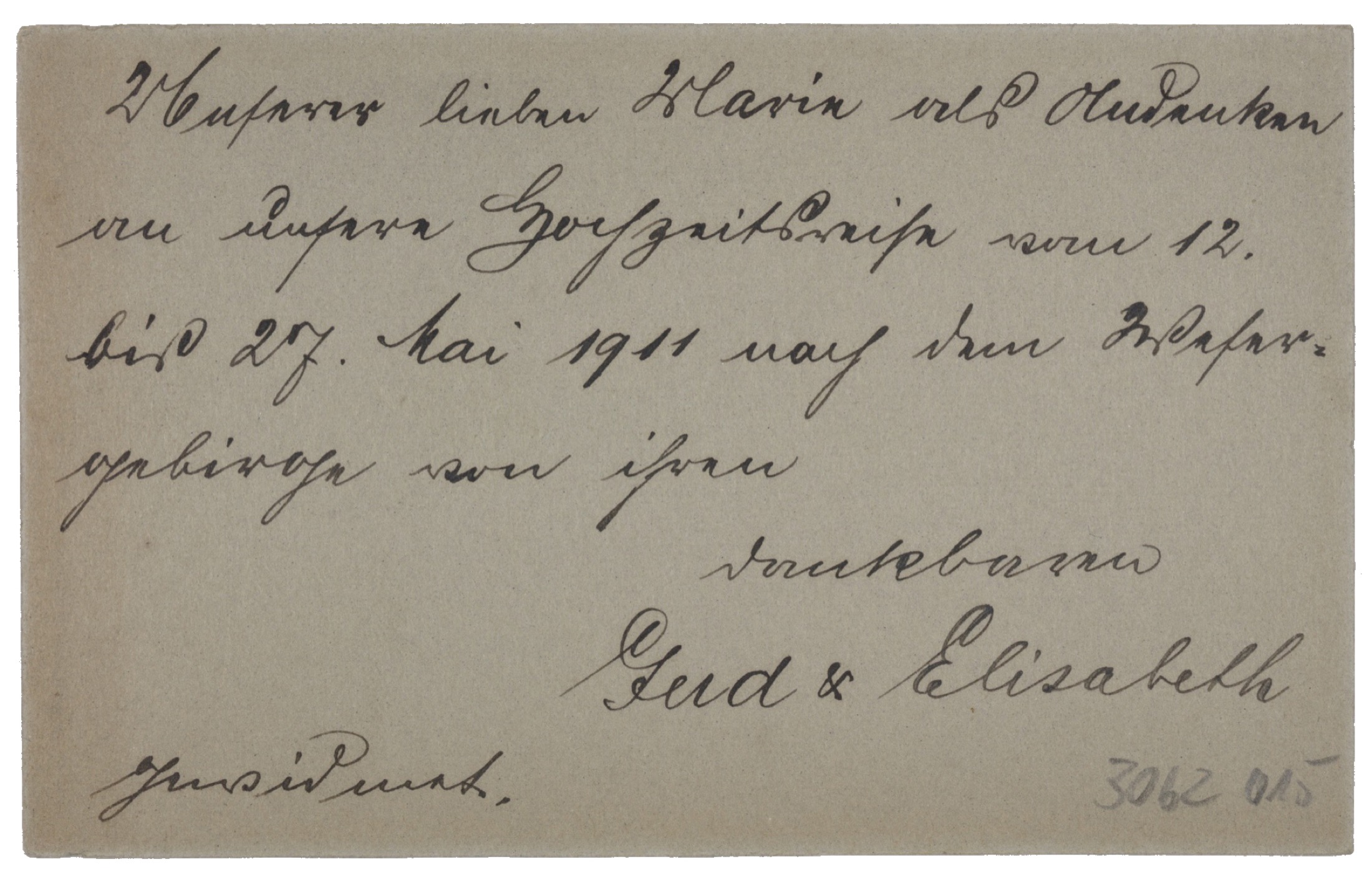
Front of a portrait in traditional dress from the studio of F. W. KuhlmannHorizontally displayed reverse with a dedication to Marie commemorating a honeymoon in the Weser Hills in May 1911
The dedication on the reverse presents the photograph to “our dear Marie” as a memento of a honeymoon in the Weser Hills from 12 to 27 May 1911. It appears to be signed by Gerd and Elisabeth.F. W. Kuhlmann

Some photographs were probably originally made as private portraits. Particularly suitable images could later be printed again from the existing negative and offered as souvenirs. The photograph then represented more than an individual: it became a reusable motif.

Other photographs were apparently intended for this market from the outset. Scenes of village life were recreated in the studio or against a suitable backdrop. Their purpose was less to document actual daily life than to convey a vivid impression of life in the region.

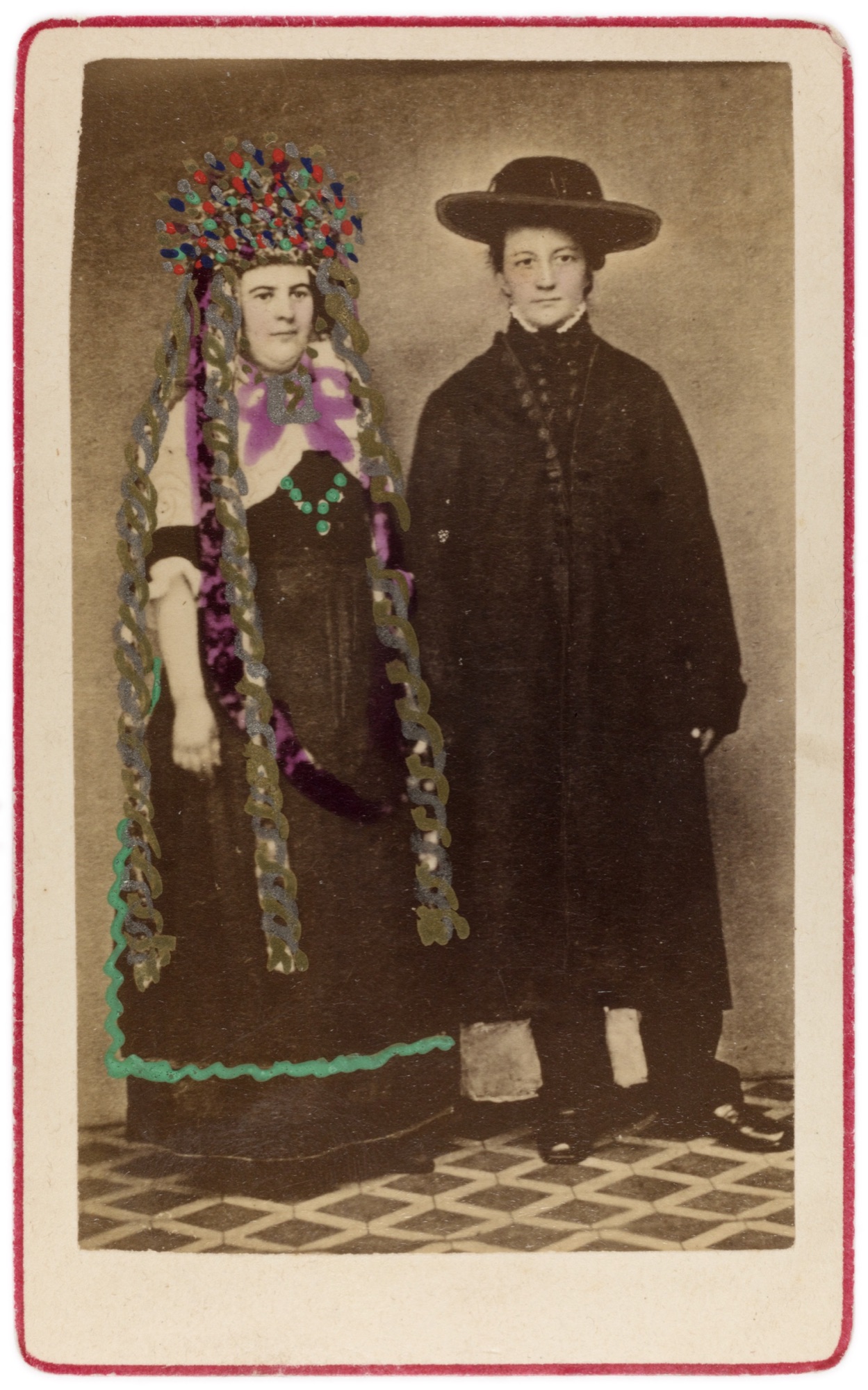
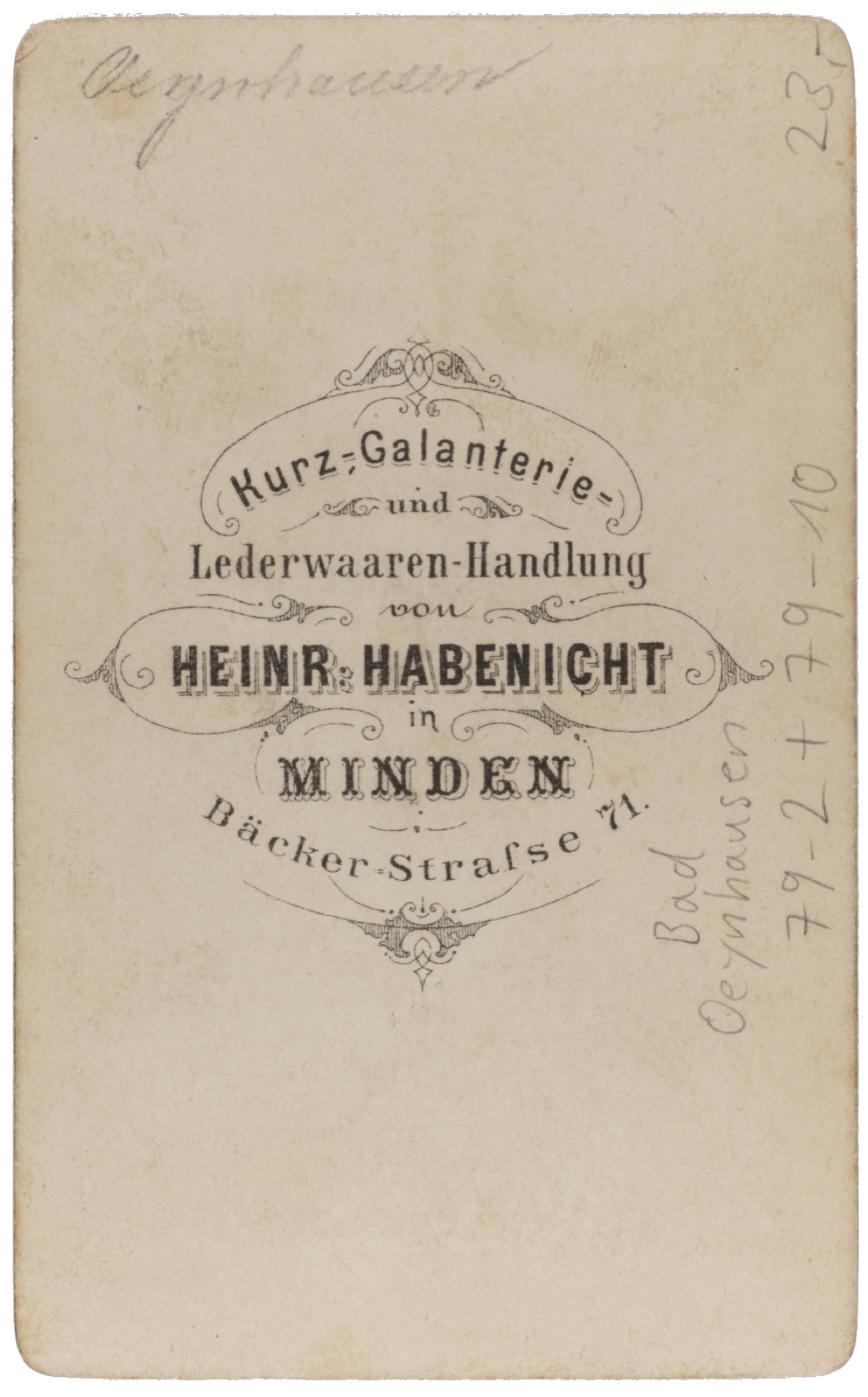
Stamps and inscriptions on the reverse show that these photographs were also distributed through other retail outlets. The mark of Heinrich Habenicht’s haberdashery, fancy-goods and leather-goods shop in Minden demonstrates that individual motifs reached markets beyond the place where they were made.
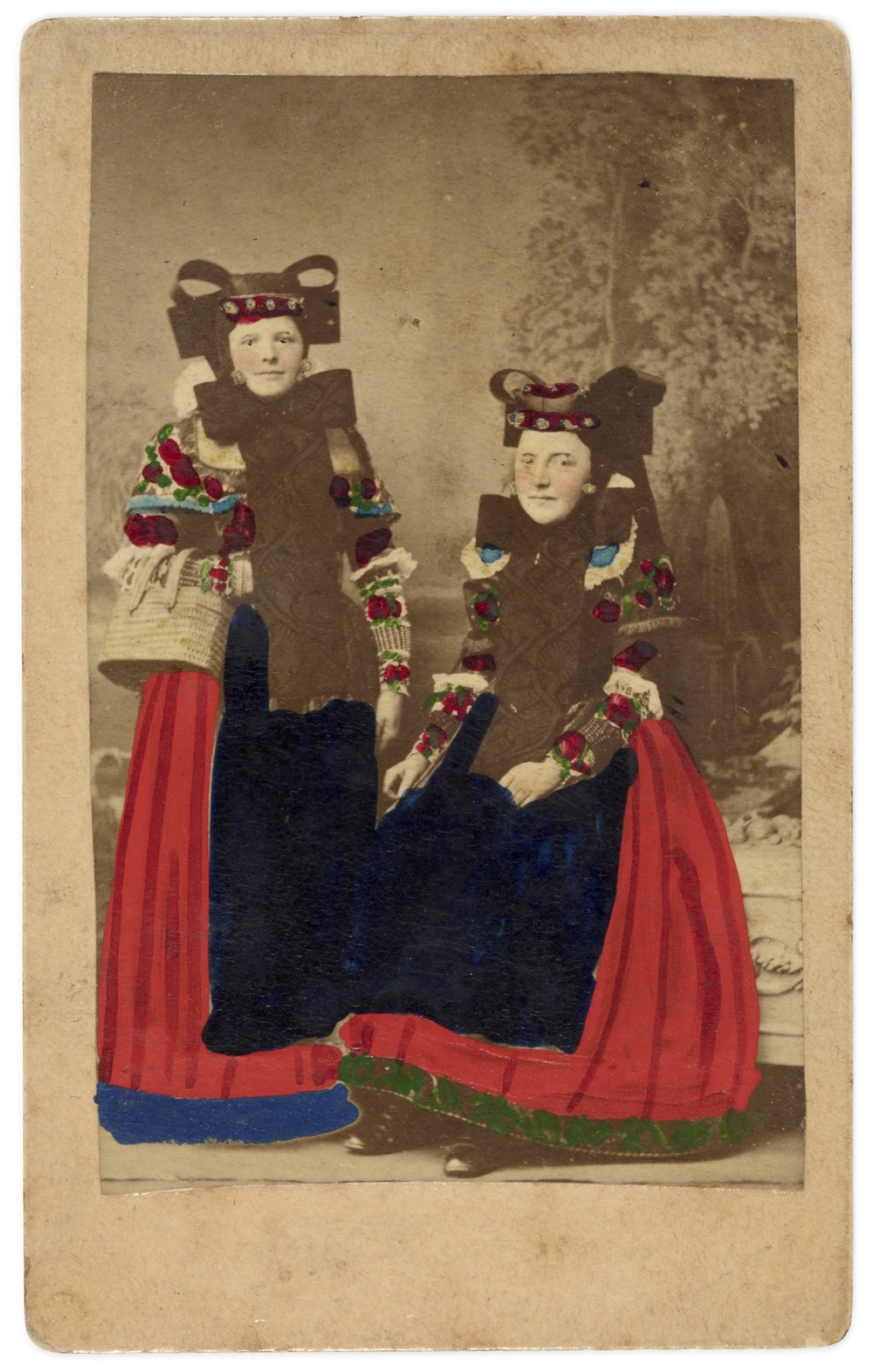
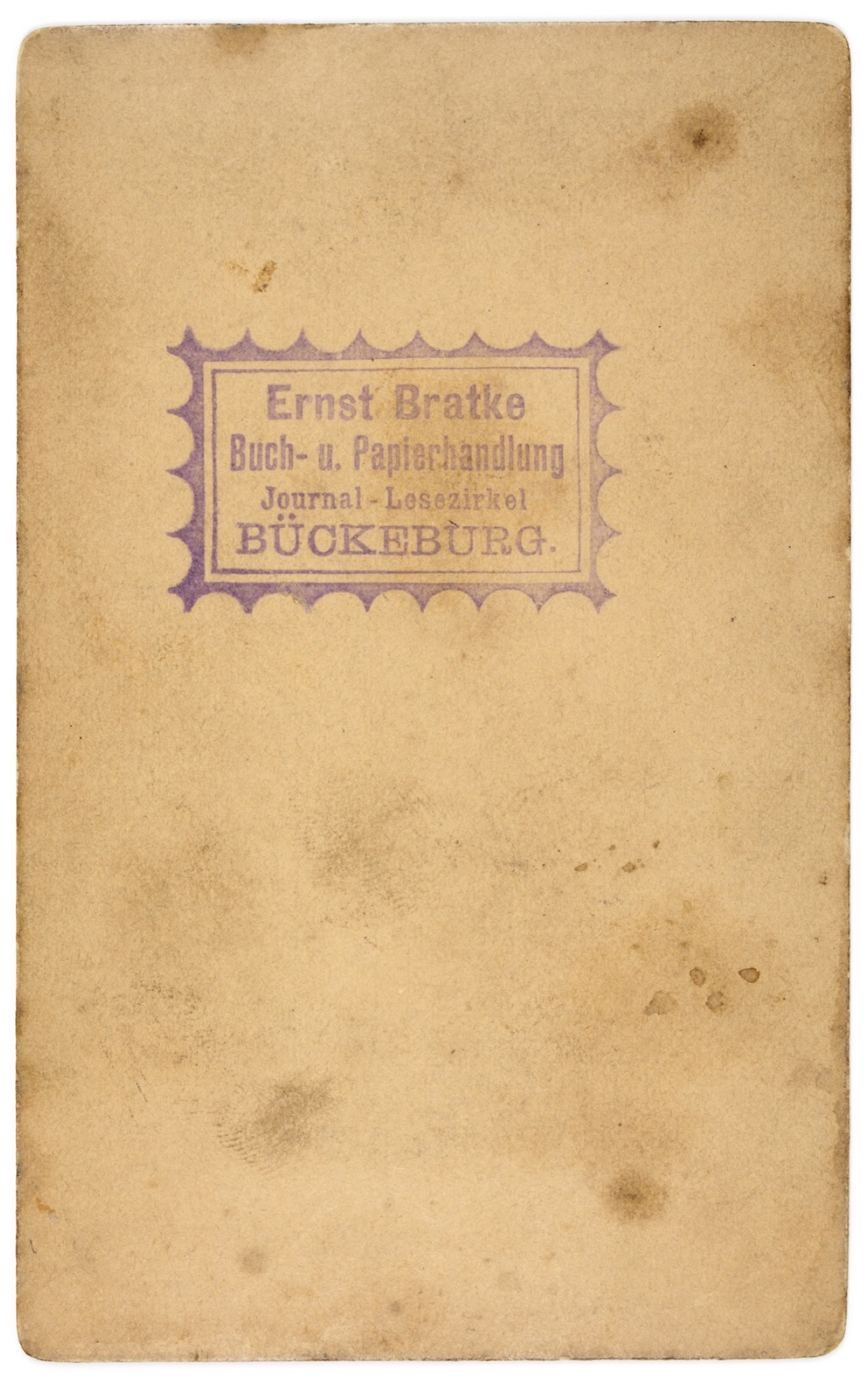
Front of a hand-coloured photograph of traditional dressReverse of the photograph with a retailer’s stamp
Front and back: the dealer’s mark indicates a sale outside the photographic studio.Studio unidentified
Front of a hand-coloured photograph of traditional dressReverse with the stamp of Heinrich Habenicht’s haberdashery, fancy-goods and leather-goods shop in Minden
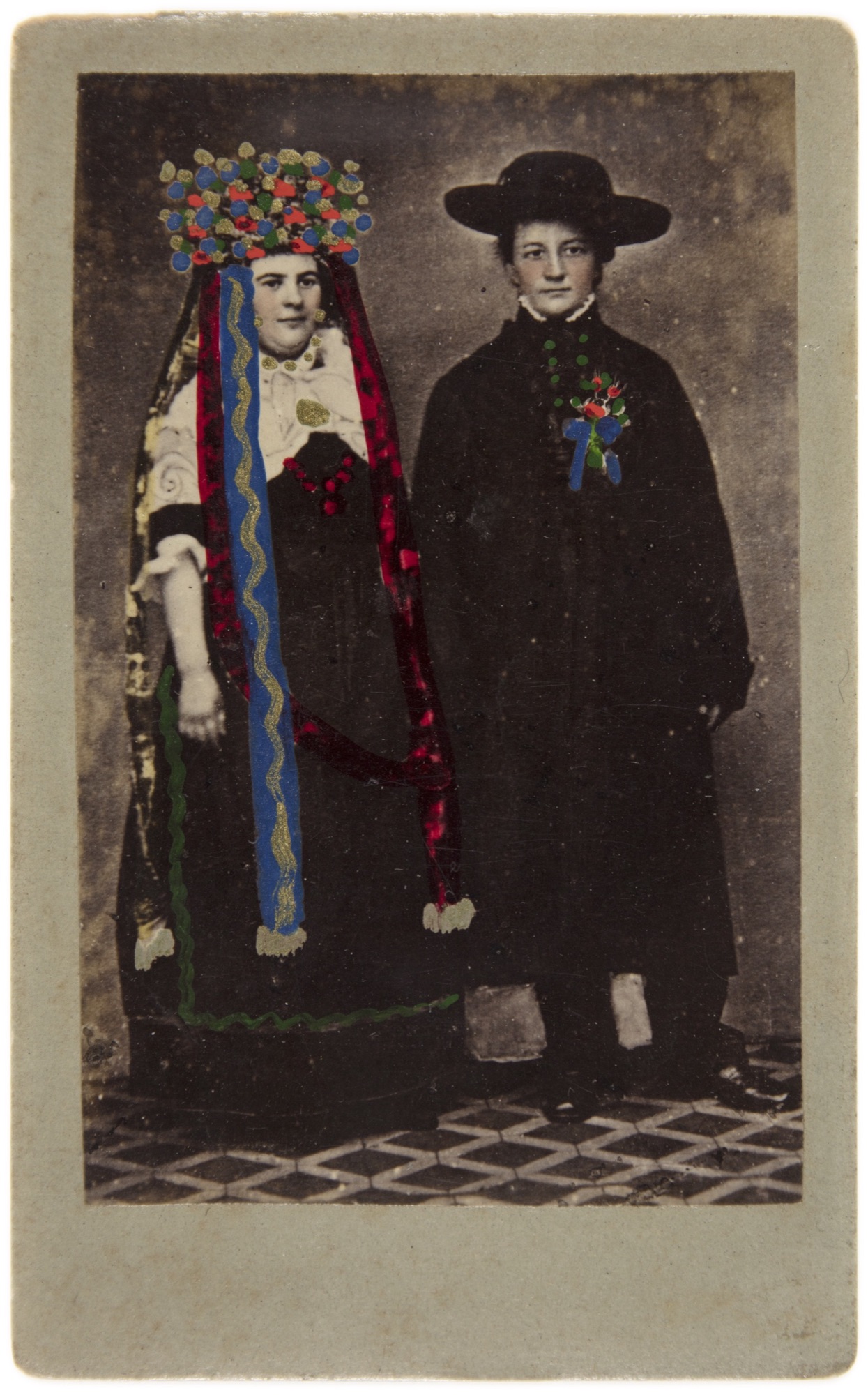
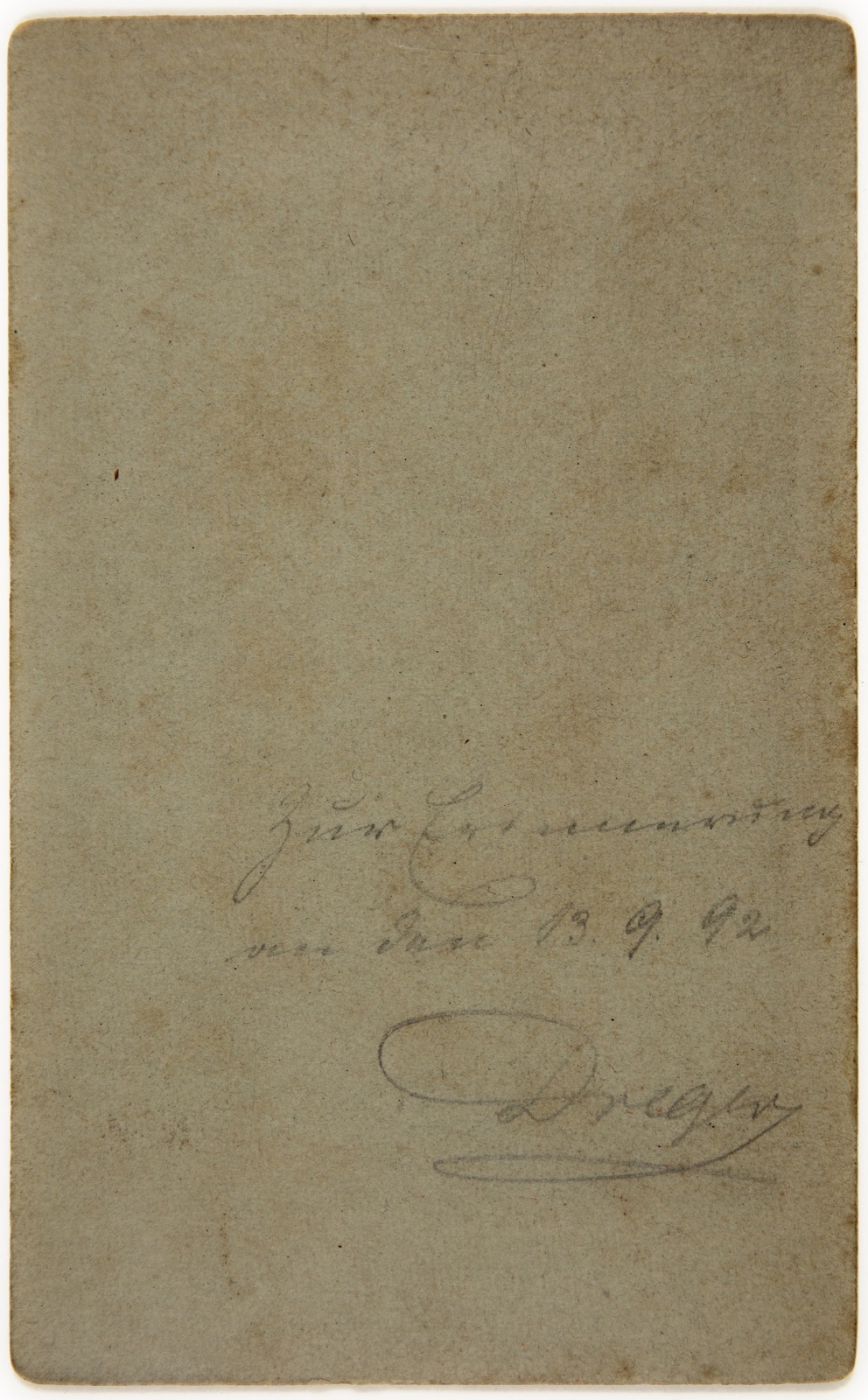
Another print of the same couple with different hand-colouringReverse of the second print with a handwritten commemorative inscription
Two differently coloured prints of the same couple, each shown with its reverse. The upper reverse names Heinrich Habenicht’s haberdashery, fancy-goods and leather-goods shop in Minden as the retailer. The lower one bears a handwritten commemorative inscription.Studio unidentified

As these images circulated, traditional-dress photography became increasingly detached from the individuals depicted. Recurring clothing, poses, backdrops and props turned individual photographs into readily recognisable images of the region.
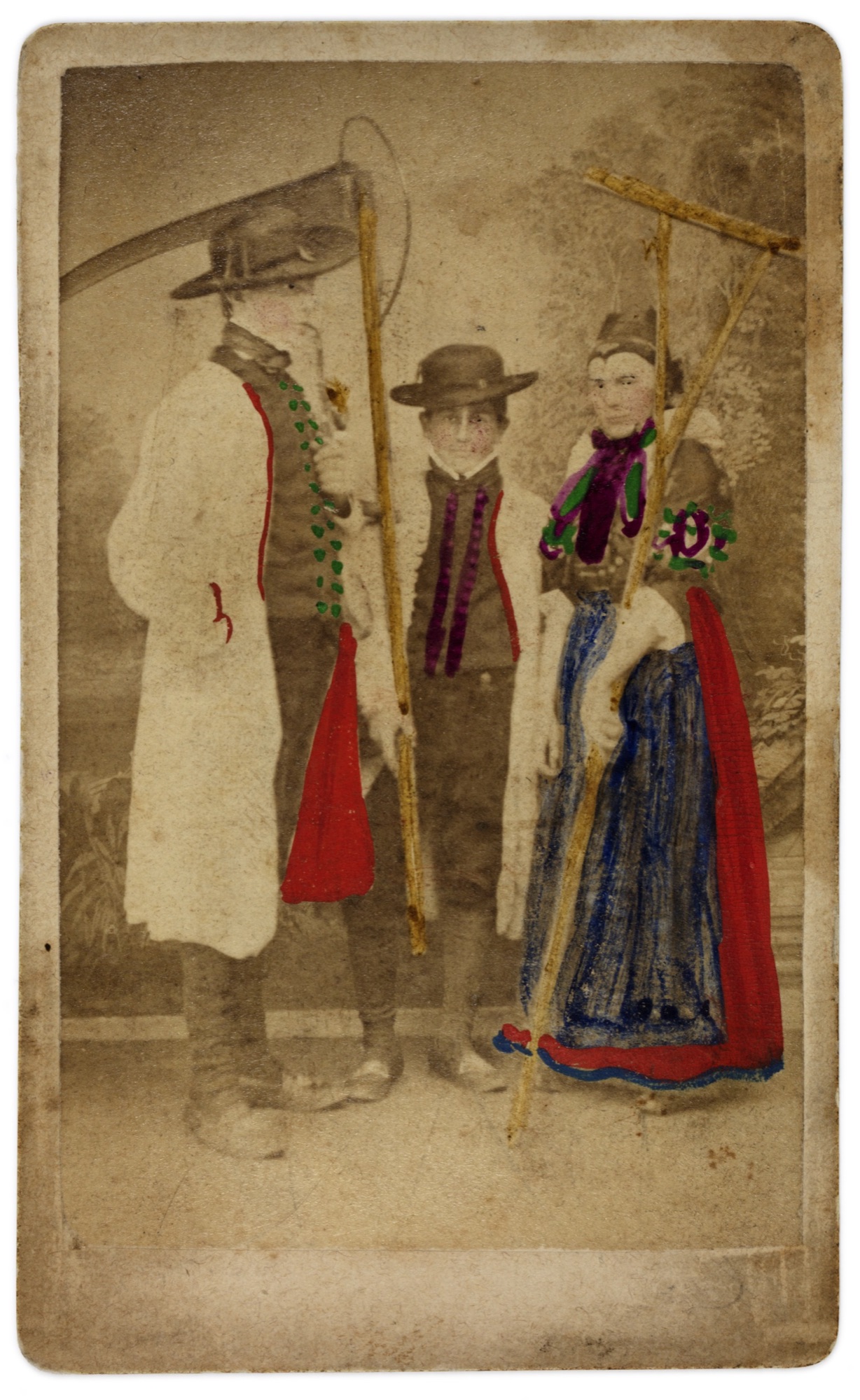
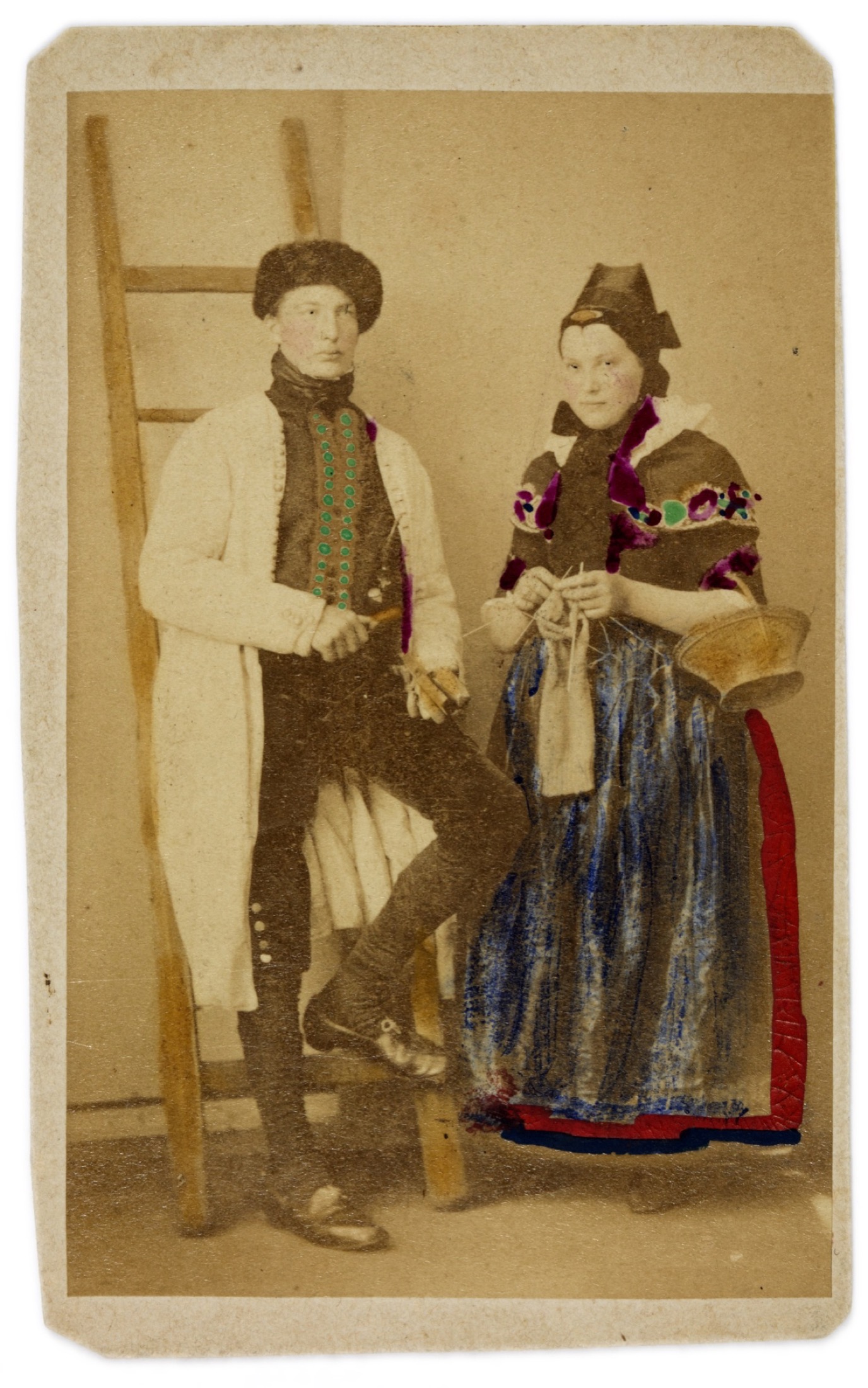
Hand-coloured, staged group in traditional dress with farming implementsHand-coloured couple in traditional dress with a ladder, knitting and a basket
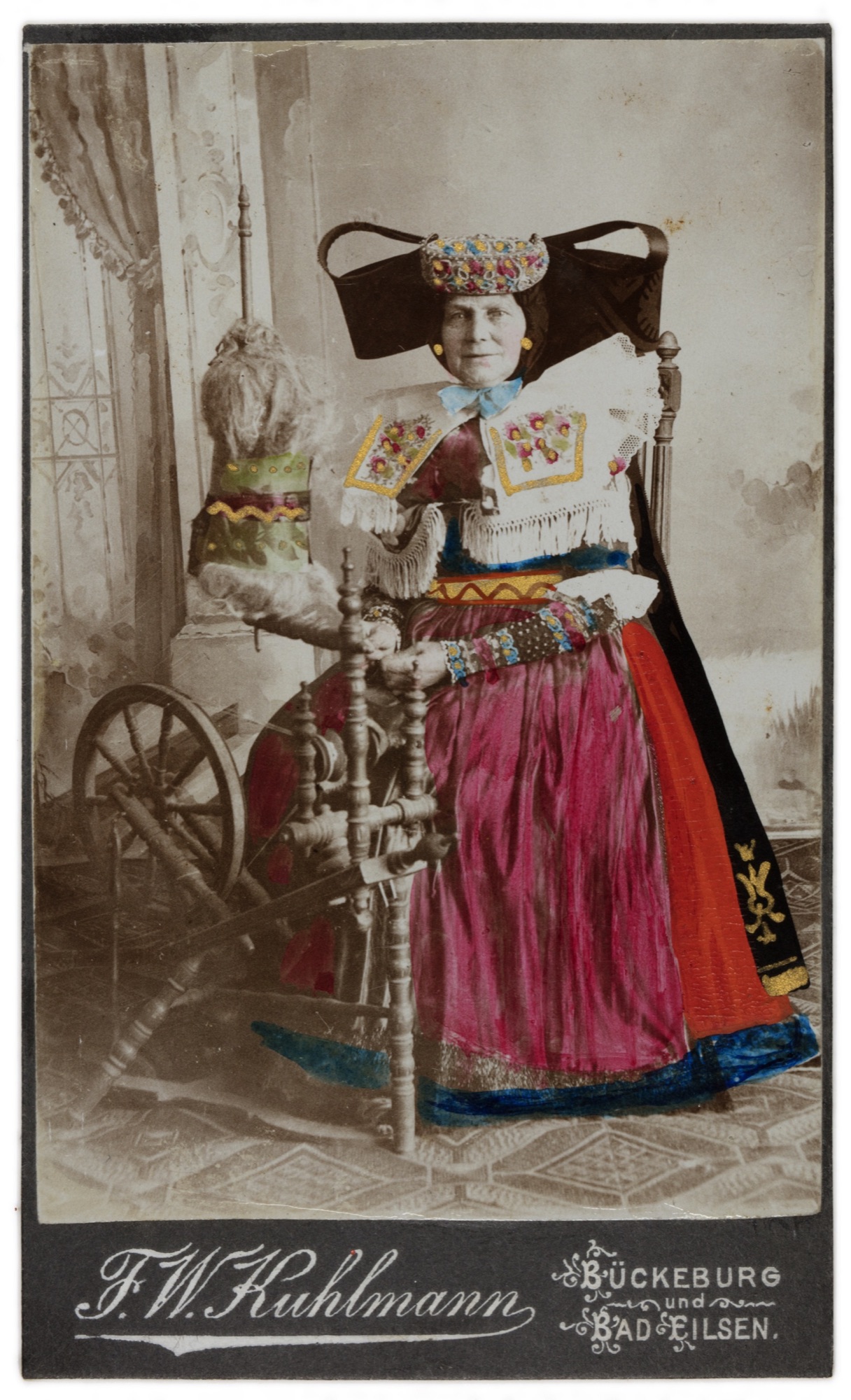
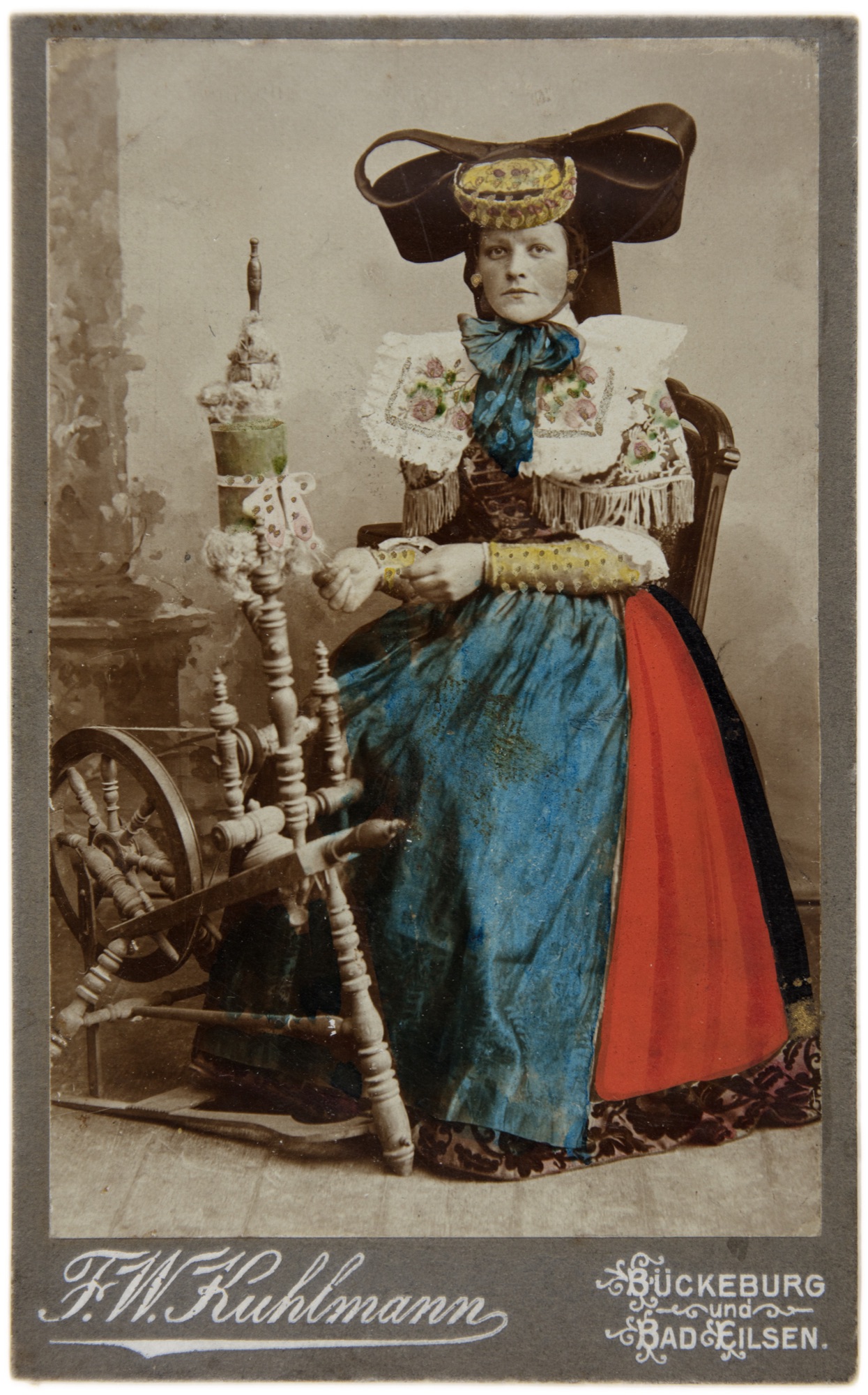
Hand-coloured depiction of a woman in Bückeburg traditional dress at a spinning wheel, from the studio of F. W. KuhlmannHand-coloured depiction of a woman in Bückeburg traditional dress at a spinning wheel, from the studio of F. W. Kuhlmann
Carefully arranged scenes create a recognisable image of traditional dress and regional belonging.Studio unidentified · F. W. Kuhlmann

This development continued with printed postcards well into the twentieth century. Successful motifs could be reproduced repeatedly, shaping perceptions of Schaumburg.
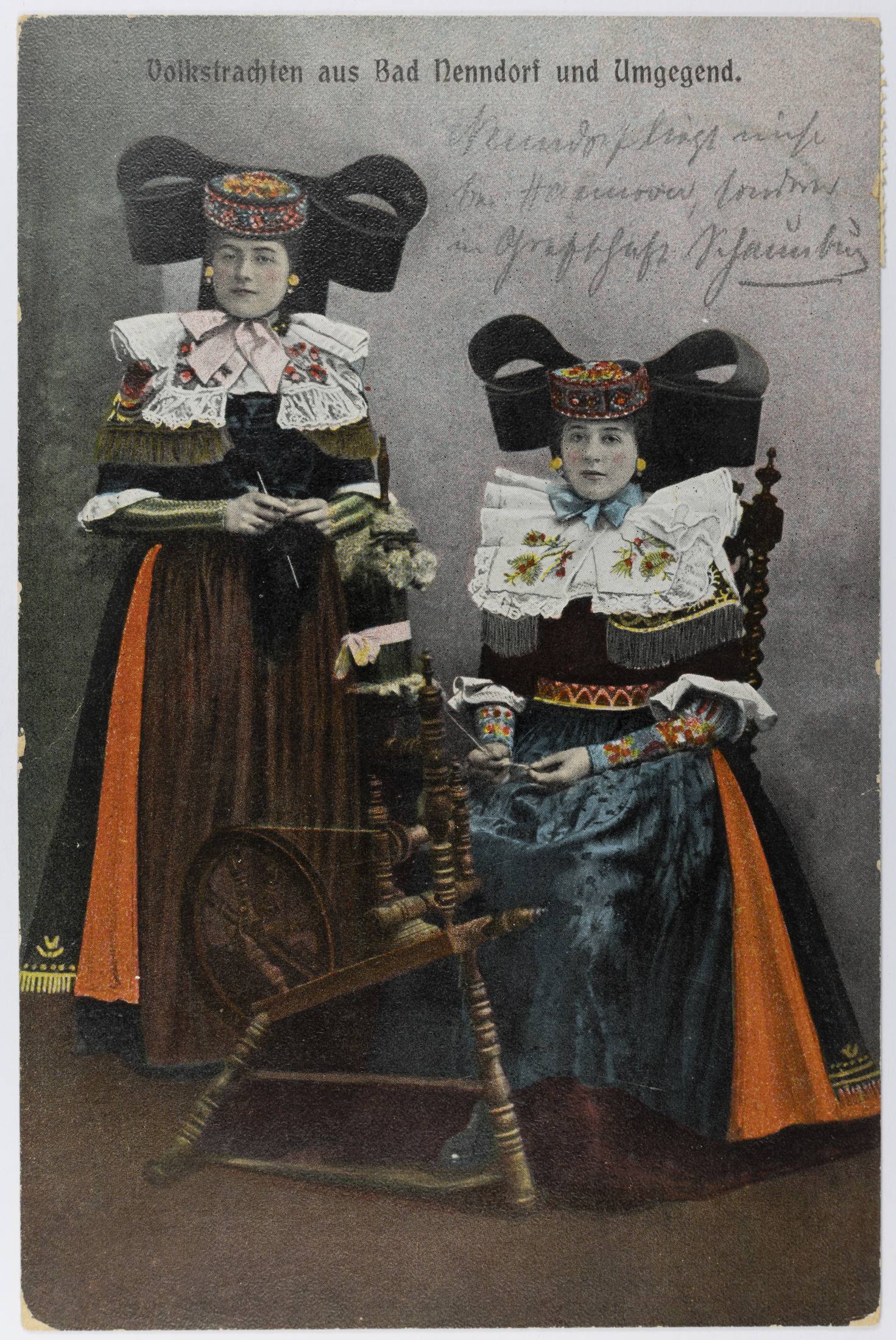
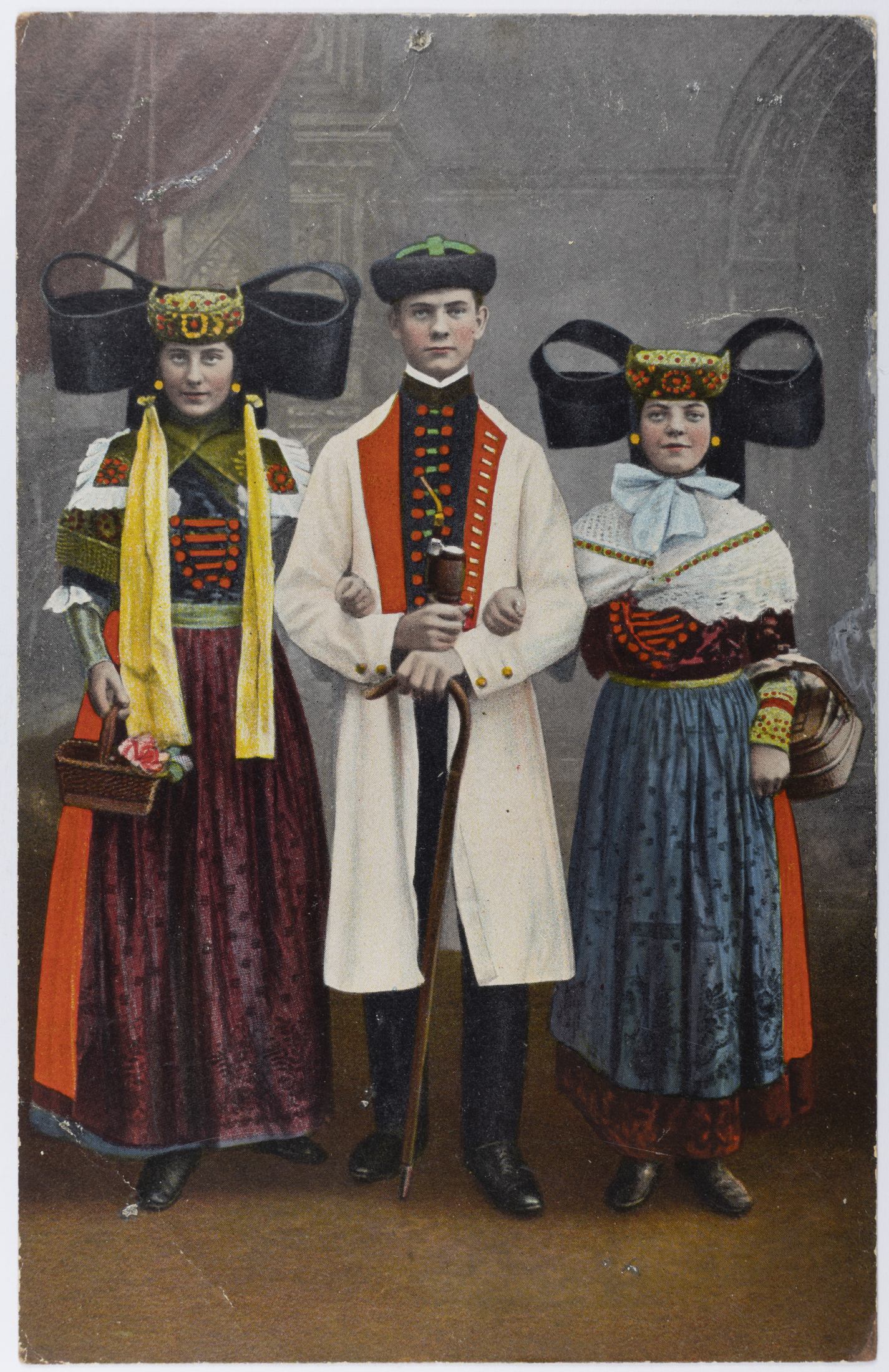
Coloured postcard: two women in traditional dress with needlework and a spinning wheel. Published by F. W. KuhlmannColoured postcard: two women and a man in Schaumburg traditional dress. Published by F. W. Kuhlmann
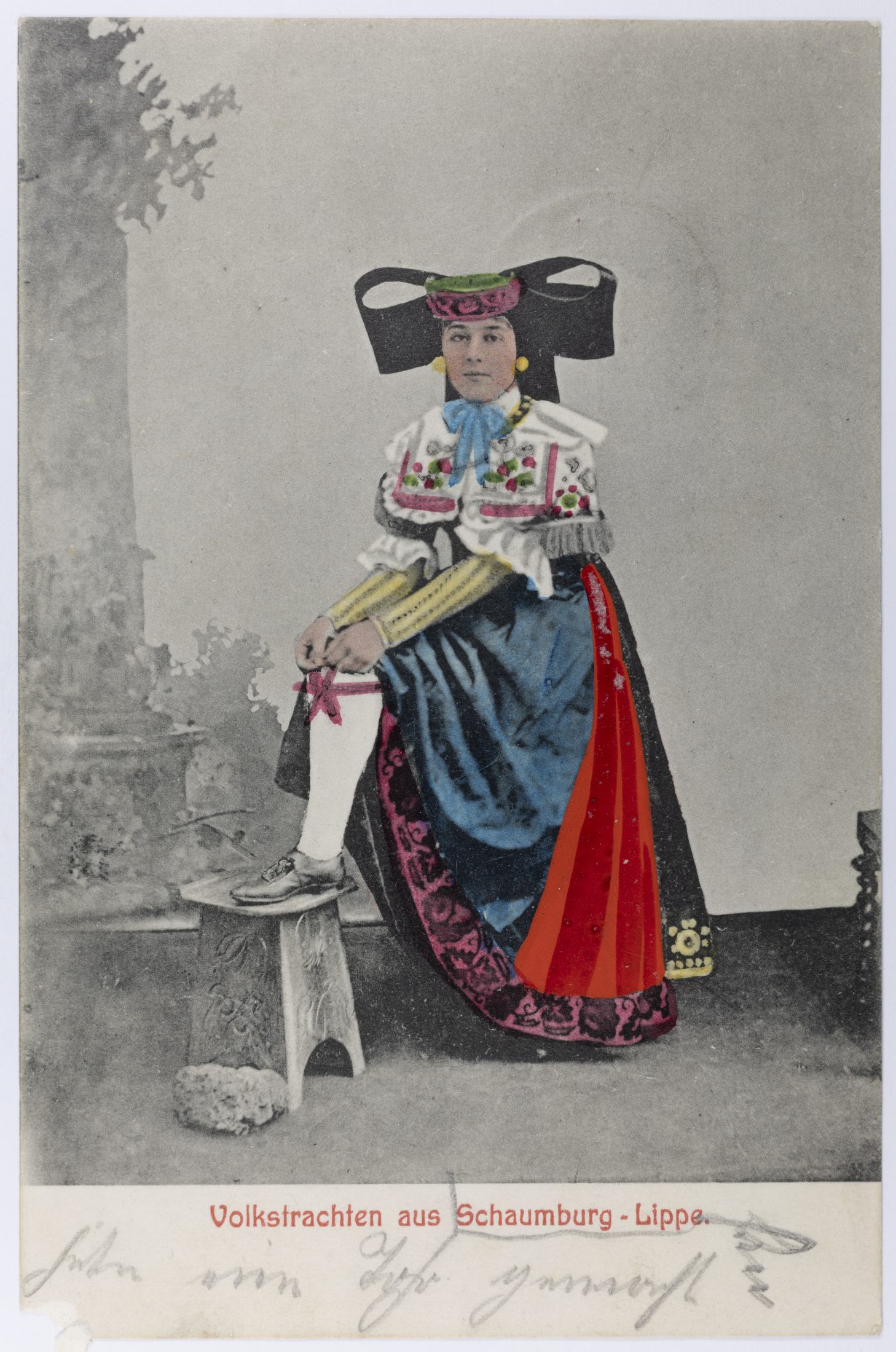
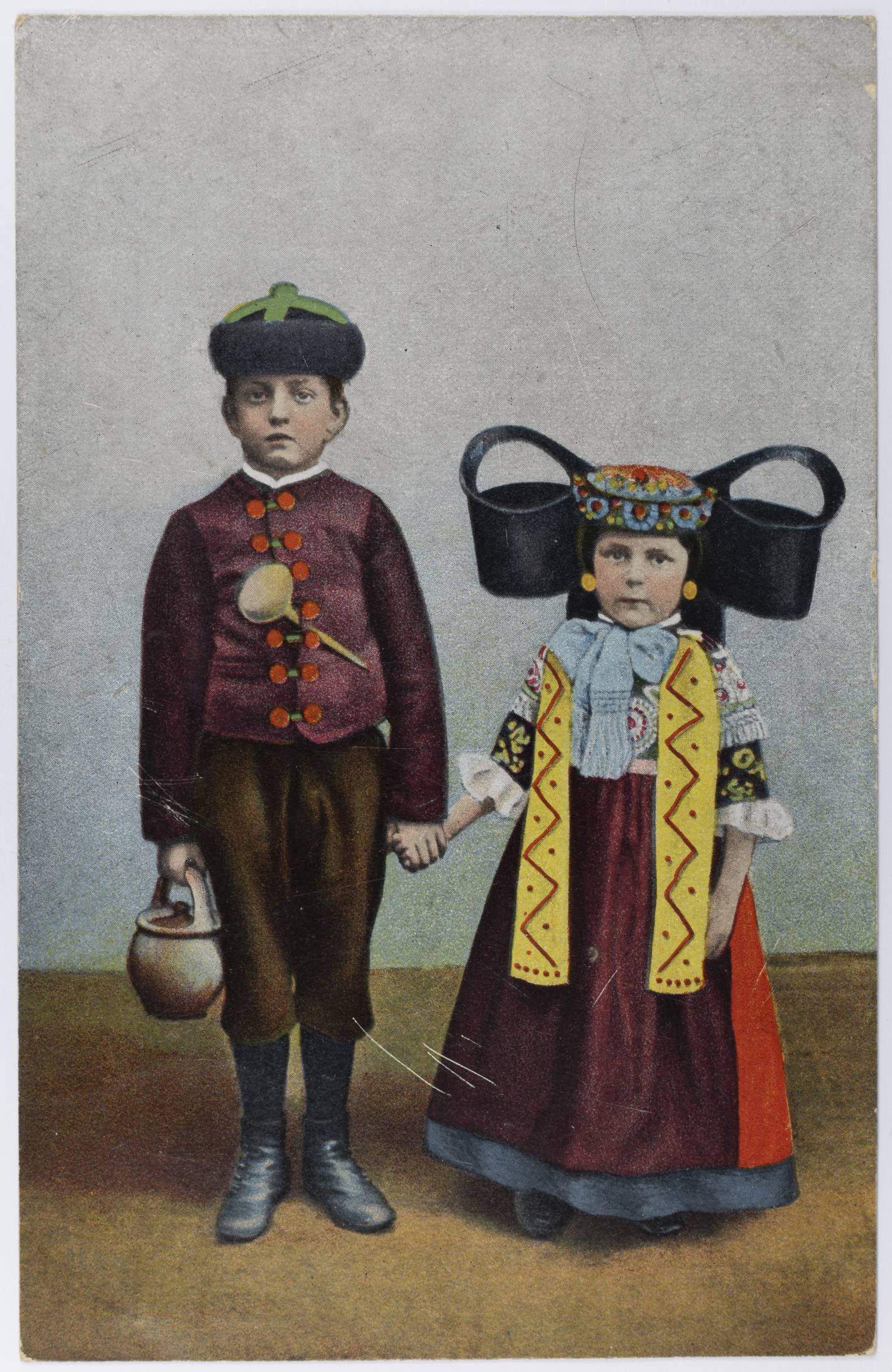
Coloured postcard: a woman in Schaumburg traditional dress adjusting a stocking. Published by F. W. KuhlmannColoured postcard: two children in Schaumburg traditional dress. Published by F. W. Kuhlmann
Mass-produced postcards from the early twentieth century showing traditional dress.Published by F. W. Kuhlmann

Traditional dress, rural life, landscape and the idea of a supposedly unspoilt homeland merged into an idealised visual world. These images had an influence far beyond their original photographic and commercial context and could later be appropriated to serve different ideas of homeland and identity.

Appendix

PICTURES AND THEIR STORIES

Photographs tell stories. Yet found and inherited images often outlive the people who could explain why they were taken. Sometimes all that remains is a name, a dedication or a note on the reverse.

Such traces can be compared with other photographs and historical sources. The following examples show what they reveal about the sitters, the intended use and the production of the images—and which questions remain unanswered.

Names on the Reverse

Photographs often bear handwritten dedications or names. In the example featuring the sisters Mathilde and Jenny, the inscription suggests a private portrait and a personal keepsake.
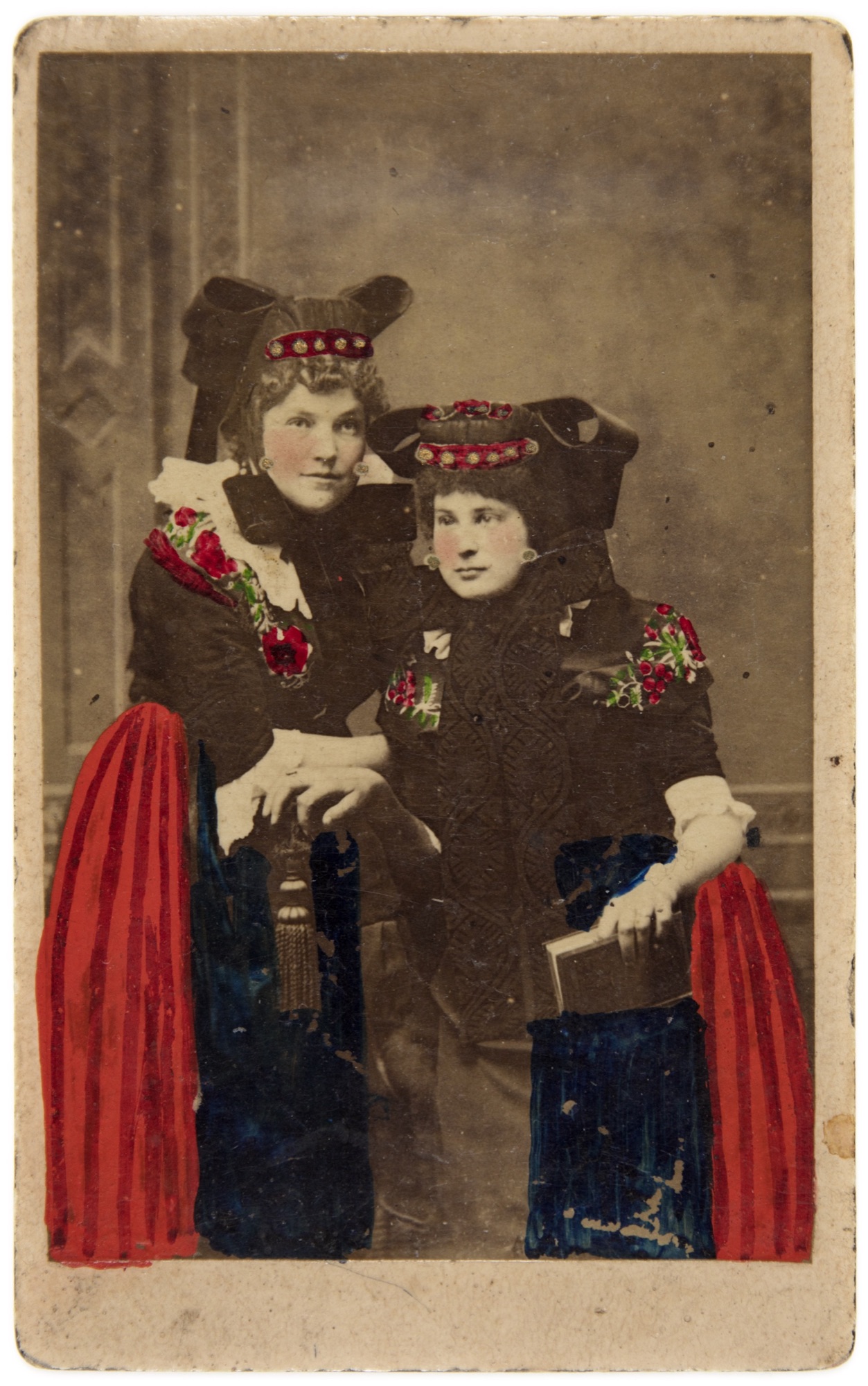
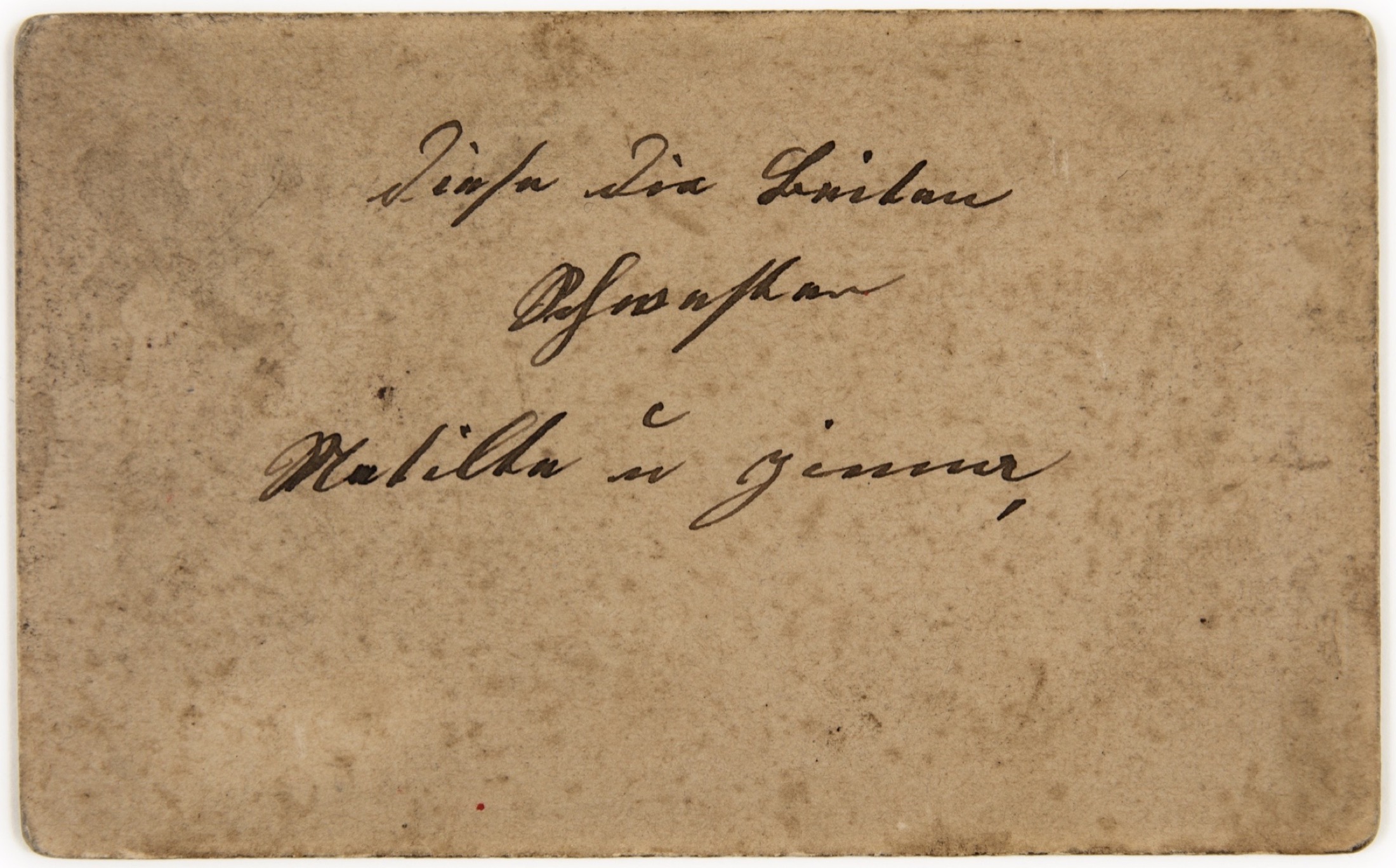
Front of the historic photograph of Mathilde and JennyHorizontally displayed reverse with the handwritten names of Mathilde and Jenny
Front and back of the same card: the handwritten note gives the women pictured their names.Studio unidentified

Another example from the F. W. Kuhlmann studio shows a woman and a girl in traditional dress. The reverse names “Mrs Baumann” and “Ella Baumann”. These names show that the sitters were remembered as specific individuals and suggest private use.
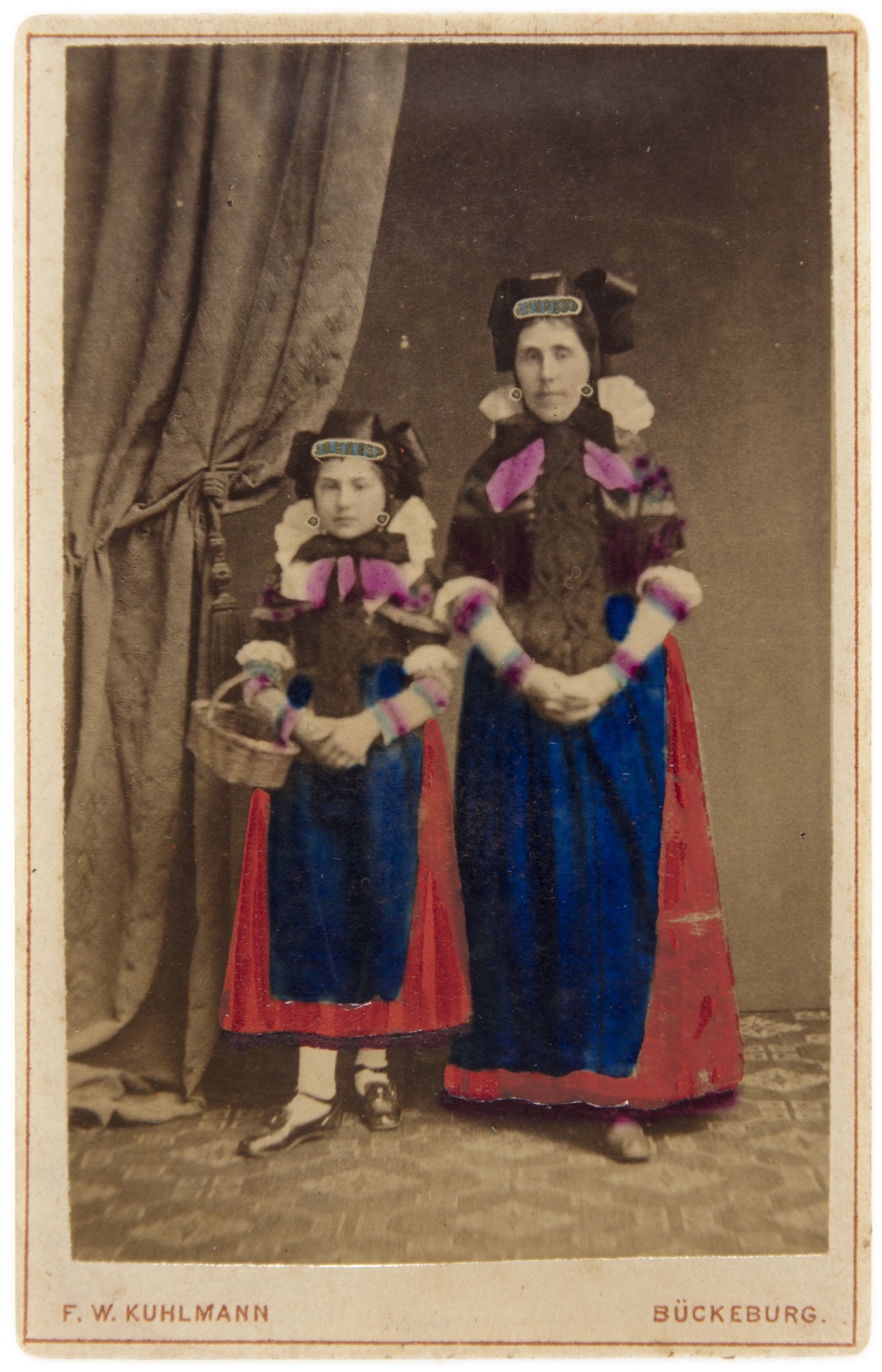
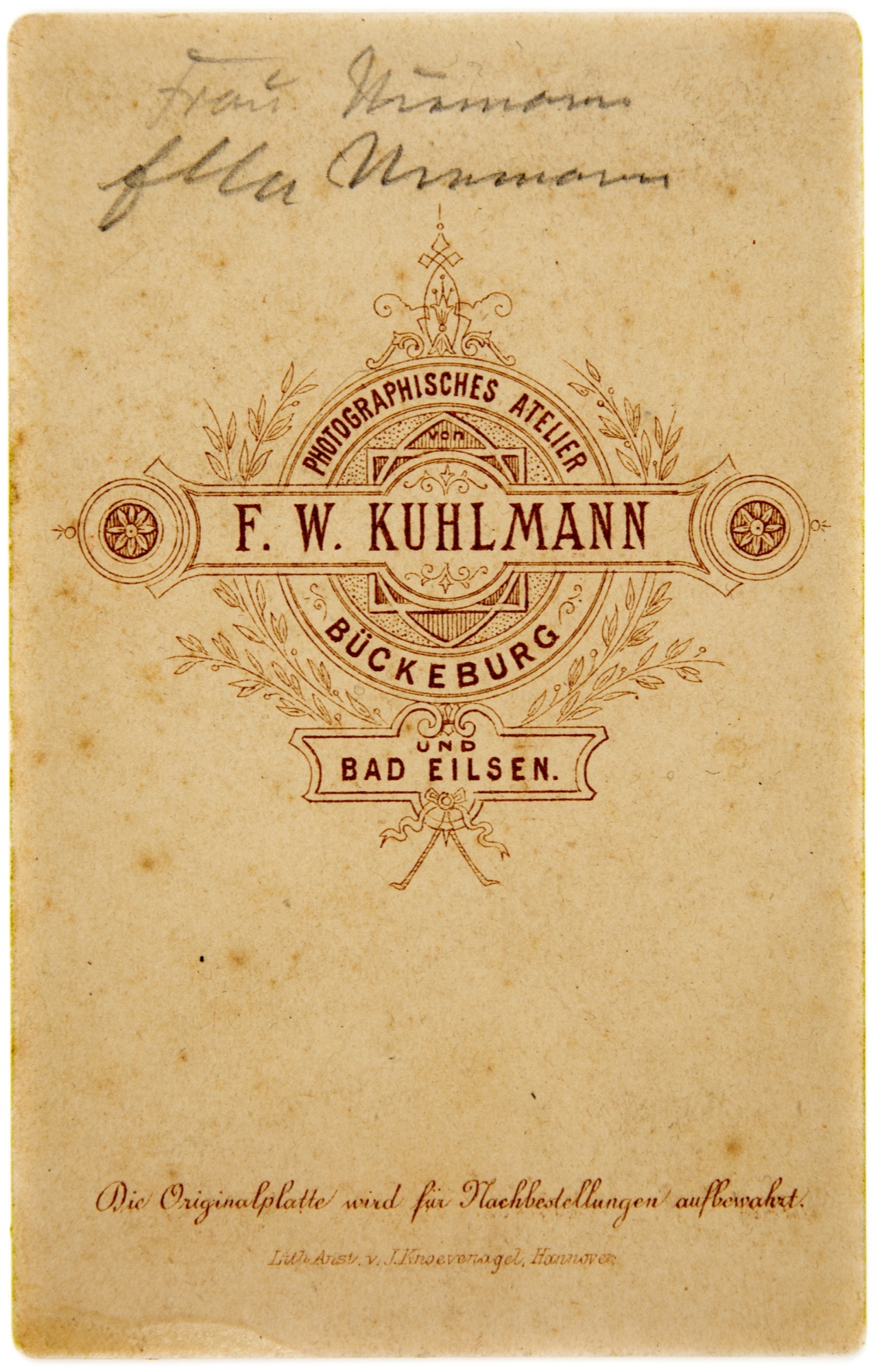
Front of the hand-coloured portrait of Frau Baumann and Ella Baumann in Bückeburg traditional dressReverse bearing the handwritten names Frau Baumann and Ella Baumann
Front and back: the handwritten names “Frau Baumann” and “Ella Baumann” strongly suggest that the photograph originally served as a personal keepsake.F. W. Kuhlmann

Visitors in Bückeburg Traditional Dress

A group portrait from the F. W. Kuhlmann studio shows several women in Bückeburg traditional dress and a man. The reverse changes our interpretation: it commemorates an outing to Obernkirchen in 1905 and lists places of origin for several women, including Bremen, Hanover and probably Charlottenburg. Some of the group therefore came from outside the region.
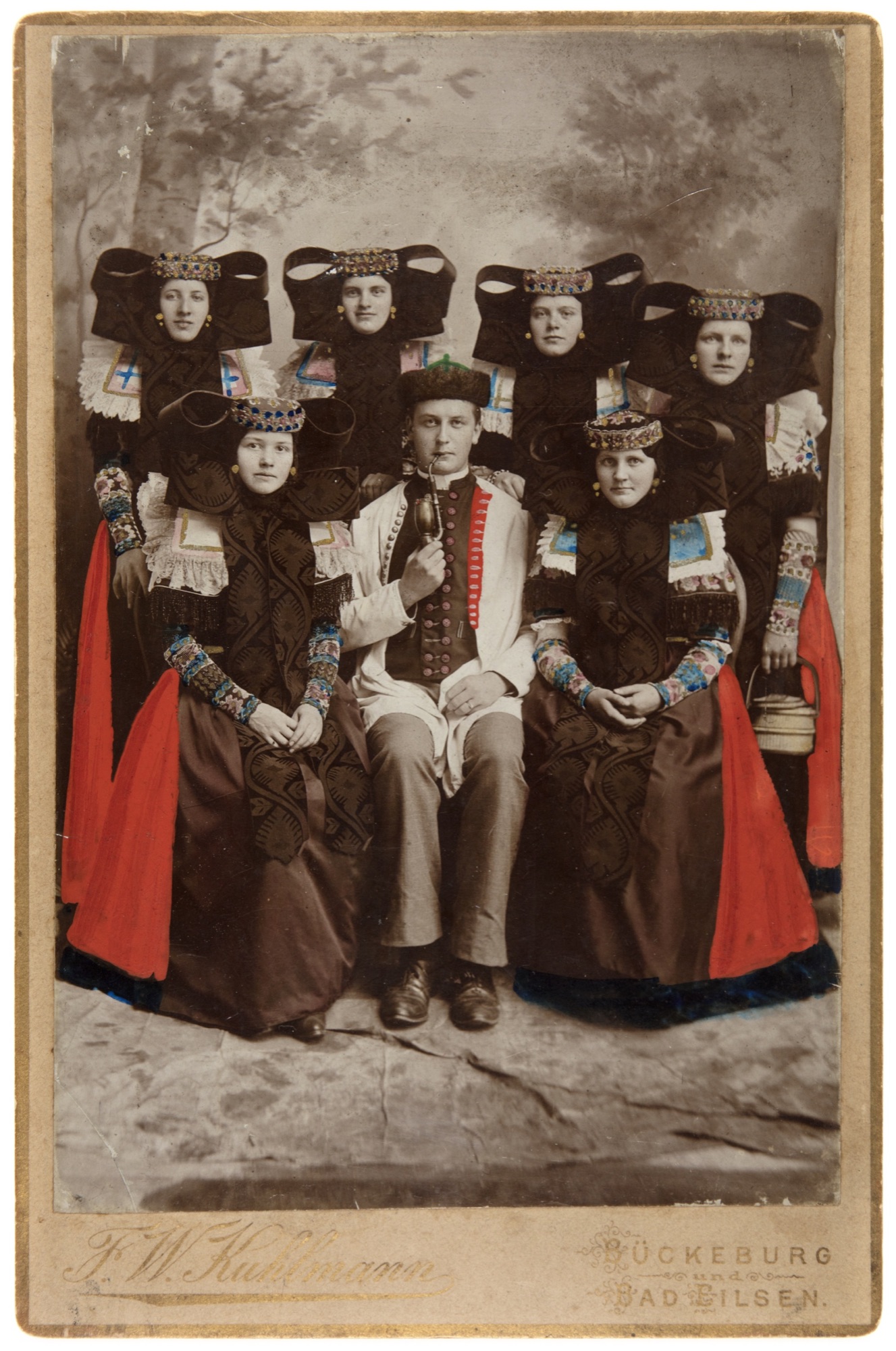
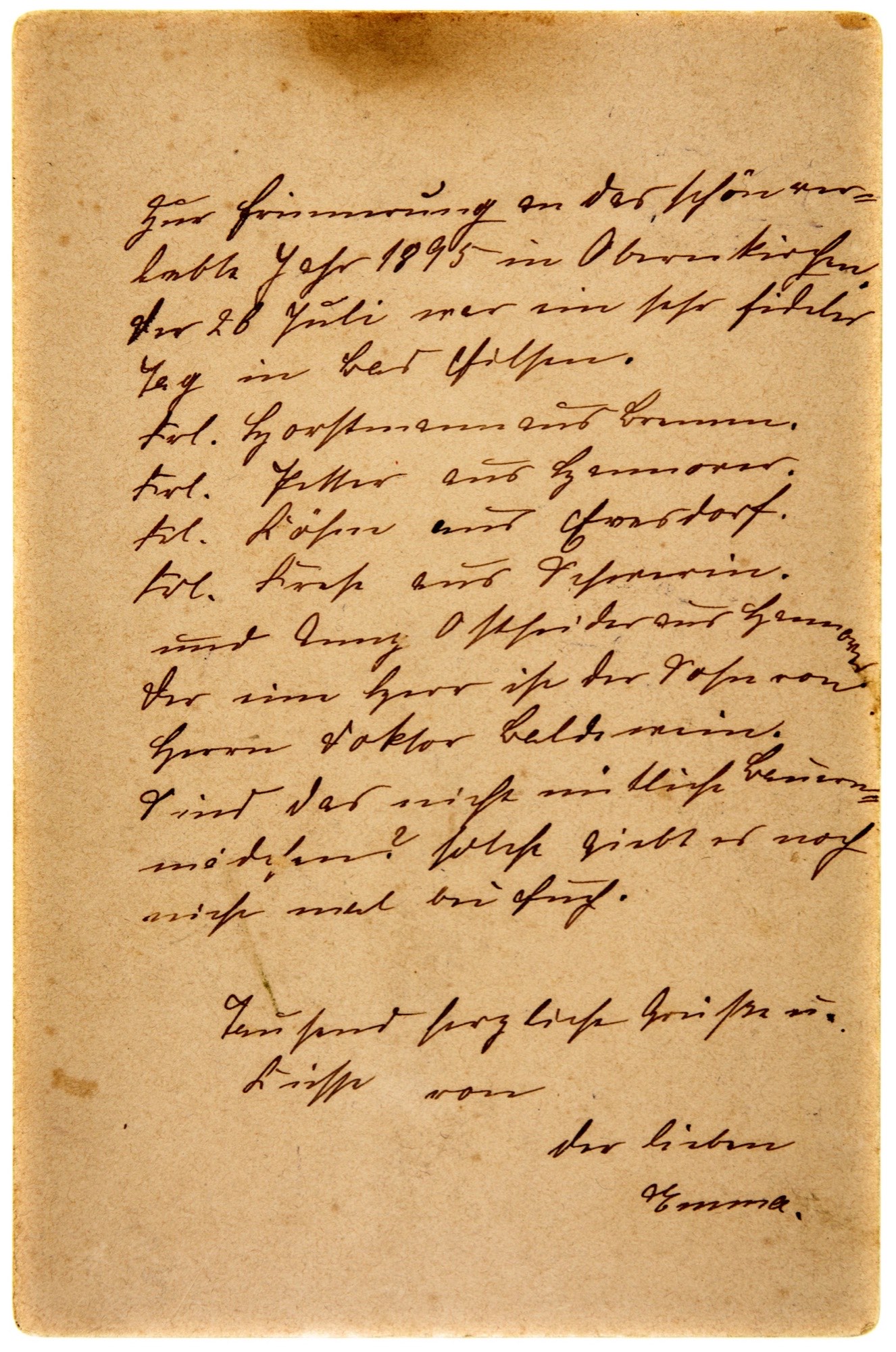
Front of the group photograph showing visiting women in Bückeburg traditional dressReverse of the group photograph with a handwritten commemorative note and places of origin
Front and back: the inscription turns an apparent portrait of a local group in traditional dress into evidence of tourist costume photography.F. W. Kuhlmann

The Same Negative, Different Colours

Two surviving prints match in pose, facial features, clothing and backdrop, but differ in colouring and decoration. The negative was therefore certainly used more than once. The comparison also shows that hand-colouring did not necessarily record the colours actually worn.
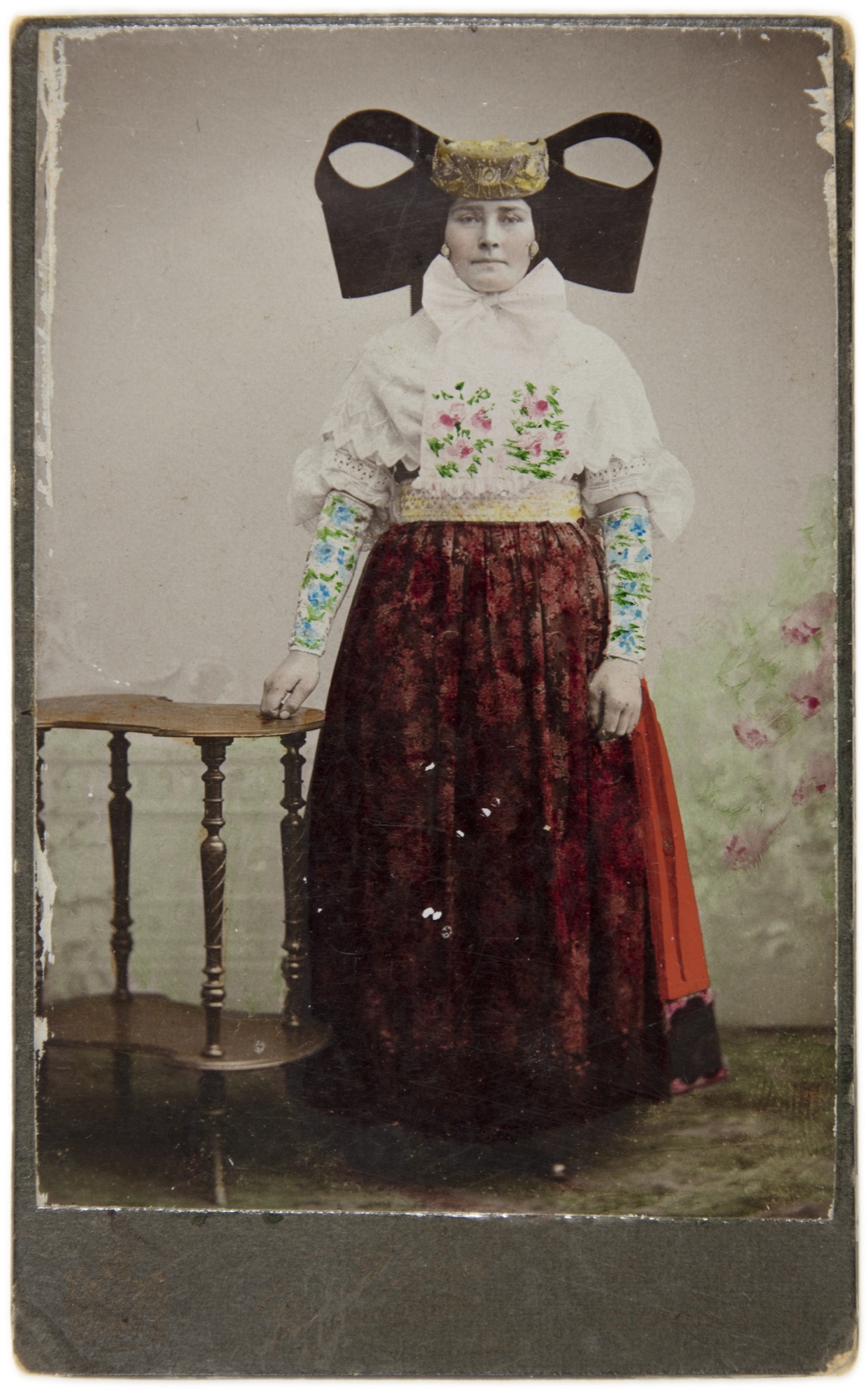
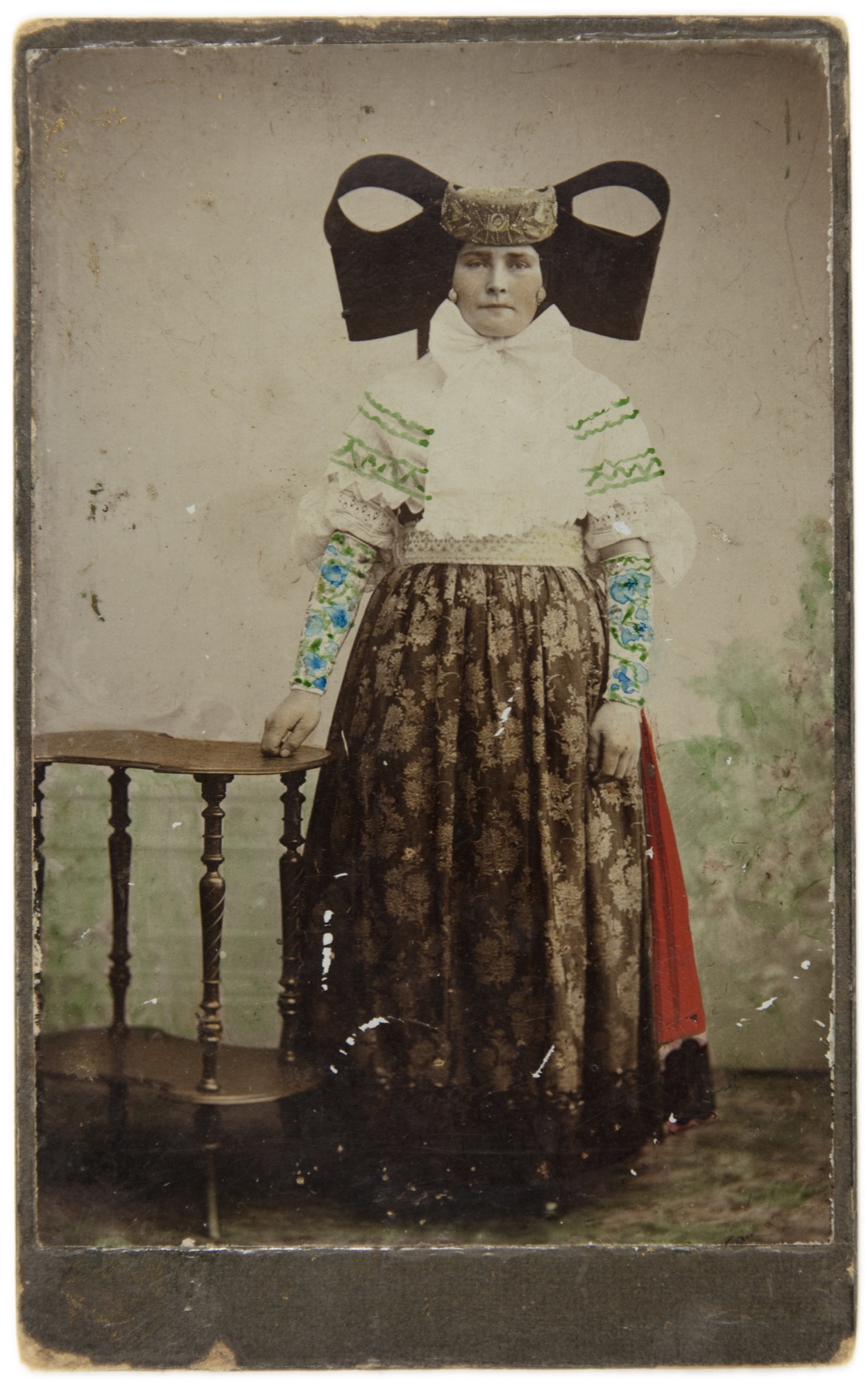
First hand-coloured print of the portrait in traditional dressSecond print of the same portrait with different hand-colouring
The same negative, two colour versions: the later colouring differs particularly across the chest, sleeves and skirt.Studio unidentified

Rural Life Staged for the Camera

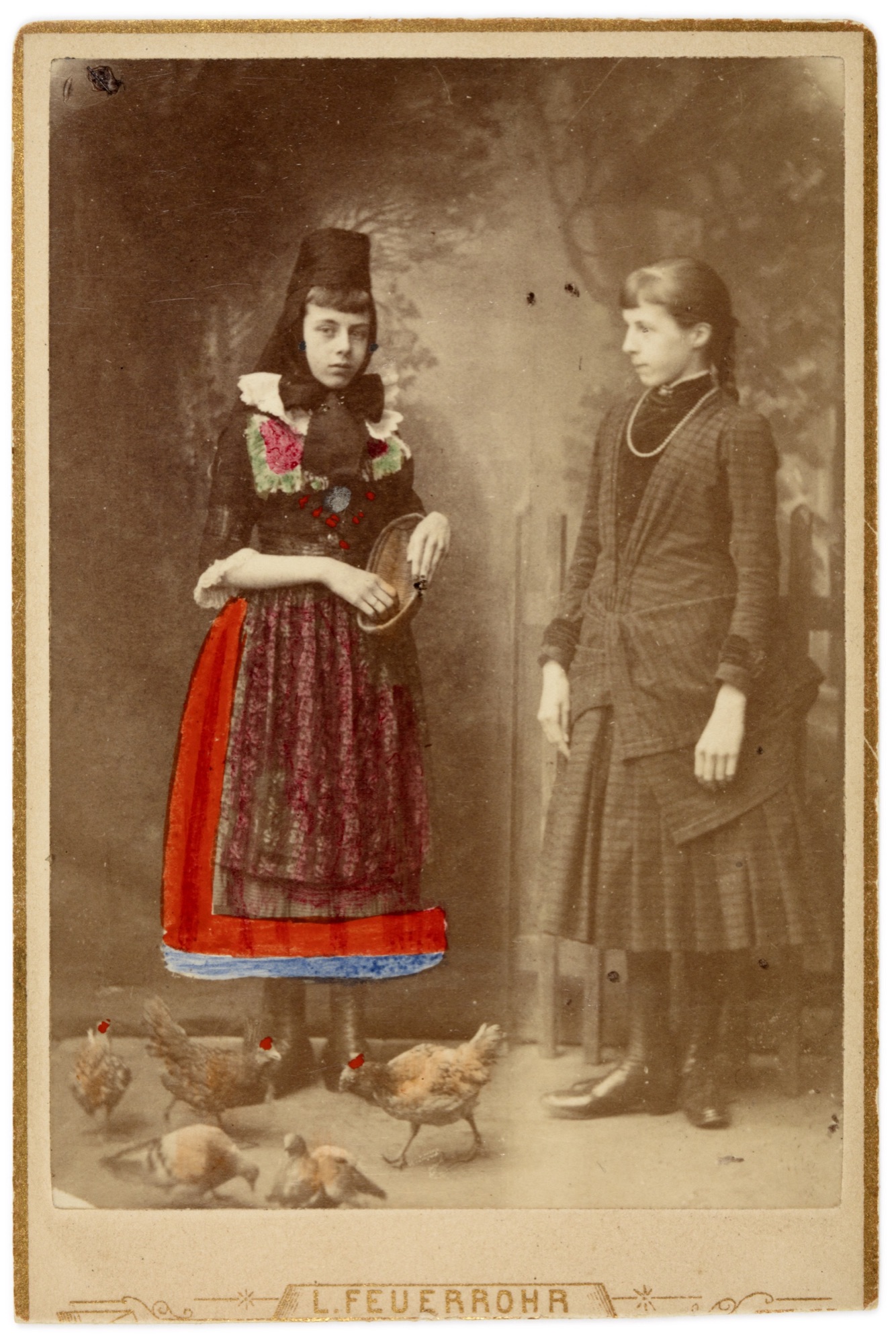
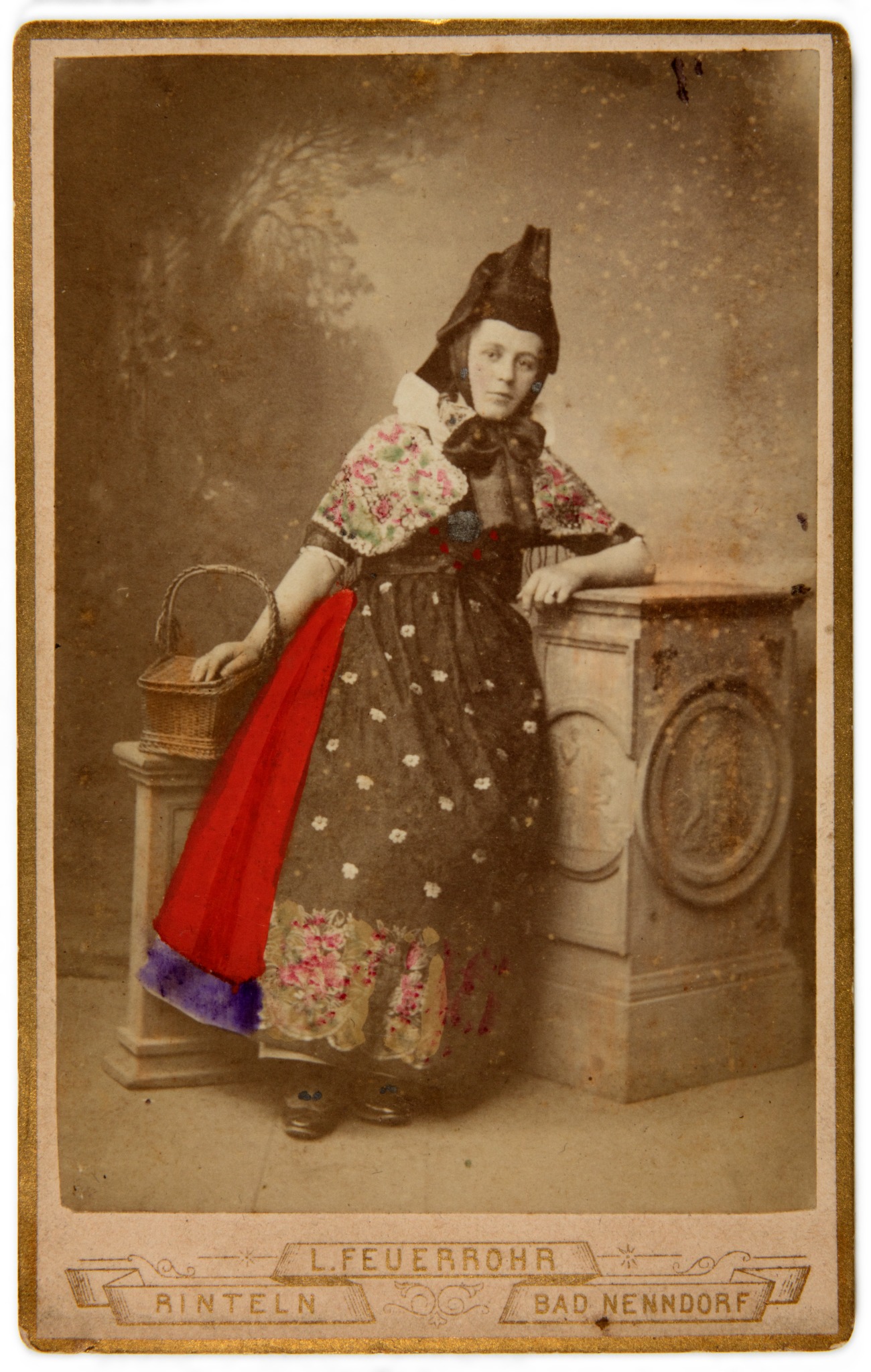
Photographs from L. Feuerrohr’s studio in Rinteln and Bad Nenndorf show how rural life was staged in the studio.

Stuffed chickens and pigeons, a prop fence and a painted landscape created the desired setting. The chickens are particularly revealing: the same birds appear in different places in both photographs, having been repositioned for each sitting.
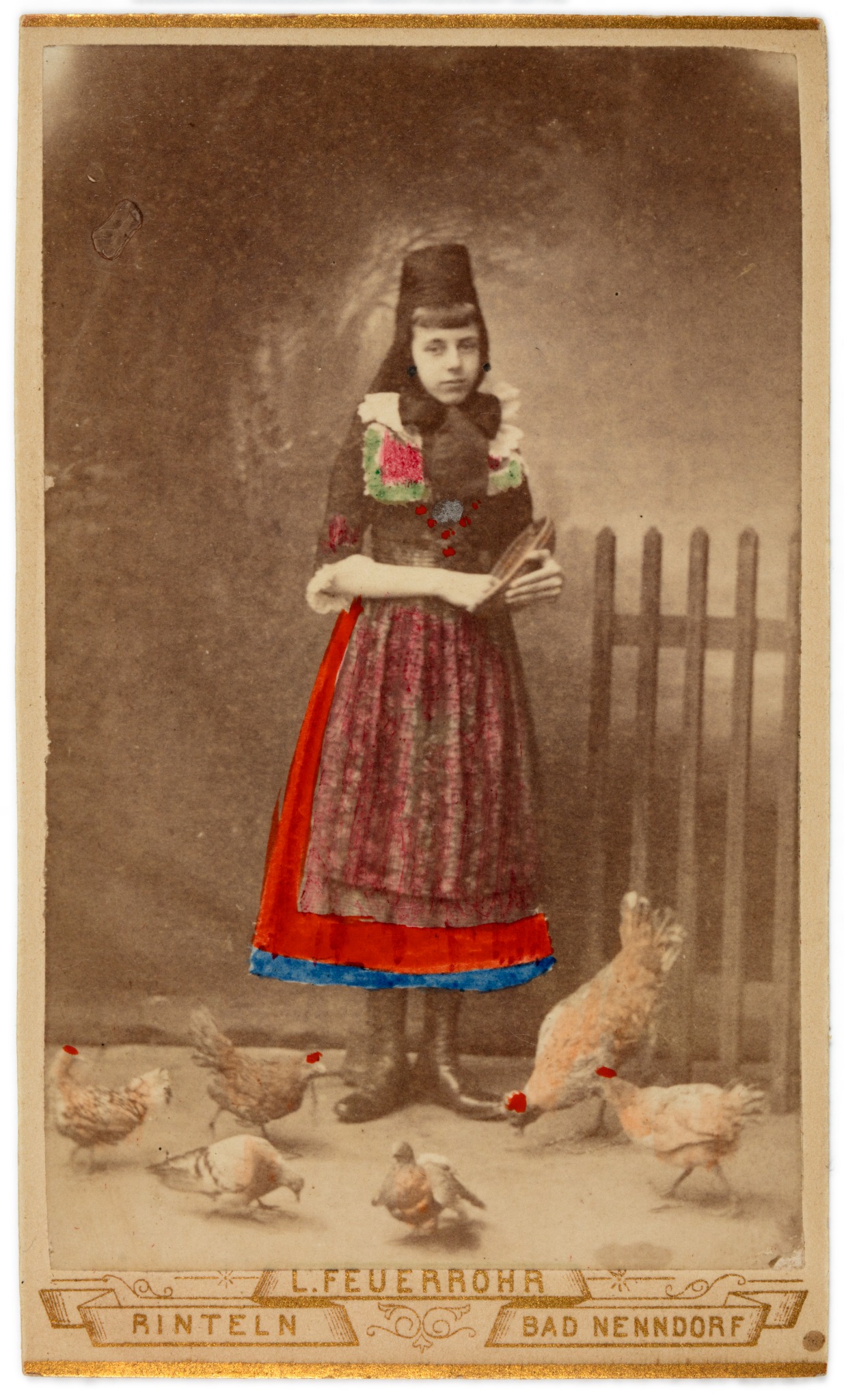
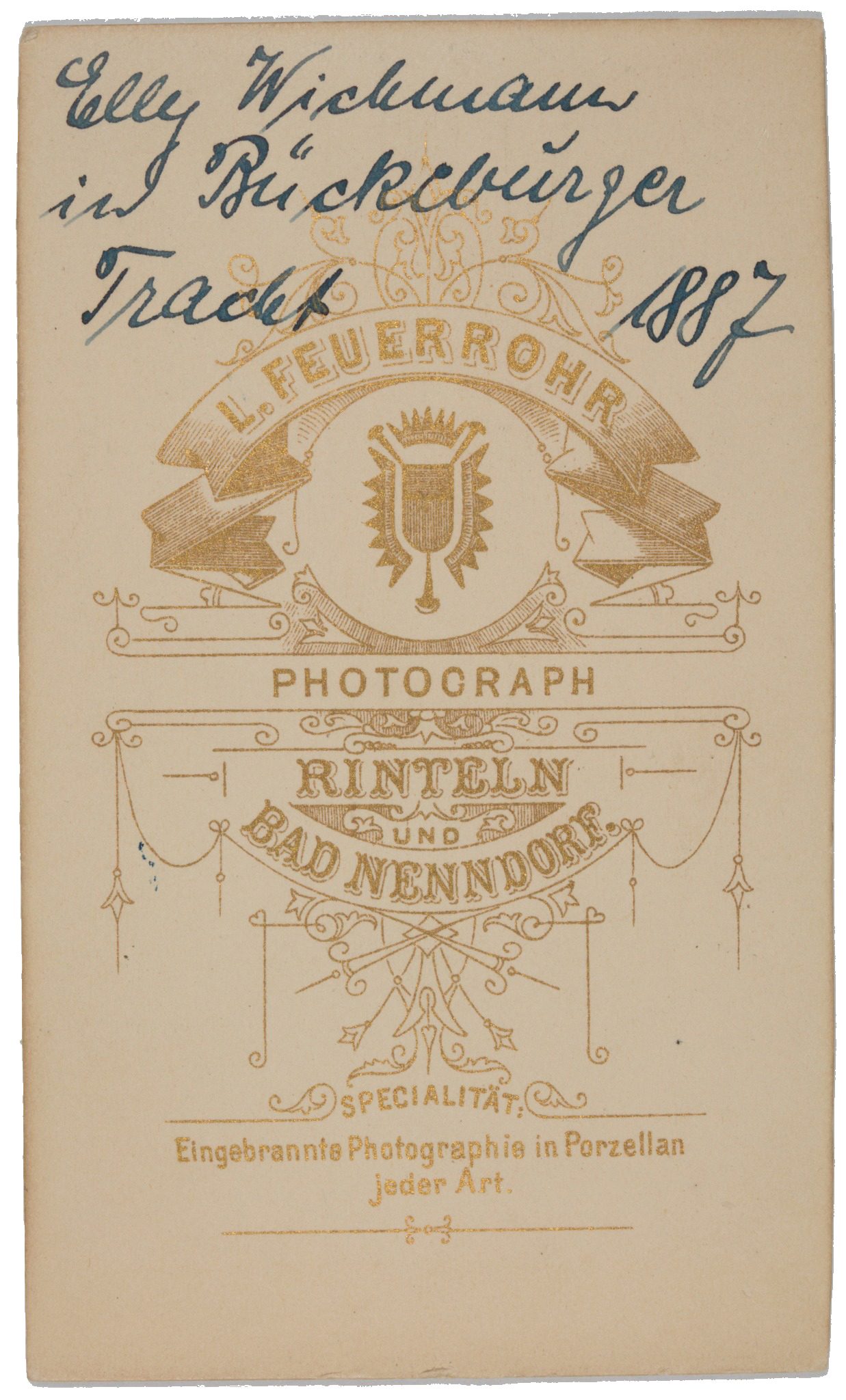
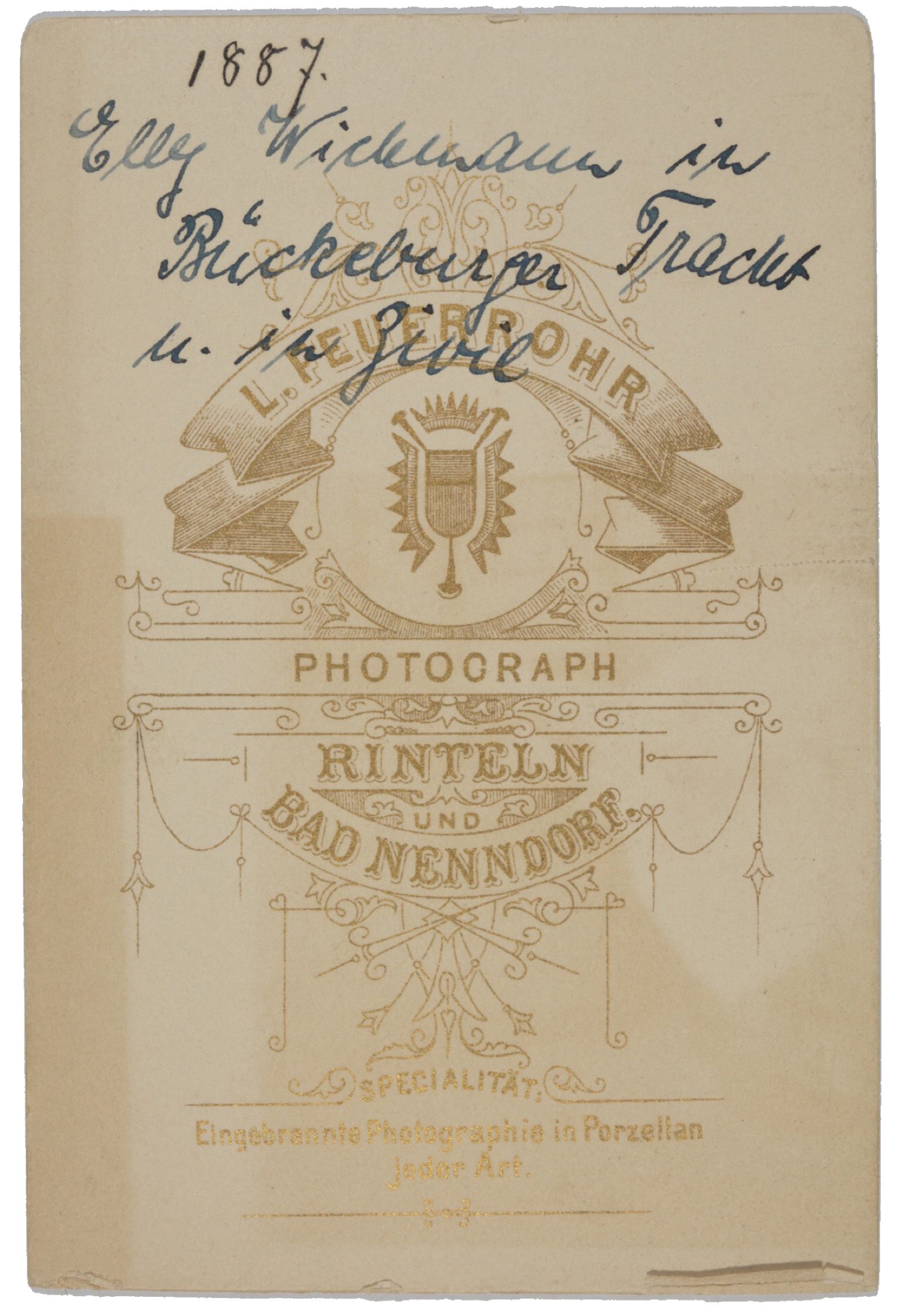
Front: Elly Wichmann in Bückeburg traditional dress, L. Feuerrohr studioReverse with handwritten inscription identifying Elly Wichmann, 1887
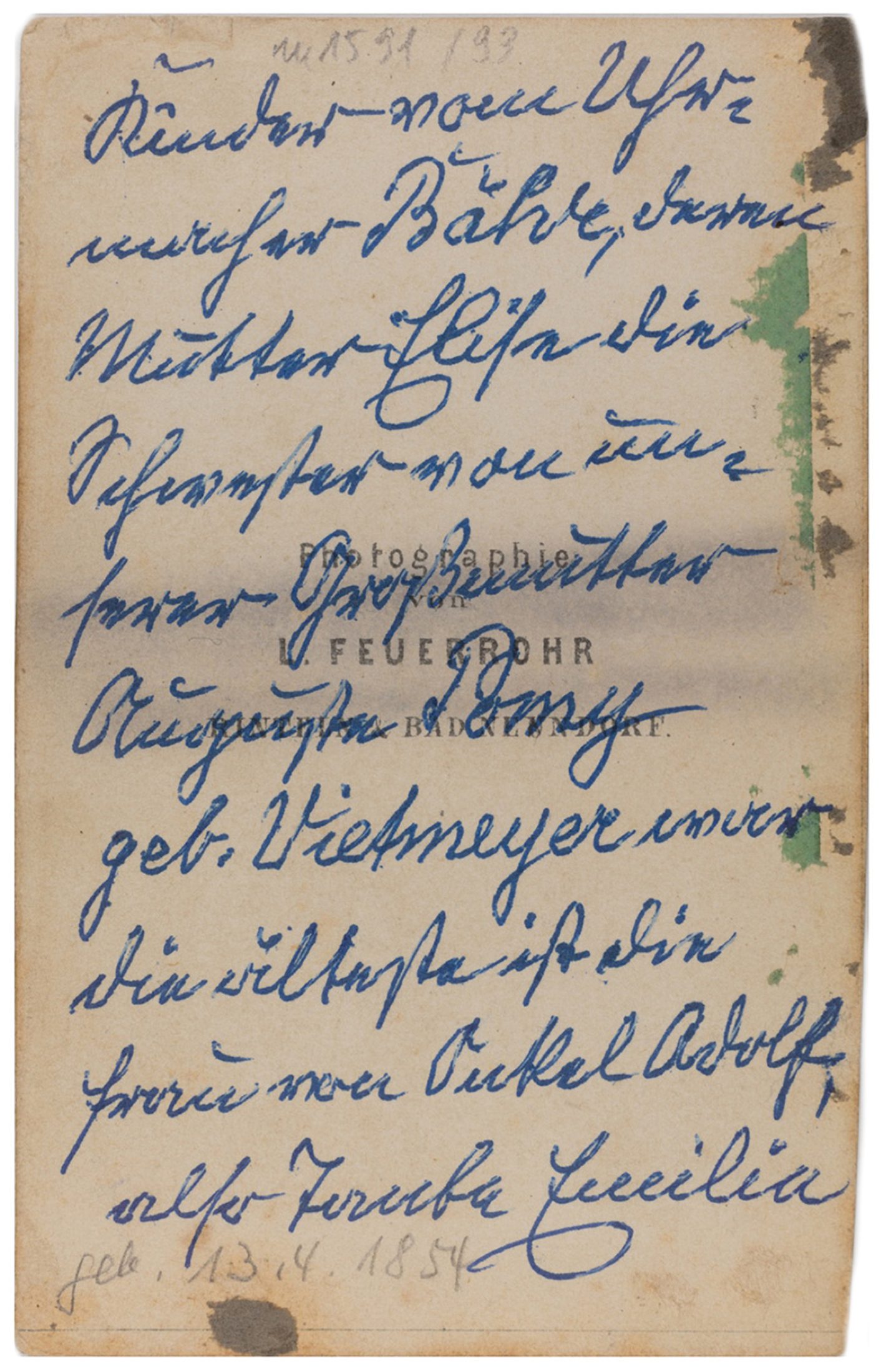
Front: Elly Wichmann in Bückeburg traditional dress and in civilian clothing before the same studio backdropReverse with handwritten inscription identifying Elly Wichmann
Elly Wichmann in two photographs in a staged rural setting, and in a photomontage showing traditional dress and civilian clothing.L. Feuerrohr

Particularly interesting is the comparison of the same young woman in traditional dress and in ordinary clothing. The inscription on the reverse explicitly describes the two depictions as “in Bückeburg traditional dress and in ordinary clothes”.

Since the photographs bear her name, they were probably commissioned as private portraits. Whether the woman came from the region or was a visitor photographed in the studio remains unknown.

The photographs reveal how a version of regional life could be constructed in the studio: sitter, traditional dress, backdrop and props were combined to create a seemingly authentic rural scene.

Appendix

STUDIOS AND PHOTOGRAPHERS

The surviving work of different photographers shows that similar forms of photographic representation emerged across the region. Alongside conventional portraits, studios produced staged and, above all, coloured photographs of traditional dress. As commercial businesses, they created more than private keepsakes: they also shaped a particular photographic image of the region.

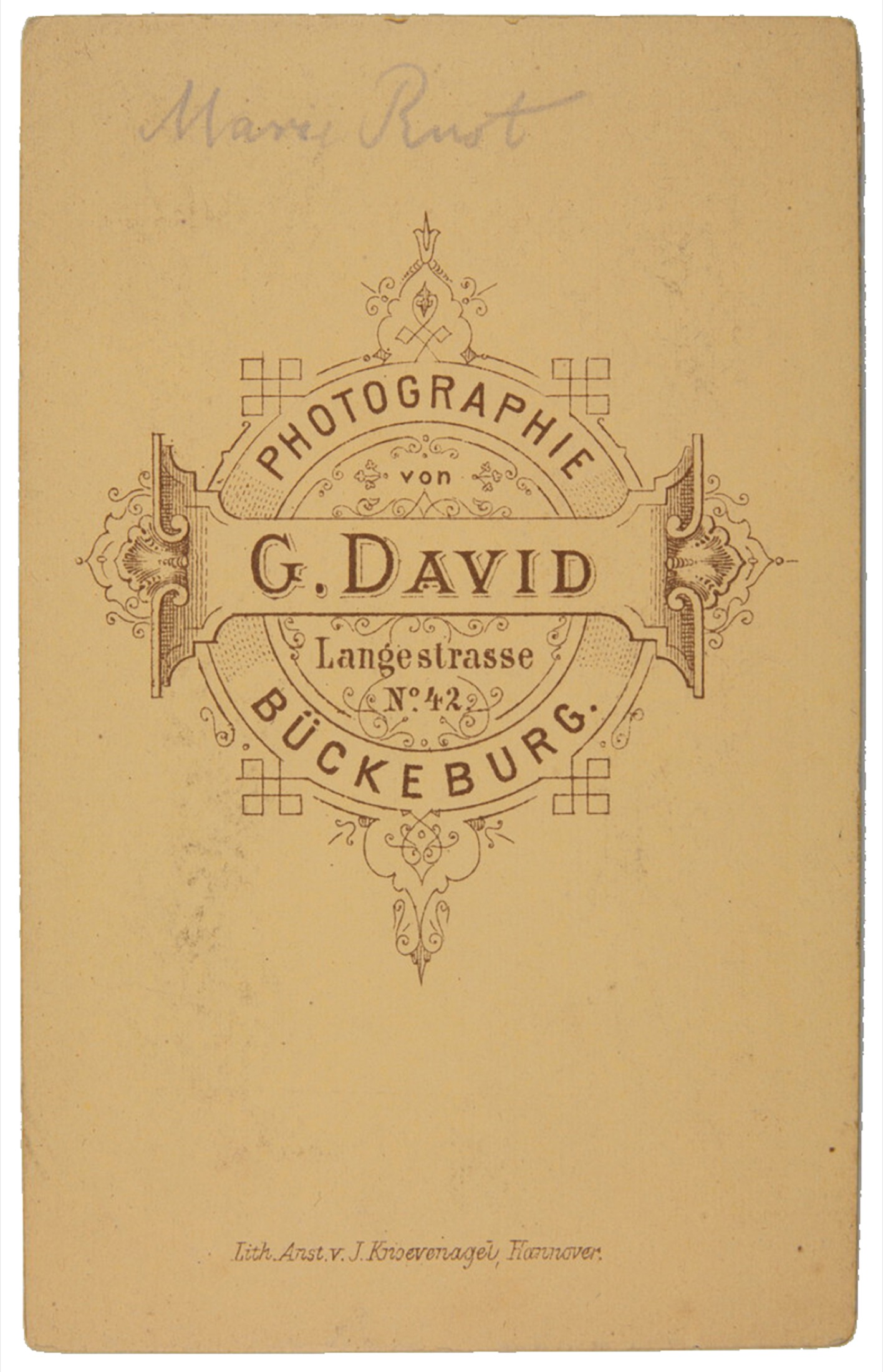
Gustav David

Studio in Bückeburg, Lange Straße 42
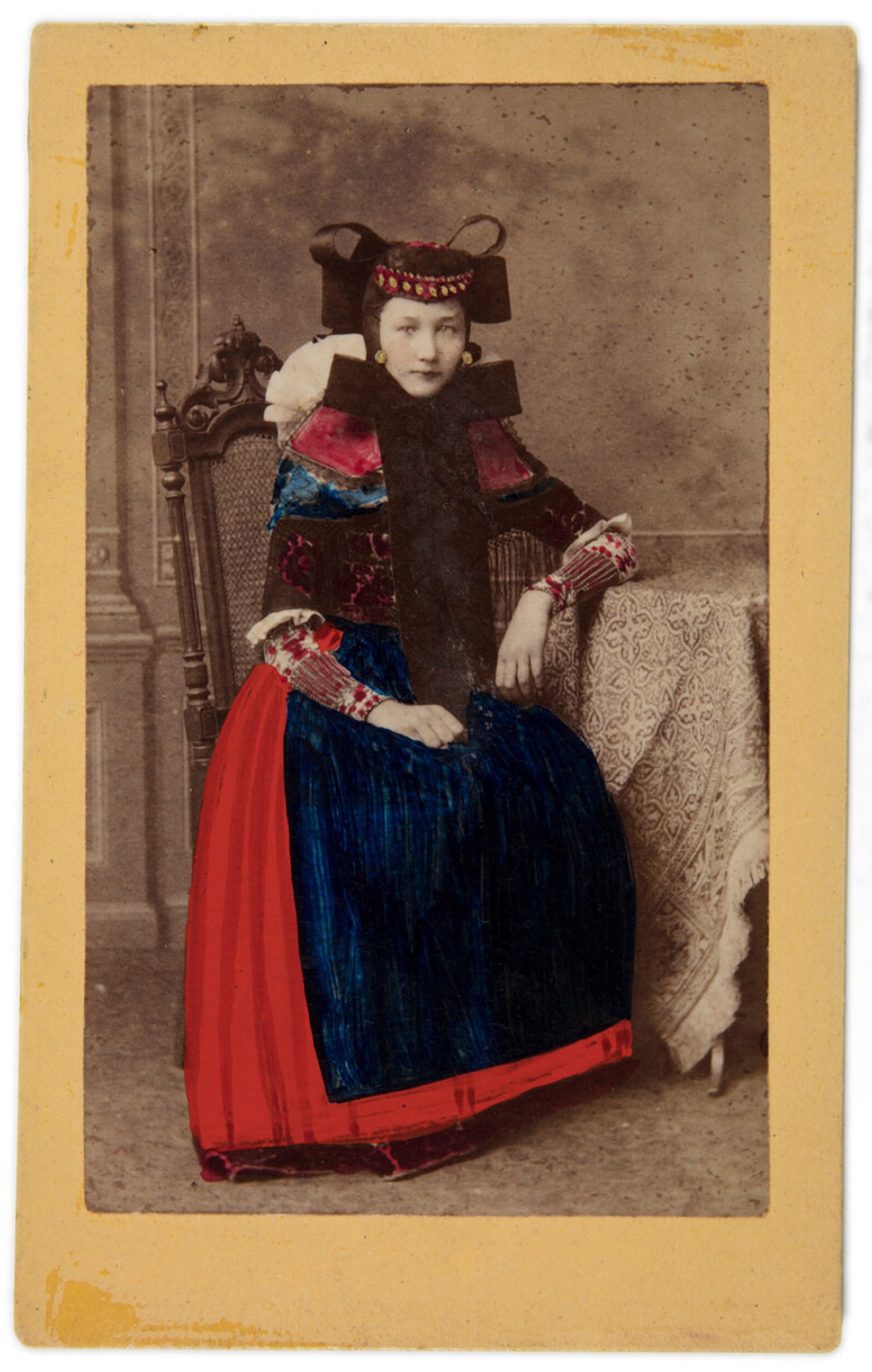
Hand-coloured portrait of a seated woman in traditional dress from the studio of G. DavidReverse of a studio card from G. David in Bückeburg
Front and back of a hand-coloured portrait of a woman in traditional dressG. David

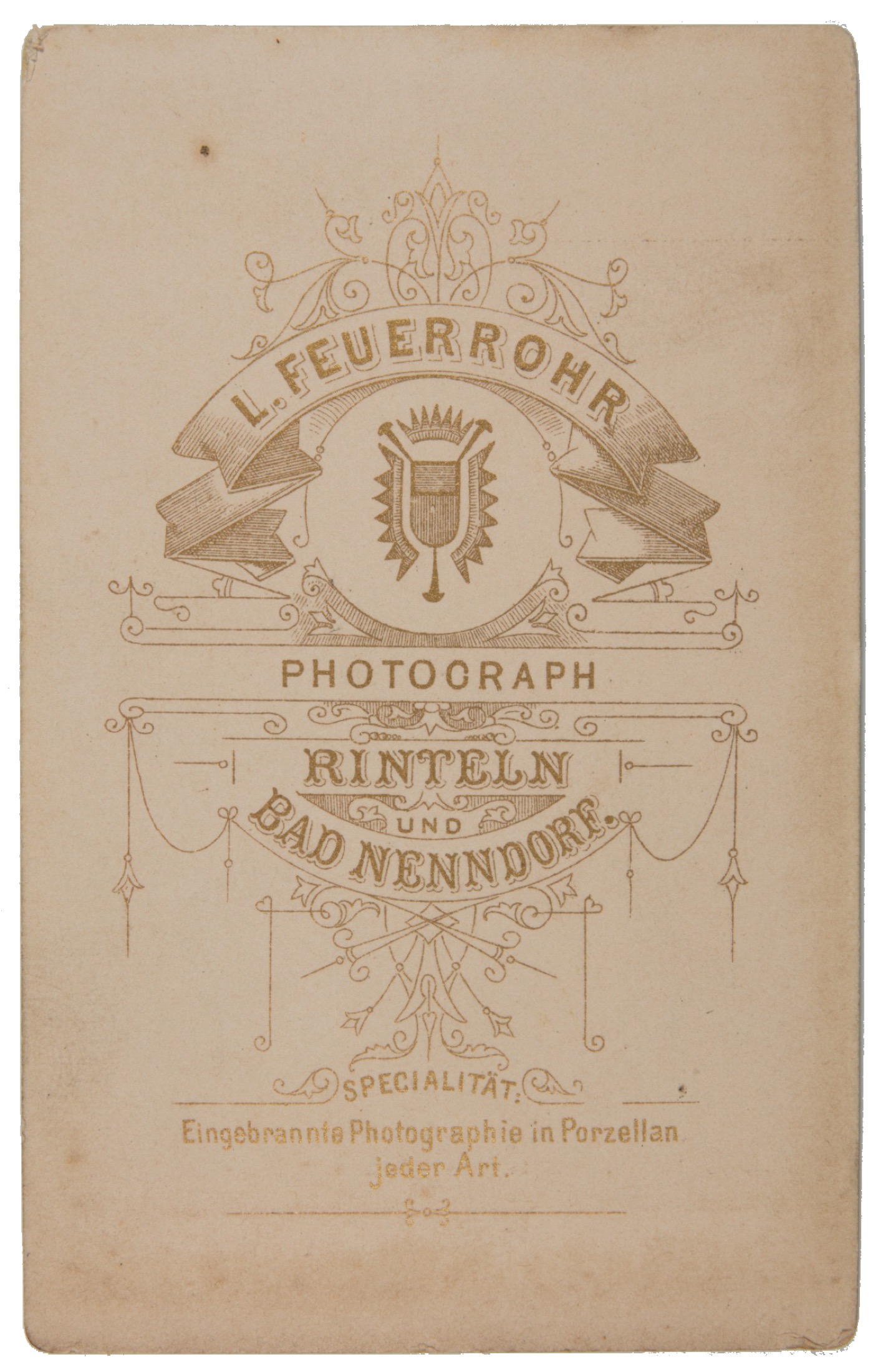
L. Feuerrohr

Studios in Rinteln and Bad Nenndorf
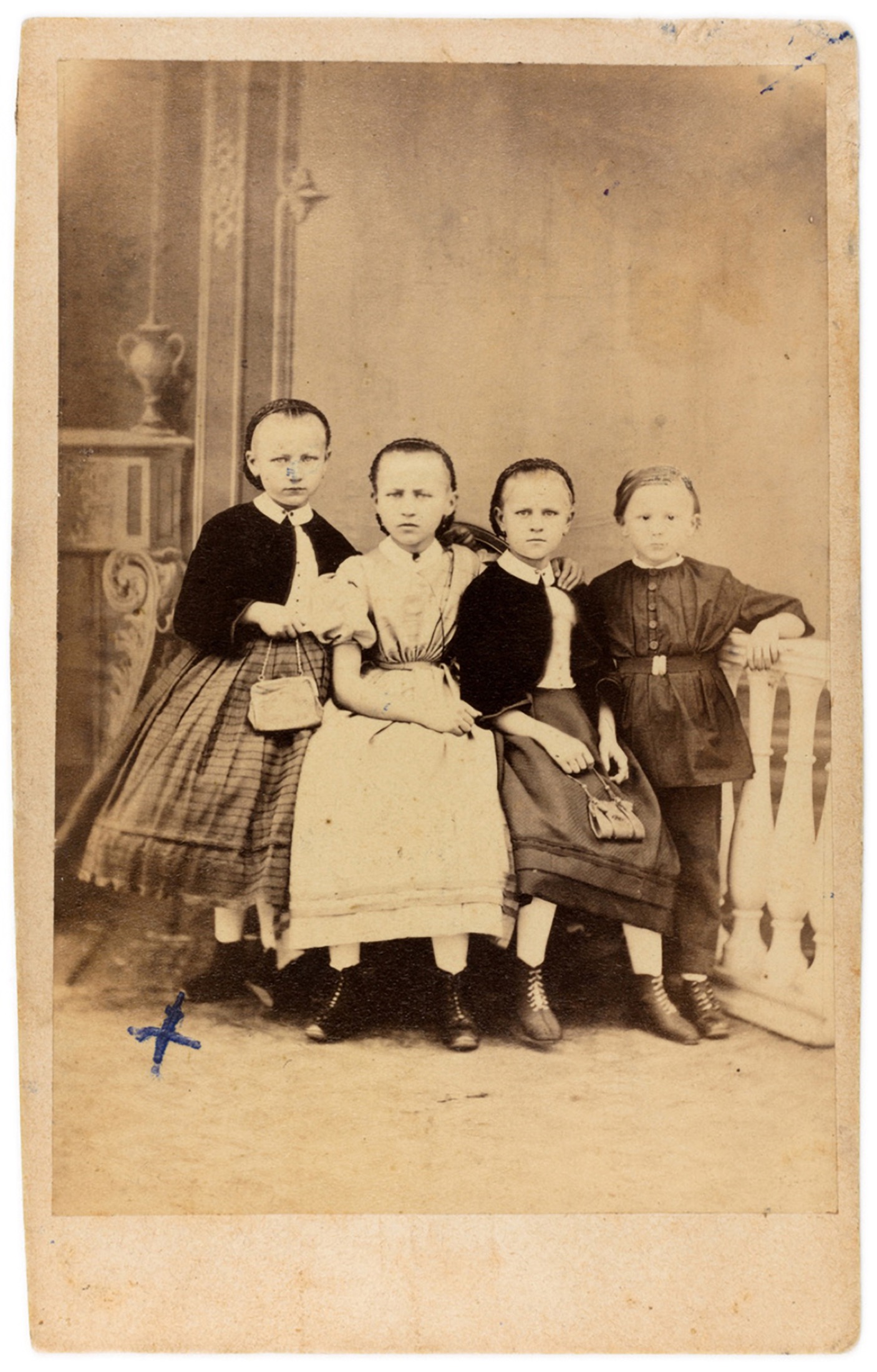
Reverse of the portrait of four girls, c. 1870Reverse of the portrait of four girls, c. 1870
Portrait of four girls, c. 1870L. Feuerrohr
Front of a hand-coloured photograph of traditional dress, L. Feuerrohr studio, Rinteln and Bad NenndorfReverse with the studio imprint of L. Feuerrohr, Rinteln and Bad Nenndorf
Front and back of a hand-coloured photograph of traditional dress L. Feuerrohr

William Focke

Studio in Bückeburg

William Focke worked in Hanover in association with the firm Focke & Ahlfeld, later under his own name with a branch in Bückeburg.
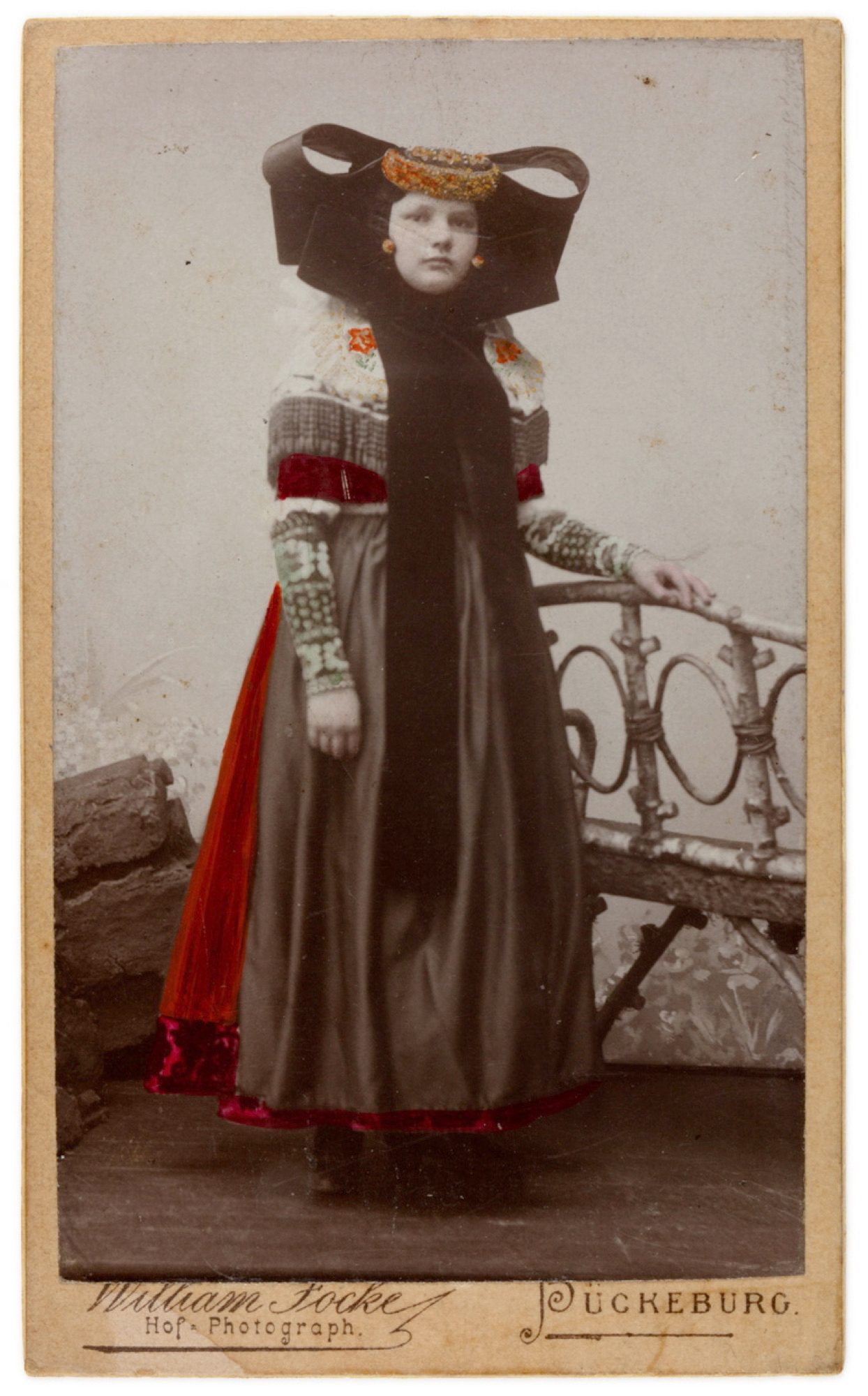
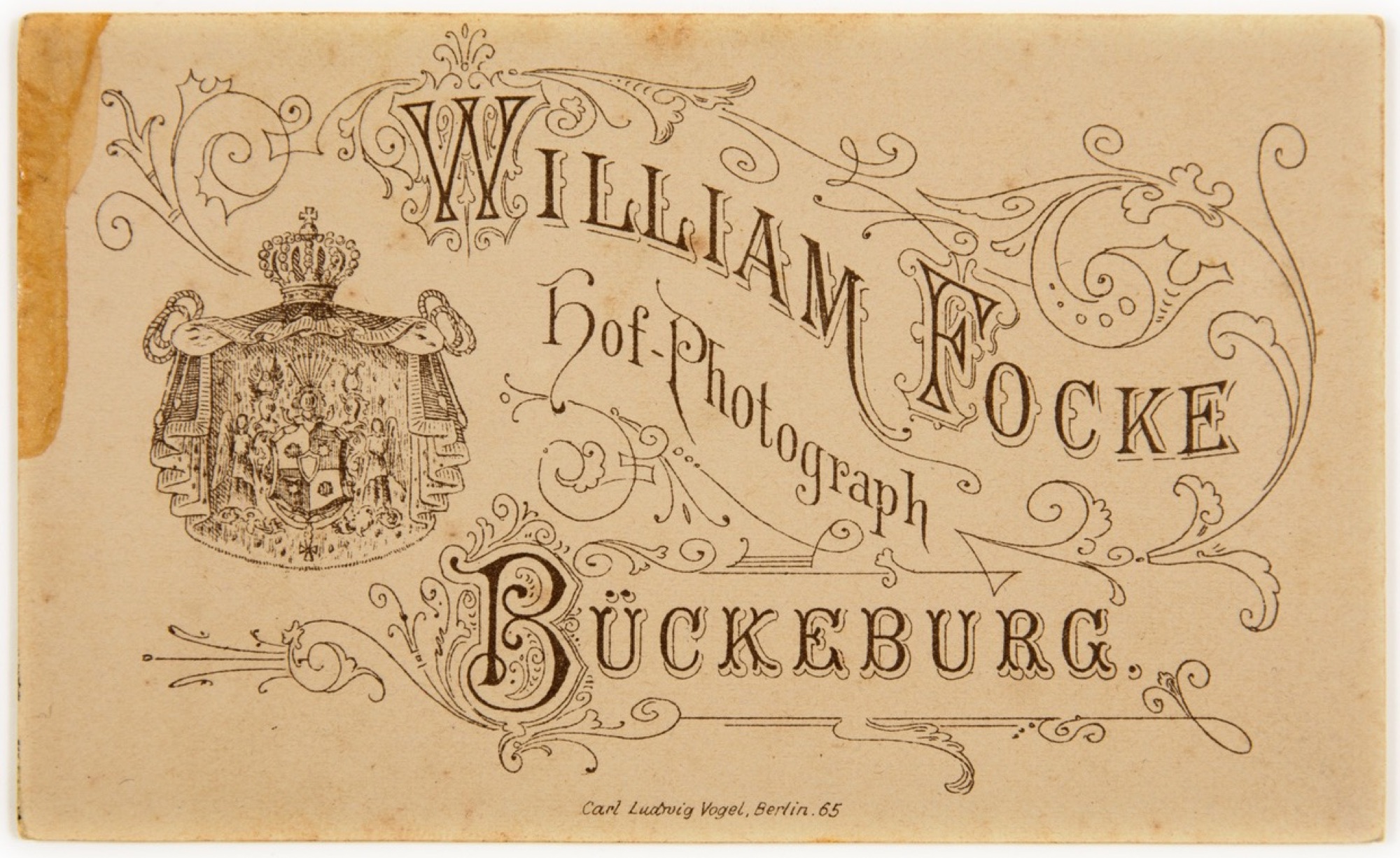
Hand-coloured portrait of a woman in Bückeburg traditional dress by William FockeHorizontally displayed reverse of a studio card inscribed William Focke, Court Photographer, Bückeburg
Front and reverse of a hand-coloured photograph of traditional dressWilliam Focke

Emma Goldstein

Studios in Bückeburg, Langestraße 3, and Minden, Kleiner Domhof 11

Emma Goldstein was among the relatively few women working professionally in photography as early as the late nineteenth century.
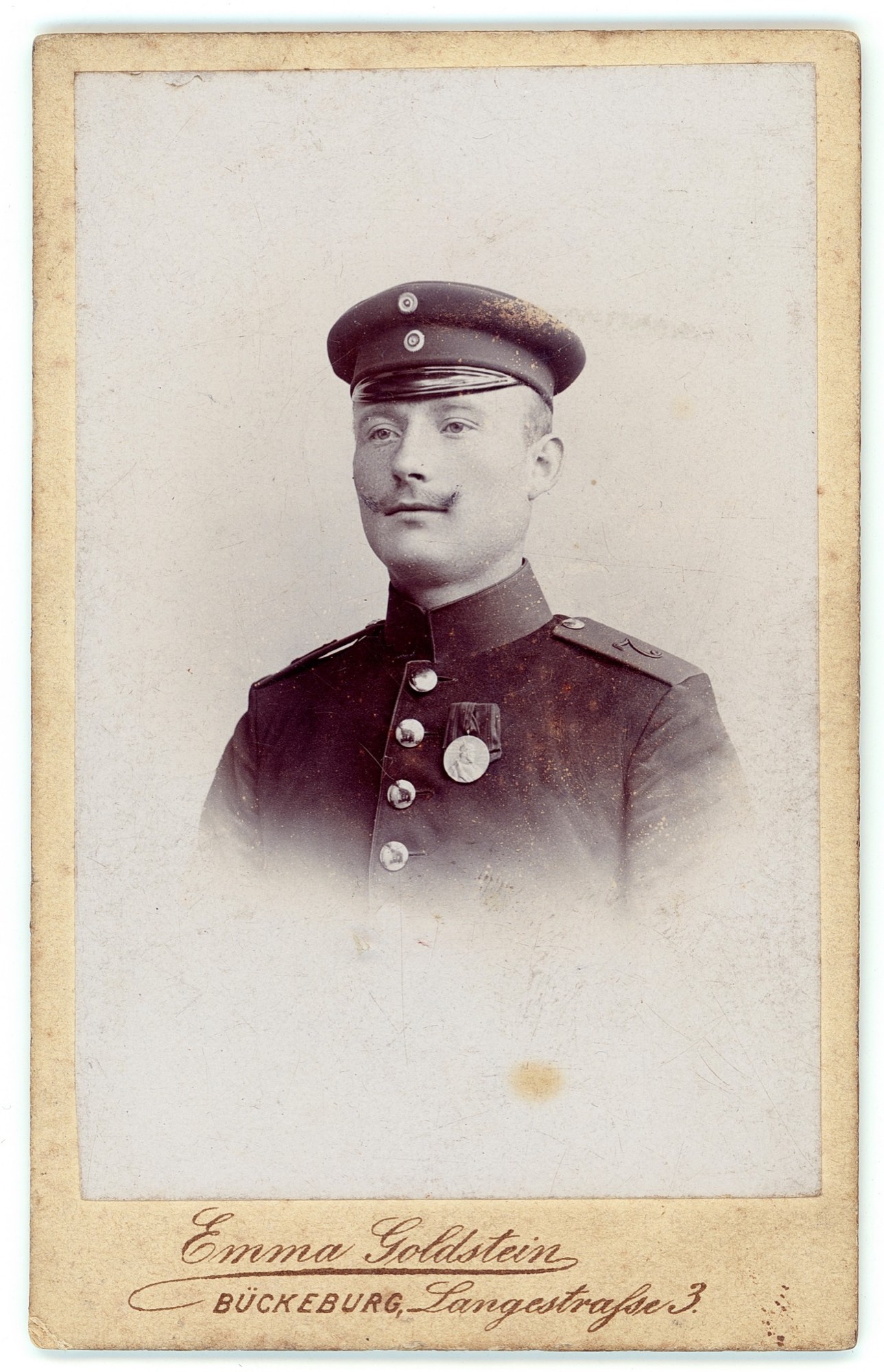
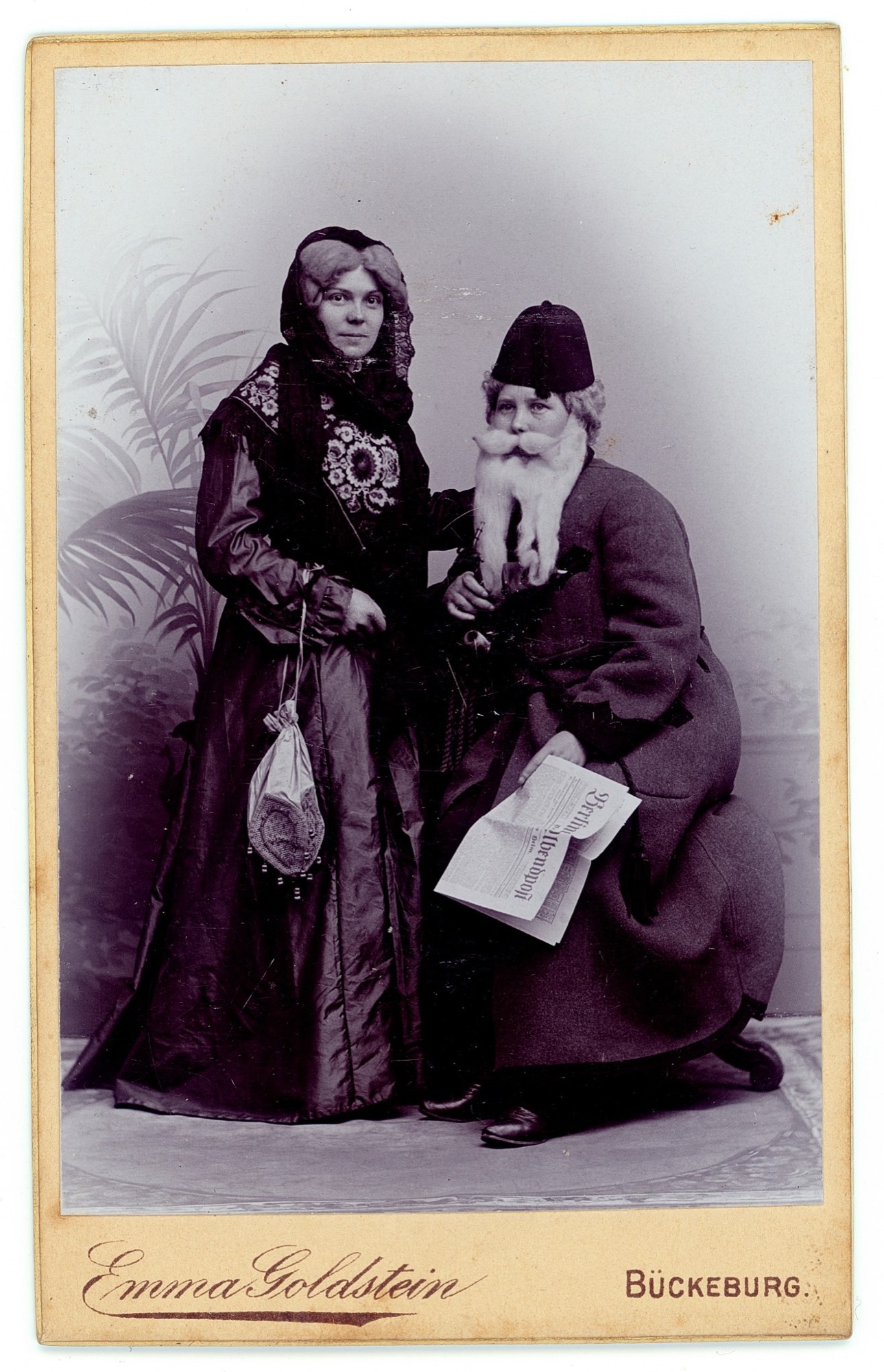
Portrait of a soldier with the studio imprint Emma Goldstein, Bückeburg, Langestraße 3Staged costume photograph with two women, Emma Goldstein studio, Bückeburg
Portrait of a soldier and a staged costume photograph from Emma Goldstein’s studio in Bückeburg.Emma Goldstein

Emma Goldstein produced conventional portraits, humorous and staged costume pictures, and coloured portraits in traditional dress. One example of a humorous staged costume picture is a photograph from Bückeburg dated 21 March 1896. The handwritten inscription identifies the two young women as “Miss Mosbach and Miss Schkerl dressed as an old married couple”.
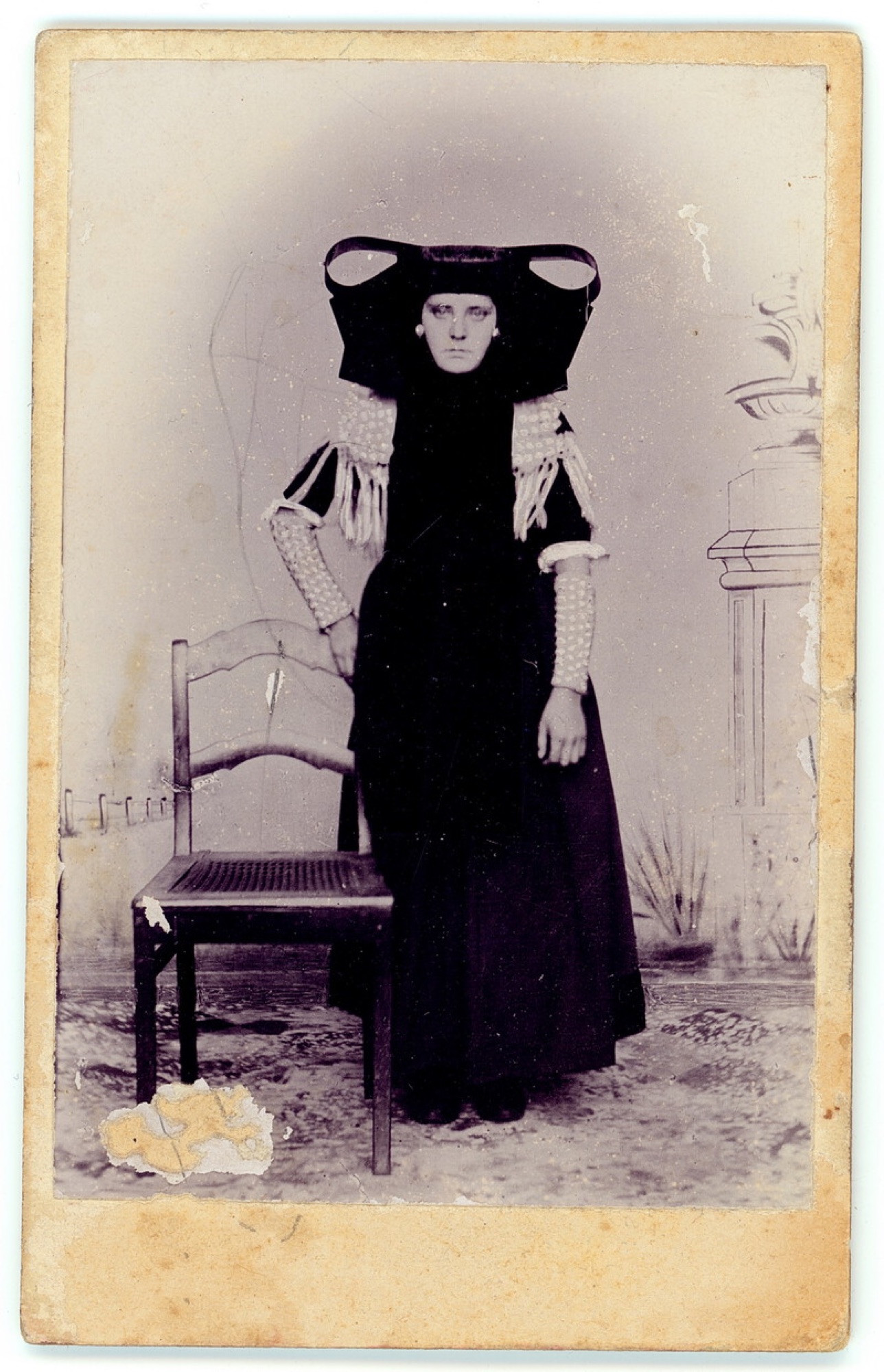
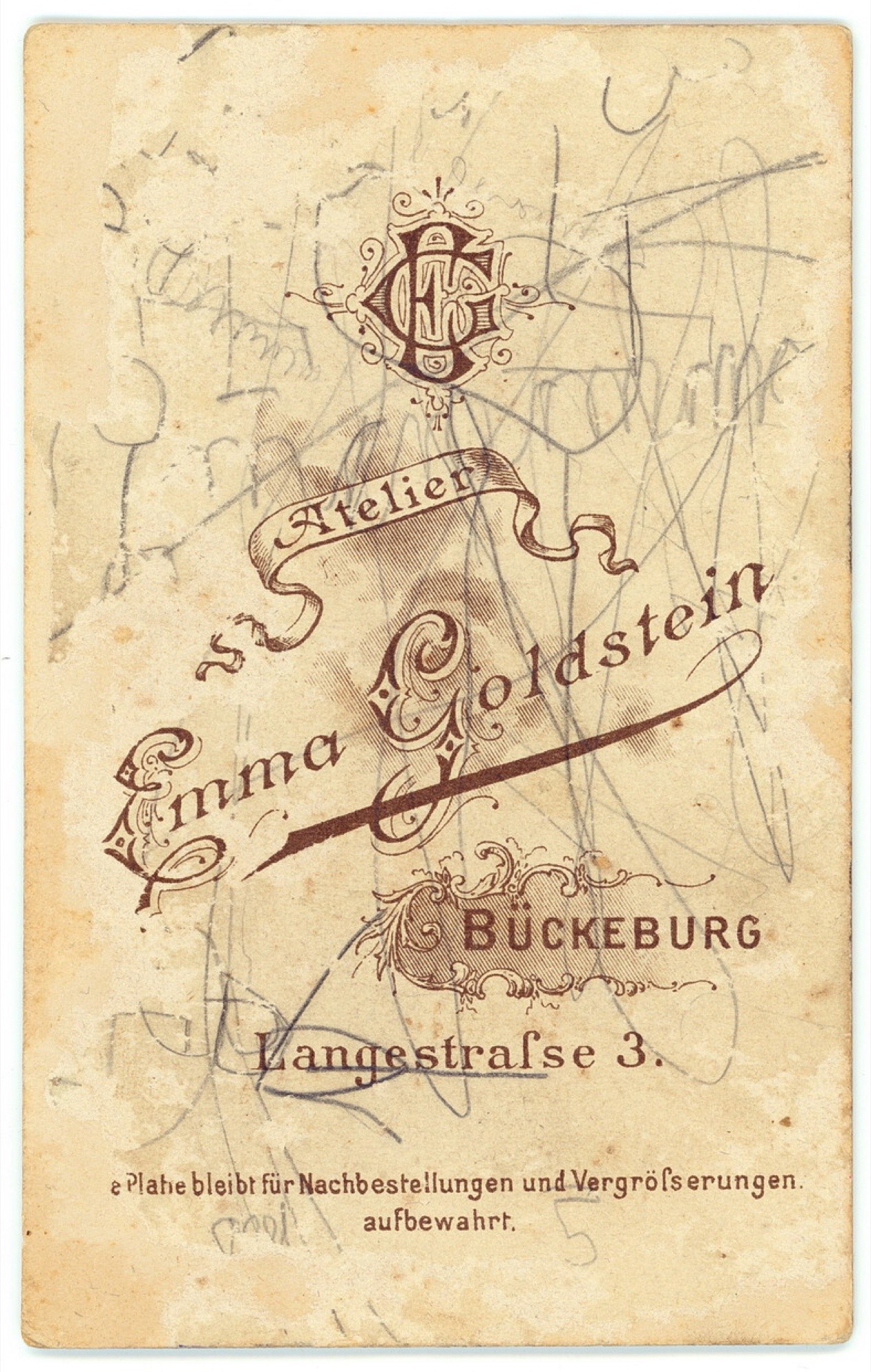
Woman in traditional dress, from Emma Goldstein’s studioReverse of the photograph with the studio details Emma Goldstein, Bückeburg, Langestraße 3
Front and back of a photograph of traditional dress. In this case, it is a reproduction of an older photograph made at her studio.Emma Goldstein

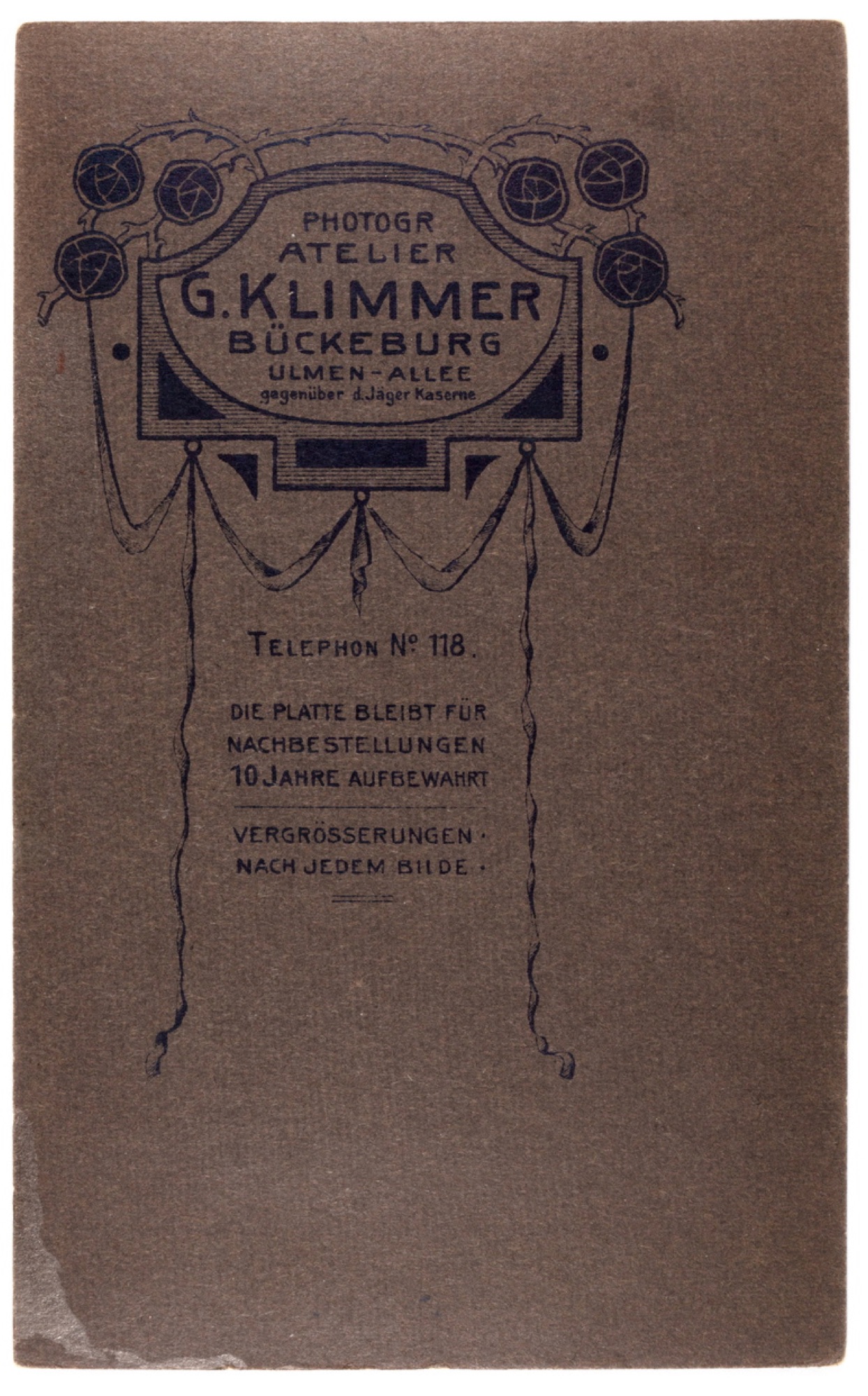
G. Klimmer

Studio in Bückeburg, Ulmen-Allee
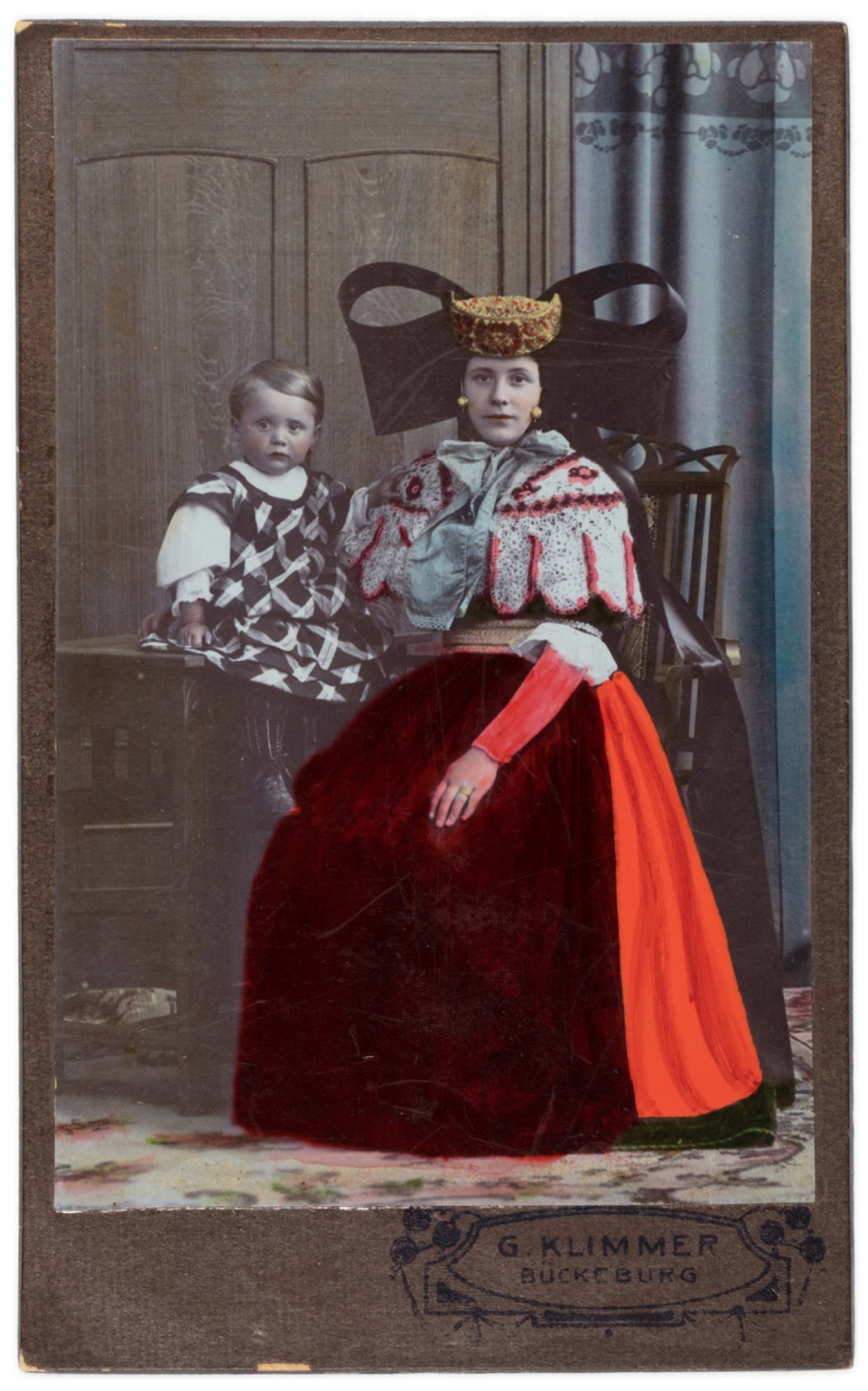
Hand-coloured portrait of a woman in Bückeburg traditional dress with a child, from G. Klimmer’s studioReverse of a card from G. Klimmer’s studio in Bückeburg, stating that the plate is kept for ten years
Portrait of a woman in traditional dress with a babyG. Klimmer

Kuhlmann Studio

Studio in Bückeburg, Schulstraße 19; later also in Bad Eilsen

The history of the Kuhlmann studio can be traced as that of a long-established family business. Earlier cards bear the name F. Kuhlmann, Bückeburg, Schulstraße 19; later ones name “F. W. Kuhlmann”, with an additional location in Bad Eilsen.
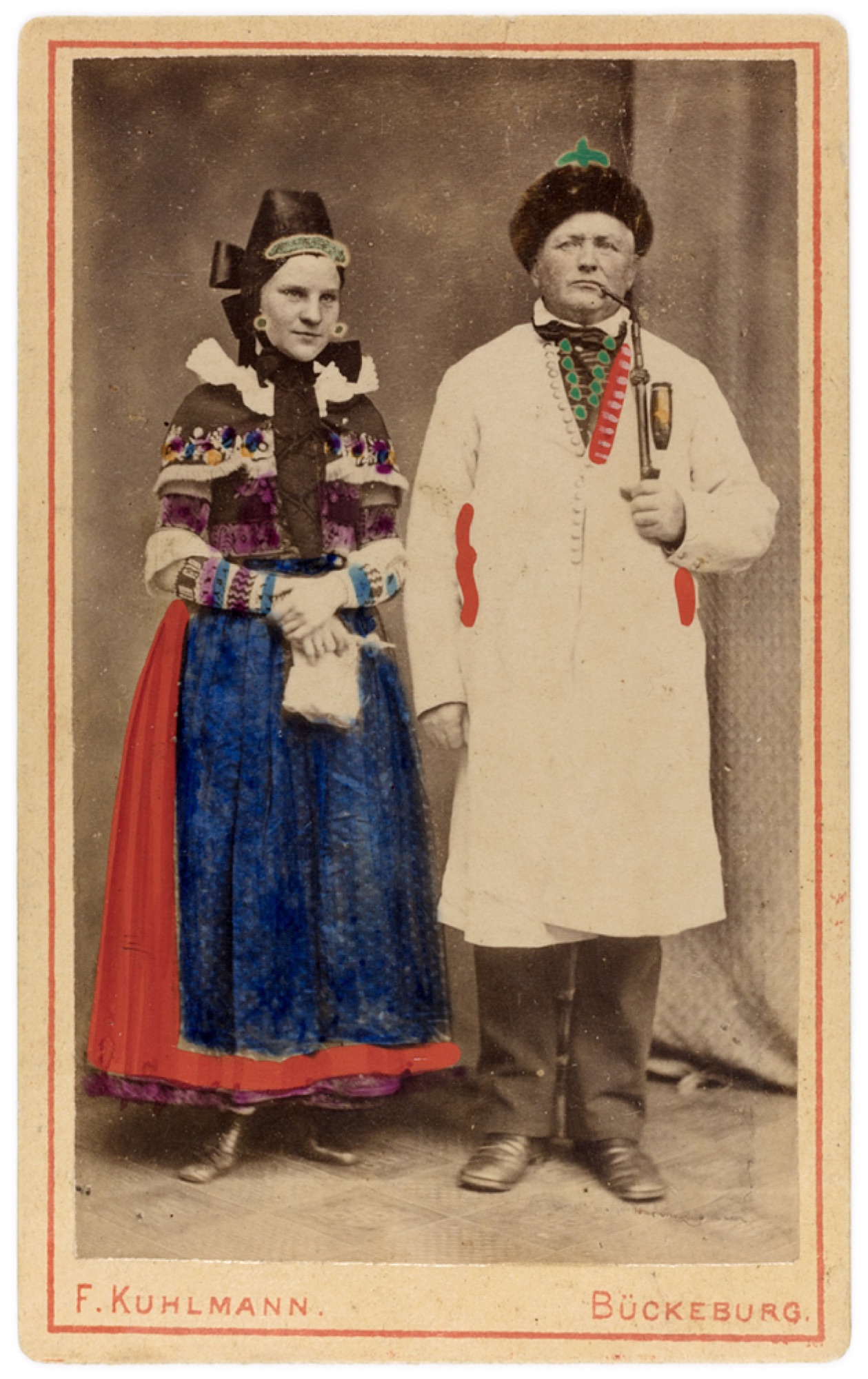
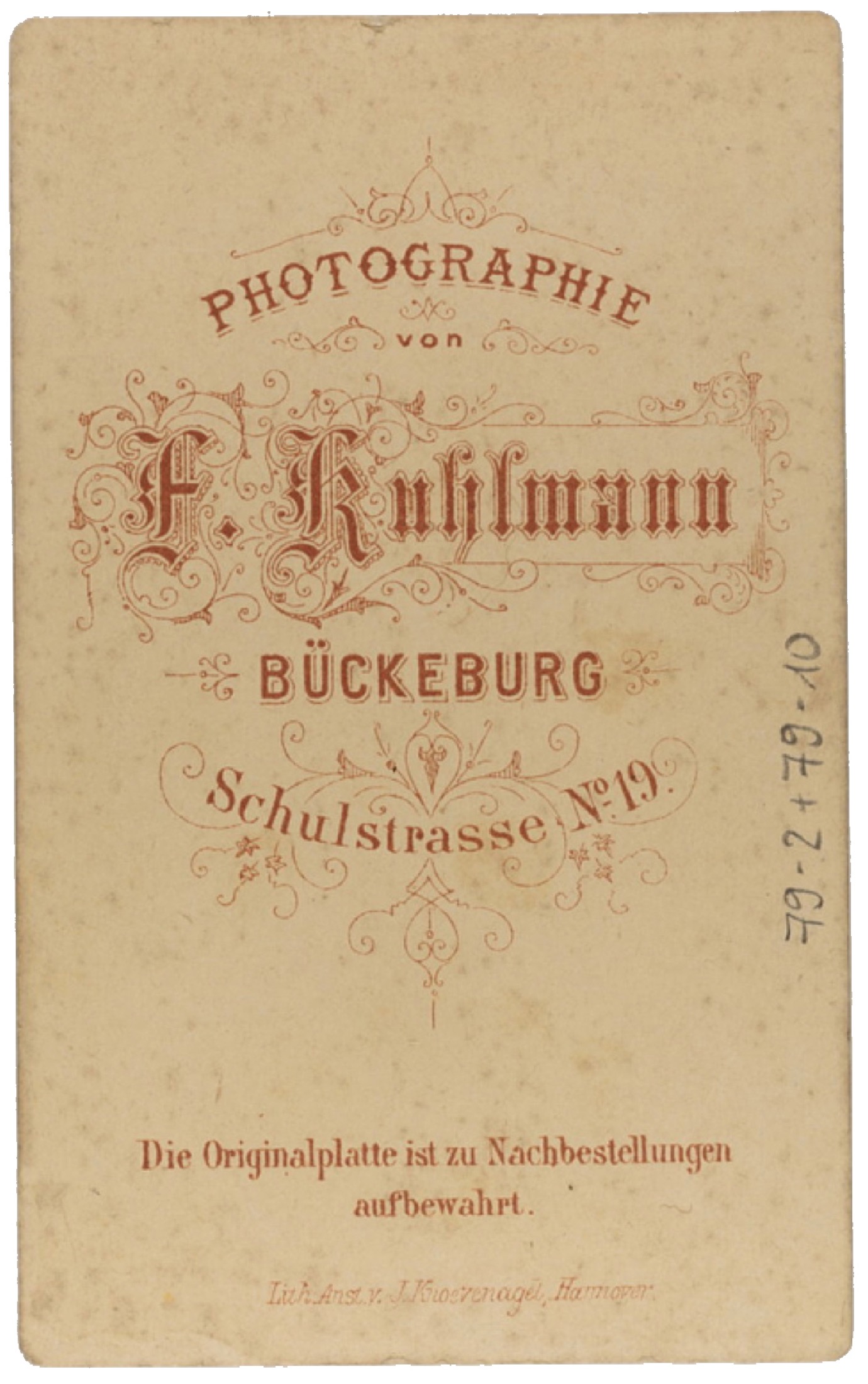
Hand-coloured couple in traditional dress on a studio card from F. Kuhlmann in BückeburgReverse of the F. Kuhlmann studio card, giving the address Schulstraße 19 and stating that the original plate is retained
Front and back bearing the name F. Kuhlmann, Bückeburg, Schulstraße 19.F. Kuhlmann

A hand-coloured portrait of a couple in traditional dress dated 1896 bears the inscription “F. W. Kuhlmann – Photographic Establishment – Bückeburg – Reproduction Prohibited” on the reverse. This indicates that the motif was regarded as a commercially exploitable image.
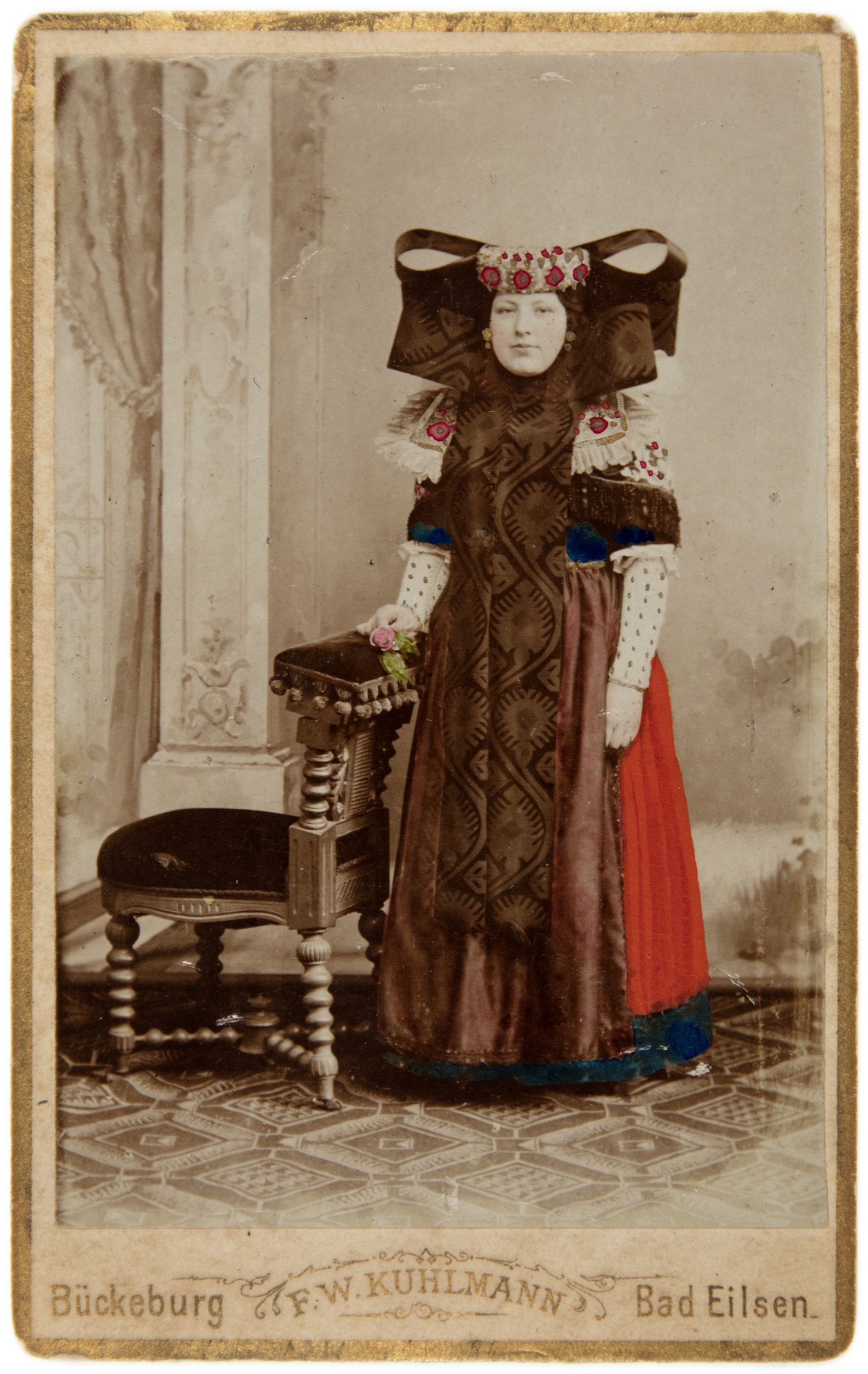
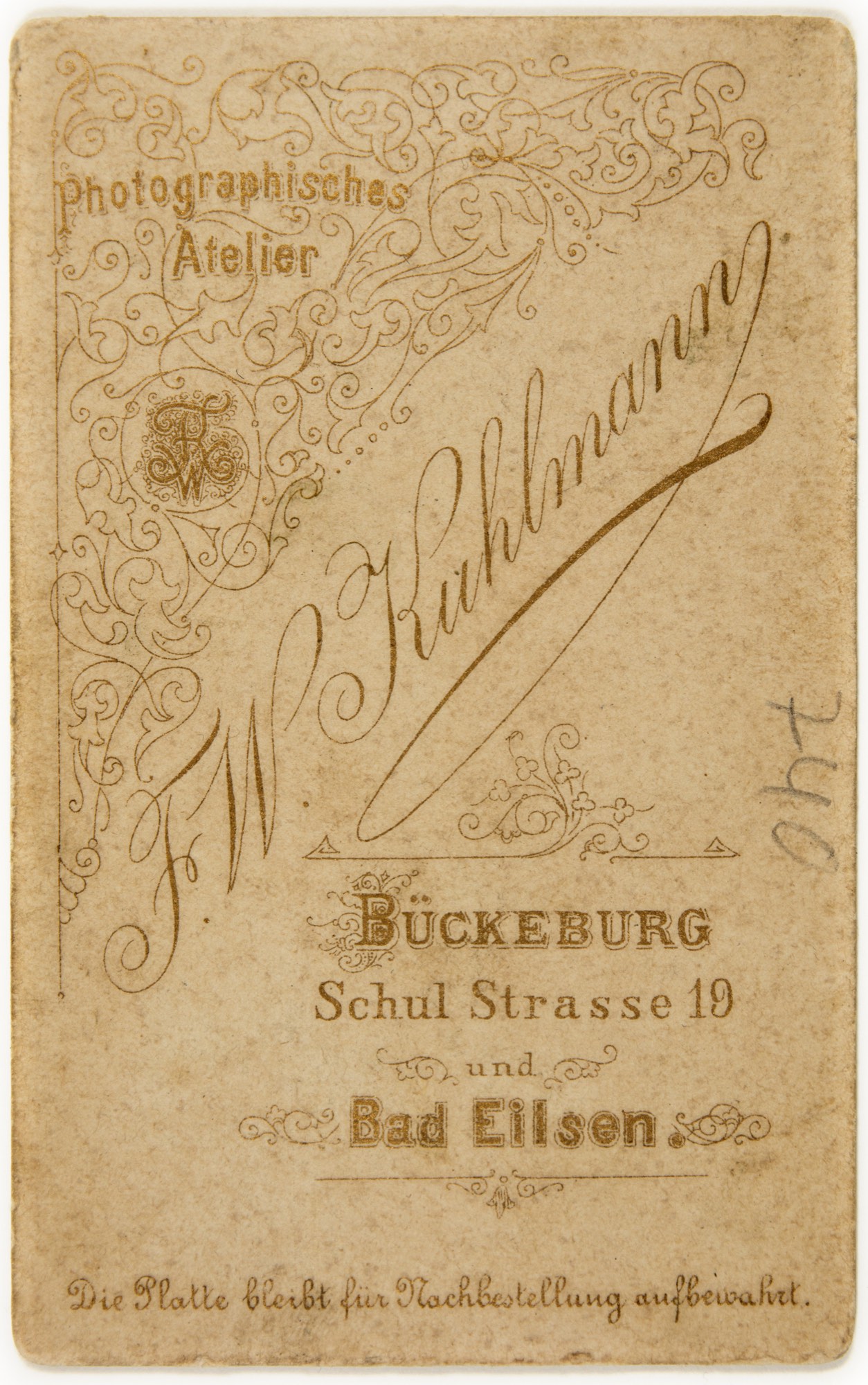
Hand-coloured portrait of a woman in Bückeburg traditional dress beside a chair, F. W. Kuhlmann studio in Bückeburg and Bad EilsenOrnamented reverse of an F. W. Kuhlmann card naming Bückeburg, Schulstraße 19, and Bad Eilsen, and stating that the plate is retained for further orders
Fronts and backs bearing the name F. W. Kuhlmann, Bückeburg and Bad EilsenF. W. Kuhlmann

By the early twentieth century at the latest, the F. W. Kuhlmann art publishing firm was selling numbered postcards featuring traditional dress and local views. The studio’s stock of negatives, originally kept for reorders, had become a reproducible image archive and ultimately a publishing catalogue.
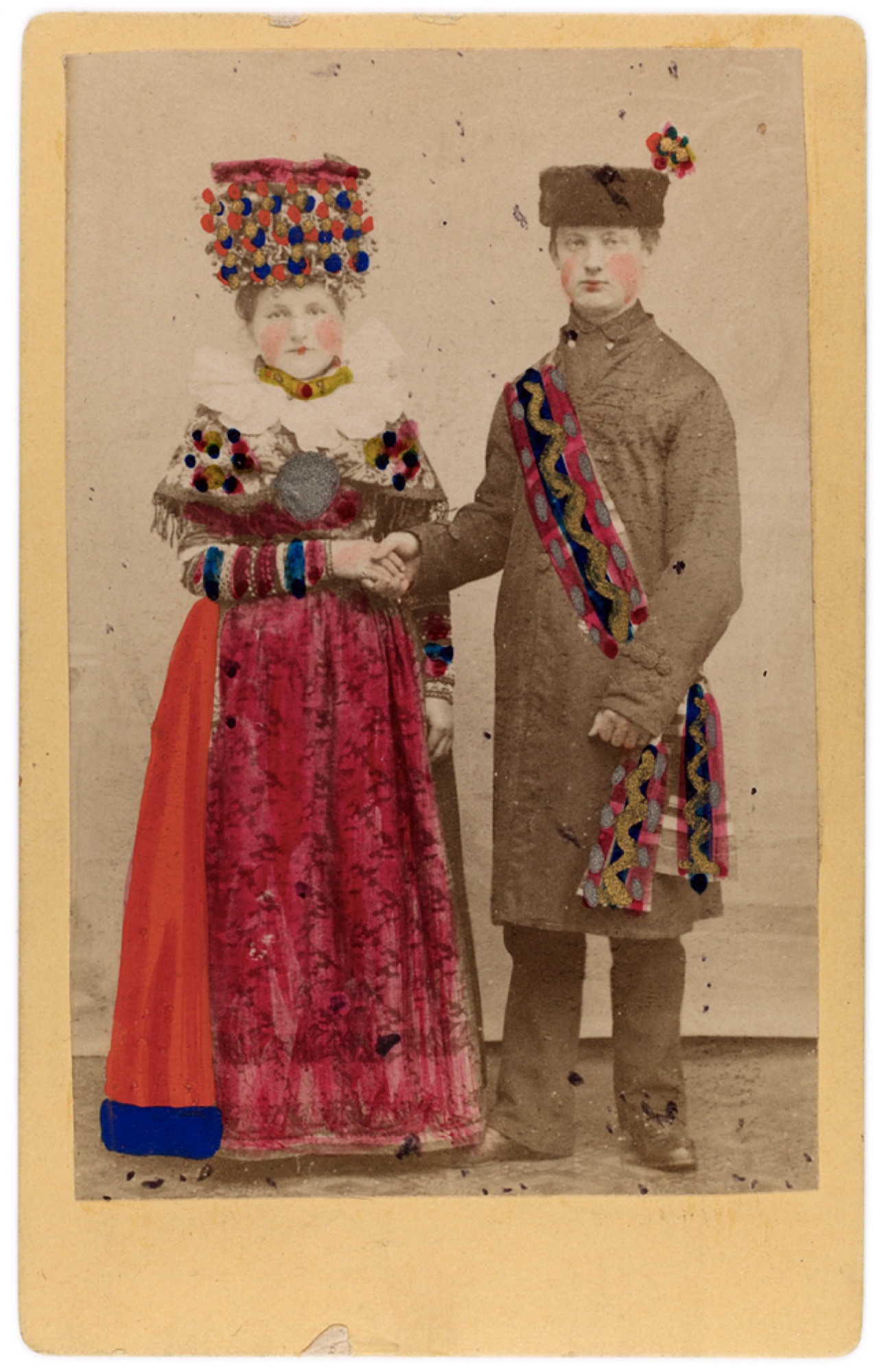
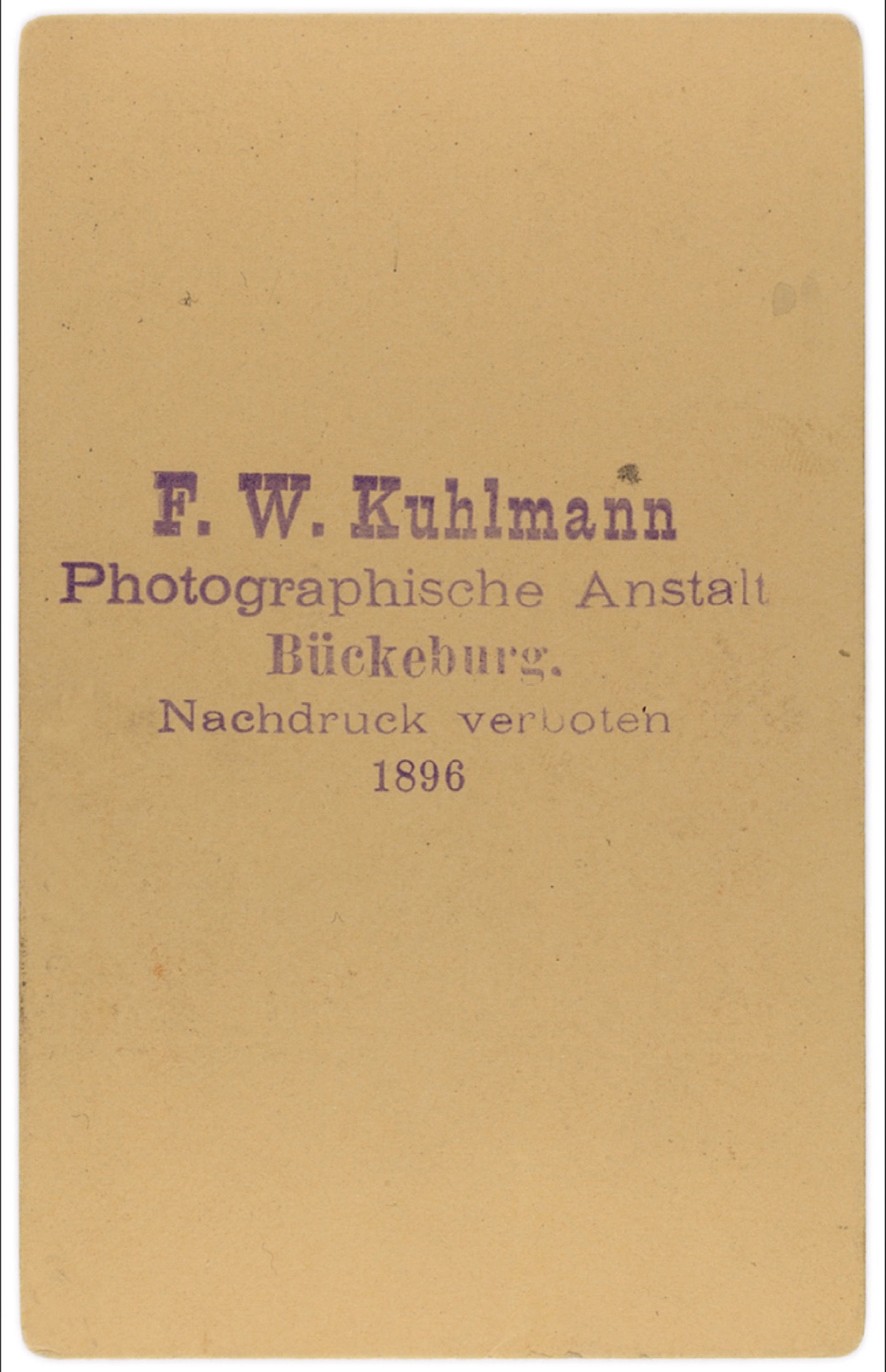
Hand-coloured couple in traditional dress in a photograph by F. W. KuhlmannReverse inscribed F. W. Kuhlmann, Photographic Establishment Bückeburg, Reproduction prohibited, 1896
An image of traditional dress. The notice “Reproduction prohibited” explicitly marks the photograph as a commercially controlled image product.F. W. Kuhlmann
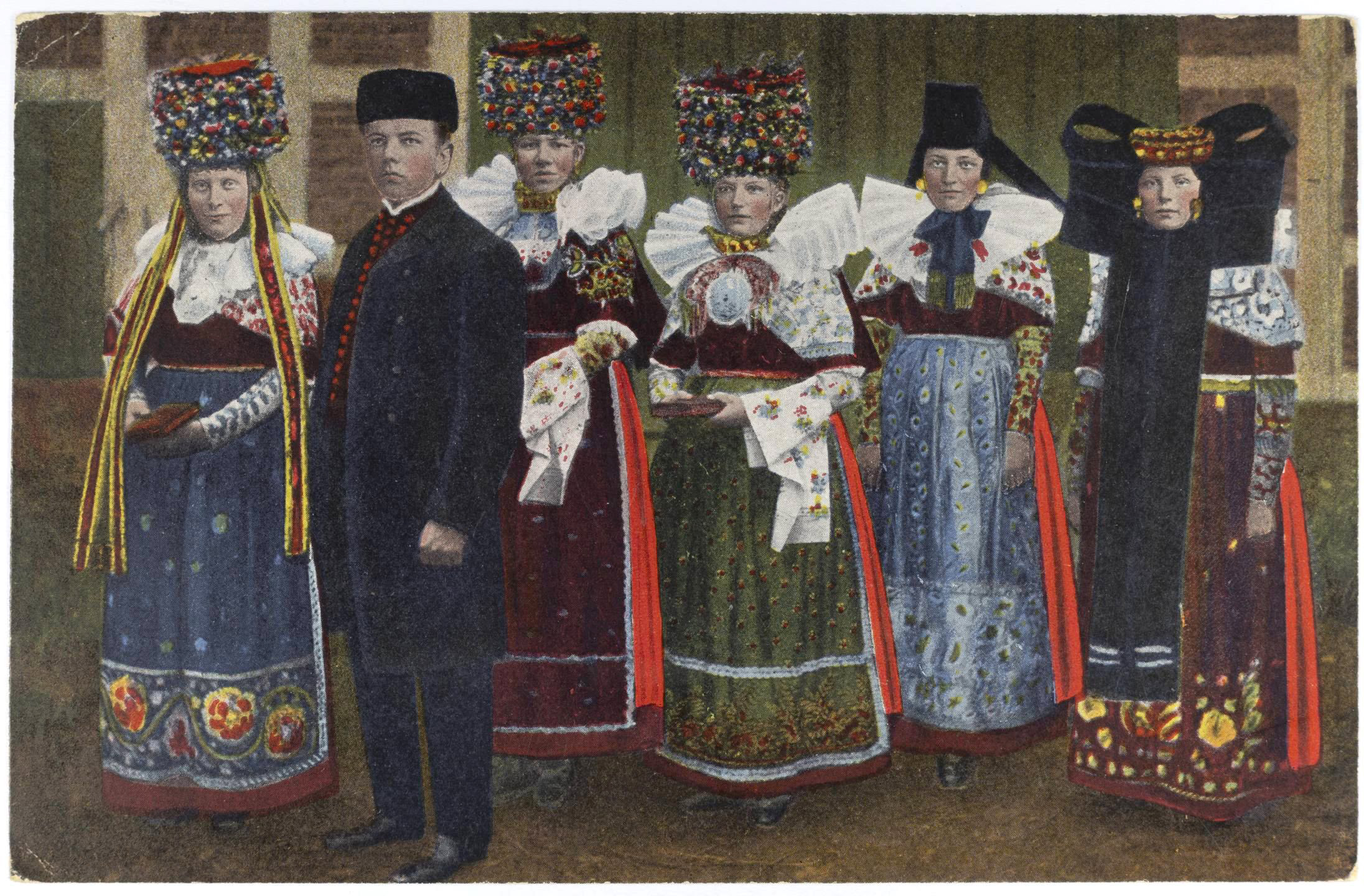
Landscape-format postcard showing five women and a man in different regional forms of traditional dress
Postcard titled on the reverse: “Traditional Dress of Schaumburg-Lippe and the Surrounding Area. Wedding Procession. – Going to Church.”Published by J. Kuhlmann

The precise family relationship between F., F. W. and J. Kuhlmann remains unresolved. It is nevertheless plausible that the business passed from father to son. The negative archive of a Bückeburg photographic studio had become an image collection and art-publishing business continued across generations.

Moritz Sweers

Studio in Minden, Bäckerstraße 25

The backs of his photographs advertise the studio with drawings of a plate camera, photographic chemicals and a painter’s palette and brushes. The studio’s own presentation thus brings together photographic technique and the subsequent working of the image.
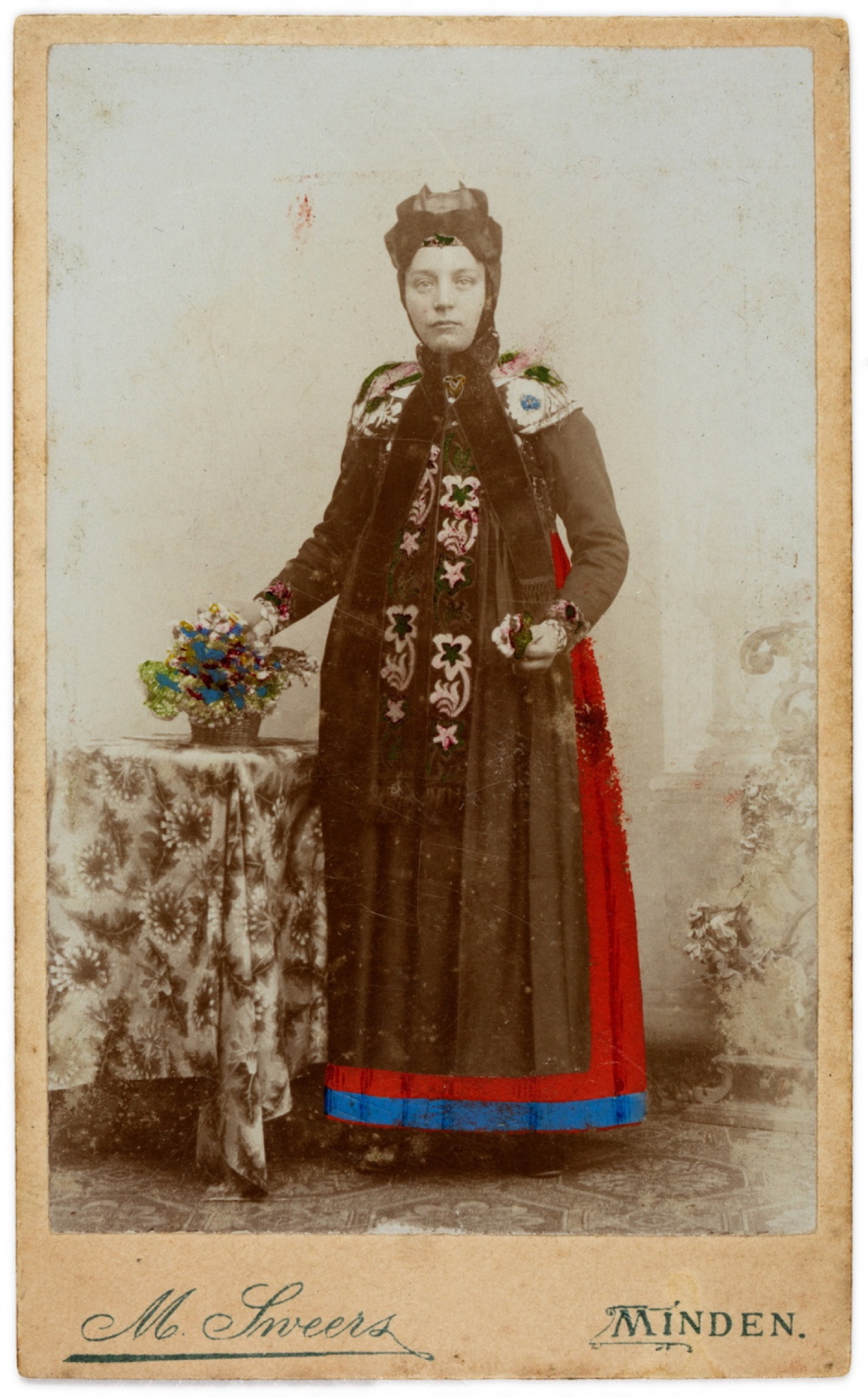
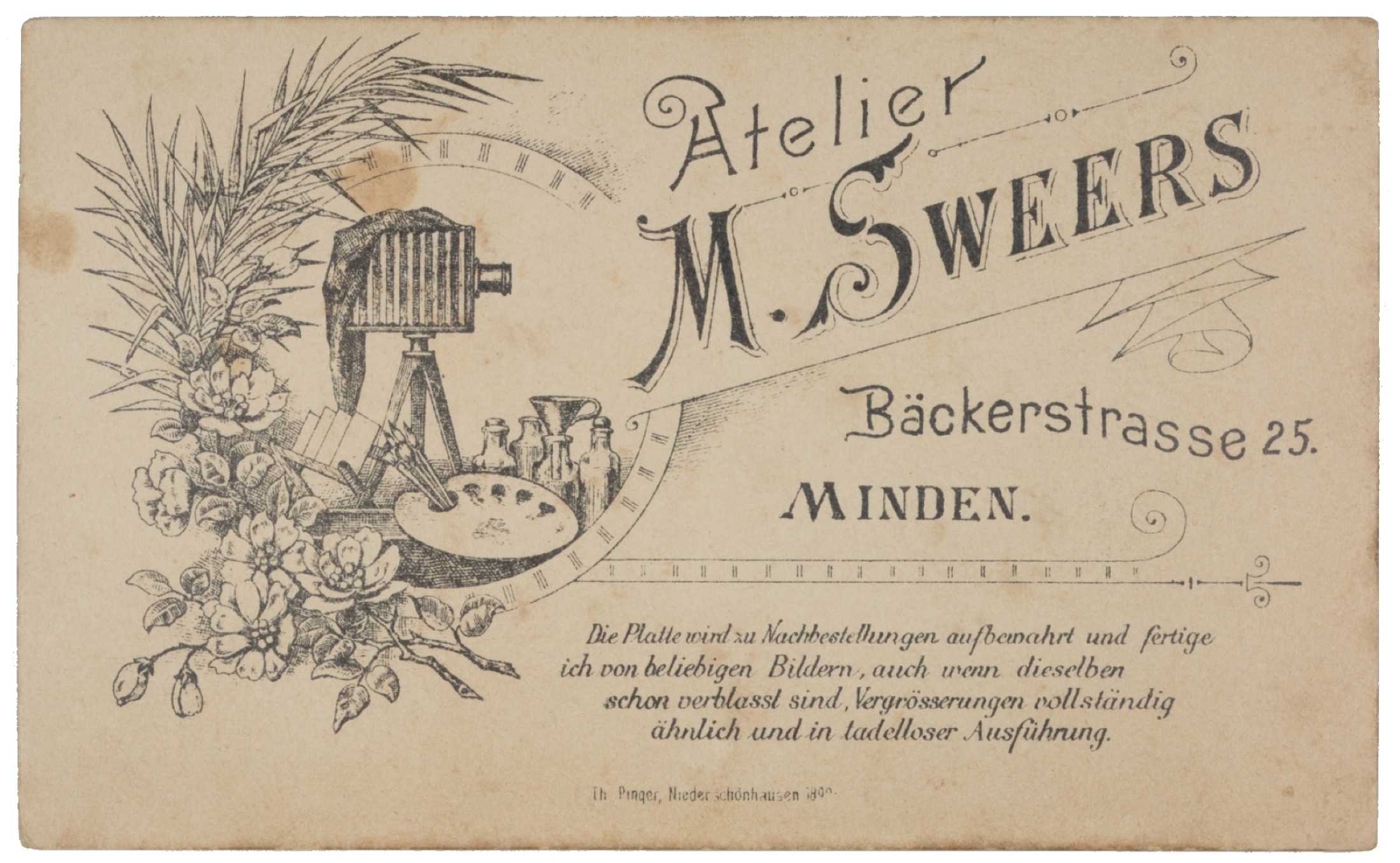
Hand-coloured portrait of a woman in regional traditional dress from the studio of M. Sweers in MindenReverse of a card from M. Sweers’s studio, Bäckerstraße 25 in Minden, advertising repeat orders and enlargements
Front and back of a portrait of a woman in traditional dressM. Sweers

Friedrich Wehde

Studios in Bückeburg and Stadthagen, Bahnhofsweg 6; previously in Hanover, Osterstrase 83

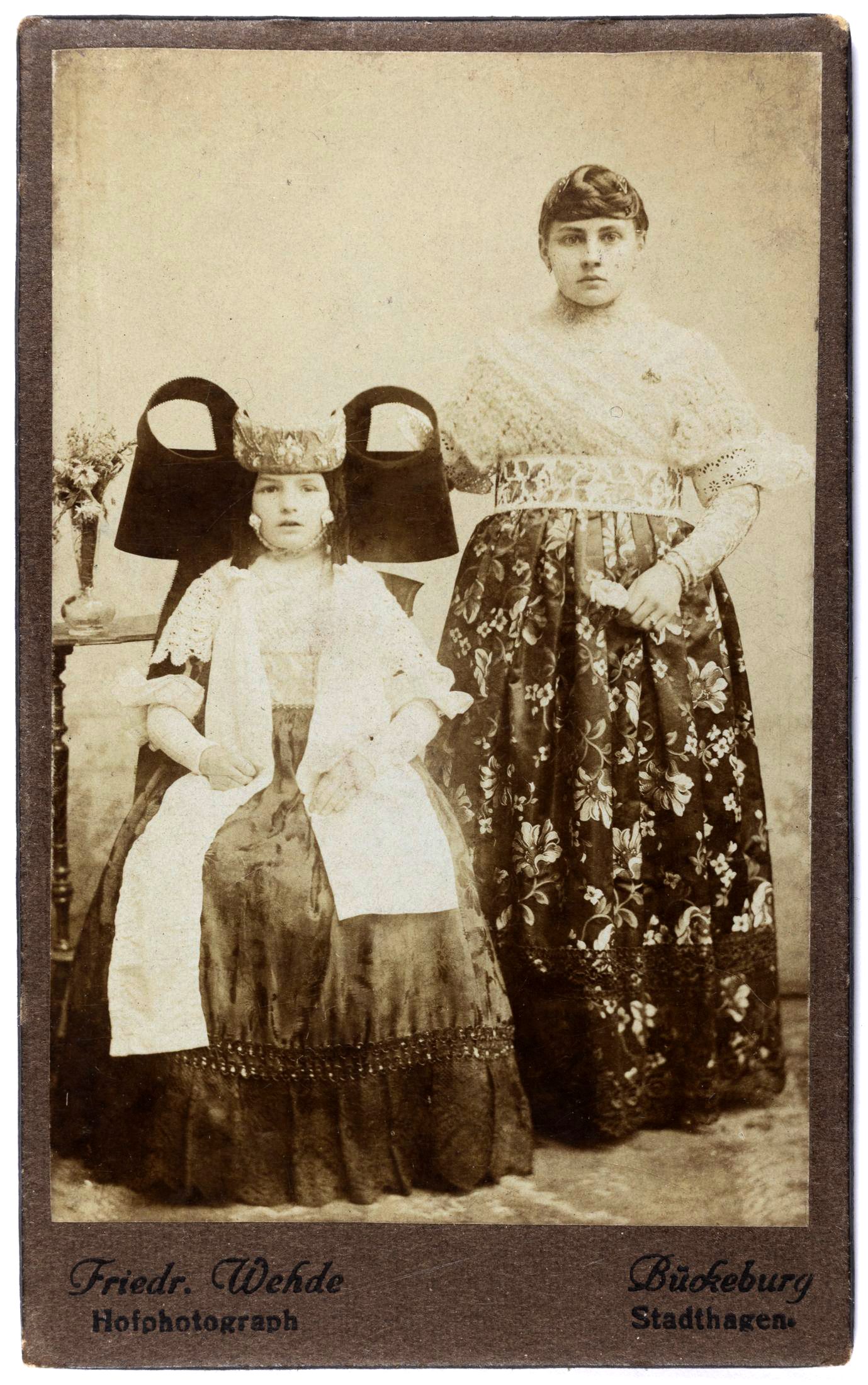
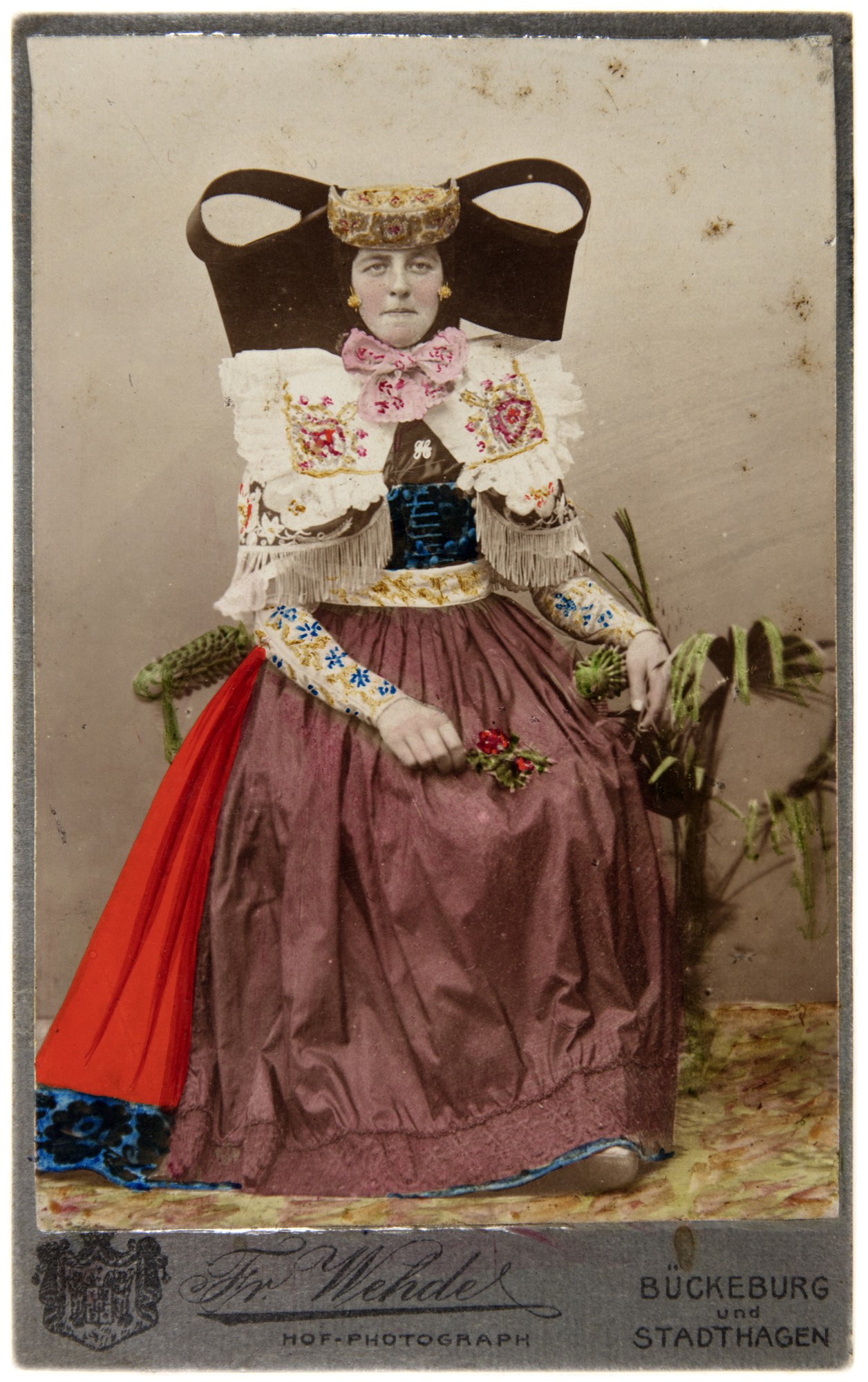
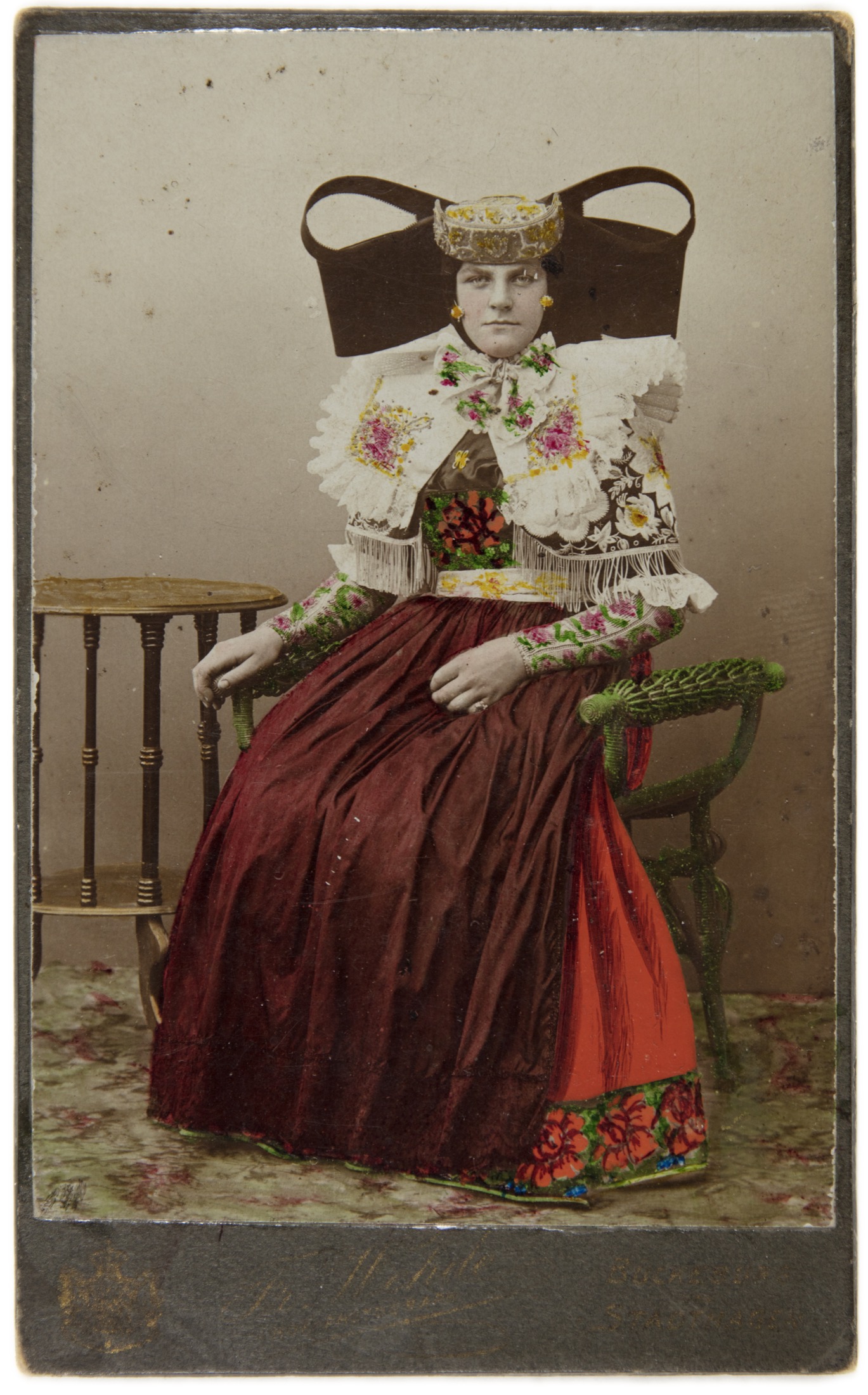
Friedrich Wehde stands out among the region’s image-makers for the quality of his hand-colouring. A trade retrospective published in 1920 reports that he originally worked as a glass painter and opened a photographic studio in December 1879. He later ran studios in Bückeburg and Stadthagen and held the title of court photographer.
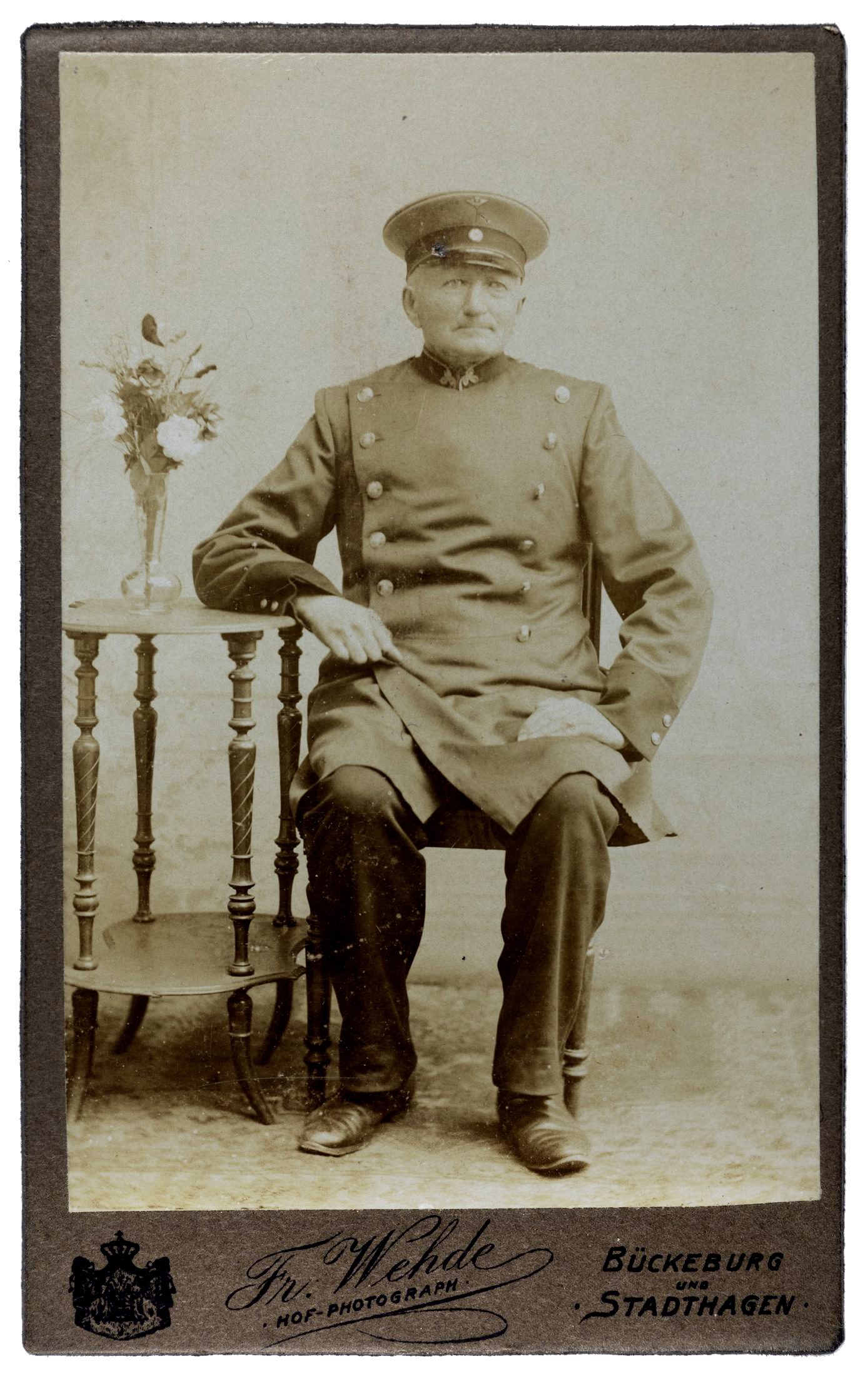
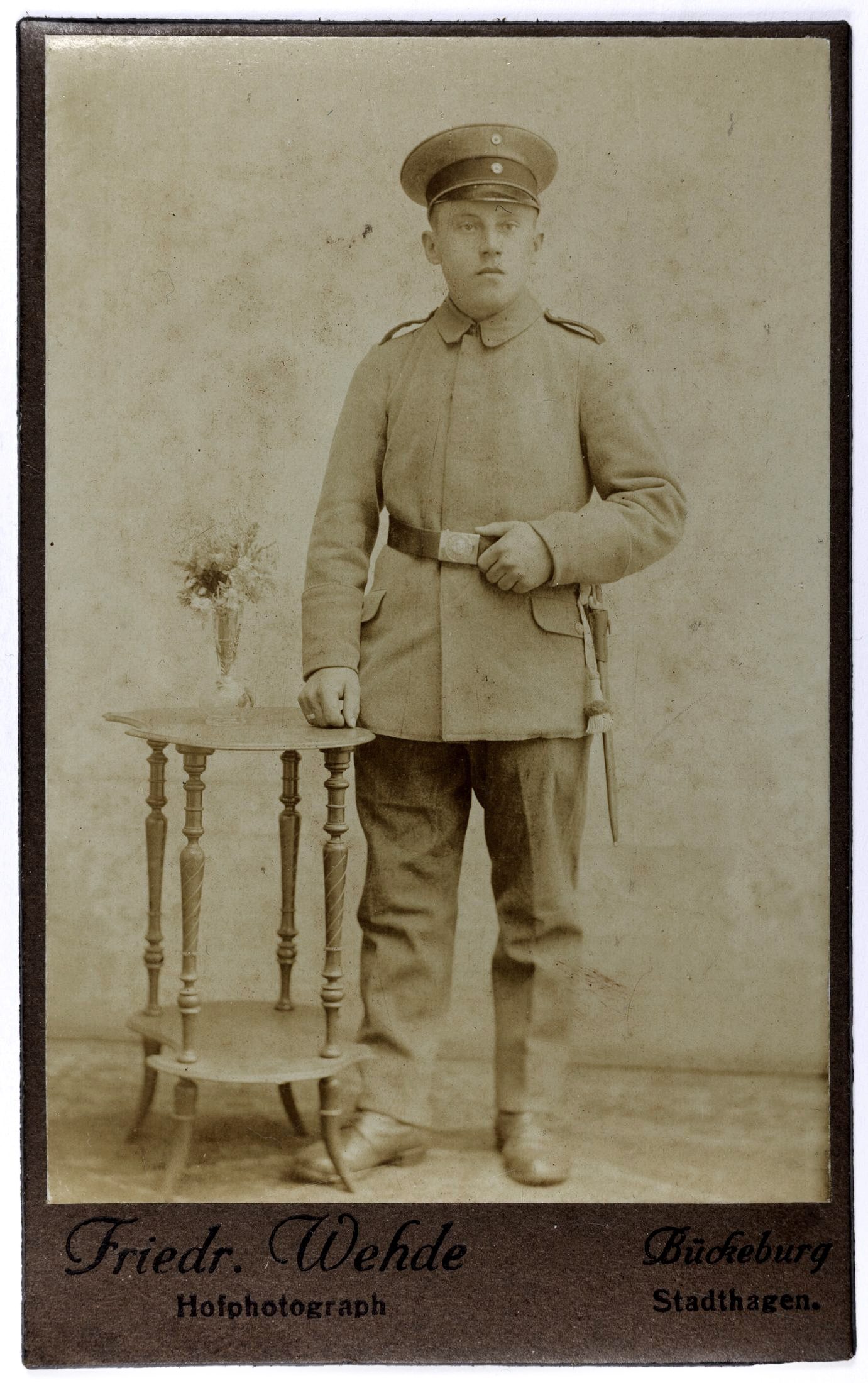
Portrait of a seated postal official in uniform, Friedrich Wehde studioPortrait of a standing soldier in uniform, Friedrich Wehde studio
Portrait of a seated woman in traditional dress with a standing young woman, Friedrich Wehde studioHand-coloured group portrait with two women in traditional dress and two men, Friedrich Wehde studio
Hand-coloured portrait of a seated woman in Bückeburg traditional dress holding flowers, from Friedrich Wehde’s studioHand-coloured portrait of a woman in Bückeburg traditional dress seated in a wicker chair beside a table, from Friedrich Wehde’s studio
Friedrich Wehde

Wehde’s finest traditional-dress photographs stand out for their particularly careful colouring. The colour follows fabrics, folds and shadows, bringing out flowers, jewellery and patterns. His earlier work as a glass painter may explain his assured handling of small areas and subtle colours.

The name Friedrich Wehde later continued as a business name. After the First World War, the designation “Court Photographer Friedrich Wehde, Successor, Proprietor O. Wehde” appears.

HistoricBits

Discover. Preserve. Make visible.

HistoricBits is dedicated to historical photographs preserved in private albums, collections and estates. The project seeks out, preserves, documents and publishes images that might otherwise be lost or forgotten.

The focus is on often overlooked forms of everyday photography: commercial photography, amateur photographs, local press images, studio portraits, photo-booth pictures and quick-turnaround photography.

Many of these photographs were neither made as art nor intended to document history—yet today they are important historical sources.

They were made to preserve memories, provide services or earn a living through photography. It is precisely this direct connection with everyday life that makes them valuable today.

About the project