A photograph and its story
Puppetry on broken glass
A broken glass plate negative, a marionette from the old Faust puppet play, and the story of the Zangerle brothers.
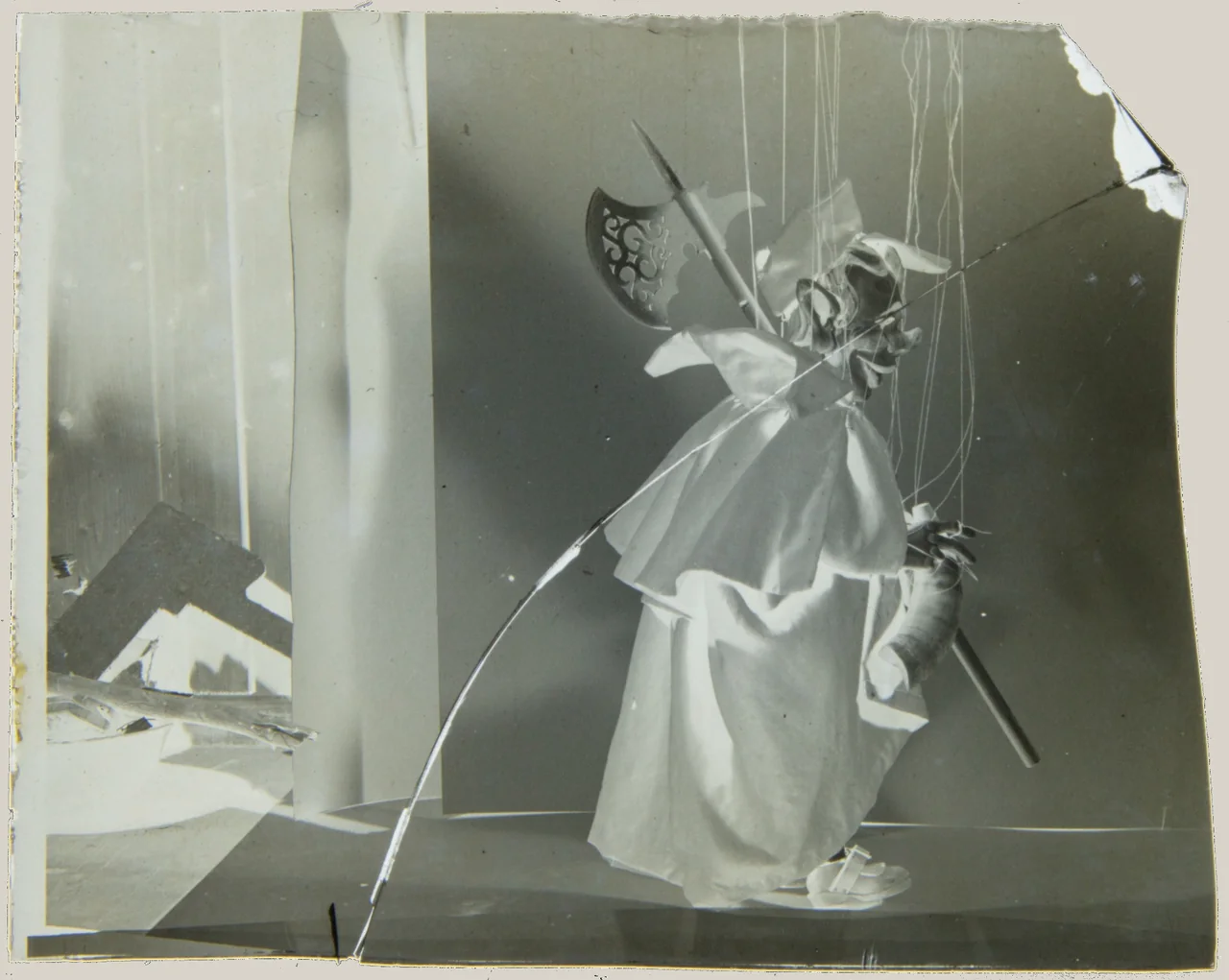
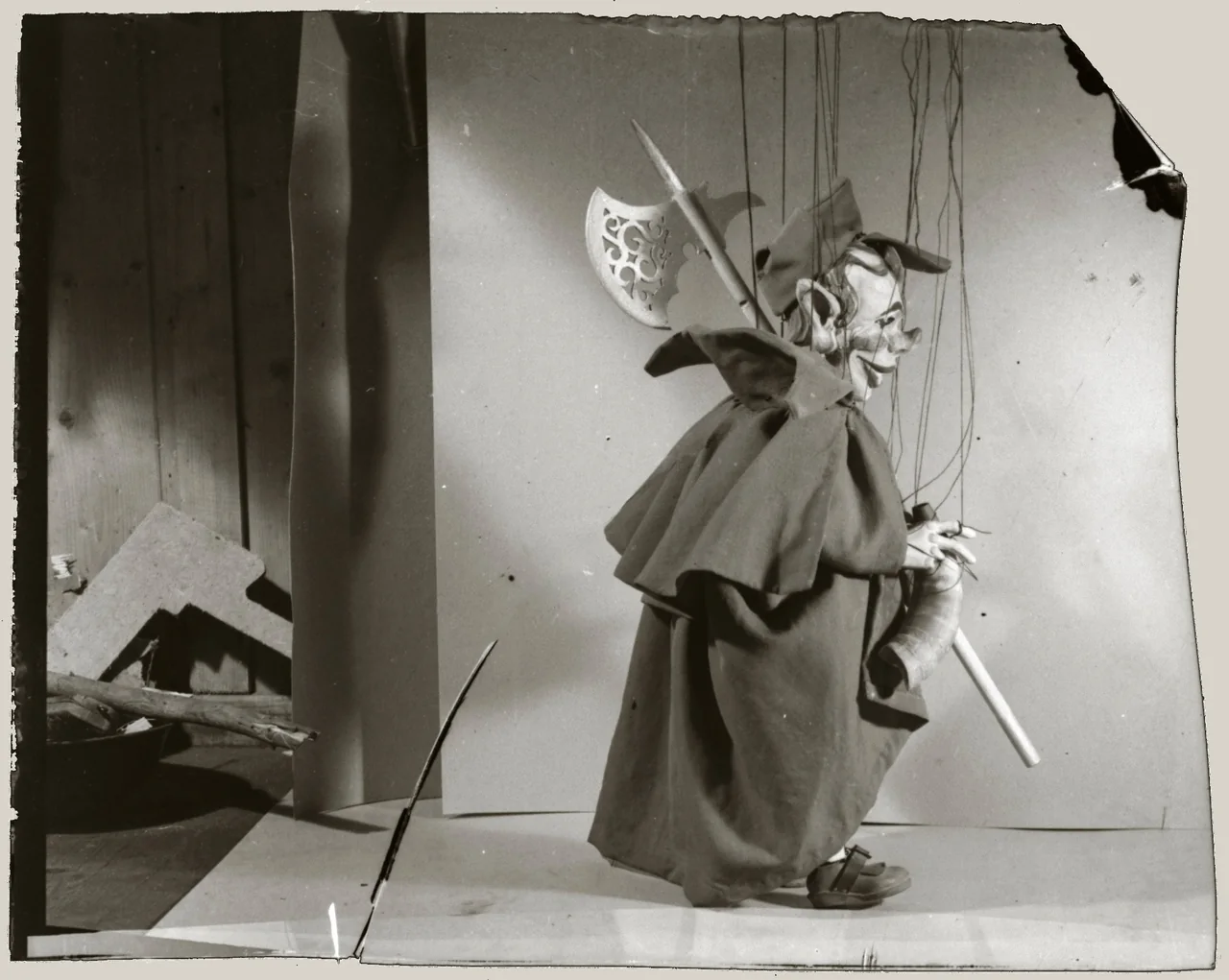
Read the story ↓A marionette stands in profile against a plain background. It wears a long cloak and a striking headdress. In one hand it holds a curved nightwatchman’s horn; above its shoulder rises a halberd with an ornate axe blade. The many puppet strings are clearly visible. Parts of the improvised photographic setting remain in view: white card on the floor and behind the figure forms a neutral backdrop, while the workshop can be seen on the left. A fracture runs across the negative, and a piece is missing from the upper right corner of the glass plate.
This is Hanswurst as the nightwatchman of Wittenberg, a character from “Das alte Volksschauspiel vom Dr. Faust” (The Old Folk Play of Dr Faust), staged by the Rheinisches Marionettentheater Zangerle. The photograph was taken in Steinau around 1949.
It is fortunate that the damaged glass plate survived. It was offered for sale at a flea market together with other plates; its broken pieces had already come apart. Digital reconstruction and restoration have made it possible to appreciate the full impact of the image again.
The Old Folk Play of Dr Faust
The story of Doctor Faust was performed at fairs and by travelling theatres long before Goethe wrote his Faust. Puppeteers brought to the stage a scholar who wanted to know more than human beings could know, and who made a pact with the Devil to achieve it. Audiences knew the story, but different theatres used different versions. Eerie apparitions and serious scenes alternated with bawdy jokes.
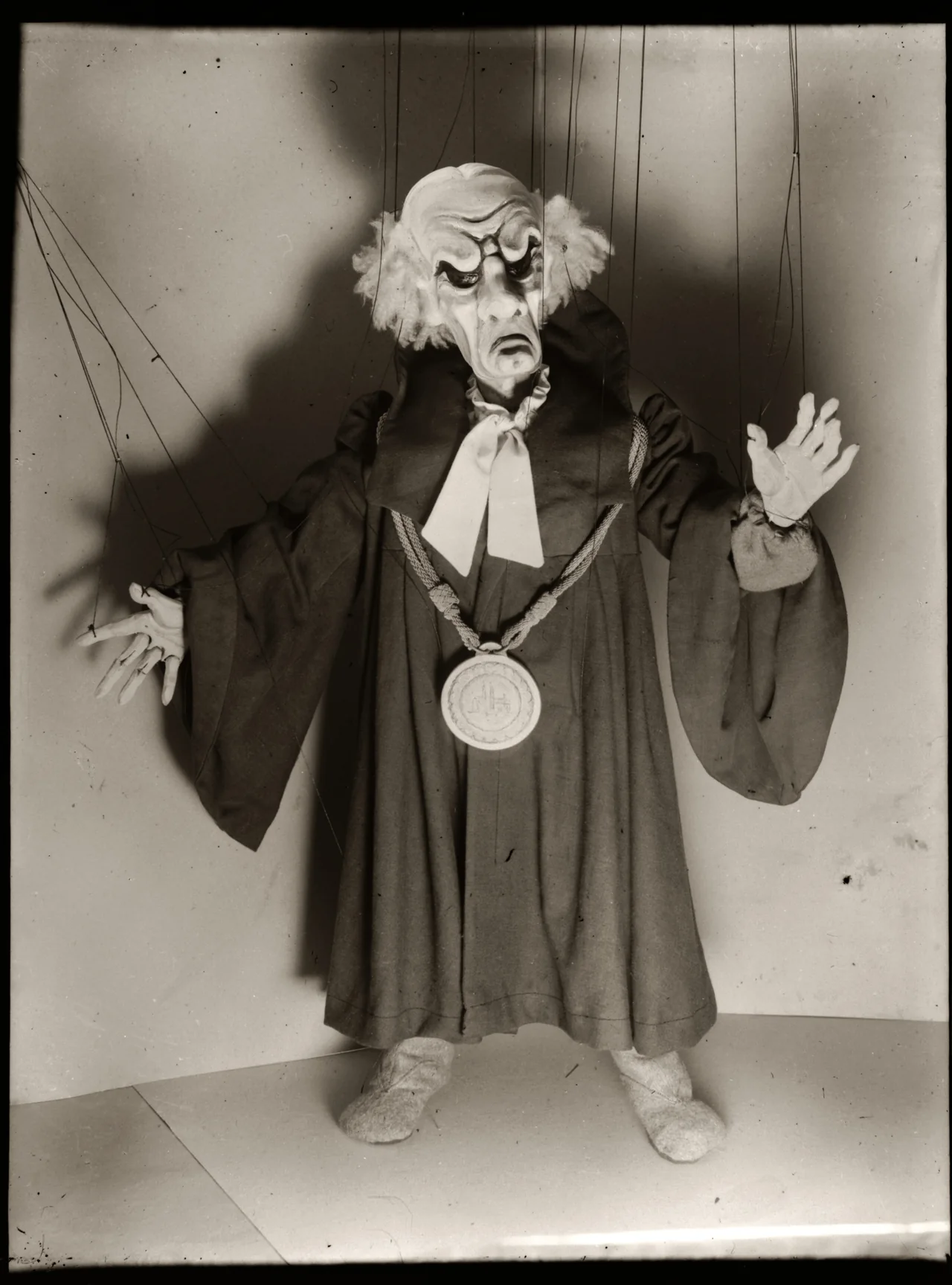
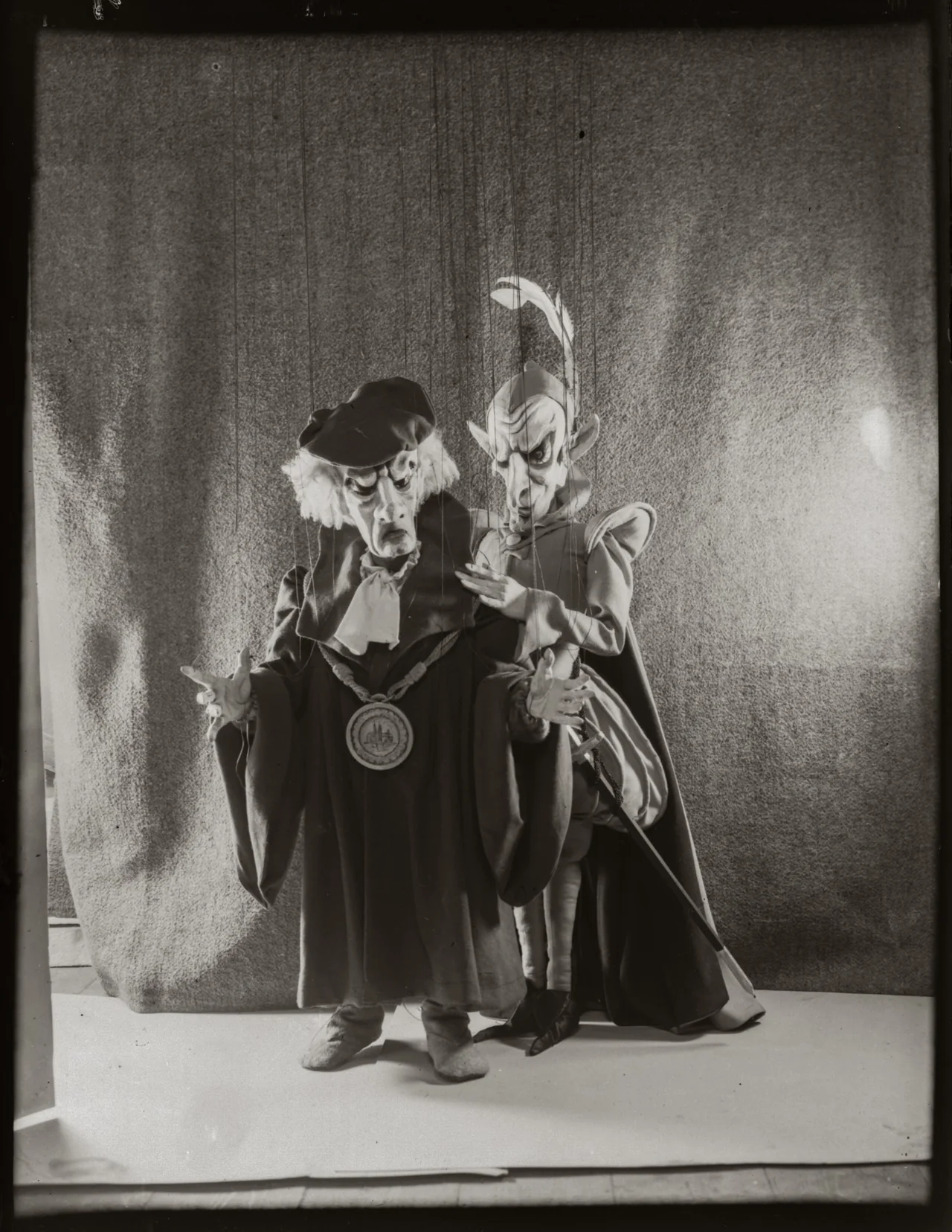
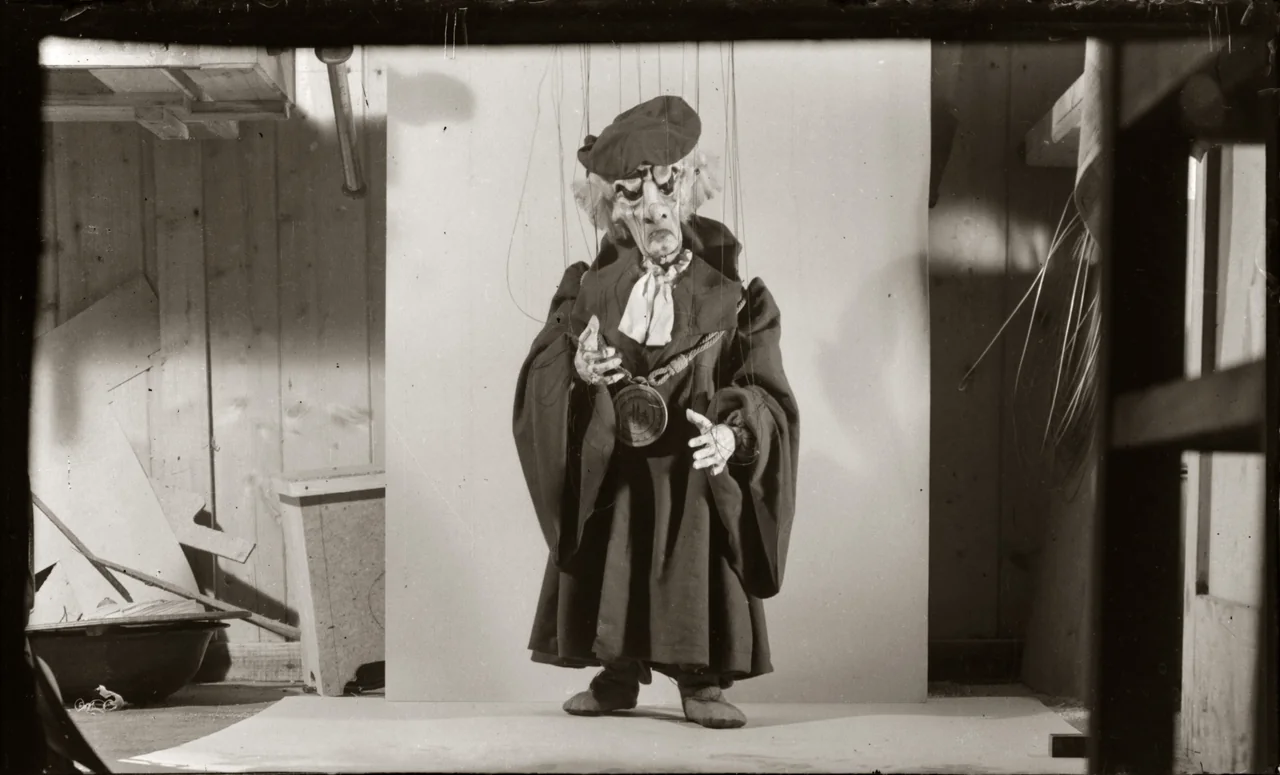
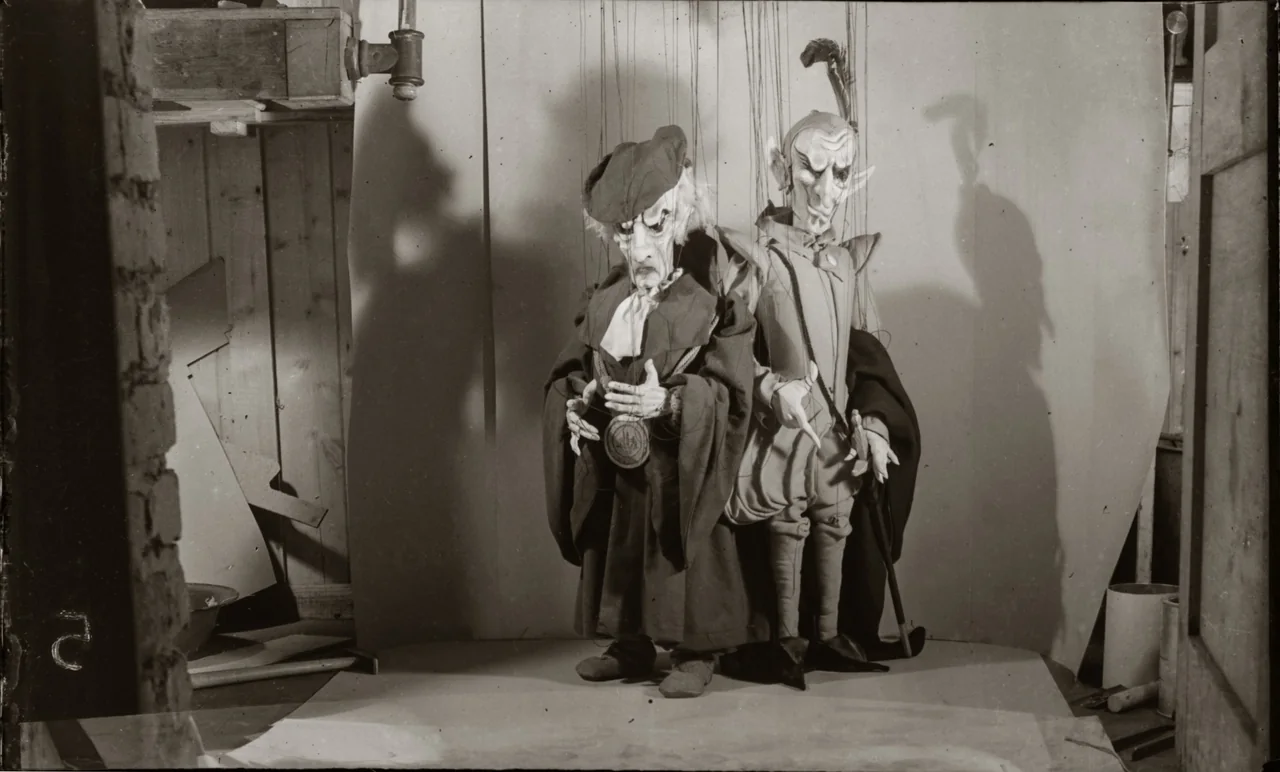
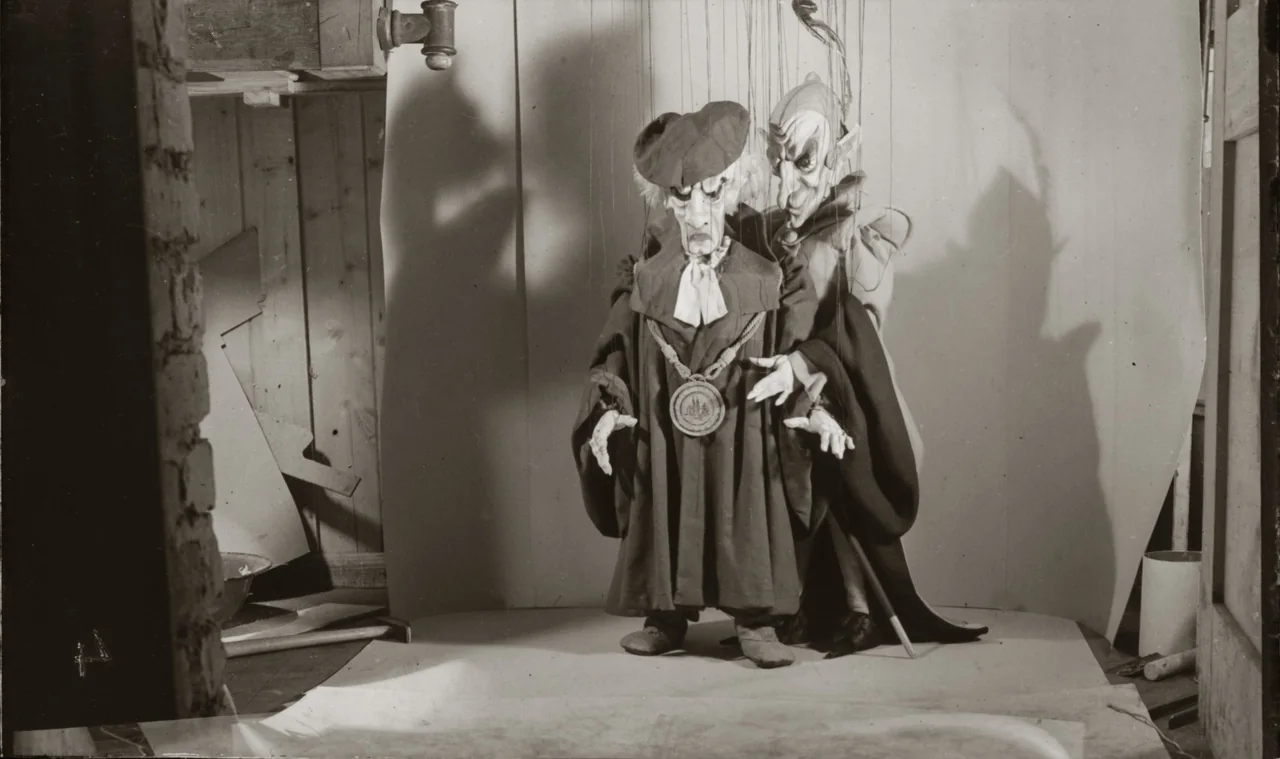
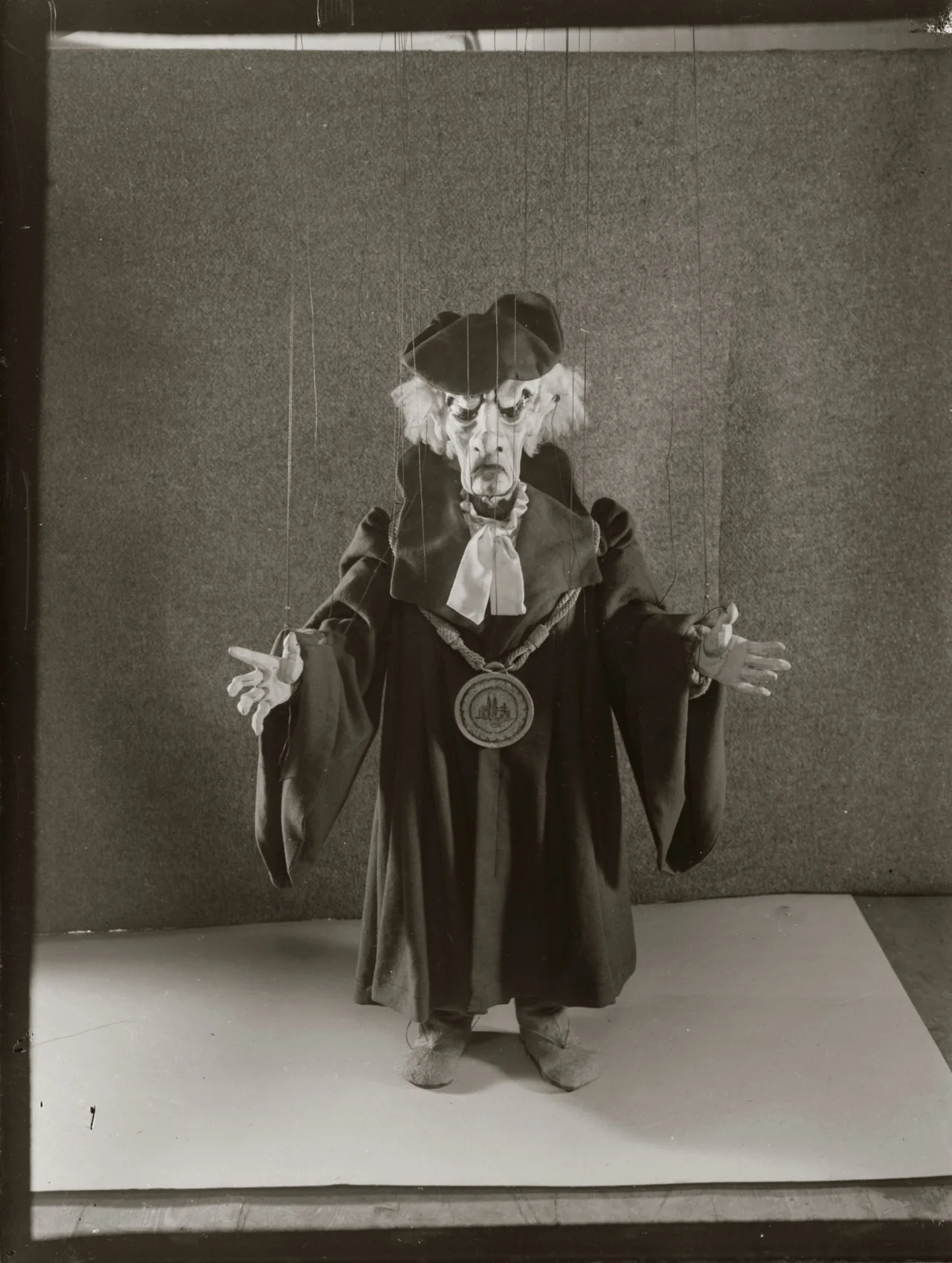
Emanuel and Franz Zangerle’s Rheinisches Marionettentheater also drew on this tradition. Their production was called “Das alte Volksschauspiel vom Dr. Faust”. The glass plates show characters from this performance, posed individually or in small groups.
A scholar and his pact with the Devil
At the centre of the story is Dr Johannes Faust, a scholar dissatisfied with the limits of his knowledge. Books and science cannot provide the answers he seeks. Eventually he turns to magic and summons spirits.
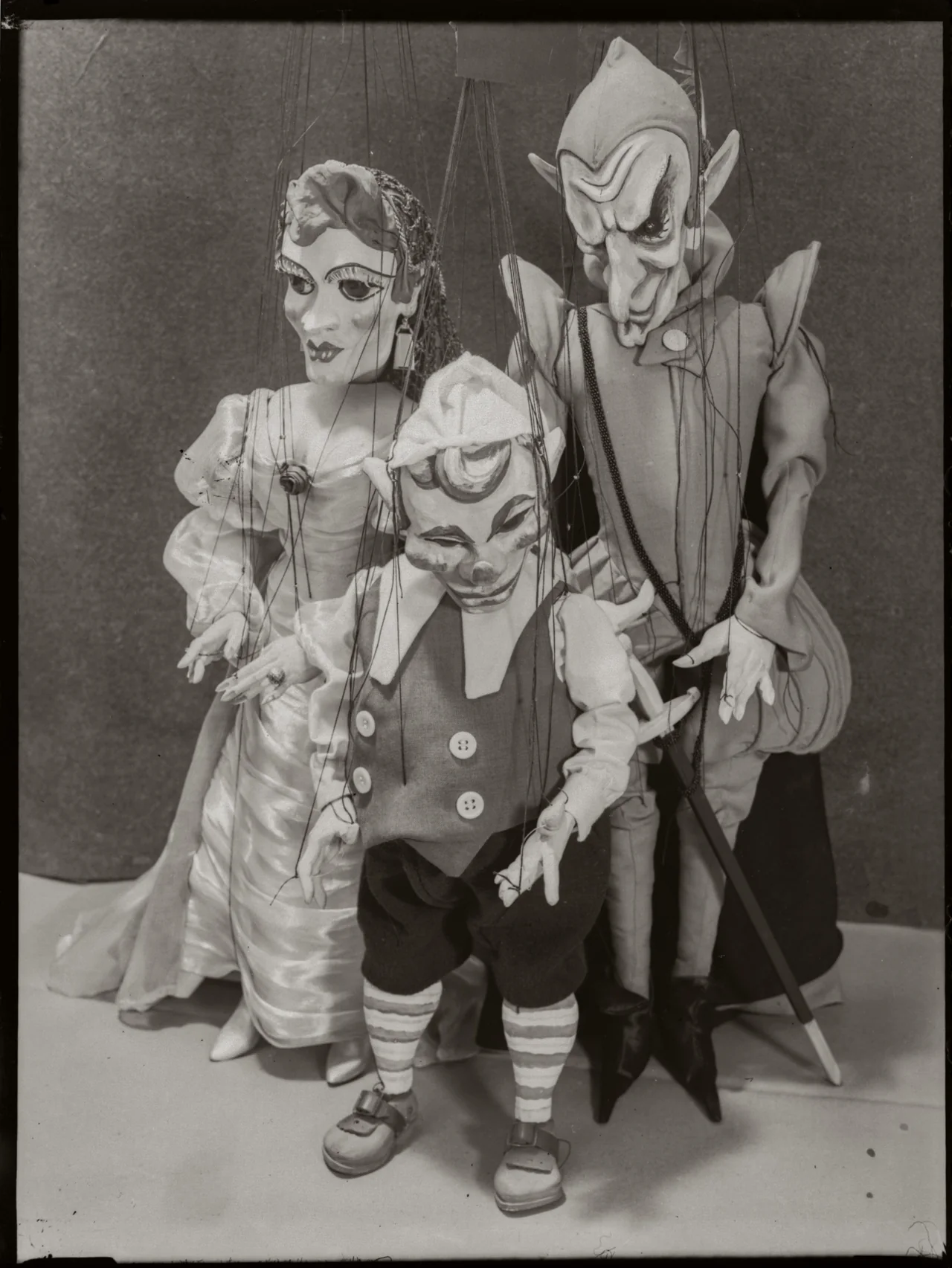
Mephistopheles promises Faust secret knowledge, power and extraordinary experiences. In return, Faust must surrender his soul after an agreed period. The marionette portraits show the scholar with a beard, headdress and long robe; the Devil appears as a distinct, carefully crafted figure. The visible strings remind us that these characters were made for a stage in motion.
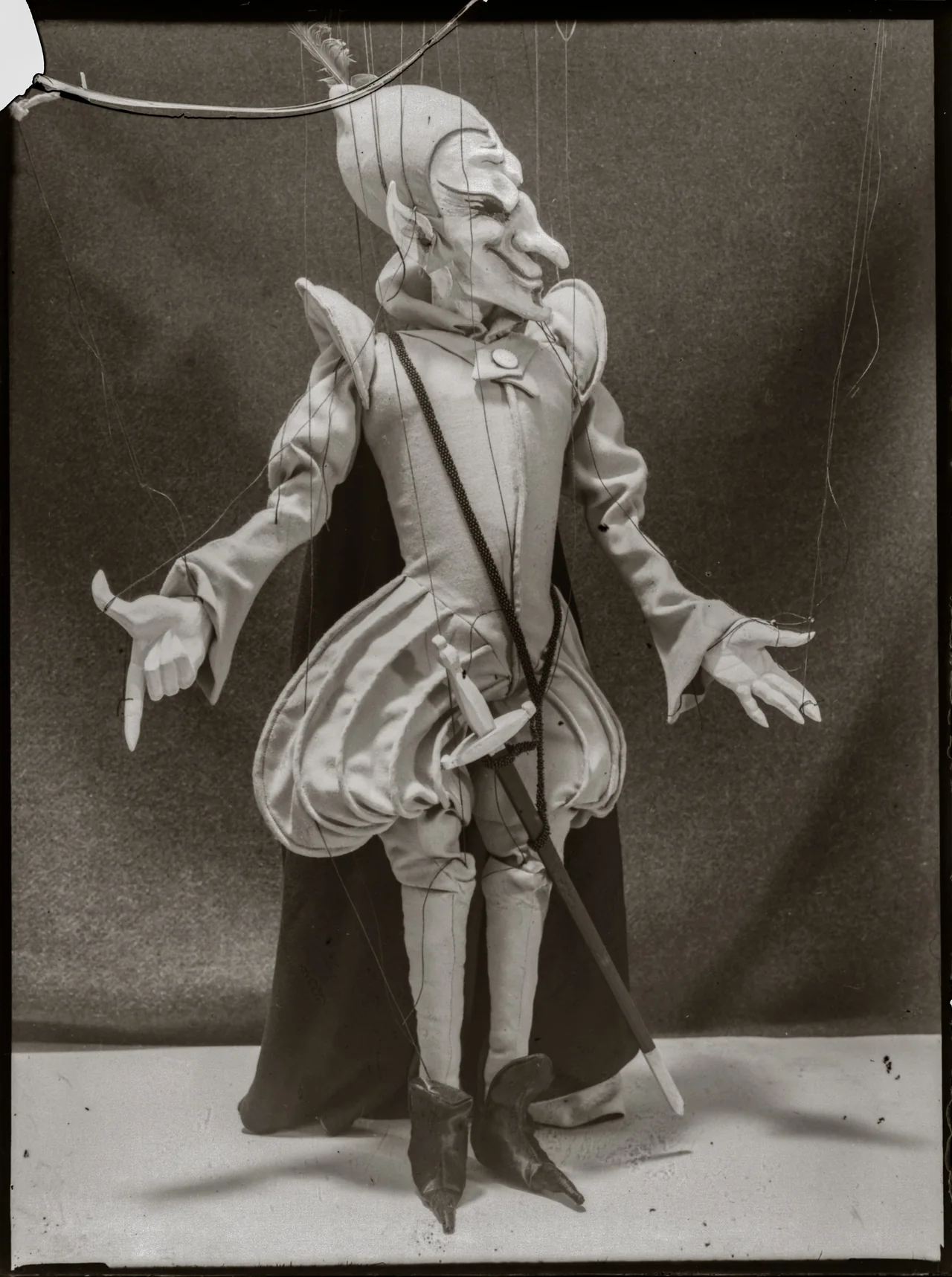
At the court of the Duke of Parma
With the powers the Devil has given him, Faust leaves his study. He travels and demonstrates his magical abilities. The court of the Duke of Parma is one of the settings in the traditional puppet play.
Before an aristocratic audience, Faust performs unusual feats and conjures apparitions. The Duke and the other characters give this courtly episode its own atmosphere. Photographs from the Zangerle series show how carefully even the supporting roles were made: costumes, headdresses and the grouping of the marionettes reveal the variety of the theatre’s stage equipment.
Hanswurst and the comic side of the play
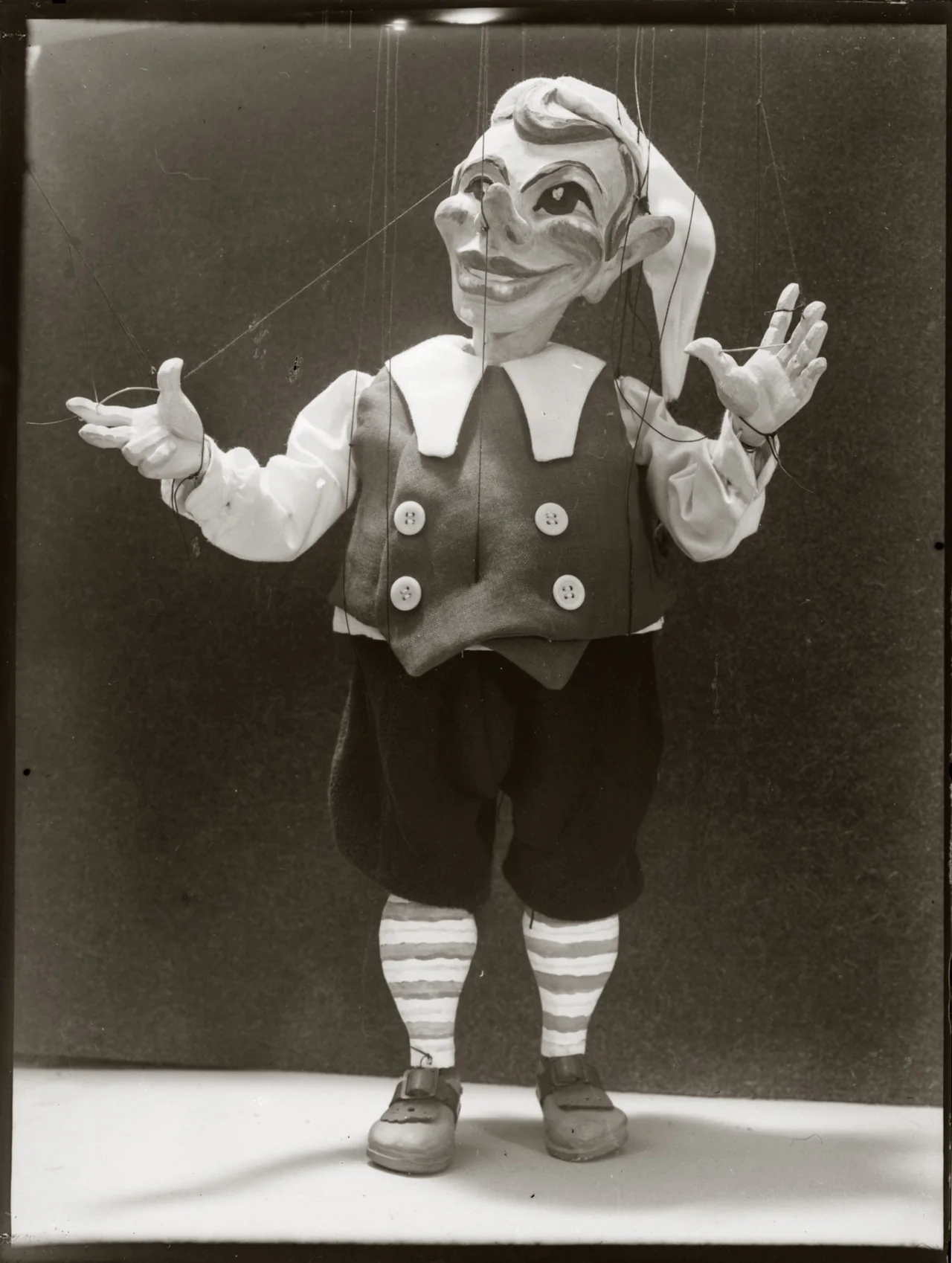
Alongside Faust’s tale of power and damnation runs a very different story. Hanswurst brings everyday life, fear and mockery to the stage. He tries to talk his way out of dangerous situations and provides comic interludes between the serious scenes.
The supporting characters and their encounters with Faust and the spirits contributed to the alternation between serious drama and popular entertainment.
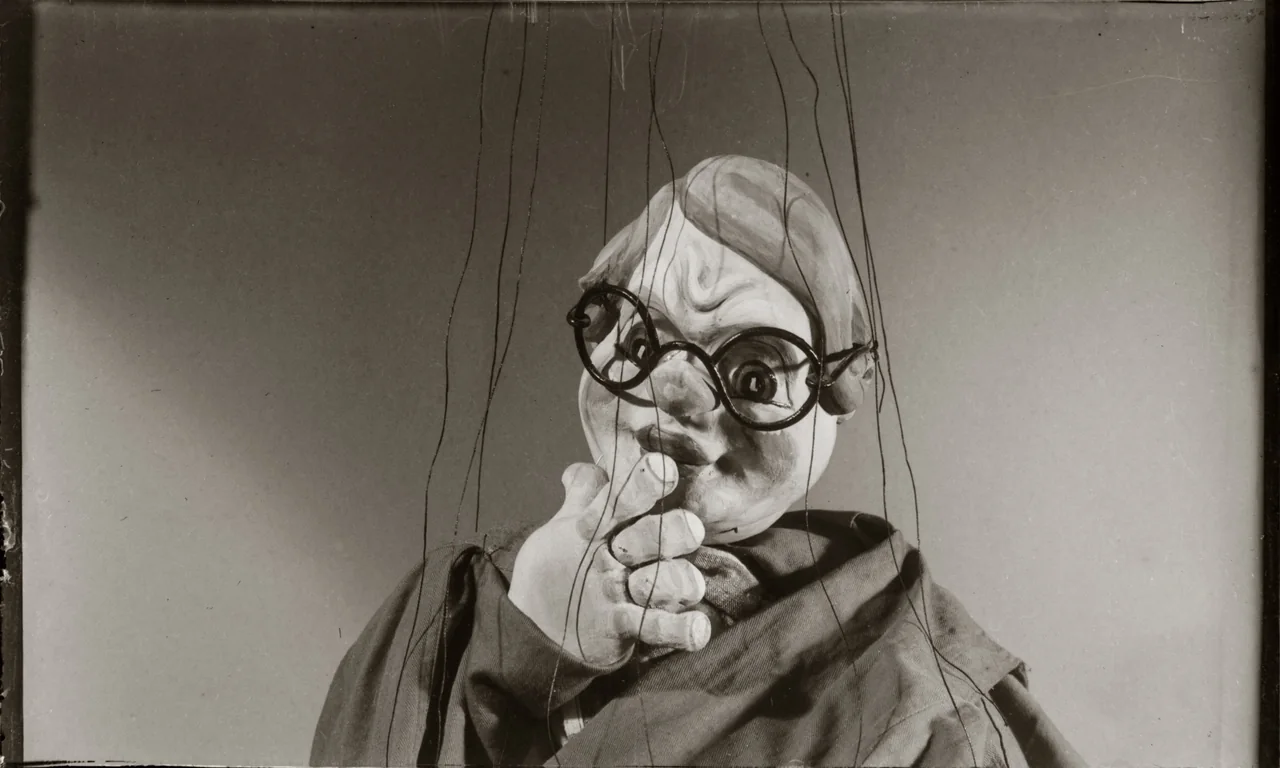
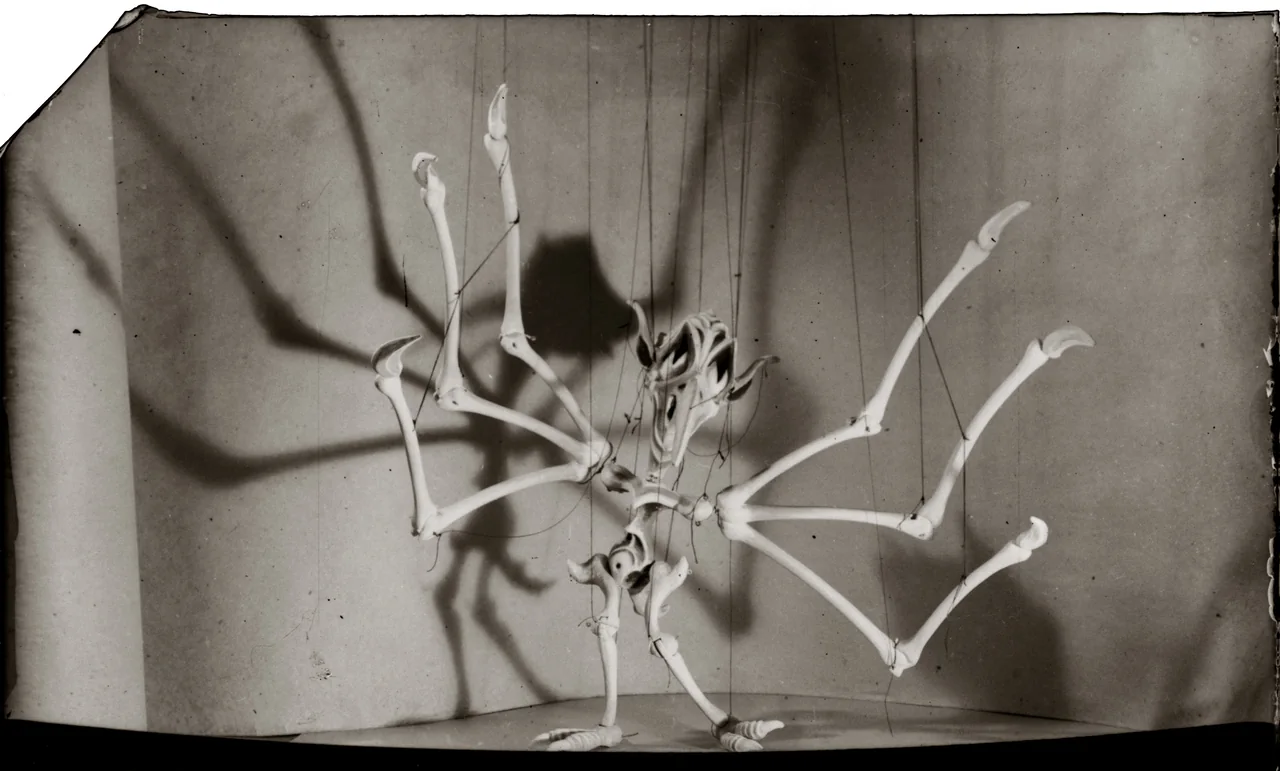
While Hanswurst repeatedly wriggles out of trouble, Faust cannot escape his contract. The agreed time runs out; in the traditional puppet play, the powers of Hell come to claim the scholar. Unlike Goethe’s drama, this story ends without redemption.
The story offered many possibilities for marionette theatre: spirits could appear, figures could float or suddenly disappear.
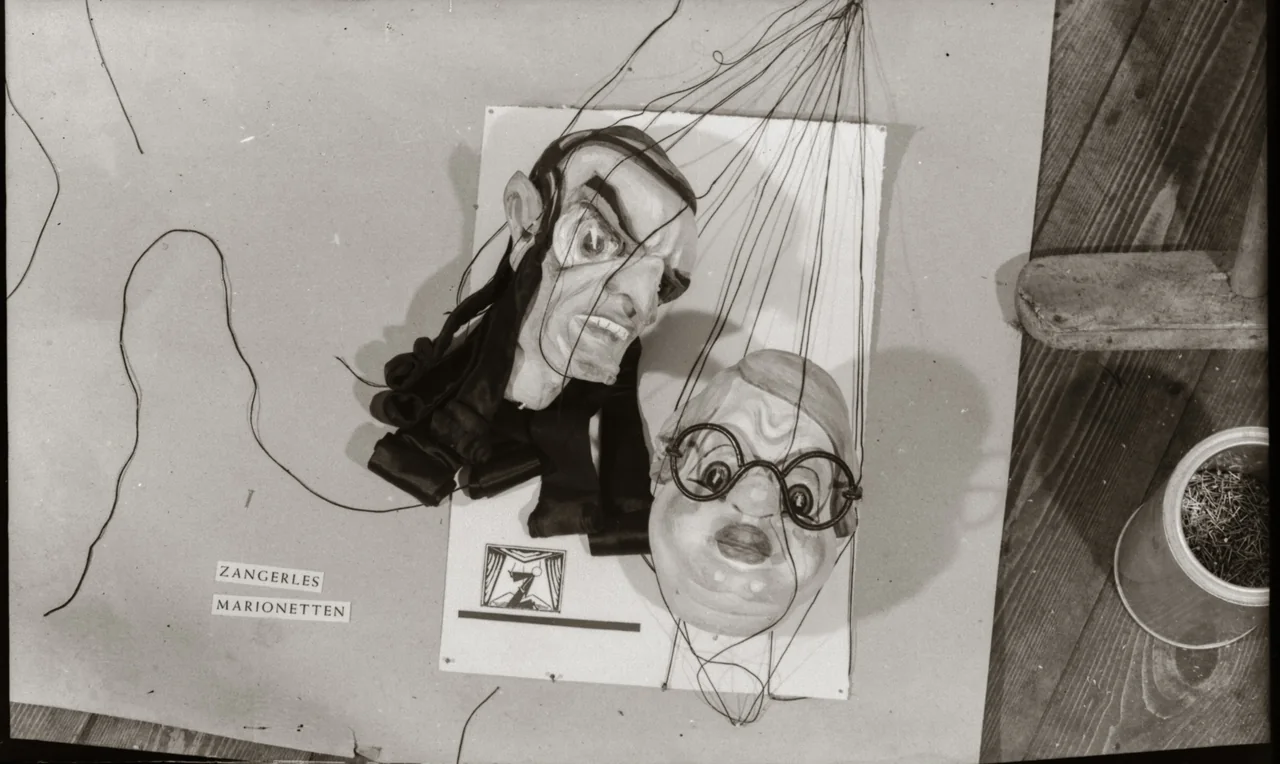
The Zangerle brothers’ theatre
Emanuel Zangerle (1900–1967) and his brother Franz (1904–1977) founded the Theater Rheinischer Marionetten in Cologne in 1925. Working with wood and tools was familiar to them from their family background. Emanuel also pursued an interest in theatre studies. One of their early venues was a tower on Cologne’s Hohenzollern Bridge. Whenever trains crossed the bridge, the noise was impossible to miss in the small theatre. Accounts describe the brothers incorporating these interruptions into their performances.
In 1941, the theatre in Cologne was destroyed in a bombing raid. Another attempt to start again in Frankfurt am Main failed in 1942, when the new venue was also bombed, three days before its planned reopening. In Steinau, Hesse, the brothers built up another marionette theatre within three years. From 1949 to 1954 they performed in the castle’s former stables. Faust was again on the programme for the opening. In 1954 the family moved to Düsseldorf. On 14 June 1956 the theatre opened on Wallstraße. A move to the Palais Wittgenstein followed in 1966. After Emanuel’s death in 1967, Franz and later Winfred Zangerle continued the work; Anton Bachleitner took over the artistic direction in 1981. Today’s Düsseldorfer Marionetten-Theater continues this tradition.
From flea market to museum collection
Decades after they were made, the glass plate negatives resurfaced at a flea market. Historicbits, an initiative dedicated to safeguarding photographic heritage, was able to acquire and preserve them. The photographs have since been donated to the Puppentheatersammlung (Puppet Theatre Collection) of the Staatliche Kunstsammlungen Dresden, where they are now catalogued and accessible.
A broken glass plate thus leads to a piece of puppet theatre history that was almost lost and has now been preserved for the future.
HistoricBits
Discover. Preserve.
Make visible.
Historical photographs from private albums, collections and estates tell us about everyday life in their time. HistoricBits seeks out, preserves and researches these images – and the stories that can emerge from them.
About the project ↗